Index

A crypto Index provides a way for investors to gain diversified exposure to a specific basket of digital assets through a single tokenized product. These indices often track specific sectors, such as DeFi, DePIN, or RWA, and are automatically rebalanced via smart contracts. In 2026, AI-managed thematic indices have become the gold standard for passive investing, allowing users to track the "blue chips" of the Web3 economy without manual portfolio management. This tag covers index methodology, rebalancing frequency, and the benefits of diversified crypto baskets.

25700 Articles
Created: 2026/02/02 18:52
Updated: 2026/02/02 18:52
Strategy Meets Requirements for S&P 500 Inclusion, Awaits Committee Decision

Strategy Meets Requirements for S&P 500 Inclusion, Awaits Committee Decision

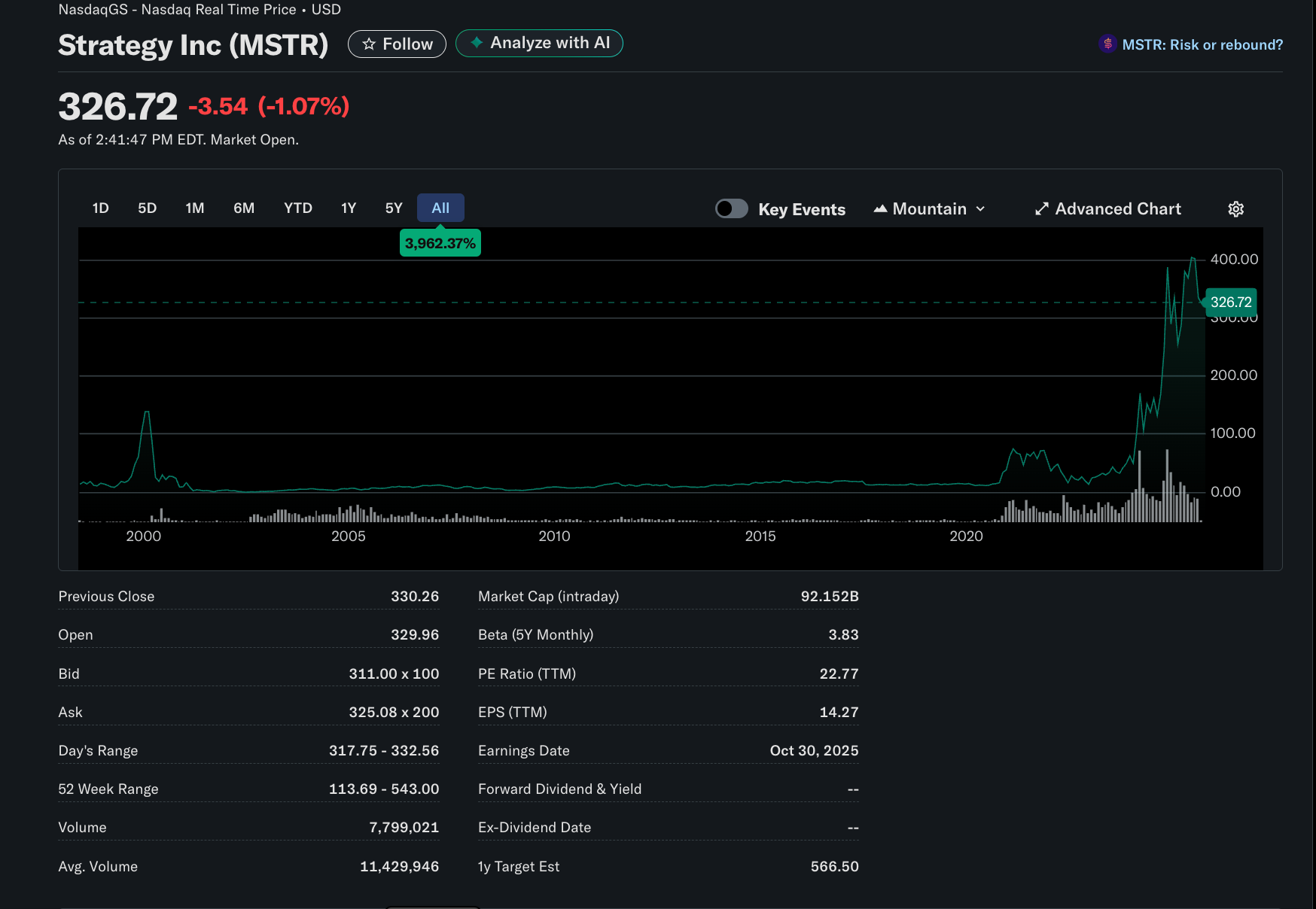
TLDR Strategy has met all technical requirements for S&P 500 inclusion with $92 billion market cap and positive earnings Despite meeting criteria, final approval requires S&P US Index Committee’s vote based on “holistic” assessment High stock volatility (96% in 30-day price swings) could present a challenge for committee approval Strategy would join Coinbase and Block [...] The post Strategy Meets Requirements for S&P 500 Inclusion, Awaits Committee Decision appeared first on Blockonomi.

Author: Blockonomi
Crucial U.S. Dollar Retreat: Nonfarm Payrolls Unveiling Market Shifts

Crucial U.S. Dollar Retreat: Nonfarm Payrolls Unveiling Market Shifts

BitcoinWorld Crucial U.S. Dollar Retreat: Nonfarm Payrolls Unveiling Market Shifts The financial world often feels like a complex web, where the movements of one major asset can send ripples across various markets, including the dynamic realm of cryptocurrencies. Recently, the U.S. Dollar has been on a noticeable retreat, a move that has captured the attention of investors globally. This shift is not arbitrary; it’s a direct response to the looming release of a pivotal economic report: the Nonfarm Payrolls data. For those tracking digital assets, understanding these macro shifts is crucial, as they often dictate the broader market sentiment and liquidity flows that indirectly influence Bitcoin and altcoins. Let’s delve into why the dollar is softening and what this eagerly awaited report could mean for your portfolio. The global financial stage is set for a significant event. The U.S. Dollar, a cornerstone of international finance and a traditional safe-haven asset, has been experiencing a period of weakness. This retreat comes as market participants brace themselves for the latest Nonfarm Payrolls (NFP) report. This monthly release from the U.S. Bureau of Labor Statistics is more than just a number; it’s a critical barometer of the nation’s economic health, offering deep insights into employment trends, wage growth, and overall economic momentum. The dollar’s current stance reflects a delicate balance of expectations regarding future monetary policy, inflation, and global economic growth. As traders and investors position themselves, the NFP data stands as a key test that could either confirm the dollar’s downtrend or spark a surprising rebound. Understanding this interplay is essential for anyone navigating the volatile landscape of the Forex Market and beyond. Why is the U.S. Dollar Retreating Now? The recent softening of the U.S. Dollar index (DXY) is a multifaceted phenomenon, driven by a confluence of factors that extend beyond immediate data releases. Several key elements are contributing to this observed retreat: Shifting Federal Reserve Expectations: A primary driver is the evolving narrative around the Federal Reserve’s monetary policy. After an aggressive cycle of interest rate hikes to combat inflation, market participants are increasingly pricing in the possibility of rate cuts in the near future. This ‘dovish pivot’ expectation tends to weaken a currency, as lower interest rates make holding that currency less attractive relative to others. Improving Global Economic Outlook: While the U.S. economy has shown resilience, signs of recovery or stabilization in other major economies (like the Eurozone or China) can lead to a shift in capital flows. If global growth prospects brighten, investors might move out of safe-haven assets like the dollar into higher-yielding or growth-oriented assets elsewhere. Risk-On Sentiment: A general increase in risk appetite among investors often sees a corresponding decrease in demand for the dollar. When market confidence is high, and investors are willing to take on more risk, they tend to favor equities, commodities, and even cryptocurrencies, leading to outflows from the dollar. Technical Factors and Profit-Taking: After periods of strong dollar appreciation, technical corrections and profit-taking by large institutional players can naturally lead to a pullback. Traders might be unwinding long dollar positions ahead of major event risks like the NFP report. These elements collectively paint a picture of a dollar under pressure, but its future direction hinges significantly on the incoming Economic Data, especially the employment figures. Decoding the Nonfarm Payrolls Report: What to Watch For The Nonfarm Payrolls report is arguably one of the most closely watched pieces of Economic Data globally. It provides a comprehensive snapshot of U.S. employment trends, excluding farm workers, government employees, private household employees, and non-profit organization employees. But what exactly should investors focus on within this dense report? The Headline Number: This is the most anticipated figure – the net change in the number of employed people during the previous month. A higher-than-expected number signals a strong labor market, potentially leading to dollar strength, while a lower number suggests weakness. Unemployment Rate: This percentage indicates the proportion of the labor force that is unemployed but actively seeking work. A falling unemployment rate is generally positive for the economy and the dollar. Average Hourly Earnings: This metric measures wage inflation. Strong wage growth can signal inflationary pressures, which might prompt the Federal Reserve to maintain higher Interest Rate Expectations or even consider further hikes. Conversely, stagnant wage growth could ease inflation concerns. Labor Force Participation Rate: This indicates the percentage of the working-age population that is employed or actively looking for work. An increasing participation rate suggests more people are entering the job market, which can be a sign of economic health. Understanding these components allows for a more nuanced interpretation of the report’s implications. For instance, a high headline NFP number coupled with stagnant wage growth might be interpreted differently than a moderate NFP with strong wage inflation. Key NFP Metrics and Their Market Impact Let’s consider how different outcomes might influence the market: NFP Outcome Impact on U.S. Dollar Impact on Interest Rate Expectations General Market Sentiment Stronger than Expected (e.g., high NFP, low unemployment, strong wages) Positive: Dollar strengthens (DXY up) Higher: Fed more likely to hold rates or hike Risk-off (initially), bond yields up, equity volatility Weaker than Expected (e.g., low NFP, high unemployment, weak wages) Negative: Dollar weakens (DXY down) Lower: Fed more likely to cut rates sooner Risk-on (initially), bond yields down, equity gains (if rate cuts expected) Mixed/In-Line (e.g., strong NFP but weak wages) Mixed: Volatility, depends on specific interpretation Uncertain: Market seeks further clarity Choppy trading, focus shifts to next data points Navigating the Forex Market: Dollar’s Dance with Global Currencies The immediate aftermath of the Nonfarm Payrolls release is often characterized by heightened volatility in the Forex Market. The U.S. Dollar‘s reaction ripples through major currency pairs, affecting everything from the Euro to the Japanese Yen. EUR/USD: As the most traded currency pair, EUR/USD is highly sensitive to NFP. A weak dollar scenario, perhaps from disappointing NFP, typically sees EUR/USD rise, while a strong dollar from robust NFP would push it lower. USD/JPY: The Japanese Yen often acts as a safe-haven currency. A strong NFP report could strengthen the dollar against the yen, pushing USD/JPY higher, especially if it reinforces higher U.S. Interest Rate Expectations. Conversely, a weak NFP might see investors flock to the yen, causing USD/JPY to fall. GBP/USD: Similar to EUR/USD, this pair reacts to the relative strength or weakness of the dollar. U.S. employment data provides a significant directional impulse. Commodity Currencies (AUD/USD, NZD/USD, USD/CAD): These currencies are often sensitive to global risk sentiment. A strong NFP report indicating a robust U.S. economy can sometimes boost risk appetite, benefiting commodity currencies, though the dollar’s direct strength might counteract this. The dollar’s performance post-NFP is not just about the headline number; it’s about how that number aligns with or deviates from market expectations and how it shapes the outlook for the Federal Reserve. This makes the Forex Market a dynamic arena where quick reactions and robust analysis are paramount. Beyond NFP: The Broader Picture of Economic Data While Nonfarm Payrolls is a heavyweight, it’s just one piece of a larger puzzle of Economic Data that investors monitor. To truly understand the dollar’s trajectory and the overall health of the economy, it’s essential to consider NFP within a broader context. Inflation Reports (CPI, PPI): Consumer Price Index (CPI) and Producer Price Index (PPI) data are crucial for understanding inflationary pressures. Strong NFP with rising wages, combined with high inflation, solidifies the case for higher interest rates. Gross Domestic Product (GDP): GDP figures provide a comprehensive measure of economic output. A strong labor market (as indicated by NFP) often correlates with healthy GDP growth. Retail Sales: This data reflects consumer spending, a significant component of economic activity. Robust employment often translates into strong retail sales, reinforcing economic strength. Manufacturing and Services PMIs: Purchasing Managers’ Index (PMI) data for both manufacturing and services sectors offer forward-looking insights into economic expansion or contraction. The Federal Reserve, in particular, adopts a holistic approach, evaluating a wide range of indicators to formulate its monetary policy. Therefore, while NFP causes immediate market reactions, its long-term impact is often determined by how it fits into the overall mosaic of economic releases. Investors looking for sustained trends in the U.S. Dollar must consider this broader array of information. Shifting Sands: How Interest Rate Expectations Drive Dollar Volatility At the heart of the U.S. Dollar‘s movements, especially around significant Economic Data releases like Nonfarm Payrolls, are Interest Rate Expectations. These expectations are essentially the market’s collective forecast for future monetary policy decisions by the Federal Reserve. Direct Correlation: Generally, higher interest rates make a currency more attractive to foreign investors seeking better returns on their fixed-income investments. Conversely, lower interest rates or the anticipation of cuts tend to weaken a currency. Inflationary Impact: A strong NFP report, particularly one showing robust wage growth, can fuel concerns about inflation. If inflation persists or accelerates, the Federal Reserve might be compelled to maintain higher interest rates for longer, or even hike again, to cool the economy. This would typically support the dollar. Deflationary Concerns: Conversely, a significantly weak NFP report, coupled with other signs of economic slowdown, might prompt the Fed to consider cutting rates sooner to stimulate growth. Such a scenario would put downward pressure on the dollar. Forward Guidance: Beyond the data itself, the Federal Reserve’s communication and ‘forward guidance’ on its policy outlook play a pivotal role. NFP data helps shape this guidance, influencing market sentiment and dollar direction. The interplay between NFP, inflation, and the Fed’s stance creates a dynamic environment where Interest Rate Expectations can shift rapidly, leading to pronounced volatility in the dollar and, by extension, the broader Forex Market. Challenges and Opportunities in a Volatile Market The anticipation and aftermath of major economic reports like NFP present both challenges and opportunities for investors: Challenges: Increased Volatility: Price swings can be sharp and unpredictable, leading to potential losses for unprepared traders. False Signals: Initial market reactions can sometimes be misleading, with prices reversing course as more nuanced interpretations of the data emerge. Information Overload: Sifting through various economic indicators and expert opinions can be overwhelming. Opportunities: Trading Opportunities: For experienced traders, volatility can present opportunities for short-term gains. Portfolio Rebalancing: Macro shifts can prompt investors to re-evaluate and rebalance their portfolios, aligning with new economic outlooks. Informed Decision-Making: Understanding these macro drivers helps in making more informed decisions across asset classes, including how broad market sentiment might affect cryptocurrency valuations. Actionable Insights for Navigating the Macro Environment For those invested in or considering the cryptocurrency space, understanding these macro currents is not just academic; it offers actionable insights: Monitor the DXY: Keep an eye on the U.S. Dollar Index (DXY). A strong dollar often correlates with a “risk-off” environment, which can put pressure on risk assets like cryptocurrencies. A retreating dollar, as we’re seeing, can sometimes signal increased risk appetite, potentially benefiting crypto. Track Interest Rate Expectations: Follow market probabilities for Fed rate hikes or cuts. Tools like the CME FedWatch Tool provide real-time probabilities. Lower Interest Rate Expectations generally make non-yielding assets like crypto more attractive. Diversify and Manage Risk: In times of macro uncertainty, diversification across different asset classes and robust risk management are paramount. Do not over-expose your portfolio to a single asset class based on short-term predictions. Stay Informed on Economic Data: Beyond NFP, keep track of CPI, PPI, and GDP. These provide the fundamental backdrop against which all markets operate. Understand Correlation vs. Causation: While crypto markets often react to macro news, their movements are also driven by internal factors (adoption, regulation, technological developments). Recognize that macro trends are influential but not the sole determinant. Compelling Summary: The Dollar’s Pivotal Test and Its Wider Implications The retreat of the U.S. Dollar ahead of the crucial Nonfarm Payrolls report underscores the immense sensitivity of global financial markets to key Economic Data. This period of anticipation highlights how deeply intertwined the dollar’s fate is with Interest Rate Expectations and the broader health of the U.S. economy. A weaker-than-expected NFP could solidify expectations for Fed rate cuts, further pressuring the dollar and potentially fueling a ‘risk-on’ environment that could indirectly benefit risk assets like cryptocurrencies. Conversely, a surprisingly strong report might reverse the dollar’s retreat, pushing back against dovish Fed narratives and introducing renewed caution across markets. The Forex Market stands at the forefront of this immediate reaction, but the ripple effects extend far beyond, influencing bond yields, equity markets, and even the sentiment in the digital asset space. As investors navigate these shifting sands, a comprehensive understanding of macro indicators and their potential impact on monetary policy is essential. The NFP report is not just a statistical release; it’s a pivotal moment that will help shape the narrative for the dollar, interest rates, and global market sentiment in the weeks and months to come. Staying informed and agile will be key to making strategic decisions in this evolving landscape. To learn more about the latest Forex market trends, explore our article on key developments shaping the US Dollar and global interest rates. This post Crucial U.S. Dollar Retreat: Nonfarm Payrolls Unveiling Market Shifts first appeared on BitcoinWorld and is written by Editorial Team

Author: Coinstats
XRP Joins Bitcoin and Ethereum as Bitwise Adds Five Crypto ETPs to SIX Swiss Exchange

XRP Joins Bitcoin and Ethereum as Bitwise Adds Five Crypto ETPs to SIX Swiss Exchange

TLDR: Bitwise lists five crypto ETPs on SIX Swiss Exchange, adding XRP and staking products to its European offerings. Assets under management at Bitwise reached $15 billion in August 2025, tripling from October 2024 levels. UK regulators are set to open crypto ETPs to retail investors by October, signaling broader market access. Each Bitwise ETP [...] The post XRP Joins Bitcoin and Ethereum as Bitwise Adds Five Crypto ETPs to SIX Swiss Exchange appeared first on Blockonomi.

Author: Blockonomi
Saylor’s Strategy Ready to Join S&P 500: Bitcoin Rally Pushes $HYPER Past $14M

Saylor’s Strategy Ready to Join S&P 500: Bitcoin Rally Pushes $HYPER Past $14M

Has Michael Saylor accumulated a digital pile of Bitcoins big enough to join the S&P 500? As it so happens, he actually has. But whether or not Strategy Inc. (formerly MicroStrategy) will join the prestigious list of Wall Street companies remains to be seen. Regardless, with eye-popping earnings and a Bitcoin-centric balance sheet, the company’s […]

Author: Bitcoinist
Strategy Inc. Poised for S&P 500 After Bitcoin Surge

Strategy Inc. Poised for S&P 500 After Bitcoin Surge

The post Strategy Inc. Poised for S&P 500 After Bitcoin Surge appeared on BitcoinEthereumNews.com. Key Points: Key Point 1 Key Point 2 Key Point 3 Strategy Inc., led by Michael Saylor, is poised to join the S&P 500 following substantial Bitcoin-related gains, marking a significant milestone in corporate digital asset adoption. This potential inclusion underscores growing institutional Bitcoin interest, potentially increasing its legitimacy and influencing market dynamics through enhanced investor exposure. Strategy Inc. Joins S&P 500 Race with Bitcoin Boost Michael Saylor’s Strategy Inc. reported $14 billion in unrealized Bitcoin gains, propelling the company toward potential S&P 500 inclusion. Since 2020, Saylor has steered the company towards Bitcoin, holding 636,505 BTC, the largest corporate stash. The company’s focus on Bitcoin has enhanced its profitability, meeting S&P requirements under new U.S. accounting standards. Potential S&P 500 inclusion marks a significant milestone, likely increasing institutional Bitcoin investments as passive index funds could acquire $16 billion in shares. This development suggests Bitcoin’s growing acceptance in traditional finance. Strategy Inc.’s market capitalization is now $22.7 billion, up from earlier reports. “Bitcoin is the solution. Everything else is a distraction.” — Michael Saylor Despite lacking official statements from Saylor or Strategy Inc. on this event, the crypto community closely watches. Market analysts speculate on institutional responses, noting that similar past events boosted both liquidity and asset demand. As of yet, no direct quotes from Saylor are verified regarding the S&P 500. Bitcoin’s Price Surge Fuels Institutional Interest Did you know? Strategy Inc. could set a precedent as the first company primarily leveraging Bitcoin for S&P 500 qualification, highlighting the cryptocurrency’s evolving role in corporate finance. According to CoinMarketCap, Bitcoin (BTC) is valued at $112,495.18 with a market cap of $2.24 trillion, dominating 58.02% of the market. Trading volume reached $67.52 billion, a 16.49% shift. In the past 90 days, Bitcoin rose 7.18%. The circulating supply stands at 19.91 million…

Author: BitcoinEthereumNews
Bitcoin en Ethereum opties van $4,6 miljard lopen vandaag af – dit moet je weten

Bitcoin en Ethereum opties van $4,6 miljard lopen vandaag af – dit moet je weten

Connect met Like-minded Crypto Enthusiasts! Connect op Discord! Check onze Discord   Meer dan $4,6 miljard aan opties op Bitcoin en Ethereum loopt vandaag af op handelsplatform Deribit. Bitcoin heeft met ruim $3,3 miljard het grootste aandeel, terwijl Ethereum $1,3 miljard voor zijn rekening neemt. Analisten waarschuwen dat de combinatie van kwartaalafwikkelingen en een historisch zwakke septembermaand voor extra volatiliteit kan zorgen. Wat betekent zo’n massale expiratie voor de koersen en de volatiliteit in de markt? Wat gebeurt er vandaag? Volgens Deribit verloopt vandaag om 08:00 UTC een totaal van $4,6 miljard aan crypto-opties. Daarvan komt $3,28 tot $3,38 miljard uit Bitcoin-contracten en $1,27 tot $1,29 miljard uit Ethereum. Het gaat om 30.447 BTC-contracten en 299.744 ETH-contracten. Het gaat bovendien om de afloop van het derde kwartaal. Dat maakt de expiratie groter dan een gewone maandafloop. Options Expiry Alert At 08:00 UTC on Friday, over $4.5B in crypto options are set to expire on Deribit.$BTC: $3.28B notional | Put/Call: 1.38 | Max Pain: $112K OI tilted toward puts, with notable clustering around $105K–110K strikes.$ETH: $1.27B notional | Put/Call:… pic.twitter.com/MUYoXboFfn — Deribit (@DeribitOfficial) September 4, 2025 Cruciale niveaus en marktsentiment Voor Bitcoin ligt het max pain-niveau volgens Deribit op $112.000. Dat is iets boven de huidige koers van $111.400. Voor Ethereum ligt de pijnlijn op $4.400, terwijl de munt rond $4.326 handelt. De put/call-ratio bij Bitcoin staat op 1,38 tot 1,41. Dat laat zien dat er meer puts openstaan dan calls. Bij Ethereum ligt die verhouding op 0,77–0,78, wat juist meer vraag naar calls aangeeft. Opvallend is dat er veel open interest zit boven $4.500. Volgens Greeks.live komt bijna 30% van het volume vandaag uit grote bloktrades in puts. Dat wijst op een defensieve houding onder handelaren. September 5 Options Data Bitcoin’s price correction has lasted nearly a month, while Ethereum’s pullback has persisted for two weeks. Both BTC and ETH have corrected over 10% from their all-time highs, with market sentiment shifting from optimism to pessimism. Weakness in U.S.… pic.twitter.com/ub1i8hOlYC — Greeks.live (@GreeksLive) September 5, 2025 Hoe expiraties voor volatiliteit zorgen Opties verlopen niet geruisloos. Grote posities trekken de koers vaak richting de pijnpunten. Dat effect zie je nu terug in de implied volatility, die opnieuw oploopt. Voor Bitcoin staat IV rond 40% na een maand correctie van meer dan 10% vanaf de top. Bij Ethereum loopt dat op tot 70%. Dat duidt op stevige verwachte bewegingen. Volgens analisten werkt dat via drie sporen: Vraag en aanbod: grote posities zetten druk op de spotmarkt. Speculatie: door leverage leiden kleine koersbewegingen tot grote winsten of verliezen. Sentiment: hogere IV maakt opties duurder en bevestigt dat handelaren volatiliteit zien aankomen. Historische context September is vaak een zwakke maand voor crypto. Rond kwartaalafwikkelingen sluiten instellingen posities of rollen ze door, waardoor de liquiditeit dunner wordt. Dat maakt markten gevoeliger voor scherpe bewegingen. Volgens Greeks.live speelt dat dit jaar opnieuw. Ze wijzen op zwakte in Amerikaanse aandelen, een lagere WLFI-index en een voorzichtig sentiment in crypto zelf. Bitcoin en Ethereum handelen nu dicht bij hun max pain-niveaus. Daardoor is de kans groot dat de koersen daar vandaag naartoe worden getrokken. Daarna volgt meestal stabilisatie, al blijft het onduidelijk of dat dit keer ook zo zal zijn. Best wallet - betrouwbare en anonieme wallet Best wallet - betrouwbare en anonieme wallet Meer dan 60 chains beschikbaar voor alle crypto Vroege toegang tot nieuwe projecten Hoge staking belongingen Lage transactiekosten Best wallet review Koop nu via Best Wallet Let op: cryptocurrency is een zeer volatiele en ongereguleerde investering. Doe je eigen onderzoek. Het bericht Bitcoin en Ethereum opties van $4,6 miljard lopen vandaag af – dit moet je weten is geschreven door Raul Gavira en verscheen als eerst op Bitcoinmagazine.nl.

Author: Coinstats
S&P 500 Potential: Strategy Could See $16 Billion Inflows With Index Inclusion–Bloomberg

S&P 500 Potential: Strategy Could See $16 Billion Inflows With Index Inclusion–Bloomberg

The post S&P 500 Potential: Strategy Could See $16 Billion Inflows With Index Inclusion–Bloomberg appeared on BitcoinEthereumNews.com. S&P 500 Potential: Strategy Could See $16 Billion Inflows With Index Inclusion–Bloomberg | Bitcoinist.com Sign Up for Our Newsletter! For updates and exclusive offers enter your email. Ronaldo is a seasoned crypto enthusiast with over four years of experience in the field. He is passionate about exploring the vast and dynamic world of decentralized finance (DeFi) and its practical applications for achieving economic sovereignty. Ronaldo is constantly seeking to expand his knowledge and expertise in the DeFi space, as he believes it holds tremendous potential for transforming the traditional financial landscape. This website uses cookies. By continuing to use this website you are giving consent to cookies being used. Visit our Privacy Center or Cookie Policy. I Agree Source: https://bitcoinist.com/sp-500-potential-strategy-could-16-billion-inflows/

Author: BitcoinEthereumNews
Analysts Revealed: “Community Is Very Pessimistic About This Altcoin, But the Price Moves Contrary to the Community’s Expectations”

Analysts Revealed: “Community Is Very Pessimistic About This Altcoin, But the Price Moves Contrary to the Community’s Expectations”

The post Analysts Revealed: “Community Is Very Pessimistic About This Altcoin, But the Price Moves Contrary to the Community’s Expectations” appeared on BitcoinEthereumNews.com. Cryptocurrency analysis firm Santiment has published a remarkable report on Cardano (ADA). According to the company, the generally optimistic Cardano community has been showing a more pessimistic outlook lately. According to Santiment data, ADA saw its lowest sentiment in five months, while the cryptocurrency’s price increased by 5% during the same period. The analysis included the following statements: The Cardano community has become increasingly pessimistic after three weeks of decline. For patient investors and those who bought on dips, a continuation of this trend could be a positive sign, as prices often move against the prevailing market expectations. When smaller investors sell out of impatience and frustration, the larger investors accumulate, pushing prices higher. At the time of writing, Cardano is trading at $0.8101, up 3.64% on the day and 73.86% below its peak price of $3.10 reached on September 2, 2021. ADA founder Charles Hoskinson recently said in a statement that he wants to see Cardano in a better position than Ethereum. *This is not investment advice. Follow our Telegram and Twitter account now for exclusive news, analytics and on-chain data! Source: https://en.bitcoinsistemi.com/analysts-revealed-community-is-very-pessimistic-about-this-altcoin-but-the-price-moves-contrary-to-the-communitys-expectations/

Author: BitcoinEthereumNews
Bitwise lists 5 crypto ETPs on Swiss SIX stock exchange

Bitwise lists 5 crypto ETPs on Swiss SIX stock exchange

The post Bitwise lists 5 crypto ETPs on Swiss SIX stock exchange  appeared on BitcoinEthereumNews.com. Bitwise is expanding its footprint in Europe by listing five flagship crypto exchange-traded products on Switzerland’s SIX Swiss Exchange. Summary Bitwise lists five crypto ETPs on Switzerland’s SIX exchange, including Bitcoin, Ethereum staking, Solana, XRP, and an MSCI index. The firm manages $15B in assets, with crypto ETPs fully backed by underlying tokens in cold storage. The listings align with a shift in Europe as the UK and France ease retail access to crypto products. Announced on Sept. 4, the move signals the growing appetite for regulated digital asset investments in Europe. The new products give investors access to a range of crypto strategies, from core tokens to staking and diversified indexes.  Bitwise’s wider suite of crypto exposure The listings include a cost-efficient Bitcoin (BTC) ETP, an Ethereum (ETH) staking ETP, a Solana (SOL) staking ETP, a diversified index tracking the MSCI Global Digital Assets Top 20, and a physically backed XRP (XRP) product. Each vehicle is made to blend in perfectly with traditional investment portfolios, is fully collateralized, and has assets held in institutional-grade cold storage. The expansion is part of Bitwise’s strategy to bridge the gap between traditional finance and cryptocurrency. Bitwise currently manages over $15 billion in assets across 40 products. For more than five years, the company has operated in Europe, providing BaFin-supervised products with a German domicile. Meanwhile, Switzerland continues to be a major hub for digital assets because of its strong investor demand and clear regulatory framework. Regulatory momentum across Europe The timing of the listings coincides with Europe’s shifting regulatory climate. The UK is expected to allow retail investors access to crypto ETPs starting Oct. 8, 2025, after years of restrictions, while France is reviewing rules that could broaden distribution. These changes are fueling optimism that regulated digital assets will gain a larger…

Author: BitcoinEthereumNews
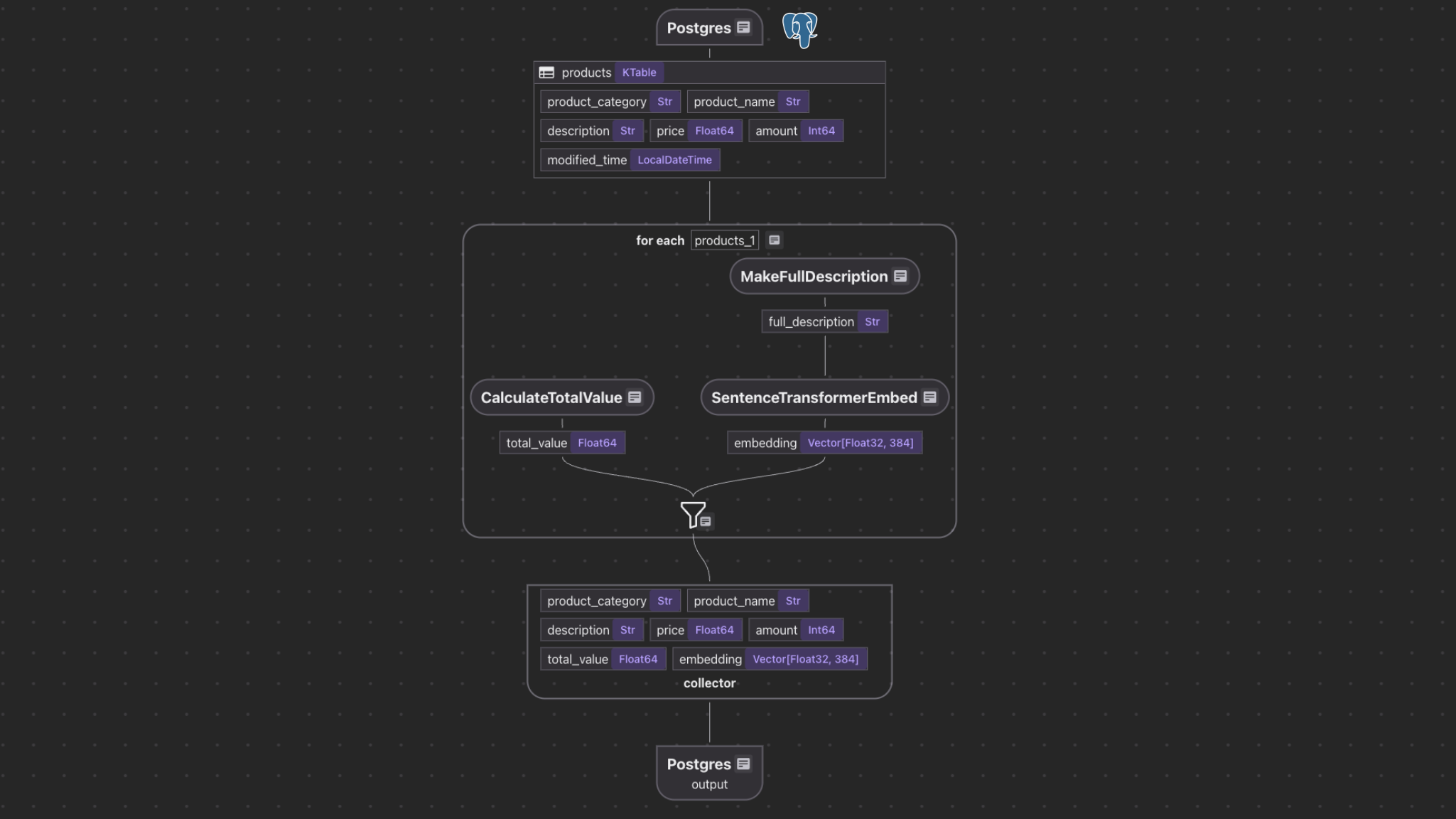
Streamline Structured + Unstructured Data Flows from Postgres with AI

Streamline Structured + Unstructured Data Flows from Postgres with AI

Comprehensive walkthrough on using CocoIndex to build unified, incrementally updated search and analytics pipelines.

Author: Hackernoon