NFT

NFTs are unique digital identifiers recorded on a blockchain that certify ownership and authenticity of a specific asset. Moving past the "PFP" craze, 2026 NFTs emphasize utility, representing everything from IP rights and digital fashion to RWA titles and event ticketing. This tag explores the technical standards of digital ownership, the growth of NFT marketplaces, and the integration of non-fungible tech into the broader Creator Economy and enterprise solutions.

12628 Articles
Created: 2026/02/02 18:52
Updated: 2026/02/02 18:52
South African Crypto Access Expands as Alchemy Pay Rolls Out ZAR Bank Transfers

South African Crypto Access Expands as Alchemy Pay Rolls Out ZAR Bank Transfers

TLDR: Alchemy Pay adds South African Rand support, letting users buy crypto directly with local bank transfers for faster access. Integration covers leading banks like FNB, Absa, Investec, Stanbic, and TymeBank for seamless fiat-to-crypto purchases. The update gives South Africans regulated access to crypto markets through familiar, trusted domestic banking channels. Alchemy Pay now supports [...] The post South African Crypto Access Expands as Alchemy Pay Rolls Out ZAR Bank Transfers appeared first on Blockonomi.

Author: Blockonomi
The founder of RMRK said that his address was marked as high risk by the WLFI team and the tokens have been locked

The founder of RMRK said that his address was marked as high risk by the WLFI team and the tokens have been locked

PANews reported on September 6th that Bruno Skvorc, founder of NFT infrastructure RMRK, tweeted a complaint, stating that his address had been marked as high-risk by the WLFI team and his tokens had been locked. On-chain detective ZachXBT commented, "Most of the time, 'high-risk' disclosures are inaccurate, so teams can't rely solely on compliance tools, many of which are flawed. It's good to see that the World Liberty Financial team is taking a more proactive approach than other teams like Circle, as this will ultimately benefit the victims. However, they do need to be cautious, as a false positive and blacklisting could cause irreparable damage to their reputation. If your address is indeed a false positive, we hope the issue can be resolved quickly." According to previous news , WLFI: There are 272 wallets on the blacklist, and the freeze is to prevent users from losing money.

Author: PANews
How XRP is Expanding Beyond Ripple to Power Payments, DeFi, and NFTs

How XRP is Expanding Beyond Ripple to Power Payments, DeFi, and NFTs

The post How XRP is Expanding Beyond Ripple to Power Payments, DeFi, and NFTs appeared first on Coinpedia Fintech News XRP has long been a key player in the crypto space, and its role continues to expand. From cross-border payments to decentralized finance, the XRP Ledger ecosystem is growing stronger every day. Recently, xrpladam, a prominent figure in the XRP Ledger community and CEO of xrp.cafe, a leading NFT marketplace on XRPL, shared insights on …

Author: CoinPedia
Senator Cynthia Lummis Pushes New Crypto Bill to Clarify SEC and CFTC Roles

Senator Cynthia Lummis Pushes New Crypto Bill to Clarify SEC and CFTC Roles

The post Senator Cynthia Lummis Pushes New Crypto Bill to Clarify SEC and CFTC Roles appeared first on Coinpedia Fintech News U.S. Senators introduced an updated draft of the market structure bill on Friday, aiming to bring more clarity to digital assets and cryptocurrencies. One of the most notable changes is that stocks and securities will not be treated as commodities if they are tokenized. The bill also excludes certain crypto activities, such as DePIN, staking, …

Author: CoinPedia
Which Is The Best Crypto to Buy Now, XRP, Shiba Inu, Cardano, Or Pepeto

Which Is The Best Crypto to Buy Now, XRP, Shiba Inu, Cardano, Or Pepeto

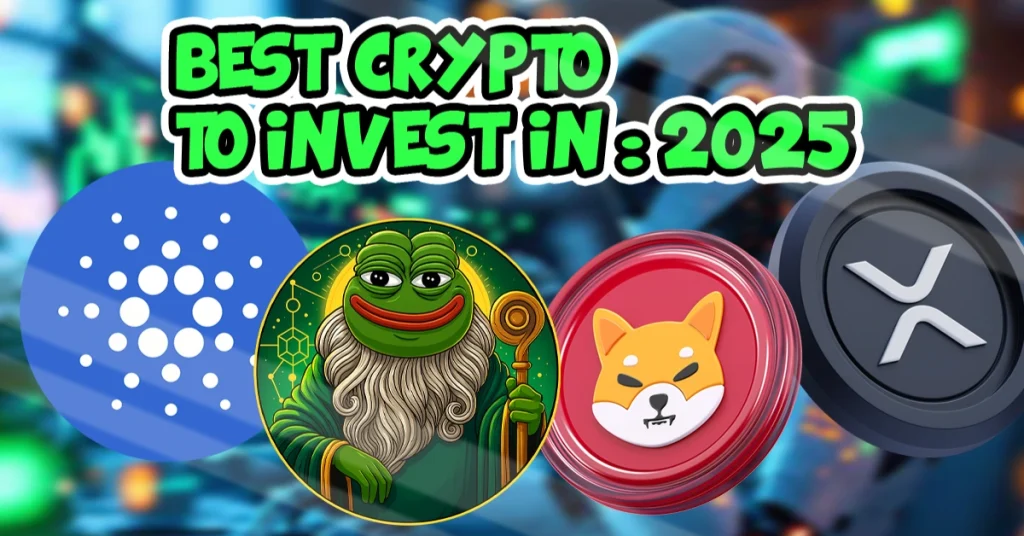
The post Which Is The Best Crypto to Buy Now, XRP, Shiba Inu, Cardano, Or Pepeto appeared first on Coinpedia Fintech News Searching for the best crypto to buy now? Focus on assets with real use and visible demand. XRP looks cleaner after recent legal updates and stays centered on payments. Shiba Inu still energizes a massive community and runs a live Layer 2 that people can use today. Cardano follows a research first plan aimed at …

Author: CoinPedia
Turn $400 into $40k With These 4 Coins

Turn $400 into $40k With These 4 Coins

The post Turn $400 into $40k With These 4 Coins appeared on BitcoinEthereumNews.com. Finding the best crypto to buy today often feels like searching for a needle in a haystack. But when a few tokens stand out, the upside potential becomes hard to ignore. Little Pepe (LILPEPE) is one of those rare tokens right now, with early-stage investors already sitting on 110% gains and stage 12 buyers still looking at a projected 42% rise before launch.  Alongside LILPEPE, coins like Stellar (XLM), Cardano (ADA), and Toncoin (TON) are shaping narratives that could make a $400 entry turn into something much bigger down the road.  Little Pepe (LILPEPE) Price and Presale Performance The story of Little Pepe has captured real attention this year. The presale is now in stage 12, with tokens selling for $0.0021 each. The project raised over $22.3 million, moving quickly toward its $25 million stage target. The momentum is real, considering that stage 11 sold out ahead of schedule. What makes LILPEPE stand out is the numbers and the foundation behind them. The token is already listed on CoinMarketCap and has been audited by Certik, which adds a layer of trust for new investors. Its ecosystem includes an Ethereum-compatible Layer 2 chain, zero trading tax, staking options, and anti-bot protection. On top of that, there is a 777k giveaway in play where contributors could win significant token rewards. The community buzz is strong. From June to August, LILPEPE peaked at 100 on ChatGPT 5 memecoin question volume, surpassing popular tokens like Dogecoin, Shiba Inu, and Pepe. That kind of organic interest suggests that this is more than another meme project. With early buyers doubling their investment and new investors still positioned for a 42% upside before the token lists at $0.0030, LILPEPE feels like the coin to watch as it could rise 23,038% after launch, being part of the top…

Author: BitcoinEthereumNews
The Untold Impact of Crypto Payment Integration on Web3 Businesses

The Untold Impact of Crypto Payment Integration on Web3 Businesses

Why Web3 Businesses Need a Crypto Payment Gateway Integration? Web3 represents the next phase of the internet, emphasizing decentralization, blockchain technology, and individual ownership. Web3 is far more than just decentralization because it gives individuals control and ownership of their data, assets, and digital identity, all while enabling trustless and transparent economies. Payments play a major role in Web3 adoption as they facilitate value exchange across decentralized applications (dApps) quickly, globally, and without restrictions. They act as a foundational element for all types of commerce, whether for apps in gaming, Decentralized finance (DeFi), non-fungible tokens (NFTs), and the entire digital economy, excluded from the traditional system. Traditional payments are slow, expensive, and dependent on third parties, which do not align with the decentralized, peer-to-peer ecosystems within Web3. Unlike traditional payments, crypto payment opens up ways to transact and share value within Web3 by adopting blockchain-based payment solutions, while reducing intermediaries, enabling borderless transactions, and allowing a frictionless payment experience consistent with pure decentralization. This blog will explore why Web3 businesses should consider implementing cryptocurrency payment gateways to stay competitive. What is a Crypto Payment Gateway? A cryptocurrency payment gateway is a digital payment solution that enables companies to accept payments in cryptocurrencies, including Bitcoin, Ethereum, stablecoins, etc. Instead of relying on conventional transaction processes with banks or credit card networks, a crypto payment gateway processes payment transactions directly to the blockchain, which provides expedited payments, more security, and enables borderless payments. A cryptocurrency payment gateway processes payments using blockchain transactions within a decentralized network. Businesses will receive payment confirmations directly, eliminating the need for bank approval and intermediaries, which can delay the process and incur fees. They have the option to receive cryptocurrency payments directly or convert crypto to fiat currency. For example, PayPal operates as a traditional payment gateway because it takes payments from merchants as payment rails through traditional financial institutions (banks), while Coinbase Commerce allows merchants to receive digital assets by not relying on traditional bank payment systems. This highlights the importance of crypto gateways in Web3 business. Why Are Crypto Payments Essential for Web3 Success? The user base is increasing, as users engage with blockchain-based services daily. If it is NFTs, gaming dApp, or metaverse platforms, millions of users are engaging with blockchain-based services. Businesses are aiming to increase their transaction safety, ease, and as frictionless as possible. Here are the other key reasons that crypto payments are essential. Global Customer Base Cryptocurrencies allow businesses to transact instantly and borderlessly without banks, intermediaries, or currency conversions. This delivers an easier path to reach a global customer base, which is valuable in Web3, because traditional finance fails to deliver to previously underserved markets. Removing the limitations by region opens up the opportunities for organizations to more quickly onboard customers and enable scaling. Crypto-Native Users Most users participating in the Web3 ecosystem today already have comfortable experiences transacting and holding digital assets like crypto in wallets and dApps. More crypto payments give users a familiar and seamless experience, which in turn encourages more transactions, improves user trust, and boosts adoption overall from Web3 businesses. Decentralization Alignment Web3 principles include decentralized, user ownership, and visibility. Using crypto payments helps build trust in blockchain platforms. When businesses eliminate banks and intermediaries, they save money and embrace the Web3 values of direct interaction without middlemen or overseers. When crypto payments become the backbone of the Web3 economy, Web3 businesses that innovate crypto payments access a wider community, benefit from trust, and establish themselves as decentralized. Web3 businesses that stay in fiat are likely to be cut off from the rapidly changing digital world of payment processing. Now let us see… How Businesses Can Create a Web3 Crypto Payment Gateway Solution? For Web3 businesses, a crypto payment gateway is no longer just a competitive advantage, but an expectation of modern customers. Building a strong crypto payment gateway needs more planning and the right execution. Here are the steps to follow to create or integrate a crypto payment gateway into your web3 business Defining the Scope Examine the payment gateway’s planned scope, focusing on the cryptocurrencies it will support, like popular tokens, stablecoins, or multiple options. This decision will impact your gateway’s architecture, scalability, and capabilities. Blockchain Integration with Smart Contracts Integrating blockchain with smart contracts increases security, as well as automating transactions. It speeds up transactions by removing the need for intermediaries and helps establish trust between parties. User Experience Considering both the merchant and the customer experience. Merchant platforms must provide the tools and reporting to track payments and conversions, while customers ultimately need smooth, notable, and easy checkouts. Essential Features for Greater Adoption To maximize adoption, additional functionalities can be built into the system: Multi-Wallet Support — Accept payments from different digital wallets. Instant Fiat Conversion — Convert crypto to fiat instantly. Regulatory Compliance — Stay aligned with KYC/AML standards. Cross-Chain Compatibility — Support multiple blockchains and tokens. High Security — Protect with 2FA, encryption, and multi-signature wallets. Scalability — Handle high transaction volumes smoothly. User-Friendly Dashboard — Simple interface for managing payments. Low Fees — Cost-effective transactions for businesses. Real-Time Analytics — Track payments and user activity instantly. 24/7 Support — Always-available assistance for users. Collaboration with Partners Working with a reputable crypto payment gateway development company can help businesses bridge the entire process. With experienced professionals helping with the tech and compliance, along with UI/UX optimization, they can help move businesses faster and with less risk. Overall, developing a custom crypto gateway offers more than payment processing; it positions businesses within Web3. A well-designed gateway supports smart contracts, multi-wallets, fiat conversions, and compliance, creating a trusted ecosystem. Companies embracing tailored crypto solutions will lead in the evolving digital economy. To understand the full impact, let’s break down the… Benefits of Crypto Payment Gateway Integration for Web3 Businesses Integrating a crypto payment gateway is not just about giving customers another way to pay; it strengthens a Web3 business. It provides global access, better security, and other benefits that support a decentralized future. Let’s look at the main advantages. Global Accessibility & Borderless Payments Crypto allows businesses to accept payments from anywhere in the world without worrying about currency conversions or those pesky, regional banking restrictions. This borderless reality gives businesses unlimited opportunities when it comes to acquiring customers on a global level for Web3 businesses. Faster & Cost-effective Payment Transactions Unlike banks that require days for transfers to settle, crypto transactions are settled in minutes or even seconds. While the speed aspect is vital, you also have to consider that the transaction fees are generally much lower compared to a credit card or international bank transfer. Improved Security & Transparency All transactions are recorded on the blockchain, which makes payments undeniably notarized and verifiable. Due to this level of security, chargeback risks are reduced, fraud is cut down, and merchants and customers instill greater trust. Multi-Token and Stablecoin Support The crypto payment gateways allow merchants to accept popular tokens like BTC, ETH, USDT, and USDC, which provides users with more options and flexibility. Merchants may even take advantage of stablecoins to still use crypto, with less impact from volatility. Boosting Customer Adoption Many users who are Web3-native would enjoy paying for products using crypto, rather than exchanging for local fiat currencies. If they can pay in crypto rather than fiat, it builds trust in the website, promotes more repeat purchases, and fosters more brand loyalty in the long run. Using a crypto payment gateway is a great way for Web3 businesses to future-proof their operations and represent themselves as decentralized and user-friendly. These gateways will allow customers and businesses to make cryptocurrency payments in a frictionless, transparent, and easy-to-use way. Now, let us see… Real-World Use Cases of Crypto Payment Gateways in Web3 From NFTs to DeFi, they enable seamless, secure, and crypto-native payments that fuel growth and adoption. Many organizations are harnessing this technology for seamless payments and improved engagement. NFT Marketplaces NFT platforms utilize cryptocurrency payment gateways for buying, selling, and trading digital collectibles directly with crypto. This allows for instantaneous settlements, which fits very naturally with the blockchain-native nature of NFTs. Play-to-Earn (P2E) Games and GameFi Crypto payment gateways allow for an easy and frictionless transfer of value in and out of the gaming experience. Since GameFi is growing quickly, allowing users to nova up their characters or buy gamified assets or cash out their rewards will flow much smoothly with crypto payment gateways. DAOs and Communities DAOs can greatly benefit from crypto payment gateways for handling financial contributions, donations, and treasury functions. With a gateway in place, contributions become seamless, values flow transparently, and transaction history is securely recorded on the blockchain. Metaverse Commerce Metaverse platforms can enhance user experience by allowing crypto payments for virtual land, digital fashion, avatars, and collectibles. Payment gateways provide an easy way for users to participate in the metaverse without fiat currency restrictions. DeFi Platforms Crypto payment gateways play a crucial role in enhancing the user experience of DeFi platforms for lending, borrowing, and liquidity provision. Payment gateways can lead to secure transactions, deposits, and withdrawals, which help facilitate trading and gaming-related activities. These examples from real life illustrate how crypto payment gateways are already promoting adoption in Web3 ecosystems. That said, businesses must carefully assess certain considerations before integrating a crypto payment gateway into their business to make sure that everything is scalable and secure. So let’s look at the… Key Considerations While Integrating a Crypto Payment Gateway Integrating a crypto payment gateway into your Web3 business requires careful planning. Deciding upon the wrong solution will lead to security risks, regulatory issues, and user experience challenges. Here are some considerations to evaluate before you decide to implement a crypto payment gateway: Multi-Chain and Multi-Token Support Web3 users conduct transactions across several blockchains and token types. Make sure your crypto payment gateway supports many of the most popular chains, such as Ethereum, BNB Chain, Polygon, as well as many of the popular tokens like BTC, ETH, USDT, and USDC. Regulatory Compliance (KYC/AML) Adhering to KYC (Know Your Customer) and AML (Anti-Money Laundering) regulations is essential. Using a compliant gateway is not only legally protective of your business, but it is also an enhancement to your credibility with users. Easy Wallet Integrations Most Web3 users depend on a crypto wallet, such as MetaMask or WalletConnect. Ensure your payment gateway easily integrates with these types of wallets to deliver a smooth, frictionless crypto payment experience. Scalability and Customer Support You may find that your Web3 business grows quickly, and your number of transactions may explode. Make sure that the crypto payment gateway you choose to use can scale easily, and that customer support is available for you. To effectively integrate cryptocurrency payments into your business, it is important to look at critical components. Important aspects to consider include the technology behind blockchain, which cryptocurrencies you will accept, the fees for transactions, and how users will experience the process. Considering these factors will allow you to enhance the payment system and build trust with users. Conclusion — Future of Crypto Payment Gateways in Web3 Business The ecosystem of Web3 is changing online commerce as we know it, making crypto payment gateways very relevant to businesses in the Web3 domain. By accepting crypto payments, businesses allow for transaction speed throughout the world, with the added benefit of decentralization. User experience will shape the future of Web3, with payments being central to that experience. Companies that embrace crypto payments now will be well-positioned for the decentralized economy of tomorrow. For projects in Web3, exploring crypto payment gateway options has never been more crucial. Partnering with a reputable crypto payment gateway service provider simplifies integration and provides a seamless web3 payment gateway solution for your crypto-related business. The Untold Impact of Crypto Payment Integration on Web3 Businesses was originally published in Coinmonks on Medium, where people are continuing the conversation by highlighting and responding to this story

Author: Medium
Litecoin Sparks Clash with Influencer Over Price & Hairline Battle

Litecoin Sparks Clash with Influencer Over Price & Hairline Battle

Litecoin (LTC), one of the oldest and most established cryptocurrencies, has recently experienced notable price volatility driven by a controversy involving a prominent crypto influencer. The incident highlights ongoing debates within the crypto community about market manipulation, influencer responsibility, and crypto regulation. Influencer Disputes and Market Impact The controversy began when a well-known cryptocurrency influencer [...]

Author: Crypto Breaking News
Brazil’s Itaú Asset Management creates crypto unit to develop ETFs

Brazil’s Itaú Asset Management creates crypto unit to develop ETFs

The post Brazil’s Itaú Asset Management creates crypto unit to develop ETFs appeared on BitcoinEthereumNews.com. Brazil’s largest private asset manager, Itaú Asset, has launched a crypto-focused arm to develop digital-asset mutual funds, ETFs, custody offerings, and staking strategies. The launch adds to Itaú’s growing crypto lineup, complementing its Bitcoin ETF and retirement plan with digital-asset exposure. Ex-Hashdex executive João Marco Braga da Cunha will oversee the new unit. He even commented, “The crypto asset segment has unique characteristics for generating alpha. It’s a relatively new market that creates major opportunities due to its volatility.” Itau’s new crypto arm will focus on bond-like products Itaú Asset lets users directly trade 10 crypto pairs via its mobile platform, featuring assets such as Bitcoin, Ether, Solana, and USD Coin, while providing in-house custody. Now, the firm is expanding its crypto division, saying its new crypto unit will work on solutions, including bond-like products as well as higher-volatility plays like derivatives and staking-based vehicles. It will also function under Itaú Asset’s mutual funds structure, which manages upwards of 117 billion reais across 15 desks. So far, Itaú has appointed Cunha, who previously directed portfolio management at Hashdex, to run the division, supervising the development of fixed-income-style products and higher-risk crypto strategies. His experience with ETFs and funds positions him well to shape offerings for Brazil’s emerging crypto market. Brazil ranks 10th in global crypto adoption Brazil has taken to crypto products in the last few months. Chainalysis places Brazil in 10th place in its 2024 ranking of global crypto adoption. The country’s crypto momentum is primarily backed by government policy. In 2023, it rolled out a nationwide crypto law, creating a framework for virtual asset companies and assigning regulatory authority to the central bank. Itaú Unibanco even introduced crypto trading for individual investors in December 2023, shortly after the law took effect, initially supporting Bitcoin and Ether. Brazil’s securities…

Author: BitcoinEthereumNews
Itaú Asset Management unveils new crypto unit to build bond-like products

Itaú Asset Management unveils new crypto unit to build bond-like products

Brazil’s largest private asset manager, Itaú Asset, has launched a crypto-focused arm to develop digital-asset mutual funds, ETFs, custody offerings, and staking strategies. The launch adds to Itaú’s growing crypto lineup, complementing its Bitcoin ETF and retirement plan with digital-asset exposure. Ex-Hashdex executive João Marco Braga da Cunha will oversee the new unit. He even commented, “The crypto asset segment has unique characteristics for generating alpha. It’s a relatively new market that creates major opportunities due to its volatility.” Itau’s new crypto arm will focus on bond-like products Itaú Asset lets users directly trade 10 crypto pairs via its mobile platform, featuring assets such as Bitcoin, Ether, Solana, and USD Coin, while providing in-house custody. Now, the firm is expanding its crypto division, saying its new crypto unit will work on solutions, including bond-like products as well as higher-volatility plays like derivatives and staking-based vehicles. It will also function under Itaú Asset’s mutual funds structure, which manages upwards of 117 billion reais across 15 desks. So far, Itaú has appointed Cunha, who previously directed portfolio management at Hashdex, to run the division, supervising the development of fixed-income-style products and higher-risk crypto strategies. His experience with ETFs and funds positions him well to shape offerings for Brazil’s emerging crypto market. Brazil ranks 10th in global crypto adoption Brazil has taken to crypto products in the last few months. Chainalysis places Brazil in 10th place in its 2024 ranking of global crypto adoption. The country’s crypto momentum is primarily backed by government policy. In 2023, it rolled out a nationwide crypto law, creating a framework for virtual asset companies and assigning regulatory authority to the central bank. Itaú Unibanco even introduced crypto trading for individual investors in December 2023, shortly after the law took effect, initially supporting Bitcoin and Ether. Brazil’s securities regulator also authorized the nation’s debut spot XRP ETF from Hashdex in February 2025. Soon after, Braza Bank announced a project to release a real-linked stablecoin using the XRP Ledger.  At that time, Marcelo Sacomori, the CEO of Braza Group, noted the stablecoin would be a game-changer for global financial markets. Created for foreign currency payments, the asset is tailored to increase the stability and effectiveness of cross-border operations. The Latin country is already emerging as a case study in how a clear regulatory framework can integrate crypto into traditional banking systems. Itaú’s ability to launch compliant custody services also reassures investors and signals the industry’s maturation. Combined with rising adoption rates across Latin America, this momentum positions Brazil as a hub for crypto innovation and a magnet for future investment. However, despite progress, there are still open questions around regulation. In June, Brazil overhauled its tax rules, scrapping the progressive system in favor of a flat 17.5% tax on crypto capital gains. The reform also removed the long-standing rule that allowed up to 35,000 reais ($6,500) in monthly tax-free sales and broadened taxation to cover self-custody, offshore assets, DeFi activity, NFTs, and staking rewards. The executive order drew swift criticism and was repealed before the month ended. Don’t just read crypto news. Understand it. Subscribe to our newsletter. It's free.

Author: Coinstats