Lending

Lending protocols form the backbone of the decentralized money market, allowing users to lend or borrow digital assets without intermediaries. Using smart contracts, platforms like Aave and Morpho automate interest rates based on supply and demand while requiring over-collateralization for security. The 2026 lending landscape features advanced permissionless vaults and institutional-grade credit lines. This tag covers the evolution of capital efficiency, liquidations, and the integration of diverse collateral types, including LSTs and tokenized RWAs.

15640 Articles
Created: 2026/02/02 18:52
Updated: 2026/02/02 18:52
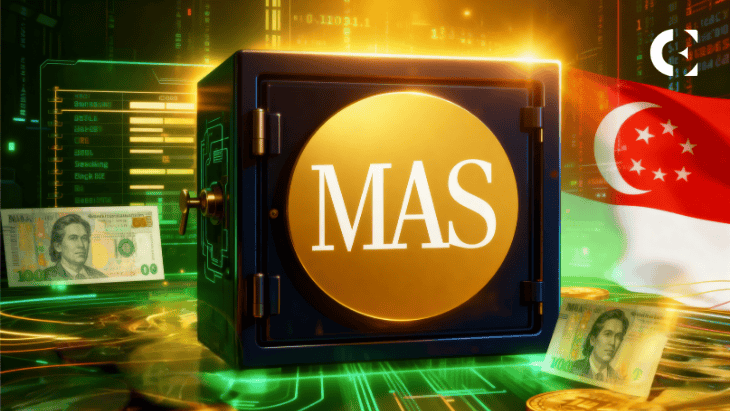
Singapore to Trial Tokenized MAS Bills and Regulate Stablecoins

Singapore to Trial Tokenized MAS Bills and Regulate Stablecoins

The post Singapore to Trial Tokenized MAS Bills and Regulate Stablecoins appeared on BitcoinEthereumNews.com. MAS will launch tokenized bills trials in 2026 with settlements using CBDC. Central bank finalizes stablecoin regulatory framework emphasizing reserve backing. 3 major Singapore banks successfully conduct interbank lending using CBDC. Singapore’s central bank will hold trials to issue tokenized MAS bills next year and introduce laws to regulate stablecoins as it advances plans to build a scalable and secure tokenized financial ecosystem. The bank’s top official shared the announcement on Thursday. “Tokenization has lifted off the ground. But have asset-backed tokens achieved escape velocity? Not yet,” said Chia Der Jiun, managing director of the Monetary Authority of Singapore, during a keynote address at the Singapore FinTech Festival. Legislative framework targets stability Chia stated MAS has been working on details of its stablecoin regulatory regime and will prepare draft legislation. The framework emphasizes “sound reserve backing and redemption reliability” as core requirements for issuers operating in the jurisdiction. MAS is also supporting trials under the BLOOM initiative, which explores using tokenized bank liabilities and regulated stablecoins for settlement purposes. The managing director announced that three Singapore banks, DBS, OCBC, and UOB, have successfully conducted interbank overnight lending transactions using the first live trial issuance of Singapore dollar wholesale CBDC. MAS will expand trials to include tokenized MAS bills settled with CBDC, according to the announcement. Chia expressed concerns about risks posed by poorly regulated stablecoins, noting that unregulated tokens have experienced repeated de-pegging incidents that undermine market confidence. He drew parallels to the 2008 money market fund crisis, highlighting how instability in one issuer can spread to others and erode trust in the broader ecosystem. International collaboration expands A regulatory guide on tokenized capital markets products will be published this week. MAS is also working with international counterparts to align standards and support adoption across jurisdictions. On Thursday, MAS announced…

Author: BitcoinEthereumNews
kpk Launches Agent-Powered Vaults on Morpho

kpk Launches Agent-Powered Vaults on Morpho

[PRESS RELEASE – Panama City, Panama, November 13th, 2025] ​​kpk, the industry leader in non-custodial asset management, has announced the launch of its agent-powered vaults on Morpho, the universal lending network, expanding non-custodial asset management through automation and transparent policy execution. By building on Morpho, kpk’s vaults leverage Morpho’s $10B+ network effect through integrations with […]

Author: CryptoPotato
Missed AAVE & ADA’s Pump? Zero Knowledge Proof’s Revolutionary ICA is Key to Catch the Next 1000x Surge!

Missed AAVE & ADA’s Pump? Zero Knowledge Proof’s Revolutionary ICA is Key to Catch the Next 1000x Surge!

The post Missed AAVE & ADA’s Pump? Zero Knowledge Proof’s Revolutionary ICA is Key to Catch the Next 1000x Surge! appeared on BitcoinEthereumNews.com. Disclaimer: This article is a sponsored post provided by a third party. It is not part of editorial content and should not be considered financial advice. While the Cardano (ADA) price outlook remains clouded by recent volatility despite ambitious $3 targets, the verifiable Aave (AAVE) price surge above $200 signals a renewed institutional appetite for decentralized finance protocols that demonstrate clear utility. This divergence invites a critical question: why does the market continue to tolerate early-stage valuations dictated by venture capital fiat rather than genuine demand? Zero Knowledge Proof (ZKP) answers this by dismantling the traditional presale structure entirely. Instead of opaque pricing tiers that favor insiders, the project employs daily on-chain auctions to establish a fair, market-driven valuation for its fully built privacy network. This mechanism does more than distribute coins; it enforces an economic equilibrium rarely seen in digital assets. By allowing the daily auction closing price to dynamically set the reward rates for Proof Pods, the hardware powering the network, Zero Knowledge Proof creates a perfect alignment between capital contributors and infrastructure operators. There are no arbitrary fixed prices or artificial scarcity games here, only a transparent discovery process where value is determined by actual participation. With the whitelist now open, the market is about to witness whether true price discovery can replace the manufactured hype that has long plagued the industry. Zero Knowledge Proof: The Architecture of Honest Pricing Most projects dictate a price they think you should pay, but Zero Knowledge Proof (ZKP) takes a different route by letting the market decide the value from day one. Instead of fixed tiers that often benefit insiders, this project utilizes daily on-chain auctions. Every 24 hours, a fixed supply of 200 million coins is distributed among participants based strictly on their contribution percentage. This creates a transparent…

Author: BitcoinEthereumNews
Ripple (XRP) Recovery To Be Strong, But Can It Outshine This $0.035 DeFi Crypto in the Bull Run

Ripple (XRP) Recovery To Be Strong, But Can It Outshine This $0.035 DeFi Crypto in the Bull Run

Ripple (XRP) is on a strong rebound, its value increasing an average of 8% to hit its highest point of $2.46 this week. This optimistic trend extends the Depository Trust and Clearing Corporation listing of spot XRP ETF of several big financial institutions such as Franklin Templeton and Bitwise. Trader optimism has been sparked by […]

Author: Cryptopolitan
Vitalik Buterin: DeFi Now Viable as Savings

Vitalik Buterin: DeFi Now Viable as Savings

Ethereum Founder Discusses Scaling Progress, Financial Freedom and Protocol Security

Author: MEXC NEWS
Digitap Enters the PayFi Conversation, XRP Faces New Competition

Digitap Enters the PayFi Conversation, XRP Faces New Competition

The payments revolution Ripple (XRP) started years ago has come under fierce competition. However, the challenger is not another huge token already in the market. It is a next-generation Payment The post Digitap Enters the PayFi Conversation, XRP Faces New Competition appeared first on CryptoNinjas.

Author: Crypto Ninjas
Pacifica overtakes Jupiter's perp DEX to steal Solana derivative market top spot

Pacifica overtakes Jupiter's perp DEX to steal Solana derivative market top spot

Pacifica became the top Solana perp DEX, surpassing Jupiter and leading on the daily, weekly, and monthly trading volume.

Author: Cryptopolitan
L2's triumphant return? Arbitrum's three arrows of renaissance and the key to breaking the deadlock.

L2's triumphant return? Arbitrum's three arrows of renaissance and the key to breaking the deadlock.

While Optimism was the first TGE L2, Arbitrum was the true pioneer of the L2 wave. Back in the first half of 2023, Korean whales were live-streaming contract trading on GMX, DeFi Degens were using GLP Lego-like Yield Farming, and grassroots communities were banding together to hype up ancient cat and dog meme coins. Arbitrum was one of the most eye-catching sectors in the spring of 2023. However, this flourishing ecosystem came to a somber end after the epic TGE and airdrop of Arbitrum's native token ARB. Looking back from November 2025, there are three main reasons for this situation: --The huge positive externalities generated by Arbitrum's epic airdrop were seized by competitors ZkSync, Starknet, and Linea; --At that time, the core business model of the King-level L2 was not natural and organic, nor was it benign and self-sustaining. Instead, it relied heavily on the false prosperity created by the industrialization of airdropped farmers. --The airdrops allocated too much to ecosystem developers, most of whom were well-disguised as high-level airdrop farmers. After receiving the airdrops, most of these developers remained passive, while some used their large amounts of ARB to vote for more ARB in DAO governance. The best solution to these problems is time. After nearly 30 months of development, the Arbitrum Foundation believes the time is ripe and has launched the DeFi Renaissance Incentive Program (DRIP) to revitalize the Arbitrum ecosystem. Arbitrum Foundation's first move was to leverage the ARB incentives from the first quarter of DRIP to subsidize the yields of DeFi lending protocols (Aave, Morpho, Fluid, Euler, Dolomite, Silo, etc.) in the ecosystem, attracting on-chain users with real money. According to data from the Dune dashboard (https://dune.com/entropy_advisors/drip-season-1-lending-protocols), DRIP boosted the total amount of lendable funds in DeFi from $1.38B to $1.67B in the first quarter, and the loan balance from $967.52M to $1.17B. However, among the L2 market share of the aforementioned DeFi lending protocols, Arbitrum's market share only increased from 3.09% to 3.75%. In contrast, Base's market share increased from 5.04% to 6.64% during the same period. This shows that, in terms of the appeal of on-chain DeFi lending platforms like Degen, real cash subsidies are still somewhat less attractive than the expectation of airdrops with the potential for explosive growth. The Arbitrum Foundation's second arrow is to incubate new, ecosystem-coupled PerpDEX Variational Protocol and Ethereal Perps. Arbitrum has a close relationship with Hyperliquid on PerpDEX, similar to the Anglo-American relationship. Hyperliquid has bridged $4.59 billion USDC into Arbitrum, accounting for 69.08% of Arbitrum's total USDC supply. However, the $4.59 billion USDC only contributes to Arbitrum's revenue in the form of transfer gas fees; the generation of other high-value revenue and positive externalities is captured by Hyperliquid. In this new environment where PerpDEX reigns supreme, the Arbitrum ecosystem needs its own PerpDEX. The Variational Protocol's OLP mechanism has the potential to recreate the glory of GLP, once dominated by GMX. Arbitrum Foundation's third arrow is its deep integration with Robinhood to aggressively promote the tokenization of US stocks. Currently, Arbitrum's RWA assets total $1,026.53 million, primarily composed of tokenized US Treasury bonds, tokenized European debt, and tokenized US stocks (EXOD). There are 615 RWA assets, mainly tokenized US stocks issued by Robinhood. Due to current regulatory restrictions, the structure of tokenized US stocks consists of off-chain SPV custody and CEX/DEX liquidity pools. This leads to issues such as insufficient liquidity, unclear legal status, and reliance on centralized entities for clearing and settlement at this stage. But whether it's Arbitrum x Robinhood's rapid push for tokenization of US stocks or Solana's new ICM narrative, they both point to a future vision set by SEC Project Crypto: the complete blockchainization of global financial infrastructure. In summary, the Arbitrum Foundation's three arrows—the DRIP program, the incubation of Variational, and betting on the tokenization of US stocks—are both focused on the present and aimed at the future. The Arbitrum Foundation is really up to something this time.

Author: PANews
Top Performing Utility Tokens and their Real-World Use Cases

Top Performing Utility Tokens and their Real-World Use Cases

Top Performing Utility Tokens Cryptocurrencies are not speculative digital assets anymore, but they are powering the ecosystems, applications, and business models of the decentralized economy. Among these, utility tokens have emerged as the origin of blockchain projects, which allow users to access the features, services, and decentralized networks. In a landscape often dominated by hype and volatility, utility tokens stand out for one simple reason: they do something. They represent actual value within an ecosystem, providing a gateway to functionality rather than serving purely as an investment instrument. The article describes the most promising examples of utility tokens, how they are changing the blockchain ecosystem in the modern world, and why they make them worthwhile in the long run. In the process of decentralizing applications or even transforming data infrastructure, these tokens are a prime example of how blockchain is shifting from speculation into the concept of utility. What are Utility Tokens? Utility tokens are digital tokens that are designed to give access to a product or service in a blockchain-based ecosystem. These are intended to drive participation, whether as paying transaction fees or accessing decentralized storage, voting on governance proposals, or staking to secure a network. They are placed at the intersection of innovation and usability, and allow the blockchain networks to be operational for both users and developers. With the increasing adoption of blockchain, utility tokens have taken on essential roles in real-world use cases, including digital identity and games, decentralized finance (DeFi), and infrastructure protocols. Top 5 Utility Tokens Leading the Charge The following tokens exemplify real, working use cases that extend far beyond speculation. Each of them showcases how blockchain utility is evolving into something tangible that is scalable, functional, and integrated with mainstream industries. BNB — Powering One of the Largest Blockchain Ecosystems BNB (Build and Build) functions as the native utility token of one of the most active blockchain ecosystems. It’s used for transaction fees, staking, and payments across an expanding network of applications. Its most prominent use is reducing transaction fees within the ecosystem, creating an incentive for traders and users alike. More than that, BNB can be used as fuel to support the BNB Chain, which provides smart contracts, decentralized apps (dApps), and Web3 services. The performance metrics reflect the steady increase in transactions, provided by NFT integrations, DeFi applications, and corporate partnerships. The takeaway here is clear: A robust ecosystem will inherently lead to a token demand, transforming utility into long-term value. ETH — The Foundational Utility Token Redefining DeFi The ETH of Ethereum will be the prototype of utility tokens, which will be used as gas during transactions and the execution of smart contracts. It forms the basis of decentralized finance and the overall Web3 ecosystem. Since it switched to a proof-of-stake mechanism, ETH has become more efficient and environmentally sustainable. The deflationary tokenomics of the network, where part of the ETH gets burned with each transaction, has introduced an economic dimension that strengthens the value proposition. What makes ETH the “default utility benchmark” is its adaptability. It drives innovation at scale, from decentralized exchanges to metaverse platforms, proving that real utility can coexist with mainstream adoption. SOL — Utility at the Speed of Scale The SOL token of Solana is a demonstration of efficiency. It is described by large throughput and low transaction costs, which facilitate a fast-growing ecosystem of decentralized applications, NFT platforms, and payment systems. Developers and enterprises are adopting Solana because of its ability to support thousands of transactions per second, which is a core characteristic of a Web3 world, and where scalability is a significant strength. Solana Pay and game integrations are examples of use cases that indicate how SOL is making blockchain more connected to a user-friendly digital experience. SOL demonstrates that utility isn’t just about purpose; it’s also about performance and accessibility. LINK — The Bridge Between Blockchain and the Real World Chainlink’s LINK token serves as the economic backbone of decentralized oracle networks. It is simplified as a process of introducing real-life data, such as market prices, weather news, and API data, to blockchain systems. This feature is essential to the DeFi industry, as it allows smart contracts to communicate with external data securely. The partnerships of LINK with major players in the traditional finance market and cloud services are indicative of the increased institutional trust in blockchain interoperability. It represents “utility infrastructure”, a token whose value derives from enabling others to function effectively. AR — Utility in Permanent Data Storage Arweave’s AR token introduces a new concept, which is permanent data storage. Unlike conventional cloud services, Arweave allows users to pay once to store data indefinitely on a decentralized network. This concept appeals to projects needing immutable recordkeeping from archives and legal data to digital art. The trend towards “forever data” is increasing, and AR is at the centre of the change in the world of Web3. Its real-world utility reaches into the maintenance of historical information and the support of decentralized applications that emphasize long-term transparency. Key Sectors Driving the Growth of Utility Tokens Utility tokens cover a wide range of industries, and each unlocks the various aspects of blockchain functionality: Finance and DeFi: Tokens like ETH and LINK enable decentralized trading, lending, and liquidity provisioning. Infrastructure: Tokens such as BNB and SOL drive ecosystems and developer platforms. Data Storage: AR and similar tokens create frameworks for secure and permanent storage. Gaming and Entertainment: Utility tokens fuel in-game economies and NFT marketplaces, connecting creators with users in transparent ecosystems. These categories demonstrate how utility tokens form the foundation of blockchain usability, driving adoption across diverse industries. To explore how utility tokens are built and integrated into modern blockchain ecosystems, you can refer to this detailed guide on utility token development, which explains their lifecycle from creation to deployment. What Makes a Utility Token Sustainable Not all tokens endure beyond their hype cycle. The sustainability of a utility token depends on several key factors: Strong Ecosystem Demand — Consistent real-world use cases ensure value stability. Clear Tokenomics — Transparent supply mechanisms and deflationary models help maintain price integrity. Active Development Community — Regular updates and developer engagement sustain innovation. Regulatory Clarity — Compliance helps projects scale without facing legal uncertainty. A utility token with a defined purpose, active users, and a healthy economy tends to survive and thrive through market cycles. Are Utility Tokens Safe from SEC Scrutiny? Although utility tokens are not considered to be securities, regulators tend to evaluate whether they satisfy the Howey Test of investment contracts. Projects that offer tokens on pure speculation might be subject to scrutiny. Nonetheless, tokens that have already demonstrated their functionality and integration into an ecosystem are more likely to retain their utility asset status. The key lies in transparency and aspects of use-case validation, which properly designed blockchain projects are now considering are becoming their priority to changes in regulatory frameworks. Understanding the Investment Potential Utility tokens may have long-term value to individuals who comprehend their ecosystem. It should also be focused on functionality and adoption as opposed to the price fluctuations in the short term. In assessing tokens, pay attention to such aspects as network activity, volume of transactions, and developer engagement. Also Read>>> https://cryptiecraft.com/utility-token-vs-security-token-explained/ Common Myths about Utility Tokens Myth 1: Utility tokens are just for tech experts. Reality: Many platforms now simplify interaction through user-friendly apps and wallets. Myth 2: They hold no financial value. Reality: Their value is tied to real usage and demand, not speculation alone. Myth 3: Utility tokens are all the same. Reality: Each has a distinct function depending on its ecosystem, from powering transactions to enabling governance. The Future of Utility Tokens The future of utility tokens will be interoperability across chains, the integration of AI, and the tokenization of real-world assets. With the further evolution of blockchain technology, these tokens will become the foundation of decentralized services, uniting individuals, enterprises, and governments. They are becoming instruments of access to engines of digital transformation. Upshots, Utility tokens represent the essence of blockchain innovation in a practical, scalable, and purpose-driven sense. Their real power is not in speculation but rather in their ability to increase the digital interaction, decentralization, and transparency. To entrepreneurs and developers who might want to develop their own blockchain solution, partnering with a crypto token development company can enable the process from idea to implementation in a short period of time. With the proper strategy, your token to go beyond the theory and become a real value in its ecosystem. Top Performing Utility Tokens and their Real-World Use Cases was originally published in Coinmonks on Medium, where people are continuing the conversation by highlighting and responding to this story

Author: Medium
Best Crypto Presale Showdown: Can LivLive ($LIVE) Beat Bitcoin Hyper And Unstaked To Deliver 100x Gains As A Top Crypto To Buy In 2025

Best Crypto Presale Showdown: Can LivLive ($LIVE) Beat Bitcoin Hyper And Unstaked To Deliver 100x Gains As A Top Crypto To Buy In 2025

What if creating content, dropping referrals, and simply living an active digital life could snowball into one of those rare 100x gains stories usually only seen in hindsight. In a market where so many launches blur together, projects that show real users, real mechanics, and real math are the ones serious investors keep circling back [...] The post Best Crypto Presale Showdown: Can LivLive ($LIVE) Beat Bitcoin Hyper And Unstaked To Deliver 100x Gains As A Top Crypto To Buy In 2025 appeared first on Blockonomi.

Author: Blockonomi