Lending

Lending protocols form the backbone of the decentralized money market, allowing users to lend or borrow digital assets without intermediaries. Using smart contracts, platforms like Aave and Morpho automate interest rates based on supply and demand while requiring over-collateralization for security. The 2026 lending landscape features advanced permissionless vaults and institutional-grade credit lines. This tag covers the evolution of capital efficiency, liquidations, and the integration of diverse collateral types, including LSTs and tokenized RWAs.

14325 Articles
Created: 2026/02/02 18:52
Updated: 2026/02/02 18:52
Here’s How a Single Exploit Brought Down Ethereum Layer 2 Kinto

Here’s How a Single Exploit Brought Down Ethereum Layer 2 Kinto

For Ramón Recuero, Kinto’s closure marks the second time he has had to oversee damage control after a hack. His […] The post Here’s How a Single Exploit Brought Down Ethereum Layer 2 Kinto appeared first on Coindoo.

Author: Coindoo
Cardano Forecast: Analysts Tip ADA for 2x Boom Potential While Highlighting a Breakout Rival With 100x Upside

Cardano Forecast: Analysts Tip ADA for 2x Boom Potential While Highlighting a Breakout Rival With 100x Upside

The post Cardano Forecast: Analysts Tip ADA for 2x Boom Potential While Highlighting a Breakout Rival With 100x Upside appeared on BitcoinEthereumNews.com. Cardano for a long time has been one of those projects in which investors pour out the most love, as the project has always promised to provide a balanced plan to solve the issues that has to do with scalability and sustainability in the world of cryptocurrency. Now, analysts are arguing that ADA is set to moon in the next 4 years, thanks to a lot of whale movement, a growing ecosystem, and increased excitement with investors. But Cardano is hardly the only game in town. A competitor that’s breaking the mold is making 100x projections of potential value seem possible in the press, also refracting new potential across the expanding market. Cardano’s Path Toward a 2x Price Boom Cardano has always positioned itself as a distinct entity focused on governance and R&D (research and development). Recent governance vote and growing developer ecosystem are setting groundwork for adoption in the long run. These are structural points and could help ADA’s cap rise 2x in the next cycle, some analysts say. Pictured above, another reason to witness to the above is the addition of the whales. Steady stream of funds flowing into major wallets are keeping it steady on its price trajectory. “rallies, the past” ThickTrapp27 has pointed out how bull runs in previous bull whale = ada could be setting up for a stronger move into 2025 again period. Technical Indicators Pointing to ADA Strength Technically, ADA is facing some strong resistance levels. Should it break through the $0.90 to $0.92 range with volume, analysts think the token will set up for a stab at the $1.50 region. It would be a psychological milestone for investors observing Cardano’s growth. There appears to be strong support at $0.75, where buying interest keeps increasing and both RSI and other momentum indicators remain…

Author: BitcoinEthereumNews
Hyperliquid USDH Stablecoin: Unveiling the Intense Battle for Issuance Authority

Hyperliquid USDH Stablecoin: Unveiling the Intense Battle for Issuance Authority

BitcoinWorld Hyperliquid USDH Stablecoin: Unveiling the Intense Battle for Issuance Authority The cryptocurrency world is buzzing with excitement as a significant development unfolds in the decentralized finance (DeFi) space. Hyperliquid, a prominent player, is gearing up to launch its native stablecoin, and the competition to issue this Hyperliquid USDH stablecoin is nothing short of intense. This pivotal decision will not only shape Hyperliquid’s future but also impact the broader stablecoin ecosystem. We’re witnessing a high-stakes contest between established giants and innovative challengers, all vying for the opportunity to power one of DeFi’s next big moves. Understanding the Hyperliquid USDH Stablecoin and Its Significance For those new to the concept, a stablecoin is a type of cryptocurrency designed to maintain a stable value, often pegged to a fiat currency like the US dollar. This stability makes them crucial for trading, lending, and various financial activities within the volatile crypto market. Hyperliquid, known for its high-performance decentralized exchange, is now introducing its own native stablecoin, USDH. This move aims to enhance liquidity, streamline transactions, and further integrate its ecosystem. The chosen issuer for the Hyperliquid USDH stablecoin will be responsible for minting and managing its supply, a role that carries immense responsibility and potential influence. What is Hyperliquid? A fast, decentralized perpetuals exchange offering deep liquidity. Why USDH? To provide a native, stable asset for its ecosystem, improving user experience and capital efficiency. The Issuer’s Role: Managing the minting and redemption of USDH, ensuring its peg and stability. Who Are the Key Players Vying for the Hyperliquid USDH Stablecoin Role? The race to issue the Hyperliquid USDH stablecoin has attracted three formidable contenders, each bringing unique strengths to the table. Their participation underscores the importance of this opportunity within the DeFi landscape. Paxos: A regulated blockchain infrastructure platform, Paxos is a well-known name in the stablecoin world, responsible for issuing regulated stablecoins like USDP and BUSD (though BUSD is winding down). Their experience with regulatory compliance and institutional trust is a significant asset. Paxos offers a robust and secure framework, appealing to those prioritizing regulatory adherence and stability. Frax Finance: An innovative algorithmic stablecoin project, Frax is known for its hybrid approach to stablecoin collateralization. Frax’s unique model combines collateralized and algorithmic mechanisms, aiming for capital efficiency and decentralization. Their expertise in dynamic stablecoin designs could offer a more adaptable and potentially scalable solution for the Hyperliquid USDH stablecoin. Agora: A decentralized finance startup, Agora is a newer entrant but brings fresh perspectives and potentially agile solutions. While less established than Paxos or Frax, Agora’s focus on decentralized innovation could provide a cutting-edge approach tailored specifically to Hyperliquid’s needs. Their competitive edge might lie in offering a highly integrated and custom solution. Each contender presents a distinct vision for how the Hyperliquid USDH stablecoin could be managed, reflecting different philosophies on regulation, decentralization, and capital efficiency. What’s at Stake in the Hyperliquid USDH Stablecoin Race? The decision regarding the Hyperliquid USDH stablecoin issuer is not merely a technical choice; it carries substantial implications for all parties involved and the broader DeFi market. For Hyperliquid, selecting the right partner means ensuring the stability, liquidity, and trustworthiness of its core stable asset. A successful USDH launch could significantly boost its platform’s adoption and utility. Benefits for Hyperliquid: Enhanced Liquidity: A native stablecoin can reduce reliance on external stablecoins, offering more controlled liquidity. Improved User Experience: Seamless integration within the Hyperliquid ecosystem. Strategic Positioning: Solidifies Hyperliquid’s standing as a comprehensive DeFi platform. For the chosen issuer, gaining the minting authority for the Hyperliquid USDH stablecoin represents a massive endorsement and a significant expansion of their stablecoin footprint. It validates their technology and approach, potentially attracting more partnerships and users. Challenges to Consider: Regulatory Scrutiny: Stablecoins are increasingly under the watchful eye of regulators, demanding compliance and transparency. Maintaining Peg: Ensuring USDH consistently holds its dollar peg is paramount and requires robust mechanisms. Market Acceptance: Gaining widespread adoption and trust among users will be crucial for its success. The outcome of this competition could set a precedent for future stablecoin issuances in DeFi, influencing how other platforms approach their native asset strategies. Navigating the Future of Hyperliquid USDH Stablecoin and Decentralized Finance As Hyperliquid deliberates its choice, the crypto community watches keenly. The selection of a partner for the Hyperliquid USDH stablecoin will reflect Hyperliquid’s strategic priorities: whether it leans towards established regulatory compliance, innovative decentralized models, or a blend of both. This decision will not only define USDH but also signal Hyperliquid’s direction in the evolving DeFi landscape. Actionable Insights for the Community: Stay Informed: Keep an eye on Hyperliquid’s official announcements for the chosen partner. Evaluate the Impact: Understand how the chosen issuer’s model might affect USDH’s stability and utility. Consider Diversification: For users, understanding the nuances of different stablecoins, including the upcoming Hyperliquid USDH stablecoin, is vital for managing risk in a dynamic market. The ongoing competition highlights the increasing maturity and complexity of the stablecoin sector. It underscores the need for robust, transparent, and well-governed stable assets to underpin the growth of decentralized finance. The ultimate success of USDH will depend on the strength of its issuer, the resilience of its peg, and the trust it garners from the Hyperliquid community and beyond. In conclusion, the race among Paxos, Frax, and Agora to issue Hyperliquid’s USDH stablecoin is a fascinating indicator of the innovation and competition within the DeFi space. This decision is poised to have far-reaching effects, influencing Hyperliquid’s ecosystem, the chosen issuer’s market position, and the broader stablecoin narrative. As the decentralized finance world continues to evolve, the launch of the Hyperliquid USDH stablecoin represents a crucial step forward, promising enhanced stability and utility for users. We eagerly await Hyperliquid’s announcement, which will undoubtedly mark a significant moment in its journey. Frequently Asked Questions about Hyperliquid USDH Stablecoin What is the purpose of Hyperliquid launching its own USDH stablecoin? Hyperliquid aims to enhance its decentralized exchange ecosystem by introducing a native stablecoin, USDH. This will provide more controlled liquidity, improve transaction efficiency, and offer a seamless user experience within its platform, reducing reliance on external stablecoins. Who are the main contenders vying to issue the Hyperliquid USDH stablecoin? The primary contenders are Paxos, known for its regulated stablecoin expertise; Frax Finance, an innovative algorithmic stablecoin project; and Agora, a decentralized finance startup offering fresh, agile solutions. What are the key factors Hyperliquid might consider when choosing an issuer? Hyperliquid will likely weigh factors such as regulatory compliance, the issuer’s track record in maintaining a stable peg, capital efficiency, decentralization principles, security infrastructure, and the ability to scale effectively. How will the launch of Hyperliquid USDH stablecoin impact the broader DeFi market? The launch of USDH could set new standards for native stablecoin integration within DeFi platforms. It will also intensify competition among stablecoin issuers and potentially influence how other decentralized exchanges approach their own stable asset strategies, pushing for more robust and innovative solutions. Did you find this deep dive into the Hyperliquid USDH stablecoin competition insightful? Share this article with your network on social media and spark a conversation about the future of stablecoins and decentralized finance! Your engagement helps us bring more valuable insights to the crypto community. To learn more about the latest crypto market trends, explore our article on key developments shaping stablecoins institutional adoption. This post Hyperliquid USDH Stablecoin: Unveiling the Intense Battle for Issuance Authority first appeared on BitcoinWorld and is written by Editorial Team

Author: Coinstats
Ethereum Layer 2 Kinto shuts down in wake of $1.6 million July exploit

Ethereum Layer 2 Kinto shuts down in wake of $1.6 million July exploit

Kinto's founder pledged $55,000 of personal funds to reimburse victims of the hack in Morpho lending pools, he said in the shutdown announcement.

Author: Coinstats
Top Stories Driving The Crypto Market This Week, According to Santiment

Top Stories Driving The Crypto Market This Week, According to Santiment

Santiment spotlighted the week’s biggest crypto drivers: U.S. revenue policy debates, institutional Bitcoin buys, and speculation on a Federal Reserve rate cut.

Author: CryptoPotato
Next Big Crypto After Solana and Aave? Mutuum Finance (MUTM) Price Predictions Point to Explosive Upside Potential

Next Big Crypto After Solana and Aave? Mutuum Finance (MUTM) Price Predictions Point to Explosive Upside Potential

The post Next Big Crypto After Solana and Aave? Mutuum Finance (MUTM) Price Predictions Point to Explosive Upside Potential appeared on BitcoinEthereumNews.com. Each market cycle generates breakout tokens, the defining feature of whole cryptocurrency eras, and a way to give early adopters an exponential payout. Previously, such names as Solana (SOL) and Aave (AAVE) were hardly recognized but soon became multibillion-dollar giants. Their achievements have evolved into case studies of how adoption, utility and timing interact to produce revolutionary outcomes. The same question is being raised by investors however the tokens are growing older and their growth is slow because of the massive market caps: what comes next? What is the next protocol that integrates innovation, scalability, and utility in a manner that will be able to grab the market and generate the same level of upside that Solana and Aave did? Due to that search, analysts and traders are currently examining fresh projects that blend price with practical tasks; these undertakings can be the next center of focus of decentralized financing. Solana & Aave Solana (SOL) is one of the primary, low-cost, high-speed blockchain players. SOL is at a price of approximately $207, an increase of approximately 65 percent annually, but still a long way off its all-time high of $293 reached in January 2025. In 2021-2022, SOL early holders were rewarded handsomely, 50-100x returns were frequent. But that type of upside is incredibly remote with Solana having a market capitalization of more than $110 billion. Aave (AAVE), the pioneer in DeFi lending, is a good example of the same trend. AAVE is now trading at an all-time low of around $308, which is over 50 percent lower than the high but it continues to make a big difference in the lending business. Those who jumped in at the very beginning made a lot of money in its breakout, however, the growth ceiling has since reduced drastically. The key conclusion is…

Author: BitcoinEthereumNews
Best Cryptos to Buy With 100x Potential Over Ethereum and Solana

Best Cryptos to Buy With 100x Potential Over Ethereum and Solana

Altcoin season is heating up, and a new wave of projects is drawing attention for their potential to rival established giants like Ethereum and Solana. Some of the best cryptos to buy right now are being called “Solana killers,” due to innovative tech and lower market caps that leave room for exponential growth. These tokens […]

Author: The Cryptonomist
Dogecoin, Shiba Inu or Rollblock: Which One of These Could Turn $2,000 Into $20,000 in Quarter 4

Dogecoin, Shiba Inu or Rollblock: Which One of These Could Turn $2,000 Into $20,000 in Quarter 4

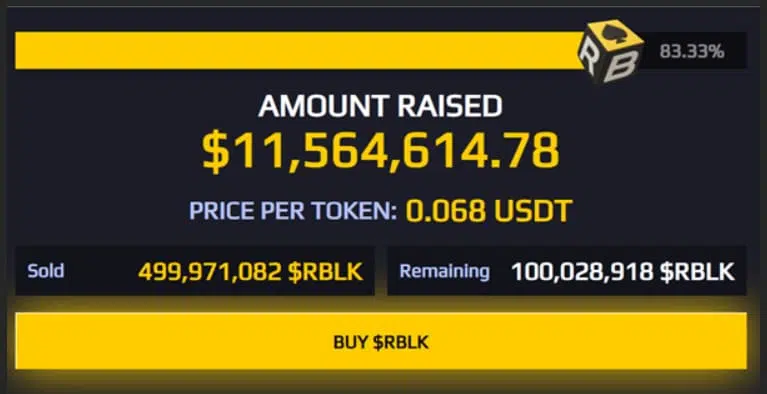
Dogecoin and Shiba Inu remain two of the most recognizable meme coins, but their price action has been slow in 2025, leaving many investors questioning their growth potential. Meanwhile, Rollblock is stealing the spotlight with a live iGaming ecosystem, $11.5 million raised in presale, and a deflationary revenue model that rewards holders weekly. With analysts [...] The post Dogecoin, Shiba Inu or Rollblock: Which One of These Could Turn $2,000 Into $20,000 in Quarter 4 appeared first on Blockonomi.

Author: Blockonomi
Ethereum Dominated Smart Contracts, Aave Defined DeFi Lending, Now Analysts Say Mutuum Finance (MUTM) Is Next in Line

Ethereum Dominated Smart Contracts, Aave Defined DeFi Lending, Now Analysts Say Mutuum Finance (MUTM) Is Next in Line

The post Ethereum Dominated Smart Contracts, Aave Defined DeFi Lending, Now Analysts Say Mutuum Finance (MUTM) Is Next in Line appeared on BitcoinEthereumNews.com. Projects that come at the right time with the right idea have always defined the crypto industry. Ethereum changed blockchain with the introduction of smart contracts. Aave introduced a new era of yield creation and experimentation in DeFi by enabling the decentralized lending process to become accessible. They both became staples of their time, and those who jump early made enormous fortunes. According to analysts, the focus has changed to Mutuum Finance (MUTM), which is a project that is more affordable but includes highly sophisticated DeFi mechanics. Mutuum Finance is taking the lead in the next round, just like Ethereum and Aave set the terms of the previous levels of crypto. First Era: Ethereum, The Smart Contract Revolution In 2015, Ethereum introduced the concept of making blockchain a programmable ecosystem as opposed to a payments-only network. With the implementation of smart contracts, Ethereum made it possible to build decentralized applications (dApps), tokenized assets, and later on an entire industry such as DeFi and NFTs. Such a breakthrough made Ethereum the foundation of the Web3, with thousands of projects being built on its base. It had an important technological price story. At the beginning ETH was sold at only a couple of dollars, but in 2021 it was approaching over $4,000. People who had seen the potential of Ethereum early on were left with a life-changing fortune. However, nowadays with ETH having a market cap in the hundreds of billions, parabolic growth is much less probable. Ethereum is on the list of blue-chip crypto, but its size and maturity restrict its upward potential relative to smaller, newer projects. Second Era: Aave, The Lending Pioneer Provided the foundation was Ethereum, Aave was one of the first to create some of its most significant applications: decentralized lending. Founded in 2017 as ETHLend and…

Author: BitcoinEthereumNews
Tether’s New Project Promises Fully Private AI on Your Device

Tether’s New Project Promises Fully Private AI on Your Device

The post Tether’s New Project Promises Fully Private AI on Your Device appeared on BitcoinEthereumNews.com. Fintech Tether, the company behind USDT, is quietly reshaping itself into a diversified tech player. After pushing into Bitcoin mining and digital education, it is now fusing artificial intelligence with secure messaging — a move that signals ambitions far beyond finance. A New Kind of Messenger The experiment centers on Keet, a peer-to-peer communication app that bypasses cloud servers. Soon, Keet will be powered by QVAC AI, a platform built to run directly on phones and laptops rather than in data centers. The upgrade is expected to add features like real-time translation, meeting summaries, and voice transcription, while keeping data locked to users’ devices. But Keet isn’t just another messaging app. Integrated payment rails will allow transfers in Bitcoin, USDT, Tether Gold (XAUT), and Lightning, turning chats into an all-in-one hub for conversation and settlement. Privacy as a Selling Point Most messaging services offer AI by streaming user data through remote servers. Tether’s pitch is the opposite: all functions stay local. CEO Paolo Ardoino described it as the first attempt to deliver “fully private, on-device AI assistants” inside a consumer messenger. The approach could appeal to users worried about surveillance, as governments and corporations expand control over online data. This integration is part of a larger roadmap. Earlier this year, Tether revealed plans to bring QVAC AI into its Bitcoin mining operating system, giving miners live performance analytics. Together, these initiatives highlight how the company is positioning AI as a cornerstone of its growth strategy. A Shifting Identity With a stablecoin market share worth almost $170 billion, Tether remains the heavyweight of crypto payments. But its forays into AI, mining, and even gold-backed tokens show a company eager to diversify — and to ensure its influence stretches well beyond USDT. The Keet-QVAC project, blending privacy tech with money transfers, may…

Author: BitcoinEthereumNews