Lending

Lending protocols form the backbone of the decentralized money market, allowing users to lend or borrow digital assets without intermediaries. Using smart contracts, platforms like Aave and Morpho automate interest rates based on supply and demand while requiring over-collateralization for security. The 2026 lending landscape features advanced permissionless vaults and institutional-grade credit lines. This tag covers the evolution of capital efficiency, liquidations, and the integration of diverse collateral types, including LSTs and tokenized RWAs.

14383 Articles
Created: 2026/02/02 18:52
Updated: 2026/02/02 18:52
Hidden Market Movers: 8 High ROI Tokens in 2025 That Every Trader Should Watch

Hidden Market Movers: 8 High ROI Tokens in 2025 That Every Trader Should Watch

The hunt for projects that deliver not only hype but also sustainable returns has become one of the most pressing […] The post Hidden Market Movers: 8 High ROI Tokens in 2025 That Every Trader Should Watch appeared first on Coindoo.

Author: Coindoo
Paxos and PayPal Push USDH into the Mainstream of Global Payments

Paxos and PayPal Push USDH into the Mainstream of Global Payments

TLDR Paxos & PayPal push USDH global with $20M boost and DeFi-first incentives. PayPal integrates USDH, fueling DeFi adoption and worldwide payments reach. Paxos redefines stablecoins: PayPal deal, $20M push, DeFi-first alignment. USDH set to rival top stablecoins via PayPal integration & ecosystem rewards. Paxos & PayPal team up to make USDH the DeFi gateway [...] The post Paxos and PayPal Push USDH into the Mainstream of Global Payments appeared first on CoinCentral.

Author: Coincentral
Next Crypto to Hit $1? DOGE and SHIB Are Old Stories Now, But This Undervalued DeFi Crypto Recently Raised $15.5M Looks Ready

Next Crypto to Hit $1? DOGE and SHIB Are Old Stories Now, But This Undervalued DeFi Crypto Recently Raised $15.5M Looks Ready

The world remembers the meteoric rise of DOGE and SHIB. Both captured headlines, fueled by social media hype and meme culture. Yet, beyond the excitement, their practical utility remains limited. Retail investors and institutions alike are learning that nostalgia and hype do not sustain long-term returns. Enter Mutuum Finance (MUTM), a DeFi token designed for [...] The post Next Crypto to Hit $1? DOGE and SHIB Are Old Stories Now, But This Undervalued DeFi Crypto Recently Raised $15.5M Looks Ready appeared first on Blockonomi.

Author: Blockonomi
Top 4 Crypto Presales to Watch Now: MAGAX, Bitcoin Hyper, Little Pepe & PEPENODE

Top 4 Crypto Presales to Watch Now: MAGAX, Bitcoin Hyper, Little Pepe & PEPENODE

Crypto presales are where fortunes are often made, offering early access to projects before they explode onto major exchanges. Right now, four names are commanding attention: MAGAX, Bitcoin Hyper, Little Pepe, and PEPENODE. Each brings unique strengths, but one—MAGAX—is setting itself apart by combining culture, rewards, and blockchain innovation into a single disruptive force. Let’s [...] The post Top 4 Crypto Presales to Watch Now: MAGAX, Bitcoin Hyper, Little Pepe & PEPENODE appeared first on Blockonomi.

Author: Blockonomi
US SEC Chairman: Most tokens are not securities, supporting "super application" platforms

US SEC Chairman: Most tokens are not securities, supporting "super application" platforms

PANews reported on September 10th that, according to Cointelegraph, U.S. Securities and Exchange Commission (SEC) Chairman Paul Atkins stated that "most crypto tokens are not securities," and he also outlined a comprehensive plan to bring crypto activities such as trading, lending, and staking under a unified regulatory framework. Atkins stated at the OECD Roundtable in Paris on Wednesday that the U.S. SEC will open a new chapter, in which policies will no longer be formulated by ad hoc enforcement actions, but will provide clear rules to help innovators develop. The Presidential Task Force on Digital Asset Markets has submitted a "bold blueprint" to support this mission. The SEC's updated strategy includes allowing platforms to operate as "super apps," facilitating the trading, lending, and staking of digital assets under a single regulatory framework. Atkins stated that these platforms should also be flexible and able to offer a variety of custody solutions. Atkins believes that regulation should be moderate to avoid burdening entrepreneurs. He also praised the EU's MiCA framework and called for international cooperation to promote innovative markets.

Author: PANews
$200 Investment in Mutuum Finance (MUTM) May Blow to $10,000 at Launch, Say Analysts

$200 Investment in Mutuum Finance (MUTM) May Blow to $10,000 at Launch, Say Analysts

The post $200 Investment in Mutuum Finance (MUTM) May Blow to $10,000 at Launch, Say Analysts appeared on BitcoinEthereumNews.com. Mutuum Finance (MUTM) is rapidly becoming the new hot play in the cryptocurrency market. Analysts are eyeing a stunning launch splash that may transform a modest $200 investment into a potential $10,000 profit. Mutuum Finance presale currently stands at Stage 6 at $0.035. The platform has already secured more than $15.5 million in capital and boasts more than 16,150 token holders.  With growth in the decentralized finance (DeFi) market, Mutuum Finance (MUTM) is building momentum for its innovative model of borrowing, lending, and liquidity management, sparking speculation over a breakout listing. With its soon-to-be-listed token already causing tongues to start wagging in the marketplace, investors and traders are watching MUTM for indications of early strength. Presale  Mutuum Finance has already gone into presale stage 6 where the token can be purchased at $0.035. The project already has more than 16,150 token holders, and already raised more than $15.5 million. FOMO is moving at lightning speed. Early buyers are on track for life-changing returns. Shaping the Future of DeFi Mutuum Finance is tipped to be a key player as DeFi extends its reach globally. The platform is built with institutional and retail investors in mind. Mutuum Finance is making massive jumps with its revolutionary smart contract paradigm and emphasis on security and scalability. Mutuum finance also launched a $100,000 giveaway where 10 users are to be given $10,000 in MUTM tokens. The campaign is an example of the project’s focus towards establishing a long-term and loyal group of users. DeFi Lending Based on a Strong Dual-Model System Mutuum Finance’s way of DeFi ensures that as the platform user you’re always in control of your assets. Through lending, users are rewarded with passive income from borrowers and lenders, and access to funds is instant by borrowing multiple assets across loan value. The…

Author: BitcoinEthereumNews
Stablecoin issuer Paxos releases new USDH proposal

Stablecoin issuer Paxos releases new USDH proposal

The post Stablecoin issuer Paxos releases new USDH proposal appeared on BitcoinEthereumNews.com. Paxos released the USDH Proposal V2 on Wednesday with a framework it said will ensure the company only wins if Hyperliquid wins. The stablecoin issuer also included three major upgrades to the V2 proposal, which it said will unlock Hyperliquid at a global scale. The company’s V2 proposal will list HYPE on PayPal or Venmo and offer free USDH on/off-ramp products. PayPal will also commit to incentives worth $20M as the firm will allow global payment integration across Checkout, Braintree, Venmo, Hyperwallet, and Xoom. Paxos’ initiative also comes as PayPal recently launched its Pay With Crypto solution, which also includes support for USDH and HYPE. V2 comes with major upgrades The new proposal will also offer a clear AF-first incentive reward structure with Paxos only earning once TVL milestones are reached. The revamped rewards are capped at 5% past $5B TVL, and all fees will be held in HYPE tokens and reinvested in growth and to its AF. The firm’s new framework will begin with an AF pledge of 20%, which increases based on TVL milestones. As earlier reported by Cryptopolitan, the company’s previous proposal only showed the differentiated distribution that the Paxos network can deliver. The firm said that since then, it has focused on kickstarting its distribution efforts by partnering with PayPal to support the Hyperliquid ecosystem. Paxos believes the global payment platform will bring immense scale to the Hyperliquid ecosystem. The payment firm processes over $1 trillion in TPV annually, with over 400 million users and 35 million merchants. “We’re thrilled to have PayPal as a partner from day one of USDH issuance. Alongside our existing set of GENIUS-compliant reserve assets, we are adding PYUSD as an additional regulated, GENIUS-compliant reserve asset.” –Bhau Kotecha, Co-Founder and CEO of Paxos Labs. Kotecha said Paxos aims to drive differentiated…

Author: BitcoinEthereumNews
Paxos releases new documentation in lobby for Hyperliquid's USDH stablecoin

Paxos releases new documentation in lobby for Hyperliquid's USDH stablecoin

Paxos has released the USDH Proposal V2, which comes with three major upgrades to unlock Hyperliquid at a global scale.

Author: Cryptopolitan
Ethereum’s Vision: Cardano Founder Declares Initial Goals Unfulfilled

Ethereum’s Vision: Cardano Founder Declares Initial Goals Unfulfilled

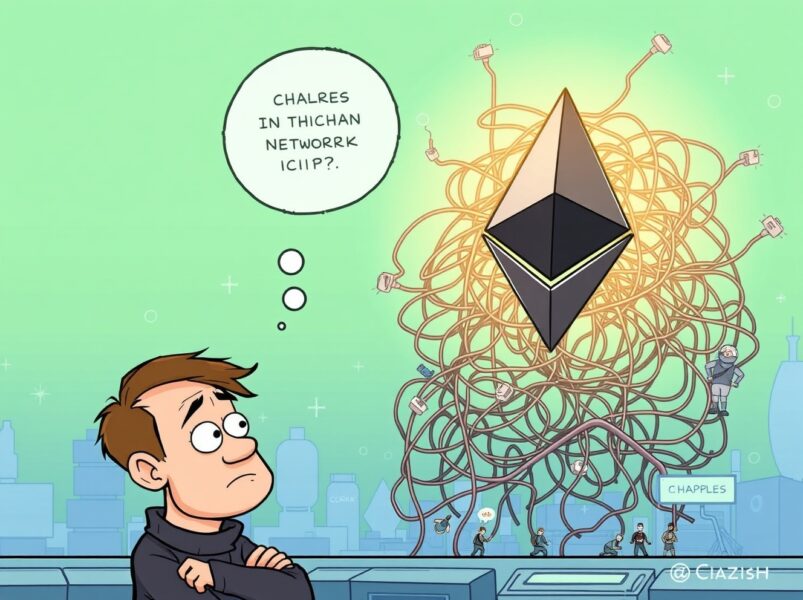
BitcoinWorld Ethereum’s Vision: Cardano Founder Declares Initial Goals Unfulfilled The cryptocurrency world is buzzing with a critical assessment from Charles Hoskinson, the visionary founder of Cardano (ADA). He recently made headlines by stating that the Ethereum layer-one network, despite its prominence, has fundamentally failed to realize the initial Ethereum’s vision designed by its original co-founders. This isn’t just a casual observation; it’s a deep dive into the foundational challenges facing one of the most important blockchain platforms today. What Was the Original Ethereum’s Vision? When Ethereum first launched, its ambition was monumental: to create a global, decentralized computer capable of running immutable smart contracts and fostering an entirely new financial system known as Decentralized Finance (DeFi). The idea was to build a robust, scalable, and accessible platform for everyone, empowering developers to build applications without intermediaries. This revolutionary Ethereum’s vision promised a future of unprecedented innovation and financial freedom. However, as Hoskinson pointed out in an exclusive interview with CoinDesk, the reality has diverged significantly from this initial dream. While Ethereum remains central to the smart contract and DeFi landscape, it continues to grapple with persistent issues that hinder its widespread adoption and efficiency. The Persistent Challenges Facing Ethereum’s Vision Hoskinson highlighted two primary pain points that have plagued the network for years: Scalability: The ability of the network to handle a growing number of transactions per second remains a significant hurdle. As more users and applications join, the network struggles to keep up. High Transaction Fees (Gas Fees): During periods of high demand, the cost of performing transactions on Ethereum can skyrocket, making it prohibitively expensive for many users and smaller transactions. This directly impacts accessibility, a core tenet of the original Ethereum’s vision. These challenges aren’t new, but Hoskinson’s critique suggests they are symptomatic of a deeper, unaddressed flaw in the network’s foundational design. Are Layer-2 Solutions a True Fix or Just a Band-Aid for Ethereum’s Vision? In response to these scalability and fee issues, the Ethereum ecosystem has seen the rise of numerous layer-two (L2) solutions. These are secondary frameworks built on top of the main Ethereum blockchain, designed to process transactions off-chain and then settle them back on the main network, thereby reducing congestion and fees. Examples include rollups (optimistic and zero-knowledge) and sidechains. While widely adopted and praised by many, Hoskinson views these L2 solutions with skepticism. He assessed that they are “merely a temporary fix” that, in the long run, could “undermine the ecosystem’s long-term sustainability.” His concern stems from the idea that relying heavily on L2s might fragment the network, introduce new complexities, and potentially compromise the decentralization and security that are fundamental to a layer-one blockchain. This perspective isn’t entirely new from the Cardano founder. Back in April, he made a bold prediction, stating that he believes the Ethereum network would not last more than 10 to 15 years. This highlights a deep-seated belief that the current trajectory of Ethereum’s vision is unsustainable without more fundamental changes. What Does This Mean for the Future of Decentralized Finance? Hoskinson’s comments spark an important debate about the future direction of decentralized finance and blockchain technology. If a leading layer-one network like Ethereum is struggling to meet its initial promises, what does this imply for the broader industry? It underscores the critical importance of foundational design choices and the need for robust, scalable solutions that don’t compromise core principles like decentralization and security. The ongoing efforts to improve Ethereum, such as the transition to Ethereum 2.0 (now known as the Merge and subsequent upgrades), aim to address some of these very issues, particularly scalability through sharding. However, Hoskinson’s critique suggests that even these significant upgrades might not fully align with what was originally envisioned, or might introduce their own set of trade-offs. A Critical Look at Ethereum’s Vision: The Takeaway Charles Hoskinson’s candid remarks serve as a powerful reminder that even the most influential blockchain networks face significant hurdles. His assertion that Ethereum has fallen short of its initial Ethereum’s vision prompts us to consider the long-term implications of current scaling strategies. While layer-two solutions offer immediate relief, the fundamental questions about scalability, cost, and true decentralization on the base layer remain central to the ongoing evolution of the blockchain space. This critical dialogue is essential for fostering innovation and building truly sustainable decentralized ecosystems for the future. Frequently Asked Questions (FAQs) Q1: Who is Charles Hoskinson? A1: Charles Hoskinson is a prominent figure in the cryptocurrency space, known as a co-founder of Ethereum and the founder of Cardano (ADA), another major blockchain platform. Q2: What are the main challenges Charles Hoskinson identified for Ethereum? A2: He highlighted persistent problems with network scalability and high transaction fees, often referred to as gas fees, which he believes hinder the realization of Ethereum’s vision. Q3: What are Layer-2 solutions, and why is Hoskinson skeptical of them? A3: Layer-2 solutions are secondary frameworks built on top of Ethereum to improve scalability and reduce fees by processing transactions off-chain. Hoskinson views them as temporary fixes that could undermine the ecosystem’s long-term sustainability due to potential fragmentation and complexity. Q4: Did Hoskinson make any long-term predictions about Ethereum? A4: Yes, in April, he predicted that the Ethereum network might not last more than 10 to 15 years, underscoring his concerns about its long-term viability without fundamental changes. Q5: How does this critique relate to Cardano? A5: While the article focuses on Ethereum, Hoskinson’s critique implicitly positions Cardano as an alternative blockchain designed with a different approach to scalability and sustainability from its inception, aiming to fulfill a robust Ethereum’s vision. Q6: What is Decentralized Finance (DeFi)? A6: DeFi refers to a financial system built on blockchain technology, primarily Ethereum, that aims to remove intermediaries like banks from financial services, offering decentralized lending, borrowing, trading, and more. Did you find this analysis insightful? Share your thoughts and this article with your network to spark further discussion on the future of blockchain technology and Ethereum’s vision! To learn more about the latest crypto market trends, explore our article on key developments shaping Ethereum’s future price action. This post Ethereum’s Vision: Cardano Founder Declares Initial Goals Unfulfilled first appeared on BitcoinWorld and is written by Editorial Team

Author: Coinstats
Top 5 Crypto Presales to Buy Now – Next Cryptos Set to Explode

Top 5 Crypto Presales to Buy Now – Next Cryptos Set to Explode

Meme coins are evolving fast, moving beyond simple hype cycles into projects with real hooks, culture-driven branding, and in some cases, surprising utility. Some of the best crypto presales to buy right now are riding this wave, blending early traction with unique narratives that stand out in a crowded market. From Bitcoin-inspired scalability to gamified […]

Author: The Cryptonomist