Lending

Lending protocols form the backbone of the decentralized money market, allowing users to lend or borrow digital assets without intermediaries. Using smart contracts, platforms like Aave and Morpho automate interest rates based on supply and demand while requiring over-collateralization for security. The 2026 lending landscape features advanced permissionless vaults and institutional-grade credit lines. This tag covers the evolution of capital efficiency, liquidations, and the integration of diverse collateral types, including LSTs and tokenized RWAs.

15520 Articles
Created: 2026/02/02 18:52
Updated: 2026/02/02 18:52
The Next 100x Token? Investors Are Buying This New Crypto Before It Hits $0.06

The Next 100x Token? Investors Are Buying This New Crypto Before It Hits $0.06

The post The Next 100x Token? Investors Are Buying This New Crypto Before It Hits $0.06 appeared on BitcoinEthereumNews.com. Every few years, a new project that appeals to the first investors before the rest of the world in the crypto market is unveiled. In 2021 that project was Solana. In 2023 it was PEPE. Today, at the beginning of 2026, it is mentioned that the next one can be Mutuum Finance (MUTM). It has a live presale, strong fundamentals and the actual product under construction. This is the reason why investors are purchasing this new crypto before it hits the price of $0.06. Mutuum Finance (MUTM) Mutuum Finance is creating a decentralized and non-custodial lending and borrowing procedure to introduce greater transparency and safety to the credit markets within DeFi. The project will allow users to lend and borrow digital assets without middle-men. The principle of the Peer-to-Contract (P2C) model goes as follows: upon depositing resources in a joint liquidity pool, users can get mtTokens. These are the minted tokens, also referred to as mtTokens that experience an increase in value over time as the borrowers make the interest payments. Take an example: 1ETH deposited results in 1mtETH, whereas over time, the value of the 1mETH will increase on its own, and there will be a passive income without requiring any manipulation. The Peer-to-peer (P2P) layer is where borrowers and the lenders are connected. The platform attracts borrowers with sustainable or fluctuating interest rates, and the platform will self-regulate the rates depending on the demand. Every loan has a Loan-to-Value (LTV) ratio to ensure that risks are kept at bay. A user can borrow up to $750 – $1000 given that he/she presents a satisfying collateral. In case of a decline in the collateral to an unsafe amount, it is automatically liquidated, thereby safeguarding the lenders and ensuring the stability of the protocol. High Sold and Soaring Numbers A…

Author: BitcoinEthereumNews
Metaplanet secures $100M loan collateralized by Bitcoin holdings

Metaplanet secures $100M loan collateralized by Bitcoin holdings

The post Metaplanet secures $100M loan collateralized by Bitcoin holdings appeared on BitcoinEthereumNews.com. Key Takeaways Metaplanet, a Japanese investment firm, secured a $100 million loan backed by its Bitcoin holdings. This move allows Metaplanet to tap into traditional credit markets while holding onto its Bitcoin. Metaplanet, a Japan-based investment firm focused on Bitcoin treasury operations, secured a $100 million loan collateralized by its Bitcoin holdings. The financing represents a significant expansion of the company’s cryptocurrency-backed credit facilities. The loan structure allows Metaplanet to access traditional capital markets while maintaining its Bitcoin position, reflecting growing institutional acceptance of digital assets as collateral for corporate financing. Metaplanet has positioned itself as a pioneer in Japan’s Bitcoin ecosystem by integrating cryptocurrency into traditional financial strategies. The company previously initiated a share buyback program utilizing Bitcoin collateral to enhance capital efficiency. The financing comes as more corporations explore Bitcoin-backed lending solutions to optimize their treasury management while preserving exposure to digital asset appreciation. Source: https://cryptobriefing.com/metaplanet-bitcoin-collateral-loan-2025/

Author: BitcoinEthereumNews
Fastest Bitcoin Layer-2 in History Raises $25.7M: Bitcoin Hyper to Soar Next?

Fastest Bitcoin Layer-2 in History Raises $25.7M: Bitcoin Hyper to Soar Next?

Quick Facts: ➡️Bitcoin’s base layer limits DeFi. Low TPS, minutes-long finality, fee spikes and minimal programmability push liquidity to EVM and Solana, fragmenting $BTC-native activity. ➡️Reliance on liquidity silos deters builders and users, making seamless $BTC collateral use across dApps difficult. ➡️Bitcoin Hyper’s SVM Layer 2 batches to Bitcoin, delivering near-instant, low-fee dApps while anchoring […]

Author: Bitcoinist
Polygon Founder Backs Katana as ZK TVL Hits $512M

Polygon Founder Backs Katana as ZK TVL Hits $512M

The post Polygon Founder Backs Katana as ZK TVL Hits $512M appeared on BitcoinEthereumNews.com. Sandeep Nailwal said Polygon played a big role in getting ZK proofs adopted and pointed at Katana’s rapid DeFi growth. Katana is now described as the second largest ZK rollup in the Polygon-linked ecosystem with about $512 million locked. The upcoming KAT token will anchor governance, liquidity rewards, and fees to keep Katana’s ZK DeFi flywheel running. Polygon’s growing bet on zero knowledge technology has started to show concrete results as co-founder Sandeep Nailwal drew fresh attention to Katana, a DeFi focused Layer 2 that is now one of the largest ZK rollups in the Polygon environment. In a post on X, Nailwal talked about how Polygon has played a “big role” in the adoption of ZK proofs, adding that Polygon’s Agglayer connects multiple ZK rollups into one scalable framework.  ZK proofs have become critical to blockchain privacy and scaling. Always proud to see that Polygon played a big role in that. Polygon took massive bet on ZK. Today Polygon Agglayer is powering multiple ZK rollups with Katana being the biggest. Few realize that Katana is the… https://t.co/nsc9ox9lF3 pic.twitter.com/QFHvW3d6rV — Sandeep | CEO, Polygon Foundation (※,※) (@sandeepnailwal) November 4, 2025 Polygon’s ZK Stack Is Now Producing High TVL Rollups Over the past few years, Polygon has positioned itself as a leader in zero-knowledge scaling solutions, investing heavily in ZK rollups and interoperability infrastructure. That focus is now materializing through Polygon Agglayer. Among these, Katana stands out, currently ranked as the second-largest ZK rollup by DeFi total value locked (TVL), trailing only Linea, according to DefiLlama. With around $512 million in DeFi TVL, Katana ranks 15th overall among Layer-1 and Layer-2 chains, only behind established ecosystems like Aptos, Avalanche, and Sui. ZK Tech Has Moved From Theory to Polygon-Ready Rollups Data from a16z crypto shows how ZK technology has evolved from…

Author: BitcoinEthereumNews
3 Best Meme Coins That Could Grow Your Capital Faster Than Shiba Inu (SHIB) This Cycle

3 Best Meme Coins That Could Grow Your Capital Faster Than Shiba Inu (SHIB) This Cycle

The meme coin market is entering a new acceleration phase as liquidity begins to rotate back into speculative altcoins.

Author: Cryptodaily
Crypto Market Cap Drops $1.2 Trillion in Eight Weeks – Was This Reset Needed?

Crypto Market Cap Drops $1.2 Trillion in Eight Weeks – Was This Reset Needed?

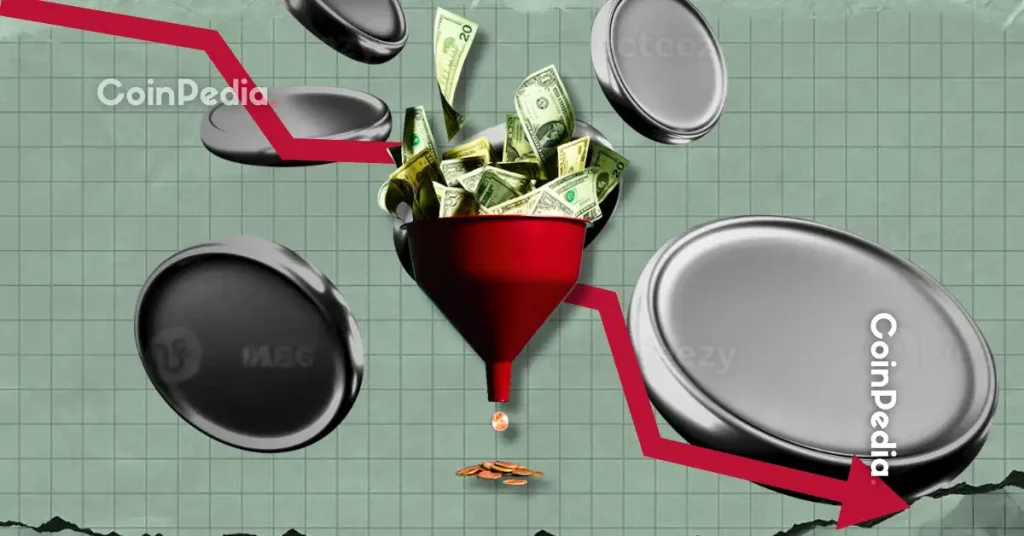
The post Crypto Market Cap Drops $1.2 Trillion in Eight Weeks – Was This Reset Needed? appeared first on Coinpedia Fintech News “Crypto didn’t crash. It was executed.” That one line from analyst and author Shanaka Perera has everyone on X buzzing and recapping what happened in one of crypto’s most dramatic months. Over just eight weeks, the global crypto market cap fell from $4.6 trillion to $3.4 trillion, erasing nearly $1.2 trillion in value. Was this just another crypto winter? Signs say no. It was a massive deleveraging event, a technical wipeout where too much leverage collided with too little liquidity. The Day the Leverage Broke On October 10, over $19 billion worth of leveraged positions were liquidated in just 24 hours, according to CoinGlass data. In the days around it, nearly 487,000 traders were wiped out daily. The problem started when open interest, the total value of all futures contracts, hit a record $217 billion, while spot liquidity dropped to just 5% of normal levels. That imbalance created a feedback loop. As prices dipped, margin calls kicked in, triggering forced selling, which drove prices even lower. By the end of the month, open interest had collapsed 43% to around $123 billion, marking one of the fastest market resets in years. Perera described it as “The machine ate itself.”  Sounds like it’s all bad. But the fundamentals are telling a very different story.  Meanwhile, Crypto Adoption Hit Record Highs While prices fell, crypto adoption and on-chain activity hit all-time highs. Independent data shows the number of global crypto users have jumped to around 560 million, up by 40 million in just six months. Stablecoins now power nearly 30% of all crypto transactions, triple their share from 2022. Institutional players doubled down too. BlackRock and MicroStrategy collectively hold over 1 million Bitcoin, and major fund houses like Fidelity and Franklin Templeton have rolled out regulated crypto products. Read More: Redditors Reveal Hard Truths of Crypto Investing After Years in the Market In the U.S., the GENIUS Act was put into effect, and the CLARITY Act gave stablecoins a clear legal framework. In short – while traders were forced out, the builders and institutions kept moving in. Why This Isn’t 2022 All Over Again Back in 2022, both prices and adoption collapsed. Exchanges failed, regulation was unclear, and trust evaporated. This time is different. The system reset itself rather than collapsing. DeFi lending volumes have grown to $39 billion, real-world asset tokenization crossed $8 billion, and blockchain infrastructure has become faster and cheaper. What Comes Next If history repeats, the next phase could be powerful. Perera points out that every major reset in crypto, from 2017 to 2021, was followed by new highs once leverage cleared out. The indicators to watch now: open interest falling below $30B, ETF inflows topping $5B a week, and stablecoin supply growing 20% monthly. When those align, markets usually turn. “Leverage massacred speculators. Fundamentals rewarded builders.” The markets seem to have cut off the noise. Once it settles, the same mechanics that broke the market could be the ones to push it higher again.

Author: Coinstats
Next 1000x Crypto News Live Today: Early Alpha on the Latest Crypto Gems (November 5)

Next 1000x Crypto News Live Today: Early Alpha on the Latest Crypto Gems (November 5)

Stay Ahead with the Latest Insights of Today’s Next 1000x Crypto Check out our Live Next 1000x Crypto Updates for November 5, 2025! Crypto is a multi-trillion-dollar industry, with 10x, 100x, or even 1000x opportunities lying there, just waiting to be found. Take Dogecoin 36,000% increase in 12 years, or XRPs 42,000% performance in the […]

Author: Bitcoinist
Bitcoin holdings surge: Hut 8’s impressive 13,696 BTC reserve reveals mining mastery

Bitcoin holdings surge: Hut 8’s impressive 13,696 BTC reserve reveals mining mastery

BitcoinWorld Bitcoin holdings surge: Hut 8’s impressive 13,696 BTC reserve reveals mining mastery Have you ever wondered how major Bitcoin mining companies manage their digital treasure? Hut 8 just revealed their third-quarter Bitcoin holdings reached an impressive 13,696 BTC, demonstrating remarkable growth in the competitive crypto mining landscape. This significant accumulation of Bitcoin holdings reflects the company’s strategic approach to cryptocurrency asset management. What makes Hut 8’s Bitcoin holdings significant? The announcement of 13,696 Bitcoin holdings represents more than just numbers. It showcases Hut 8’s operational efficiency and long-term vision in the volatile crypto market. These Bitcoin holdings serve as both a revenue stream and a strategic reserve, positioning the company for future opportunities. Moreover, the consistent growth in Bitcoin holdings indicates sustainable mining practices despite market fluctuations. How does Hut 8 maintain such substantial Bitcoin holdings? Maintaining and growing Bitcoin holdings requires a multi-faceted approach. Hut 8 employs several key strategies: Efficient mining operations that maximize Bitcoin production Strategic holding decisions rather than immediate selling Cost management to ensure profitability during market downturns Technological upgrades to maintain competitive advantage These Bitcoin holdings didn’t accumulate overnight but resulted from careful planning and execution. Why should investors care about Bitcoin holdings? Bitcoin holdings represent more than just assets on a balance sheet. They indicate a company’s belief in Bitcoin’s long-term value and its ability to weather market volatility. For investors, substantial Bitcoin holdings suggest: Strong financial positioning Confidence in cryptocurrency’s future Potential for significant upside during bull markets Reduced vulnerability to short-term price swings The management of these Bitcoin holdings often separates successful mining companies from struggling ones. What challenges come with maintaining large Bitcoin holdings? While impressive, maintaining substantial Bitcoin holdings presents unique challenges. Market volatility can significantly impact the value of these assets. Security concerns require robust protection measures. Additionally, regulatory uncertainty and storage solutions demand constant attention. However, Hut 8’s consistent growth in Bitcoin holdings suggests they’ve developed effective strategies to navigate these obstacles. How do Bitcoin holdings impact the broader crypto ecosystem? Large-scale Bitcoin holdings by major miners like Hut 8 contribute to market stability and liquidity. These substantial reserves: Demonstrate institutional confidence in Bitcoin Provide market depth during volatile periods Influence Bitcoin’s circulating supply dynamics Set benchmarks for other mining companies The strategic management of these Bitcoin holdings often signals broader market trends. What’s next for Hut 8’s Bitcoin holdings strategy? Looking forward, Hut 8’s approach to Bitcoin holdings will likely evolve with market conditions. The company may explore: Diversification strategies while maintaining core Bitcoin holdings Enhanced security measures for protecting assets Potential staking or lending opportunities Expansion of mining capacity to grow Bitcoin holdings further The future trajectory of their Bitcoin holdings will be crucial to watch. Hut 8’s announcement of 13,696 Bitcoin holdings marks a significant milestone in cryptocurrency mining. This achievement underscores the company’s operational excellence and strategic vision. As the crypto landscape evolves, these substantial Bitcoin holdings position Hut 8 for continued success and influence within the industry. The careful management of these assets demonstrates how professional mining operations can thrive while contributing to Bitcoin’s ecosystem. Frequently Asked Questions What percentage growth did Hut 8’s Bitcoin holdings show in Q3? While exact percentage growth wasn’t specified in the announcement, reaching 13,696 Bitcoin holdings represents significant quarter-over-quarter accumulation through efficient mining operations. How does Hut 8 secure their Bitcoin holdings? The company employs enterprise-grade security measures including cold storage solutions, multi-signature protocols, and comprehensive cybersecurity systems to protect their valuable Bitcoin holdings. Does Hut 8 sell any of their mined Bitcoin? Hut 8 maintains a strategic balance between holding and selling Bitcoin. Their substantial Bitcoin holdings indicate a strong preference for long-term accumulation, though they may sell portions to cover operational costs when necessary. How do Hut 8’s Bitcoin holdings compare to other major miners? With 13,696 Bitcoin holdings, Hut 8 ranks among the top publicly-traded Bitcoin mining companies in terms of Bitcoin reserves, demonstrating competitive positioning within the industry. What impact do large Bitcoin holdings have on Bitcoin’s price? Substantial Bitcoin holdings by major miners can reduce circulating supply, potentially creating upward price pressure while demonstrating strong institutional confidence in Bitcoin’s long-term value. Can individual investors benefit from tracking mining companies’ Bitcoin holdings? Absolutely. Monitoring Bitcoin holdings of major miners provides valuable insights into industry health, operational efficiency, and broader market sentiment toward cryptocurrency. Found this analysis of Hut 8’s Bitcoin holdings insightful? Share this article with fellow crypto enthusiasts on social media to spread knowledge about cryptocurrency mining trends and institutional Bitcoin accumulation strategies! To learn more about the latest Bitcoin trends, explore our article on key developments shaping Bitcoin institutional adoption. This post Bitcoin holdings surge: Hut 8’s impressive 13,696 BTC reserve reveals mining mastery first appeared on BitcoinWorld.

Author: Coinstats
Ripple Price Prediction: Can XRP Rebound as This New Crypto Eyes 20x?

Ripple Price Prediction: Can XRP Rebound as This New Crypto Eyes 20x?

Lunar Strategy will host an Afterworks Series in Lisbon during Web Summit, gathering crypto and AI founders for nightly talks, networking, food and music.

Author: Blockchainreporter
Coinbase Exec Slams Banks for Blocking Crypto Charter Bid

Coinbase Exec Slams Banks for Blocking Crypto Charter Bid

Coinbase Chief Legal Officer Paul Grewal publicly condemned traditional banking groups for opposing the crypto exchange’s national trust bank charter application, accusing them of prioritizing protectionism over consumer protection. The pushback from banking associations intensified this week as both community banks and Wall Street lobbying groups mounted coordinated efforts to block crypto firms from securing federal banking licenses. Grewal fired back after the Independent Community Bankers of America urged federal regulators to deny Coinbase’s charter application for its subsidiary, Coinbase National Trust Company. “Imagine opposing a regulated trust charter because you prefer crypto to stay… unregulated,” Grewal wrote on X, adding that bank lobbyists are attempting to “dig regulatory moats to protect their own.“ Banking Groups Mount Coordinated Opposition The ICBA submitted a detailed opposition letter to the Office of the Comptroller of the Currency on November 3, arguing that Coinbase’s application fails to meet statutory chartering standards on multiple grounds. The banking group’s letter claims the application exhibits fundamental deficiencies in governance, profitability, sustainability, and receivership complexity, particularly during crypto bear markets when both Coinbase and its subsidiary would face simultaneous financial pressure. The ICBA letter also challenges the legal validity of OCC Interpretive Letter 1176, which permits national trust banks to engage in non-fiduciary activities beyond traditional trust services. The banking group contends that this interpretive letter was issued without the required public notice and comment procedures under the Administrative Procedure Act, rendering it legally invalid as a basis for Coinbase’s application. Meanwhile, a separate banking lobby emerged in the stablecoin debate. The American Bankers Association and 52 state banking associations submitted a joint letter to the Treasury Department on November 4, urging strict enforcement of the GENIUS Act’s prohibition on stablecoin interest payments. The coordinated response addresses what banks view as a “loophole” allowing digital asset platforms to circumvent the law by offering interest through affiliates rather than directly from stablecoin issuers. Stablecoin Interest Debate Intensifies The banking associations warned that without a broad interpretation of the interest ban, digital asset platforms may exploit loopholes through high-yield rewards and incentives, which would undermine the law’s intent to keep stablecoins as payment tools rather than investment vehicles. Senator Mike Rounds previously told Politico the interest workaround “looks like an end-run on the original legislation.” At the same time, Federal Reserve Governor Christopher Waller stated stablecoins should function as pure payment instruments, not interest-bearing deposits. “It’s not an investment vehicle. It’s not a time deposit where you’re holding it to earn interest,” he said. The banking groups argue that interest-bearing stablecoins could trigger a 25.9% loss in bank deposits, eliminating approximately $1.5 trillion in lending capacity and shrinking small business and farm credit by $110 billion and $62 billion, respectively. Community banks serving rural and underserved areas would face disproportionate impact from deposit outflows to yield-generating stablecoins. Coinbase Chief Policy Officer Faryar Shirzad dismissed the banking concerns, stating that the GENIUS Act explicitly permits third-party rewards programs and distinguishes them from issuer-paid interest. “Congress answered this question,” Shirzad wrote, suggesting the banking industry’s letter acknowledges this distinction while attempting to reopen settled legislative intent. Review Process and Industry Implications The OCC is expected to take between 12 and 18 months to review Coinbase’s application, with public comments potentially influencing the agency’s decision. The agency is currently led by Comptroller Jonathan Gould, a former chief legal officer of Bitfury, who has criticized the banking sector’s reluctance to work with crypto companies. Beyond Coinbase, similar opposition from the Bank Policy Institute targets trust charter applications from Ripple, Circle, and Paxos. Anchorage Digital remains the only crypto firm with an approved national trust bank charter, granted in January 2021. Looking forward, the concentrated wave of banking industry resistance shows that traditional financial institutions view crypto firms’ pursuit of federal charters as a fundamental threat to their competitive position in custody and payment services

Author: CryptoNews