Layer1

Layer 1 refers to the base level of a blockchain network, such as Bitcoin, Ethereum, or Solana, which settles transactions without relying on another network. These protocols provide the underlying security and consensus for the entire ecosystem. In 2026, the L1 landscape focuses on monolithic vs. modular architectures, with high-performance chains like Aptos and Sui pushing the boundaries of parallel execution. This tag explores the evolution of decentralized infrastructure, network security, and the foundational assets driving the Web3 economy.

133 Articles
Created: 2026/02/02 18:52
Updated: 2026/02/02 18:52
The crypto sector generally fell, but the AI sector rose against the trend for two consecutive days

The crypto sector generally fell, but the AI sector rose against the trend for two consecutive days

PANews reported on October 16th that, according to SoSoValue data, while all sectors of the crypto market were generally declining, the AI sector bucked the trend, rising for two consecutive days, with a 24-hour gain of 4.51%. Within the sector, ChainOpera AI (COAI) surged another 56.47%, following yesterday's surge of over 25%. Meanwhile, Bitcoin (BTC) fell 1.29%, falling below $112,000. Meanwhile, Ethereum (ETH) dropped 2.60%, falling to around $4,100. In other sectors, the CeFi sector fell 1.99% in 24 hours. Within the sector, FTX (FTT) rose against the trend by 9.79%; the Layer1 sector fell 2.57%, among which TRON (TRX) was relatively strong, rising 0.95%; the PayFi sector fell 2.69%, but Dash (DASH) rose 3.83%; the Meme sector fell 3.15%, and MemeCore (M) climbed 1.61% during the session; the DeFi sector fell 3.89%, and PancakeSwap (CAKE) fell 10.07%; the Layer2 sector fell 4.74%, and within the sector, Mantle (MNT) and Zora (ZORA) fell 5.91% and 8.51% respectively.

Author: PANews
Stable taps Morpho as lending partner to generate stablecoin yield

Stable taps Morpho as lending partner to generate stablecoin yield

Stable has partnered with Morpho to power lending across its ecosystem, including the Stable Pay app. The integration claims to let users generate yield through idle balances. According to a press release sent to crypto.news, the stablecoin-powered blockchain Stable has…

Author: Crypto.news
Why 85% of People Reuse Passwords Against Expert Advice

Why 85% of People Reuse Passwords Against Expert Advice

The average person manages 255 passwords in 2025. That's up 70% from 2020. Human working memory can hold about 7 items. 85% of people reuse passwords.

Author: Hackernoon
The crypto market generally fell, with BTC falling below $113,000, while only the AI sector rose

The crypto market generally fell, with BTC falling below $113,000, while only the AI sector rose

PANews reported on October 15th that according to SoSoValue data, all sectors of the crypto market declined. Bitcoin (BTC) fell 1.10%, falling below $113,000. Meanwhile, Ethereum (ETH) plummeted 2.08%, falling below $4,200. Only the AI sector saw a slight increase of 0.46%. Within the sector, ChainOpera AI (COAI) surged 26.56%, and Bittensor (TAO) rose 1.16%. In other sectors, the PayFi sector fell 2.63% in 24 hours. Within the sector, Monero (XMR) and Telcoin (TEL) rose 2.77% and 5.10% respectively; the DeFi sector fell 2.99%, of which PancakeSwap (CAKE) fell 4.99%; the Meme sector fell 3.39%, but 4 rose against the trend by 24.88%; the Layer2 sector fell 3.67%, and Zora (ZORA) was relatively strong, rising 10.47%; the Layer1 sector fell 3.89%, and Zcash (ZEC) rose 2.56%; the CeFi sector fell 5.08%, and Aster (ASTER) climbed 3.89% during the session.

Author: PANews
Nexchain AI Token Presale Gains Momentum As Investors Seek Alternatives Beyond Ethereum

Nexchain AI Token Presale Gains Momentum As Investors Seek Alternatives Beyond Ethereum

For several years now, Ethereum has maintained its position as the second-largest digital asset by market capitalization. However, its growth has slowed, and limited price movement has caused investors to The post Nexchain AI Token Presale Gains Momentum As Investors Seek Alternatives Beyond Ethereum appeared first on CryptoNinjas.

Author: Crypto Ninjas
Analysis: Plummeting prices of new tokens like CAMP, XAN, and XPL raise questions about the TGE model

Analysis: Plummeting prices of new tokens like CAMP, XAN, and XPL raise questions about the TGE model

PANews reported on October 10th that according to CoinDesk, several new tokens have recently experienced significant pullbacks after their launch, raising questions about the Time-Based Enabling (TGE) model ahead of a series of airdrops. CAMP, the native token of the AI-powered Layer1 blockchain, has plummeted 88% since its launch last month, while DoubleZero's 2Z token has lost 60% of its value in just eight days. Anoma's XAN token has also seen a significant drop, falling 60% in a week. XPL's price fell below its TGE issue price on Friday due to widespread negative sentiment surrounding the alleged founding team token sale, a claim denied by the company's founder. There are several reasons behind the dismal performance of newly listed tokens. One is excessive pre-launch hype, which means that when the tokens finally come to market, users are often content to receive a return on their investment rather than continue to increase their holdings. Another reason is token economics. XPL's woes were attributed to $813 million worth of "ecosystem and growth" tokens, which were allegedly sold through market makers, putting pressure on prices and exceeding retail investor demand. With major airdrops coming up for MetaMask, OpenSea, and Monad, some worry that the 2025 "airdrop season" could see similarly weak performance if supply outstrips demand.

Author: PANews
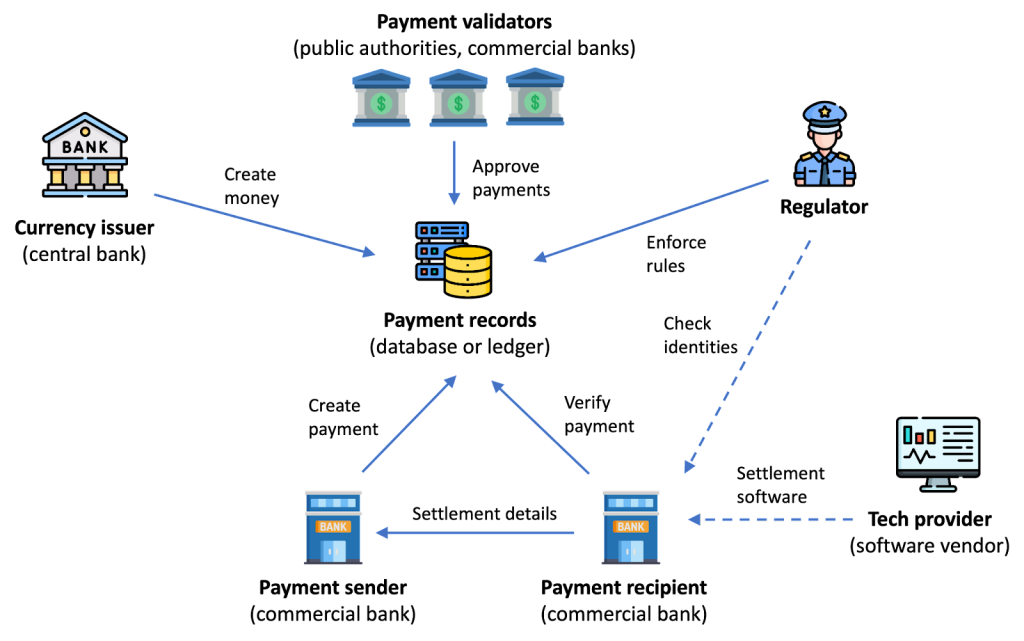
CBDCs + Open Credit: A Three-Layer Model for Privacy, Inclusion, and Audit

CBDCs + Open Credit: A Three-Layer Model for Privacy, Inclusion, and Audit

By separating settlement, credit, and privacy layers, this architectural model for CBDCs aims to prevent surveillance while enabling financial access.

Author: Hackernoon
On Lex Fridman’s podcast, Pavel Durov explained why Telegram gifts are “socially relevant NFTs”

On Lex Fridman’s podcast, Pavel Durov explained why Telegram gifts are “socially relevant NFTs”

On Sep. 30, Lex Fridman shared a four and a half hour long interview with Telegram CEO and founder Pavel Durov. They touched upon various topics, including censorship, government pressure, and freedom of speech, among others. Some portions of their…

Author: Crypto.news
Ondo Finance and Securitize are already building on the Sei Network

Ondo Finance and Securitize are already building on the Sei Network

PANews reported on October 2nd that Layer1 blockchain Sei announced on its official X platform that Ondo Finance and Securitize, two major players in the real-world asset (RWA) tokenization field, have chosen to build or integrate on the Sei network. Sei officials noted that the two companies combined hold over 50% of the tokenized U.S. Treasury market share. Sei said the move demonstrates that institutions are moving toward a settlement layer built for a global-scale market.

Author: PANews
zkVerify Launches Mainnet To Cut ZKP Verification Costs

zkVerify Launches Mainnet To Cut ZKP Verification Costs

The post zkVerify Launches Mainnet To Cut ZKP Verification Costs appeared on BitcoinEthereumNews.com. Horizen Labs, a zero-knowledge cryptography platform, is rolling out its dedicated layer-1 blockchain for private data verification. ZkVerify, a new L1 blockchain designed for zero-knowledge proof (ZK-proof) verification, announced its mainnet launch on Tuesday. “ZkVerify’s mission is to remove the economic and technical barriers to ZK adoption,” Horizen Labs CEO and zkVerify founder Rob Viglione told Cointelegraph. “Even though verification is typically seen as the ‘cheapest’ part of the ZK value chain, it is still far too costly and inefficient to support real-world scale,” Viglione said. What is ZKP verification? ZKP verification is a cryptographic method that allows one party to prove a statement to another without disclosing the underlying information or data itself. A common example is verifying age eligibility to access a service without requiring the disclosure of an entire ID or other personal details. With a ZKP volume estimated at around $100 million and 4.4 billion proofs as of 2025, the ZK proving market is expected to reach $1.5 billion by 2030, according to data from leading industry platforms Chorus, Aligned and Horizen Labs. ZK proving market predictions. Source: Delphi Digital “Right now, many chains and apps can be slowed down or more expensive because verifying those proofs on Ethereum or another chain can be significantly more expensive,” Viglione said. According to zkVerify, ZKP verification on networks like Ethereum can cost up to $60 per proof during high congestion, with verification consuming up to 300,000 gas units. zkVerify promises to enable cost reduction of at least 90% compared to verifying directly on L1s. “Heavy math instead of original app or chain” To cut verification costs, zkVerify provides a dedicated verification layer by separating proof verification from settlement on L1s. “zkVerify checks a ZK-proof by doing the heavy math instead of the original app or chain,” Viglione told…

Author: BitcoinEthereumNews