ETF

A crypto ETF is a regulated investment fund that tracks the price of one or more digital assets and trades on traditional stock exchanges like the NYSE or Nasdaq.Following the success of Bitcoin and Ethereum ETFs, the 2026 market now includes Solana ETFs and diversified Altcoin Baskets. ETFs serve as the primary vehicle for institutional capital and retirement funds (401k/IRA) to enter the Web3 space. This tag tracks regulatory approvals, AUM (Assets Under Management) inflows, and the impact of Wall Street on crypto liquidity.

40000 Articles
Created: 2026/02/02 18:52
Updated: 2026/02/02 18:52
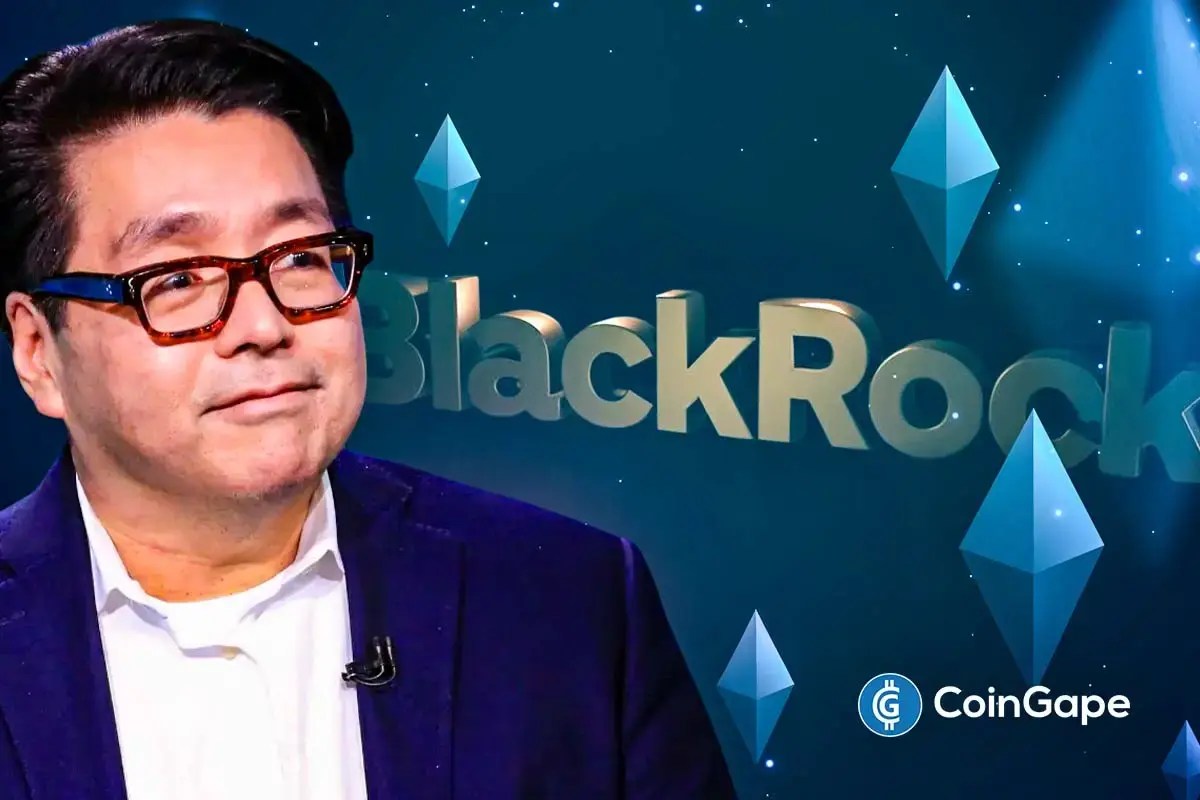
BlackRock Ethereum ETF Records $314M Inflows as Tom Lee Predicts ETH Price Floor

BlackRock Ethereum ETF Records $314M Inflows as Tom Lee Predicts ETH Price Floor

The post BlackRock Ethereum ETF Records $314M Inflows as Tom Lee Predicts ETH Price Floor appeared on BitcoinEthereumNews.com. BlackRock’s Ethereum ETF saw an inflow of $314 million on August 25. This news comes after Tom Lee predicted that the ETH price would drop to its lowest point soon. BlackRock’s Ethereum ETF Posts Strong Recovery Data from SoSoValue showed that BlackRock’s Ethereum ETF (ETHA) recorded a net inflow of 67,899 ETH on August 25. This is worth roughly $314.9 million. Trading activity was equally impressive, with volumes crossing $2.4 billion in a single day. Source: SoSoValue; Spot Ethereum ETFs Data The surge comes as a reversal after the product collectively suffered more than $924 million in outflows between August 15 and 20. This included a massive $429 million exit on August 19, the second-largest daily loss of the month. Other funds, such as Fidelity’s Ethereum ETF (FETH) and Grayscale’s Mini Ethereum ETF (ETH), also recorded steep outflows during the same stretch. In comparison, BlackRock’s Ethereum ETF lost just $8.3 million last week before bouncing back strongly. Since inception, cumulative inflows across all ETH ETFs have now topped $12.43 billion, with total net assets at $30.58 billion. Furthermore, on August 22, ETH ETFs collectively recorded a daily net inflow of 92,900 ETH. This lifted spot ETF reserves to 6.6 million ETH worth $29.23 billion. It also equates to roughly 5.45% of Ethereum’s circulating supply, underscoring how significant ETFs have become in absorbing market liquidity. BlackRock’s ETHA led that charge with $233.5 million in fresh inflows, while Fidelity’s fund added $28.5 million. Other issuers averaged around $6 million each. This indicated a general improvement in investor mood. Interestingly, spot Ether ETFs have accumulated 6.6 million ETH, according to the Strategic ETH Reserve (SER) tracker. This is valued at $29.23 billion, controlling around 5.45% of Ethereum’s available supply. Tom Lee Predicts ETH Price Bottom Amid this renewed interest, Tom Lee, head of…

Author: BitcoinEthereumNews
Ripple (XRP) and Cardano (ADA) Eye $5 In 2025, But It;s Another Crypto Capturing The Eye In August

Ripple (XRP) and Cardano (ADA) Eye $5 In 2025, But It;s Another Crypto Capturing The Eye In August

The post Ripple (XRP) and Cardano (ADA) Eye $5 In 2025, But It;s Another Crypto Capturing The Eye In August appeared on BitcoinEthereumNews.com. Crypto News The crypto community has been buzzing over whether Ripple (XRP) and Cardano (ADA) can push toward the elusive $5 mark in 2025. On paper, both tokens have brand recognition and established ecosystems. However, both already command multi-billion-dollar market caps. That means even a modest XRP or Cardano price run requires a flood of fresh liquidity. For traders chasing parabolic upside, the “boomer coin” days of XRP and ADA are showing cracks. The smart money, meanwhile, is quietly rotating into Layer Brett ($LBRETT) and its crypto presale, a next-generation meme-flavored Ethereum Layer 2 scalability solution poised to capture institutional flows and community hype in equal measure. Here’s why. Ripple’s uphill climb to $5 While Ripple continues to win regulatory battles, its path to a sustainable XRP breakout is far from clear. Yes, the network supports cross-border payments, but with a $150+ billion diluted valuation, the math doesn’t add up for high-multiple gains. For XRP to convincingly move from $3 to $5, it needs tens of billions in incremental capital. In today’s capital-efficient market, that’s a tall order. XRP is a “liquidity trap” that looks like a blue chip but doesn’t offer the kind of asymmetric returns. Even if Ripple succeeds in capturing bank adoption, its upside is capped by its gargantuan market cap. FACTS. Cardano ivory tower problem Cardano (ADA), meanwhile, remains a polarizing token. While founder Charles Hoskinson champions academic rigor, the chain has faced years of criticism for slow development, thin DeFi adoption, and a culture that feels more like a research lab than a vibrant Web3 hub. Impressive on paper, but lacking in on-the-ground execution. Worse, for Cardano to climb from $0.50 levels toward $5, it would require not just adoption, but a wholesale narrative reset. With Solana and Ethereum commanding developer mindshare, ADA risks being…

Author: BitcoinEthereumNews
Bitcoin Is “Digital Gold” — Not a Currency

Bitcoin Is “Digital Gold” — Not a Currency

The post Bitcoin Is “Digital Gold” — Not a Currency appeared on BitcoinEthereumNews.com. Bitcoin BlackRock CEO Larry Fink is once again voicing confidence in Bitcoin, framing the asset as a long-term store of value rather than a true currency. Speaking in an interview with Citi, Fink said Bitcoin carries “legitimacy” through its underlying blockchain technology but compared it to gold rather than money used for everyday transactions. Bitcoin as a Hedge, Not a Currency Fink argued that Bitcoin is often bought in times of fear, whether from concerns over currency debasement or national security. In his view, that demand dynamic makes it a “currency of fear,” one that protects wealth rather than circulates like cash. His comments fit with BlackRock’s broader approach. The firm’s investment philosophy is rooted in long-term positioning, and Fink suggested Bitcoin has earned its place in that framework. ETF Demand Fuels Bitcoin’s Rise BlackRock has played a central role in driving institutional adoption. Its spot Bitcoin ETF, IBIT, has become one of the most popular vehicles for exposure to BTC, helping push flows into crypto investment products to record levels. In fact, IBIT recently surpassed Coinbase as the largest single Bitcoin holder. Bitcoin reached a record $124,128 on Aug. 14 but has since slipped back to around $111,000. The decline follows heavy liquidations and fits a broader pattern: September has historically been a tough month for the asset. Macro Factors in Play Still, optimism lingers. If the Federal Reserve follows through with an expected rate cut in September, risk assets could rebound sharply, with Bitcoin well positioned to benefit. For now, the market is consolidating after an extraordinary run, while the world’s largest asset manager continues to frame BTC as a long-term bet — digital gold for the modern era.  The information provided in this article is for informational purposes only and does not constitute financial, investment, or…

Author: BitcoinEthereumNews
Glassnode: Market sentiment has shifted from enthusiasm to caution, and future trends depend on the possibility of liquidity returning to stability or further adjustments.

Glassnode: Market sentiment has shifted from enthusiasm to caution, and future trends depend on the possibility of liquidity returning to stability or further adjustments.

PANews reported on August 26th that according to Glassnode data, BTC rose to $117,000 last weekend, but then quickly fell back to $111,000, indicating increased market volatility. Momentum in the spot market weakened, with the RSI approaching oversold territory and selling pressure intensifying. Trading volume remained stable, but buyer confidence was fragile. Leverage in the futures market decreased, funding rates rose, and speculative demand weakened. Regarding ETFs, US-listed spot ETFs saw outflows of $1 billion, trading volume declined, and institutional demand cooled. On-chain data showed a decrease in daily active addresses and transaction fees, a decline in network usage, and a slight increase in transfer volume driven by volatility. Overall, the market has shifted from enthusiasm to caution, and future trends depend on the possibility of liquidity stabilization or further adjustments.

Author: PANews
Data: Hong Kong virtual asset ETF trading volume today is approximately HK$56.4129 million

Data: Hong Kong virtual asset ETF trading volume today is approximately HK$56.4129 million

According to PANews on August 26, Hong Kong stock market data showed that as of the close of trading, the total trading volume of all Hong Kong virtual asset ETFs today was approximately HK$56.4129 million. The trading volume of China Asset Management Bitcoin ETF (3042.HK/9042.HK/83042.HK) was HK$12.5616 million, and the trading volume of China Asset Management Ethereum ETF (03046.HK/09046.HK/83046.HK) was HK$25.9978 million. The trading volume of Harvest Bitcoin ETF (03439.HK/09439.HK) was HK$5.1133 million, and the trading volume of Harvest Ethereum ETF (03179.HK/09179.HK) was HK$1.3038 million; The trading volume of Bosera Bitcoin ETF (03008.HK/09008.HK) was HK$3.30822 million, and the trading volume of Bosera Ethereum ETF (03009.HK/09009.HK) was HK$8.128 million. Note: All of the above virtual asset ETFs have Hong Kong dollar counters and US dollar counters, and only two ETFs of China Asset Management also have RMB counters.

Author: PANews
Grayscale Pushes for a Dogecoin (DOGE) ETF, but Meme Coin Traders Are Doubling Down on Competitor Token for 18365% Gains

Grayscale Pushes for a Dogecoin (DOGE) ETF, but Meme Coin Traders Are Doubling Down on Competitor Token for 18365% Gains

Grayscale Investments has filed for a spot Dogecoin (DOGE) exchange-traded fund (ETF), a move seen as an effort to legitimize the meme-based cryptocurrency within institutional markets.

Author: Cryptodaily
Is it a cognitive lag or a misjudgment of value? Decoding Wall Street's three main reasons for rejecting crypto assets

Is it a cognitive lag or a misjudgment of value? Decoding Wall Street's three main reasons for rejecting crypto assets

By Gino Matos, CryptoSlate Compiled by Shaw Golden Finance Bitcoin and cryptocurrencies appear to be on the verge of mainstream acceptance, with inflows into U.S. spot exchange-traded funds (ETFs) hitting record highs. Goldman Sachs holds more shares in the cryptocurrency ETF issued by BlackRock than any other institution, and corporate finance departments from Strategy to Bitmine are also embracing digital assets. However, a recent Bank of America survey showed that three-quarters of global fund managers still firmly refuse to dabble in digital assets. Max Gokhman, deputy chief investment officer at Franklin Templeton, said the seemingly contradictory data did not stem from regulatory uncertainty or operational complexity, as those obstacles have largely been resolved. In an interview, Gokman said the skewed data stems from fear, misunderstanding and the industry's difficulty in letting go of its ingrained belief in legitimate investments. Gokman has been watching how traditional finance responds to the digital asset revolution for years. He noted: “The biggest reason is that it often takes a while for a mature industry to realize it’s falling behind. This fear of the unknown is always there.” Management Paradox Fund managers take pride in fulfilling their fiduciary responsibilities, but this protectiveness creates a paradox: the desire to protect client assets prevents them from accessing the investment opportunities that their clients increasingly desire. According to Gochman: “One aspect of good asset management is understanding client needs. From individual clients to institutional clients, they are more interested in digital assets, but they find that their investment managers don’t actually provide relevant solutions.” This resistance stems from some deep-seated misconceptions: one is that it’s all overly speculative and worthless, and another is that there’s a lack of people with the expertise to create legitimate investment solutions using digital assets. Meme Coin Trap When Gokman encounters skeptical colleagues, the conversations follow a predictable pattern: Veterans of traditional finance will dismiss Meme Coin as representative of the entire cryptocurrency ecosystem, revealing what he calls a superficial understanding. Just as the stock market encompasses everything from blue-chip dividend stocks to speculative biotech stocks, digital assets range from mature protocols that generate real income to purely speculative tokens. His reaction has become natural: “Because you invest in stocks, does that mean you only buy penny stocks that trade on the pink sheets? There are a lot of companies in high-yield bonds that most rational investors wouldn’t touch. Most asset managers will tell you they hold emerging market stocks and distressed debt. It’s a key asset class for them.” Gochman stressed that this skepticism is selective. Fund managers are comfortable with Venezuelan bonds, a financial instrument that has defaulted many times, but are hesitant to invest in Bitcoin, which has never defaulted in 15 years. While fund managers continue to debate the legitimacy of cryptocurrencies, the market has quietly shifted. The data cited by Gokman refutes the notion of retail investors dominating the market: 89% of Bitcoin transactions on exchanges are for amounts exceeding $100,000. He emphasized: “That’s not retail money. The market is becoming more institutional.” Educational Challenges Franklin Templeton’s response involved a three-tiered outreach campaign targeting central bankers, institutional intermediaries, and retail investors. The crucial middle layer consisted of large brokerage firms and platform owners, who controlled access to millions of clients but had little understanding of their needs. Gokman asked these players if they had ever asked their customers if they wanted cryptocurrency. He added: “They might have an account on Coinbase and have the majority of their wealth there. And you have no idea what’s going on.” Traditional advisors often find that their clients’ wealth is spread across multiple platforms, and the digital assets accumulated by their clients themselves are not included in the professionally managed portfolios. Franklin Templeton's breakthrough lies in interpretation: expressing blockchain concepts in traditional financial language. When analyzing Solana, they didn't invoke revolutionary rhetoric, but instead calculated discounted cash flows. Gochman explained: “If you actually pay fees on every transaction, like Solana does, we can project the growth of those transactions. Those are future cash flows. We can discount them to the present.” This approach demystifies digital assets by applying a familiar analytical framework that any investor with basic valuation training can understand. It all comes down to revenue With the Federal Reserve's interest rate cut looming, Gokman saw an opportunity. With traditional sources of income facing declining returns and institutions facing increasing pressure to generate revenue, cryptocurrencies offered an alternative. According to him: “Everyone needs income. Staking is a clear way to get income. When people tell me they’re worried this whole thing (cryptocurrency) is a scam, have you ever wondered if the government will just cancel all the debt? Because I’ve been there.” The recent guidance from the U.S. Securities and Exchange Commission (SEC) on liquidity staking could be a turning point. For the first time, regulated products can offer staking returns without directly holding cryptocurrencies. Gokman predicts that this resistance won’t last indefinitely if a staking-backed cryptocurrency ETF is approved. He predicts: “When we can show the benefits, I think it will drive more adoption.” This shift could accelerate suddenly. Institutional adoption typically follows a pattern of persistent skepticism until competitive pressures force large-scale action. A significant cryptocurrency divide remains between the 75% of fund managers who adhere to traditional frameworks and a growing consortium that recognizes the need to embrace technological change in client service. The question isn’t whether the gap will narrow, as economic pressures will eventually force acceptance on all sides. The question is which managers will lead the way and which will scramble to catch up.

Author: PANews
Grayscale Avalanche Trust Converts to Spot ETF

Grayscale Avalanche Trust Converts to Spot ETF

The post Grayscale Avalanche Trust Converts to Spot ETF appeared on BitcoinEthereumNews.com. Quick Highlights Grayscale plans to convert its Avalanche Trust into a spot ETF. Up to 85% of the fund’s assets could be used for staking. VanEck is also eyeing an AVAX-based ETF, signaling rising competition. Grayscale Moves to Launch Avalanche Spot ETF with Plans for More Altcoin Funds Grayscale Investments has filed with the U.S. Securities and Exchange Commission (SEC) to convert its Avalanche Trust into a spot ETF, continuing its efforts to expand into altcoin-based exchange-traded funds (ETFs). Source: sec.gov This move comes after the company successfully launched similar products based on Bitcoin and Ethereum. Grayscale first launched the Avalanche Trust in late August 2024 as a closed-end fund that exclusively invested in Avalanche (AVAX). Since then, it has expanded its focus to include a broader range of altcoins. Future Plans: Expanding the ETF Portfolio Grayscale has big plans to keep growing its ETF portfolio. The company aims to launch additional funds based on other altcoins in the near future. According to the latest S-1 filing with the SEC on August 22, 2025, the Avalanche Trust will issue and redeem shares in cash. Coinbase will act as the custodian, while BNY Mellon will manage the trust and serve as the transfer agent. In addition to its primary investment focus, Grayscale is also looking to increase the income potential of its trust. The filing mentions the possibility of generating additional returns through staking, and if approved, the fund plans to use up to 85% of its managed assets for this purpose. This new feature promises to give the trust a unique advantage in the altcoin space. Rising Competition in the AVAX ETF Market Grayscale isn’t alone in its interest in launching an AVAX-based fund. VanEck, another prominent financial firm, has also filed an application to offer a similar product. Their…

Author: BitcoinEthereumNews
Tokyo Hash upgrades to HashKey Japan, fully deploying in the Japanese digital asset market

Tokyo Hash upgrades to HashKey Japan, fully deploying in the Japanese digital asset market

Tokyo Hash, a licensed crypto asset service provider under HashKey Group, a leading Asian digital asset financial services group, has announced the completion of its comprehensive transformation and its official launch as HashKey Japan. This move is not only a significant step in the company's long-term development strategy in Japan, but also marks a new phase in its business, evolving from simple trading services to asset management and on-chain institutional solutions. HashKey Japan is committed to becoming the preferred channel for local companies entering the digital asset industry. This upgrade demonstrates HashKey Group's commitment to deepening its presence in the Japanese market. On August 25th, HashKey Japan hosted a closed-door luncheon in Tokyo, inviting several major Japanese companies actively exploring Web3 opportunities. During these discussions, HashKey Japan and attendees discussed how to jointly develop innovative solutions to help companies successfully enter the blockchain industry. This series of interactions demonstrates the company's future ambitions, not only to export its technology and services but also to collaborate with the local market to advance digital finance practices. Since its founding in 2018, HashKey Japan has prioritized security and compliance, strictly adhering to the Payment Services Act, relevant regulatory guidelines, and the industry rules of the Japan Crypto Asset Exchange Association. In June 2021, the company obtained registered crypto asset trading service provider status, laying the foundation for its subsequent transition to serving institutional and professional investors. HashKey Japan CEO Deng Chao stated that the brand upgrade is a significant milestone in the company's development, marking the expansion of its business focus from simple trading to asset management and on-chain services. He emphasized that Japan has always been a priority in the group's strategy, and the company will continue to provide compliant, innovative solutions that meet the highest industry standards. From Tokyo Hash to HashKey Japan, HashKey has upgraded not only its name but also its business approach. In the future, in addition to high-net-worth client trading and OTC services, HashKey Japan will gradually expand its asset management business, including funds, ETFs, and structured products, and promote the implementation of on-chain services such as decentralized financial products, stablecoins, and the tokenization of real-world assets. HashKey Group is Asia's leading one-stop digital asset financial services provider, encompassing trading, asset management, and infrastructure development. The transformation and upgrade of HashKey Japan is a key step in the group's overall strategy. Leveraging its established network in Hong Kong, Singapore, Tokyo, and Shanghai, HashKey will combine global experience with local market insights to drive the development of digital finance in Japan. About HashKey Japan HashKey Japan, a subsidiary of HashKey Group, is a strategic subsidiary in Japan. Its business covers three key areas: trading services, including fiat deposits and withdrawals, and spot trading; asset management, encompassing active and passive investment strategies, including funds, ETFs, and structured products; and on-chain solutions, encompassing decentralized finance, stablecoins, and the tokenization of real-world assets. Leveraging Japan's forward-thinking regulatory environment, HashKey Japan will collaborate with local partners to promote ecosystem development and foster the wider adoption of digital assets within the Japanese financial system.

Author: PANews
The SEC delayed its decision on WisdomTree’s XRP ETF

The SEC delayed its decision on WisdomTree’s XRP ETF

The SEC delayed its decision on WisdomTree’s XRP ETF to October 24.

Author: Cryptopolitan