A Texas sheriff’s bold move to seize funds from a Bitcoin ATM has sparked controversy over law enforcement practices and the future of privacy in crypto transactions. On June 16, Jasper County Sheriff Chuck Havard authorized a search warrant that led to the forced entry and seizure of nearly $32,000 from a Bitcoin ATM located in neighboring Hardin County. The action followed a report that a local family had been tricked into depositing $25,000 into the machine after being contacted by someone posing as a government official. Crypto Scam Funds Recovered From ATM, but Critics Question Sheriff’s Methods According to local reports on Tuesday, the scammers had told the family they owed legal fines and needed to pay immediately or face legal consequences. The family complied, transferring the money through the kiosk. Once alerted, deputies from the Jasper County Sheriff’s Office began an investigation and traced the funds to the Bitcoin ATM. Source: KDFM Chief Deputy Scott Pulliam, accompanied by Investigator David Lampman, traveled to the machine’s location. After securing a state search warrant, they accessed the machine and recovered $31,900. The sheriff’s office confirmed that the funds have been returned to Jasper County pending a seizure hearing. Although the money was recovered, the scammers remain unidentified. “We’re still trying to locate what I call the online scammers,” Havard said. “When thieves, lowlifes, and scammers attempt to take advantage of the citizens of Jasper County, we will work swiftly and utilize every resource at our disposal to protect our citizens and their property at all costs.” The sheriff praised his team’s rapid response. “I want to thank Chief Pulliam and our staff along with the Hardin County Sheriff’s Office for their aggressive approach to this investigation,” he said. But while some residents welcomed the recovery of funds, the operation has drawn sharp criticism online. Some questioned whether the authorities overstepped legal boundaries by accessing a privately owned crypto ATM. “Sounds like maybe government employees destroyed an innocent third party’s property and stole his money,” one Reddit user commented . Another user wrote , “Unless it was the kiosk owner who was scamming, this makes no sense. It’s like confiscating all the money from a CVS register after someone bought a bunch of gift cards to send to scammers.” The case has stirred broader questions about how far law enforcement can go in responding to crypto-related crimes. As sheriff departments across the U.S. face more digital financial scams, the balance between swift action and due process may become a growing point of tension. For now, the Jasper County Sheriff’s Office says the focus remains on identifying those behind the scam. But with an ATM forcibly opened and thousands seized, the case has set off new debates around Bitcoin ATM security and the limits of law enforcement authority in crypto crime. More U.S. Cities Crack Down on Bitcoin ATMs Amid Rising Fraud Concerns Following the dramatic seizure of $32,000 from a Bitcoin ATM in Texas, the pressure on crypto kiosks is intensifying nationwide. Earlier this month, the city of Spokane, Washington, voted unanimously to ban all crypto ATMs within city limits. Operators have been ordered to remove machines, many of which are located in gas stations and convenience stores. 🇺🇸 Spokane City Council voted unanimously on an ordinance that eliminates and prohibits crypto ATMs located within the US city in Washington. #Spokane #CryptoATM #BitcoinATMScam https://t.co/u1hiKFmxcj — Cryptonews.com (@cryptonews) June 18, 2025 Council Member Paul Dillon said the ordinance aims to “protect vulnerable residents from scams involving virtual currency kiosks.” Data from Coin ATM Radar shows nearly 45 Bitcoin ATMs were operating in Spokane prior to the ban, run by companies like Coinflip and Bitcoin Deposit. The decision follows similar action in Stillwater, Minnesota, while other U.S. cities are reviewing crypto kiosk regulations. Globally, regulators are also tightening rules. In Australia, AUSTRAC recently imposed new conditions on ATM operators , including $5,000 limits and enhanced ID checks, after identifying rising fraud risks. Back in the U.S., the issue has gained attention at the federal level. In March, o ver 1,200 crypto ATMs went offline , coinciding with Senator Dick Durbin’s proposed Crypto ATM Fraud Prevention Act , which would cap transactions and require better fraud tracking. Despite hosting nearly 80% of the world’s crypto ATMs, America’s booming Bitcoin kiosk scene is now facing a wave of scrutiny and regulation.A Texas sheriff’s bold move to seize funds from a Bitcoin ATM has sparked controversy over law enforcement practices and the future of privacy in crypto transactions. On June 16, Jasper County Sheriff Chuck Havard authorized a search warrant that led to the forced entry and seizure of nearly $32,000 from a Bitcoin ATM located in neighboring Hardin County. The action followed a report that a local family had been tricked into depositing $25,000 into the machine after being contacted by someone posing as a government official. Crypto Scam Funds Recovered From ATM, but Critics Question Sheriff’s Methods According to local reports on Tuesday, the scammers had told the family they owed legal fines and needed to pay immediately or face legal consequences. The family complied, transferring the money through the kiosk. Once alerted, deputies from the Jasper County Sheriff’s Office began an investigation and traced the funds to the Bitcoin ATM. Source: KDFM Chief Deputy Scott Pulliam, accompanied by Investigator David Lampman, traveled to the machine’s location. After securing a state search warrant, they accessed the machine and recovered $31,900. The sheriff’s office confirmed that the funds have been returned to Jasper County pending a seizure hearing. Although the money was recovered, the scammers remain unidentified. “We’re still trying to locate what I call the online scammers,” Havard said. “When thieves, lowlifes, and scammers attempt to take advantage of the citizens of Jasper County, we will work swiftly and utilize every resource at our disposal to protect our citizens and their property at all costs.” The sheriff praised his team’s rapid response. “I want to thank Chief Pulliam and our staff along with the Hardin County Sheriff’s Office for their aggressive approach to this investigation,” he said. But while some residents welcomed the recovery of funds, the operation has drawn sharp criticism online. Some questioned whether the authorities overstepped legal boundaries by accessing a privately owned crypto ATM. “Sounds like maybe government employees destroyed an innocent third party’s property and stole his money,” one Reddit user commented . Another user wrote , “Unless it was the kiosk owner who was scamming, this makes no sense. It’s like confiscating all the money from a CVS register after someone bought a bunch of gift cards to send to scammers.” The case has stirred broader questions about how far law enforcement can go in responding to crypto-related crimes. As sheriff departments across the U.S. face more digital financial scams, the balance between swift action and due process may become a growing point of tension. For now, the Jasper County Sheriff’s Office says the focus remains on identifying those behind the scam. But with an ATM forcibly opened and thousands seized, the case has set off new debates around Bitcoin ATM security and the limits of law enforcement authority in crypto crime. More U.S. Cities Crack Down on Bitcoin ATMs Amid Rising Fraud Concerns Following the dramatic seizure of $32,000 from a Bitcoin ATM in Texas, the pressure on crypto kiosks is intensifying nationwide. Earlier this month, the city of Spokane, Washington, voted unanimously to ban all crypto ATMs within city limits. Operators have been ordered to remove machines, many of which are located in gas stations and convenience stores. 🇺🇸 Spokane City Council voted unanimously on an ordinance that eliminates and prohibits crypto ATMs located within the US city in Washington. #Spokane #CryptoATM #BitcoinATMScam https://t.co/u1hiKFmxcj — Cryptonews.com (@cryptonews) June 18, 2025 Council Member Paul Dillon said the ordinance aims to “protect vulnerable residents from scams involving virtual currency kiosks.” Data from Coin ATM Radar shows nearly 45 Bitcoin ATMs were operating in Spokane prior to the ban, run by companies like Coinflip and Bitcoin Deposit. The decision follows similar action in Stillwater, Minnesota, while other U.S. cities are reviewing crypto kiosk regulations. Globally, regulators are also tightening rules. In Australia, AUSTRAC recently imposed new conditions on ATM operators , including $5,000 limits and enhanced ID checks, after identifying rising fraud risks. Back in the U.S., the issue has gained attention at the federal level. In March, o ver 1,200 crypto ATMs went offline , coinciding with Senator Dick Durbin’s proposed Crypto ATM Fraud Prevention Act , which would cap transactions and require better fraud tracking. Despite hosting nearly 80% of the world’s crypto ATMs, America’s booming Bitcoin kiosk scene is now facing a wave of scrutiny and regulation.

Texas Sheriff Breaks Open Crypto ATM, Seizes $32K—Is This the End for Bitcoin ATM Privacy?

2025/06/20 22:37
4 min read
For feedback or concerns regarding this content, please contact us at [email protected]

A Texas sheriff’s bold move to seize funds from a Bitcoin ATM has sparked controversy over law enforcement practices and the future of privacy in crypto transactions.

On June 16, Jasper County Sheriff Chuck Havard authorized a search warrant that led to the forced entry and seizure of nearly $32,000 from a Bitcoin ATM located in neighboring Hardin County.

The action followed a report that a local family had been tricked into depositing $25,000 into the machine after being contacted by someone posing as a government official.

Crypto Scam Funds Recovered From ATM, but Critics Question Sheriff’s Methods

According to local reports on Tuesday, the scammers had told the family they owed legal fines and needed to pay immediately or face legal consequences. The family complied, transferring the money through the kiosk.

Once alerted, deputies from the Jasper County Sheriff’s Office began an investigation and traced the funds to the Bitcoin ATM.
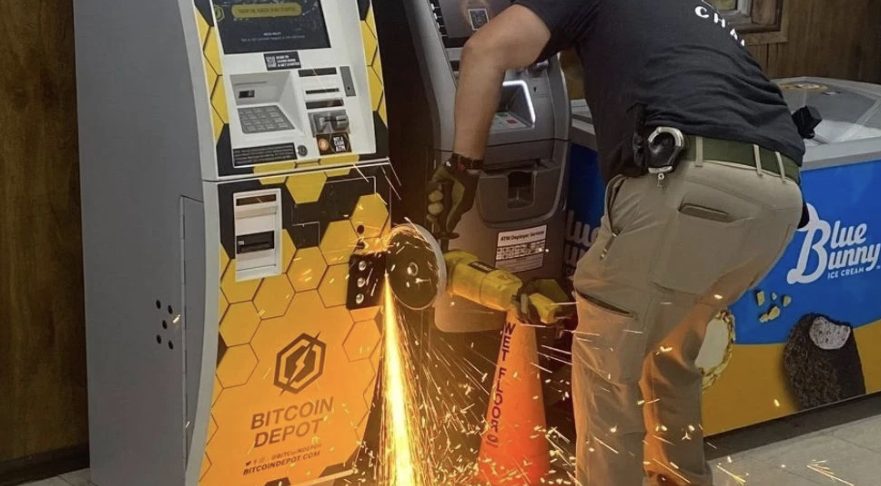
Source: KDFM

Chief Deputy Scott Pulliam, accompanied by Investigator David Lampman, traveled to the machine’s location. After securing a state search warrant, they accessed the machine and recovered $31,900.

The sheriff’s office confirmed that the funds have been returned to Jasper County pending a seizure hearing.

Although the money was recovered, the scammers remain unidentified. “We’re still trying to locate what I call the online scammers,” Havard said.

“When thieves, lowlifes, and scammers attempt to take advantage of the citizens of Jasper County, we will work swiftly and utilize every resource at our disposal to protect our citizens and their property at all costs.”

The sheriff praised his team’s rapid response. “I want to thank Chief Pulliam and our staff along with the Hardin County Sheriff’s Office for their aggressive approach to this investigation,” he said.

But while some residents welcomed the recovery of funds, the operation has drawn sharp criticism online.

Some questioned whether the authorities overstepped legal boundaries by accessing a privately owned crypto ATM.

“Sounds like maybe government employees destroyed an innocent third party’s property and stole his money,” one Reddit user commented.

Another user wrote, “Unless it was the kiosk owner who was scamming, this makes no sense. It’s like confiscating all the money from a CVS register after someone bought a bunch of gift cards to send to scammers.”

The case has stirred broader questions about how far law enforcement can go in responding to crypto-related crimes. As sheriff departments across the U.S. face more digital financial scams, the balance between swift action and due process may become a growing point of tension.

For now, the Jasper County Sheriff’s Office says the focus remains on identifying those behind the scam.

But with an ATM forcibly opened and thousands seized, the case has set off new debates around Bitcoin ATM security and the limits of law enforcement authority in crypto crime.

More U.S. Cities Crack Down on Bitcoin ATMs Amid Rising Fraud Concerns

Following the dramatic seizure of $32,000 from a Bitcoin ATM in Texas, the pressure on crypto kiosks is intensifying nationwide.

Earlier this month, the city of Spokane, Washington, voted unanimously to ban all crypto ATMs within city limits. Operators have been ordered to remove machines, many of which are located in gas stations and convenience stores.

Council Member Paul Dillon said the ordinance aims to “protect vulnerable residents from scams involving virtual currency kiosks.”

Data from Coin ATM Radar shows nearly 45 Bitcoin ATMs were operating in Spokane prior to the ban, run by companies like Coinflip and Bitcoin Deposit. The decision follows similar action in Stillwater, Minnesota, while other U.S. cities are reviewing crypto kiosk regulations.

Globally, regulators are also tightening rules. In Australia, AUSTRAC recently imposed new conditions on ATM operators, including $5,000 limits and enhanced ID checks, after identifying rising fraud risks.

Back in the U.S., the issue has gained attention at the federal level. In March, over 1,200 crypto ATMs went offline, coinciding with Senator Dick Durbin’s proposed Crypto ATM Fraud Prevention Act, which would cap transactions and require better fraud tracking.

Despite hosting nearly 80% of the world’s crypto ATMs, America’s booming Bitcoin kiosk scene is now facing a wave of scrutiny and regulation.

Market Opportunity
Threshold Logo
Threshold Price(T)
$0.006097
$0.006097$0.006097
-2.29%
USD
Threshold (T) Live Price Chart
Disclaimer: The articles reposted on this site are sourced from public platforms and are provided for informational purposes only. They do not necessarily reflect the views of MEXC. All rights remain with the original authors. If you believe any content infringes on third-party rights, please contact [email protected] for removal. MEXC makes no guarantees regarding the accuracy, completeness, or timeliness of the content and is not responsible for any actions taken based on the information provided. The content does not constitute financial, legal, or other professional advice, nor should it be considered a recommendation or endorsement by MEXC.

You May Also Like

200,000,000 XRP out in 2 Weeks: What’s Going On?

200,000,000 XRP out in 2 Weeks: What’s Going On?

The post 200,000,000 XRP out in 2 Weeks: What’s Going On? appeared on BitcoinEthereumNews.com. In the last 14 days, wallets with between 1,000,000 and 10,000,000 XRP have reduced their holdings by around 200,000,000 tokens. This change, displayed by Santiment data, suggests that some of these holders are leaving the mid-level group, reducing their combined holdings to around 6.74 billion XRP.  They are not small retail accounts, but they also do not match the scale of the very largest XRP players.  Such movements usually matter because of the amount of supply in control, which can influence short-term trends. Of late, these whales have clearly been reducing their holdings. The XRP price has been trending down while XRP has been levitating close to $3, bouncing between $2.90 and $3.30, without going in a clear direction.  The fact that these wallets are selling could be one of the reasons why the token has struggled to increase in value, even though the general crypto market has had a mix of positive and negative days. Why do XRP whales sell? One possibility is that these holders are simply taking profit after XRP’s climb earlier in the summer.  Another reason is caution: with the Federal Reserve’s interest rate decision coming up and money availability across markets looking uncertain, some investors may prefer to derisk their exposure now instead of holding amid price chaos. It is important to know that not all of these tokens have been moved to cold storage.  The number of XRP going into exchanges has gone up, which suggests that some of the 200 million XRP has been sent to trading platforms. This means that some of the selling pressure could be transferred to the open market if those tokens are moved directly there. Source: https://u.today/200000000-xrp-out-in-2-weeks-whats-going-on
Share
BitcoinEthereumNews2025/09/18 08:45
Smart investors earn $6,875 daily on ProfitableMining, the leading cloud mining platform.

Smart investors earn $6,875 daily on ProfitableMining, the leading cloud mining platform.

In the volatile cryptocurrency market, price fluctuations are becoming increasingly severe. Simply holding onto your coins and waiting for them to rise is no longer a safe strategy. More and more experienced investors are turning to a more stable approach—ProfitableMining cloud mining, with becoming their preferred platform. They aren’t waiting for market fluctuations; they’re generating […]
Share
Cryptopolitan2025/09/18 01:00
Worldcoin price at risk of $0.20 breakdown amid rising exchange inflows and bearish setup

Worldcoin price at risk of $0.20 breakdown amid rising exchange inflows and bearish setup

Worldcoin price has dropped over 30% this month as market sentiment remains risk-off amid geopolitical tensions in the Middle East. According to data from crypto
Share
Crypto.news2026/03/27 18:24
