In a crypto landscape often dominated by sober white papers, serious development roadmaps, and heavy‑duty technical jargon,
Dogecoin stands out as different-friendly, ironic, community‑driven. While it may never rival the sheer technological ambition of some blockchain projects, its role as a social‑finance phenomenon and its persistent community make it a unique case study in crypto evolution.
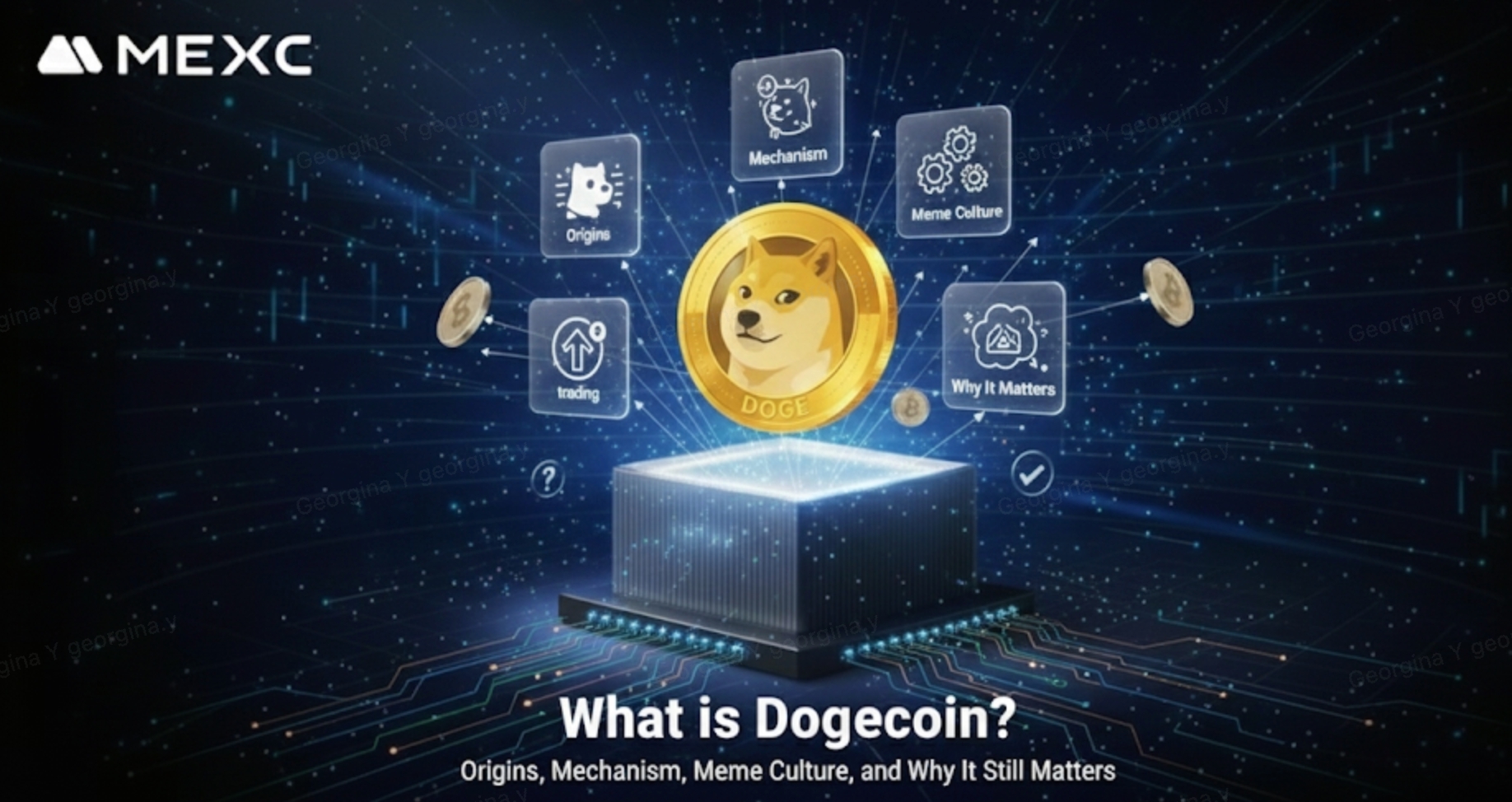
This article explores: the origins of Dogecoin, its technical foundations, the role of meme and community culture, and why - years after its creation - it still matters. Data, historical context, and recent developments are deployed to provide a comprehensive, no-fluff analysis.
Dogecoin (DOGE) started as a meme coin in December 2013 but evolved into a major cryptocurrency with real-world use cases.
It operates on a Proof-of-Work blockchain using the Scrypt algorithm, enabling faster transactions and lower fees than Bitcoin.
Dogecoin's community-driven culture has sustained its popularity, with memes, social media, and tipping playing a significant role.
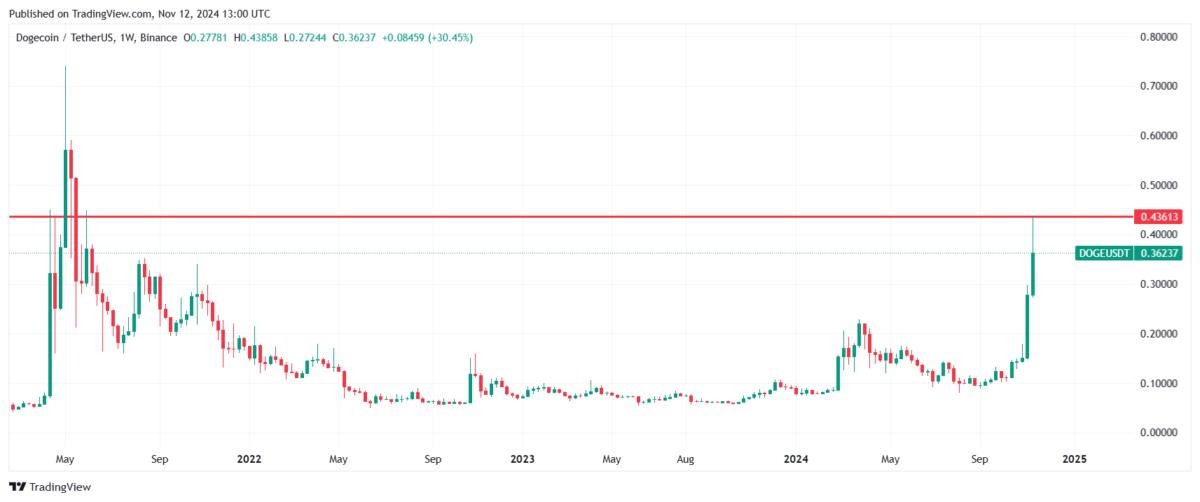
In 2024, Dogecoin saw a massive surge (250%) before facing a market correction in 2025, stabilizing at USD 0.14–0.16.
As of 2026, Dogecoin continues to serve as a transactional coin for micropayments, charitable donations, and community-driven initiatives.
By its nature, Dogecoin is an open-source
peer-to-peer digital currency. It was launched on December 6, 2013, by software engineers
Billy Markus and Jackson Palmer. The pair designed Dogecoin as a fun and approachable alternative to Bitcoin, using the Doge meme - which depicted a Shiba Inu dog paired with humorous captions. The idea behind Dogecoin was to create a lighthearted cryptocurrency that could appeal to a broader audience and offer a more friendly alternative to Bitcoin’s serious, speculative nature.
Unlike Bitcoin, which was aimed at becoming a decentralized store of value and a hedge against inflation, Dogecoin’s creators envisioned it as a peer-to-peer currency for small-value transactions and tipping. The coin’s branding was meant to be fun and accessible, breaking away from the tech-heavy language used by other cryptocurrencies. This made Dogecoin an instant hit among internet users looking for something more casual.
One of Dogecoin's unique features is its use of the Scrypt algorithm, borrowed from Litecoin, which allows for faster block generation and lower transaction fees than
Bitcoin’s SHA-256 algorithm. This makes Dogecoin an appealing choice for small transactions and micropayments.
Dogecoin’s connection to internet culture, particularly the Doge meme, is a big part of what has kept it popular. The meme featured a Shiba Inu dog, often with captions like “such wow” and “so doge” in Comic Sans font. This humor and lightheartedness helped Dogecoin gain popularity beyond just being a cryptocurrency - it became a cultural phenomenon.
As a meme coin, Dogecoin’s identity revolves around fun, humor, and a sense of community. It quickly became a community-driven cryptocurrency, with many users seeing it as a fun, low-stakes way to participate in the world of digital assets. The Dogecoin community embraced its humorous origins, organizing charity events and even funding projects like
NASCAR sponsorships and sending a dogecoin-funded spacecraft to the moon.
Dogecoin operates on a public blockchain that uses a Proof-of-Work (PoW) consensus mechanism, ensuring decentralization and security of its network. While both Bitcoin and Dogecoin use PoW, Dogecoin uses the Scrypt algorithm, which is different from Bitcoin’s SHA-256 algorithm. This difference means that
Dogecoin can be mined with less specialized equipment than Bitcoin, making it more accessible to users with ordinary computers or mining rigs.
The Proof-of-Work mechanism requires miners to solve complex cryptographic puzzles in order to validate transactions and add them to the blockchain. These miners compete to find the correct solution, and the first one to do so gets rewarded with newly minted Dogecoins. The Dogecoin blockchain generates a new block every 1 minute, much faster than Bitcoin’s 10-minute block generation, which allows for faster transactions and cheaper fees. This is a key reason why Dogecoin is considered ideal for small-value transfers and micropayments.
One of the most distinctive features of Dogecoin is its unlimited supply. Unlike Bitcoin, which has a fixed supply of 21 million coins, Dogecoin’s supply is inflationary. This means that new coins are continuously mined and added to circulation. Currently, 5 billion DOGE are mined annually, ensuring a steady increase in supply.
As of 2025, there are approximately 160 billion DOGE in circulation, and the supply is expected to grow without any cap.
This inflationary design makes Dogecoin less suited for long-term value storage or investment as compared to Bitcoin, which benefits from its fixed supply and is often seen as a store of value. However, Dogecoin's design is ideal for daily transactions and tipping because its supply ensures that there is plenty of liquidity, and inflation helps prevent hoarding by users.
While this inflationary model has made Dogecoin an accessible and practical cryptocurrency for micropayments, it has also
limited its appeal as a long-term investment vehicle. The price per DOGE may experience pressure if demand does not continue to grow at the same pace as the increasing supply.
Metric | Value / Description |
Metric | Value / Description |
Market Rank | Top 10 cryptocurrencies by market capitalization. |
Market Capitalization | USD 22.7 billion ($\approx$ #9 to #10 ranking). |
Circulating Supply | |
Price Range (2025) | USD 0.14–0.16 per DOGE. |
24h Trading Volume | Over $1 billion, reflecting high liquidity and trading activity. |
2024 Surge: Dogecoin saw a massive price increase of approximately 250% in 2024. This surge was fueled by both market trends and increased social media promotion. During this period, Dogecoin was among the top performers in the crypto market, outperforming even Bitcoin and Ethereum.
2025 Correction: Following its meteoric rise, Dogecoin experienced a market correction in 2025, with its price falling by around 52%. This drop was part of broader market volatility affecting the entire cryptocurrency sector.
Despite its inflationary nature and high volatility, Dogecoin remains relevant in the cryptocurrency landscape for the following reasons:
Dogecoin is one of the most widely used cryptocurrencies for micropayments, particularly in tipping. Thanks to its low transaction fees and faster confirmation times, Dogecoin is widely used for small transactions in online communities, tipping creators, and making micro-payments for goods and services.
Dogecoin has become a reliable means of payment in many online communities, particularly where small transactions are involved. Its low-cost transactions make it ideal for frequent, small-value exchanges. Many content creators on platforms like Reddit and Twitter use Dogecoin to accept tips from their followers.
This community-centric model has enabled Dogecoin to be more than just a currency; it is a symbol of internet culture, shared experiences, and social good. As more users see Dogecoin as a fun, easy-to-use cryptocurrency, its community impact grows.
With its large supply and high trading volume, Dogecoin remains one of the most liquid cryptocurrencies. It’s often used for quick exchanges because it is easy to buy, sell, and trade on various exchanges. As Dogecoin continues to rank in the top 10 cryptocurrencies, its liquidity and low barriers to entry ensure that it remains an attractive option for those new to cryptocurrency and for traders looking for quick transactions.
Dogecoin is also one of the most accessible cryptocurrencies for newcomers, offering low fees, high liquidity, and simple mechanics. For people interested in crypto trading or experimenting with digital currencies, Dogecoin serves as an easy point of entry into the world of digital assets.
Despite its popularity, Dogecoin has several limitations and risks that investors and users should consider:
Inflationary Nature
Dogecoin’s unlimited supply means that it is inherently inflationary. With 5 billion new DOGE minted every year, there is no fixed supply cap. While this ensures that there is always supply available for use, it also means that Dogecoin could dilute in value over time unless demand continues to grow at the same pace.
High Volatility & Social Sentiment
Dogecoin’s price is highly volatile and often swayed by social media trends, celebrity endorsements, and meme culture. As seen in 2024, Dogecoin can experience sharp price increases driven by online trends or market sentiment, only to correct sharply when the hype fades. This means Dogecoin’s value is subject to extreme swings, making it risky for long-term investors.
In 2026,
Dogecoin remains a community-driven and socially relevant cryptocurrency, thriving in areas like micropayments, tips, and community engagement. Although its inflationary nature and volatility limit its appeal for long-term investment, Dogecoin’s
ease of use, strong liquidity, and
cultural significance ensure that it remains a prominent player in the cryptocurrency ecosystem.
For those seeking to participate in the crypto movement without worrying about technicalities or large investments, Dogecoin continues to be a valuable asset. However, for those looking for long-term wealth or store-of-value potential, Dogecoin’s structural limitations must be considered.
What is Dogecoin used for?
Dogecoin is used primarily for micropayments, tipping, and small transactions. It is particularly popular for rewarding content creators and for charitable donations.
How does Dogecoin differ from Bitcoin?
Dogecoin uses the Scrypt algorithm for Proof-of-Work, making it faster and more energy-efficient than Bitcoin, which uses SHA-256. Additionally, Dogecoin has unlimited supply, while Bitcoin has a fixed supply of 21 million coins.
Can Dogecoin reach $1?
While it’s possible for Dogecoin to reach $1, it would require a massive increase in adoption and demand. Due to its inflationary nature, maintaining that price level may be difficult unless there is strong long-term demand.
Is Dogecoin a good investment?
Dogecoin is more suitable for small transactions and social uses rather than long-term investment. Its volatility and lack of fixed supply make it risky for investors seeking long-term value preservation.
Why is Dogecoin so popular?
Dogecoin’s popularity is rooted in its meme origins, low fees, and strong community. It offers a fun and accessible entry point to cryptocurrency, combined with its use in charitable causes and online tipping.