Critical Deployment: US Sends Thousands of Marines and Three Warships to Middle East – WSJ
BitcoinWorld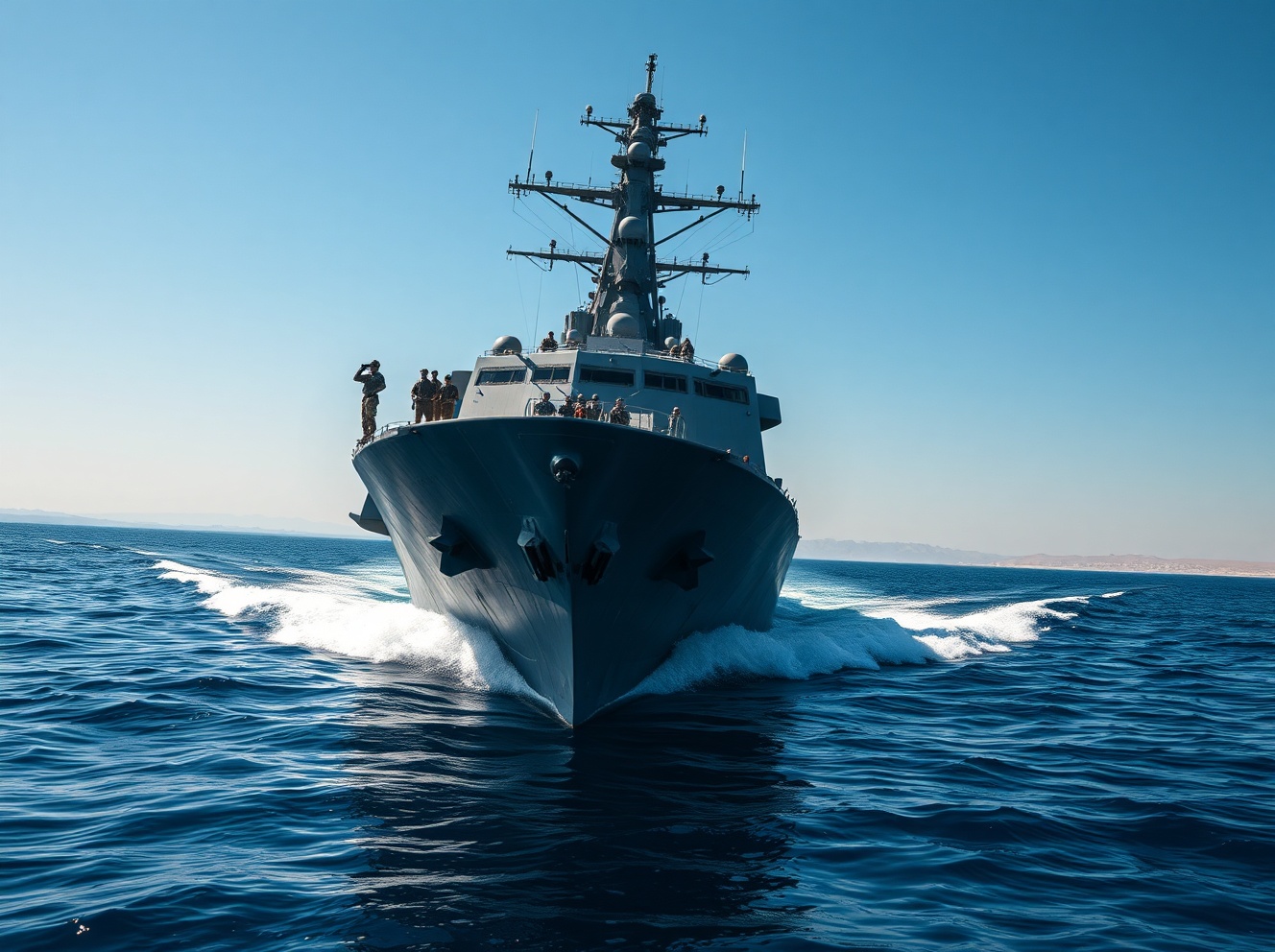
Critical Deployment: US Sends Thousands of Marines and Three Warships to Middle East – WSJ
In a significant strategic move reported by The Wall Street Journal, the United States has initiated a major military deployment to the Middle East, sending thousands of Marines and a naval task force of three warships to the region as of early 2025. This substantial mobilization responds directly to escalating tensions and represents one of the largest single reinforcements of U.S. combat power in the area in recent years. Consequently, analysts are scrutinizing the potential ramifications for regional stability and global security frameworks.
Analyzing the US Marines and Warships Deployment
The deployment, first reported by The Wall Street Journal, involves elements of a Marine Expeditionary Unit (MEU). A MEU is a rapid-response force centered around an amphibious ready group. Typically, it comprises roughly 2,200 Marines. Furthermore, the naval component includes three surface combatants. These vessels likely consist of guided-missile destroyers or cruisers. Such ships provide advanced air defense, ballistic missile defense, and strike capabilities. This force package offers the U.S. Central Command (CENTCOM) considerable flexibility. It can conduct a wide range of operations, from show-of-force patrols to non-combatant evacuations and, if necessary, high-intensity combat.
Historically, the U.S. maintains a robust force posture in the Middle East. However, this deployment marks a notable increase. For instance, it comes amid a period of sustained volatility. The Pentagon has not officially detailed the specific units or final destinations. Nevertheless, regional experts point to several potential hotspots. The Persian Gulf, the Red Sea, and the Eastern Mediterranean are all plausible areas of operation. Each region presents unique challenges and strategic imperatives for U.S. national security policy.
Strategic Context and Regional Triggers
This military movement does not occur in a vacuum. Instead, it unfolds against a complex geopolitical backdrop. Several interlocking crises have prompted Washington to bolster its military posture. Firstly, Iran’s nuclear program continues to advance, with reports indicating it has enriched uranium to near-weapons-grade levels. Secondly, Iranian-backed militias have increased attacks on U.S. personnel and assets in Iraq and Syria. Thirdly, Houthi rebels in Yemen persist in threatening international shipping lanes in the Red Sea. Finally, diplomatic efforts to de-escalate conflicts, such as the war in Gaza, remain fragile. Therefore, the deployment serves as a deterrent signal. It aims to prevent any actor from miscalculating U.S. resolve or commitment to regional allies.
Capabilities and Composition of the Deployed Force
The deployed Marine Air-Ground Task Force brings a combined-arms capability to the theater. Its core components include:
- Ground Combat Element: An infantry battalion, reinforced with artillery, light armored vehicles, and other support units.
- Aviation Combat Element: A composite squadron featuring transport helicopters (CH-53Es, UH-1Ys), attack helicopters (AH-1Zs), and MV-22B Osprey tiltrotor aircraft.
- Logistics Combat Element: Provides all necessary support, from fuel and ammunition to medical services and maintenance.
The accompanying warships significantly amplify this power. A typical Arleigh Burke-class destroyer, for example, is equipped with the Aegis Combat System. This system can track hundreds of targets simultaneously. Moreover, it can launch Standard Missiles for air and missile defense. Additionally, it carries Tomahawk land-attack cruise missiles for deep-strike missions. The table below outlines the potential capabilities a three-ship surface action group provides:
| Capability | Strategic Purpose |
|---|---|
| Area Air Defense | Protects allied assets, carrier groups, and regional bases from aerial threats. |
| Ballistic Missile Defense | Counters missile launches from state actors like Iran or its proxies. |
| Maritime Interdiction | Enforces sanctions, conducts boardings, and secures sea lanes. |
| Power Projection | Provides a visible, persistent presence to deter aggression and reassure partners. |
Potential Impacts on Middle East Geopolitics
The arrival of thousands of Marines and advanced warships will undoubtedly recalibrate the regional military balance. Primarily, it reassures key U.S. allies such as Israel, Saudi Arabia, and the United Arab Emirates. These nations have repeatedly expressed concerns about perceived U.S. retrenchment. Conversely, the deployment may provoke reactions from adversarial states. Iran, in particular, often views such buildups as acts of encirclement. Subsequently, it may accelerate its own military exercises or proxy activities. Regional diplomacy may also become more complicated. For example, ongoing negotiations could be indirectly influenced by the demonstration of hard power in the region.
Economically, the move aims to stabilize critical global trade routes. Approximately 20% of the world’s oil supply transits through the Strait of Hormuz. Similarly, the Bab el-Mandeb Strait is a vital chokepoint for Red Sea shipping. Any major disruption there would have immediate global consequences. Therefore, the U.S. naval presence acts as a guarantor of freedom of navigation. It discourages harassment of commercial vessels by state or non-state actors. This is a core national interest for the United States and its European and Asian partners.
Historical Precedents and Expert Analysis
Military historians note parallels with past deployments. For instance, the 2019 deployment of the USS Abraham Lincoln carrier strike group followed intelligence about potential Iranian aggression. Similarly, the 2020 reinforcement of Saudi Arabia with troops and Patriot batteries responded to attacks on oil infrastructure. Dr. Michael O’Hanlon, a senior fellow at the Brookings Institution, stated in a recent analysis that “such deployments are a standard tool of crisis management.” He emphasizes they create “options and time” for diplomats. However, other experts, like retired General David Petraeus, caution that a sustained, large-scale presence can also become a target. It requires careful political-military integration to avoid unintended escalation.
Operational Timeline and Future Scenarios
The deployment process involves several phases. Initially, forces move from their home bases, likely on the U.S. East Coast or from forward stations. Next, they integrate and conduct final certifications. Finally, they assume their mission under CENTCOM’s operational control. This entire cycle can take weeks. Once in theater, the force will likely conduct joint exercises with regional partners. These drills enhance interoperability and send a clear message of collective defense.
Looking ahead, several scenarios could unfold. In a low-tension scenario, the presence deters conflict and the force rotates out after a standard six-to-seven-month deployment. In a medium-tension scenario, the Marines might execute a non-combatant evacuation operation (NEO) or provide security for a diplomatic initiative. In a high-tension scenario, the force could be employed in a limited strike or defensive counter-air operation. The flexibility of the MEU and the firepower of the warships are designed to handle this spectrum of conflict. Ultimately, the decision to employ them rests with the National Command Authority in Washington.
Conclusion
The deployment of thousands of U.S. Marines and three warships to the Middle East, as reported by The Wall Street Journal, is a decisive strategic action. It underscores the enduring importance of the region to American national security interests. This move provides military commanders with critical assets to deter conflict, protect allies, and ensure the free flow of commerce. While the immediate trigger may be a specific crisis, the broader objective is to stabilize a volatile environment. The world will closely watch how this enhanced U.S. military presence influences the complex dynamics of the Middle East in the coming months.
FAQs
Q1: What exactly was reported by The Wall Street Journal regarding the US military?
The Wall Street Journal reported that the United States is deploying thousands of Marines from a Marine Expeditionary Unit (MEU) and a naval task force of three warships to the Middle East in response to rising regional tensions.
Q2: Why is the US sending Marines and warships to the Middle East now?
The deployment is a response to multiple escalating threats, including Iran’s advancing nuclear program, attacks on U.S. forces by Iranian-backed militias, threats to international shipping lanes, and general instability that could threaten U.S. allies and interests.
Q3: What capabilities does a Marine Expeditionary Unit (MEU) bring?
A MEU is a self-sufficient, rapid-response force of about 2,200 Marines. It includes infantry, artillery, armored vehicles, attack and transport helicopters, tiltrotor aircraft, and all necessary logistics, enabling it to conduct everything from humanitarian aid to amphibious assaults.
Q4: What is the strategic significance of the three warships accompanying the Marines?
The warships, likely guided-missile destroyers, provide area air defense, ballistic missile defense, long-range strike capability with cruise missiles, and maritime security. They protect the force, project power, and help secure vital sea lanes like the Strait of Hormuz.
Q5: How might regional actors like Iran respond to this US military buildup?
Iran typically condemns such deployments as provocative and may respond with its own military exercises, accelerated proxy activities, or heightened rhetoric. The U.S. aims to deter major aggression while managing the risk of unintended escalation through clear signaling.
This post Critical Deployment: US Sends Thousands of Marines and Three Warships to Middle East – WSJ first appeared on BitcoinWorld.
You May Also Like

Best Crypto to Buy as Saylor & Crypto Execs Meet in US Treasury Council

Unleashing A New Era Of Seller Empowerment