Federal Reserve Rate Hikes: BofA’s Critical Warning About Oil Shock Resurgence
BitcoinWorld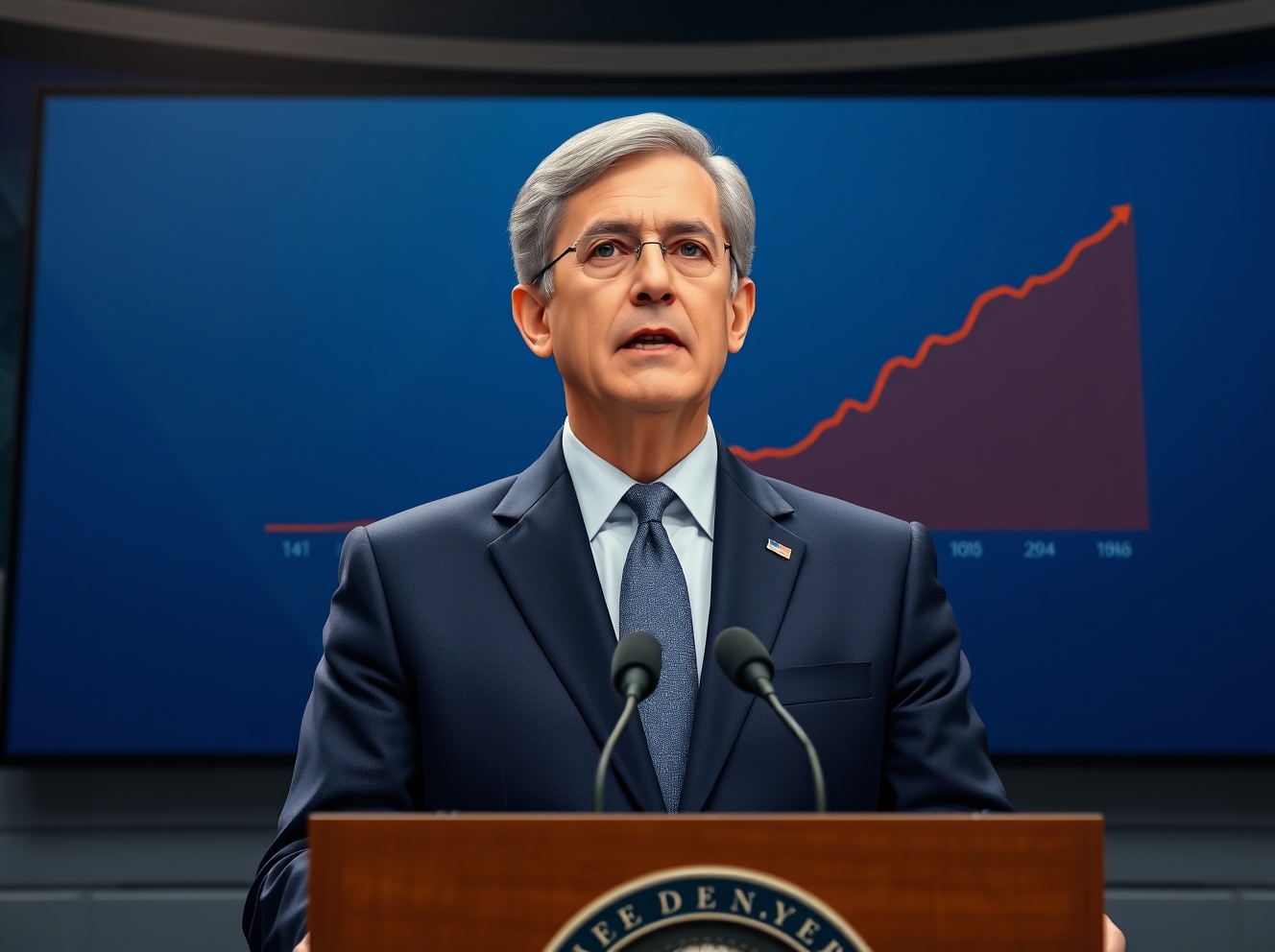
Federal Reserve Rate Hikes: BofA’s Critical Warning About Oil Shock Resurgence
WASHINGTON, D.C. – March 15, 2025 – Bank of America has issued a critical warning that the Federal Reserve may resume interest rate hikes if the current oil price shock and geopolitical uncertainty continue disrupting global markets. This analysis comes as energy costs create renewed inflationary pressures, potentially forcing the central bank to reverse its recent policy direction.
Federal Reserve Rate Hikes: The Oil Shock Catalyst
Bank of America economists have identified a specific scenario that could trigger renewed Federal Reserve tightening. According to their analysis, sustained oil prices between $80 and $100 per barrel would significantly increase the likelihood of rate hikes. This price range creates persistent inflationary pressure that monetary policy must address. The bank’s research team, led by prominent economists with decades of combined experience in monetary policy analysis, bases this projection on historical correlations between energy costs and inflation outcomes.
Furthermore, the current geopolitical landscape adds complexity to this equation. Ongoing tensions in key oil-producing regions, particularly uncertainty related to Iran, create supply-side vulnerabilities. These vulnerabilities amplify price volatility and extend the duration of energy cost increases. Consequently, the Federal Reserve faces a challenging policy environment where traditional tools may prove insufficient against supply-driven inflation.
Jerome Powell’s Hawkish Stance and Policy Continuity
Federal Reserve Chair Jerome Powell maintains a consistently hawkish position on inflation risks. His recent public statements emphasize the central bank’s commitment to price stability above other considerations. This commitment becomes particularly relevant when external shocks, like oil price surges, threaten to derail inflation progress. Powell’s leadership continuity provides policy predictability but also suggests limited tolerance for inflationary backsliding.
Additionally, the Federal Open Market Committee’s composition influences potential policy shifts. Current voting members generally share Powell’s inflation-focused approach. This consensus strengthens the case for preemptive action if energy costs persist at elevated levels. Historical precedent supports this view, as previous oil shocks have frequently prompted monetary policy responses despite economic growth concerns.
The Labor Market’s Crucial Role in Policy Decisions
A stable job market represents both opportunity and constraint for Federal Reserve policymakers. Strong employment numbers provide economic resilience against tighter monetary conditions. However, they also reduce concerns about triggering recession through rate increases. This dynamic creates policy space for the Fed to address inflation without immediate growth worries.
Current labor market indicators show remarkable stability despite previous tightening cycles. Unemployment remains near historic lows while wage growth shows moderate but persistent increases. These conditions support Bank of America’s analysis that the Fed possesses adequate economic cushion to resume hikes if necessary. The table below illustrates key labor market metrics influencing policy decisions:
| Indicator | Current Level | Pre-Pandemic Average | Policy Implication |
|---|---|---|---|
| Unemployment Rate | 3.8% | 3.7% | Minimal labor market slack |
| Wage Growth (YoY) | 4.2% | 3.1% | Moderate inflationary pressure |
| Labor Force Participation | 62.8% | 63.1% | Stable workforce dynamics |
| Job Openings Ratio | 1.4 openings per unemployed | 1.2 | Tight but easing conditions |
Inflation Dynamics and Energy Cost Transmission
Energy costs influence inflation through multiple transmission channels that concern Federal Reserve officials. Direct effects appear in consumer price indexes through gasoline, heating oil, and electricity costs. Indirect effects manifest through increased production and transportation expenses across all economic sectors. These combined pressures create broad-based inflationary momentum that monetary policy must counteract.
Recent Consumer Price Index data reveals energy’s disproportionate impact on headline inflation numbers. While core inflation shows gradual moderation, headline figures remain elevated primarily due to energy components. This divergence creates policy complications, as the Fed must decide whether to prioritize core or headline measures. Historical analysis suggests the central bank typically responds to sustained headline inflation surges, especially when driven by persistent supply shocks.
Key inflation transmission mechanisms include:
- Direct consumer impact: Higher fuel and utility costs reduce disposable income
- Production cost increases: Manufacturing and transportation expenses rise
- Inflation expectations: Consumers and businesses adjust behavior based on perceived trends
- Secondary effects: Service providers pass increased costs to consumers
Historical Precedents for Oil Shock Responses
Previous oil price shocks provide valuable context for current policy considerations. The 1970s oil crises prompted aggressive Federal Reserve responses that ultimately contributed to recession but controlled inflation. More recently, the 2008 oil price spike occurred alongside financial crisis pressures, creating complex policy trade-offs. Each historical episode offers lessons about timing, magnitude, and communication of monetary policy adjustments.
The 2011-2014 period provides particularly relevant parallels, as oil prices remained elevated for an extended duration without triggering immediate recession. During that period, the Fed maintained accommodative policies due to broader economic weakness, but current conditions differ significantly. Today’s stronger economic fundamentals and higher starting inflation levels suggest less tolerance for energy-driven price increases.
Global Central Bank Coordination Challenges
Federal Reserve decisions increasingly occur within a global monetary policy context. Other major central banks face similar energy cost pressures but different domestic economic conditions. The European Central Bank confronts particular vulnerability due to greater energy import dependence. Meanwhile, emerging market central banks often respond more aggressively to currency pressures from dollar-denominated oil imports.
This policy divergence creates exchange rate volatility that complicates Federal Reserve calculations. A stronger dollar from U.S. rate hikes could alleviate some inflationary pressures through cheaper imports. However, it could also exacerbate global financial conditions and trigger capital flow disruptions. Federal Reserve officials must balance domestic priorities against international spillover effects, particularly given the dollar’s reserve currency status.
Market Implications and Financial Stability Considerations
Potential Federal Reserve rate hikes carry significant implications for financial markets and stability. Equity valuations face pressure from both higher discount rates and potential economic slowdown. Bond markets must adjust to changing yield curve dynamics and inflation expectations. Meanwhile, credit conditions tighten across consumer and business lending channels.
Bank of America’s analysis specifically notes financial stability considerations in their assessment. Previous rapid tightening cycles have exposed vulnerabilities in certain market segments, particularly interest-rate-sensitive sectors like commercial real estate. The Fed must weigh inflation control against financial stability preservation, creating complex policy trade-offs. Current regulatory frameworks and bank capital positions provide greater resilience than during previous tightening episodes, but risks remain.
Conclusion
Bank of America’s warning about potential Federal Reserve rate hikes highlights the delicate balance central bankers must maintain in 2025’s volatile economic environment. The intersection of persistent oil price shocks, geopolitical uncertainty, and stable labor markets creates conditions where renewed tightening becomes plausible. Federal Reserve Chair Jerome Powell’s consistent hawkish stance on inflation suggests limited tolerance for energy-driven price increases derailing progress toward the 2% target. While rate cuts dominated previous discussions, current analysis indicates that Federal Reserve rate hikes remain a tangible risk if oil markets maintain their current trajectory. Market participants and policymakers must prepare for multiple scenarios as energy costs continue influencing monetary policy decisions.
FAQs
Q1: What specific oil price range does Bank of America identify as triggering potential rate hikes?
Bank of America’s analysis suggests oil prices sustained between $80 and $100 per barrel would significantly increase the likelihood of Federal Reserve rate hikes, creating persistent inflationary pressure that requires monetary policy response.
Q2: How does Jerome Powell’s stance influence the potential for rate increases?
Federal Reserve Chair Jerome Powell maintains a consistently hawkish position on inflation risks, emphasizing price stability above other considerations. This stance suggests limited tolerance for energy-driven inflation and increases the probability of policy action if oil prices remain elevated.
Q3: Why does a stable job market make rate hikes more likely according to this analysis?
A strong labor market provides economic resilience against tighter monetary conditions while reducing concerns about triggering recession through rate increases. This creates policy space for the Fed to address inflation without immediate growth worries.
Q4: How do oil price increases translate into broader inflationary pressures?
Energy costs influence inflation through direct effects on consumer prices for gasoline and utilities, indirect effects through increased production and transportation costs across all sectors, and through inflation expectations that influence consumer and business behavior.
Q5: What historical precedents exist for Federal Reserve responses to oil price shocks?
Historical examples include the 1970s oil crises that prompted aggressive Fed responses, the 2008 oil spike during the financial crisis, and the 2011-2014 period of sustained high prices. Each episode offers lessons about timing and magnitude of policy adjustments in response to energy-driven inflation.
This post Federal Reserve Rate Hikes: BofA’s Critical Warning About Oil Shock Resurgence first appeared on BitcoinWorld.
You May Also Like

Top 3 Altcoins for the Next Bull Run Ethereum, Solana and Mutuum Finance

Trump: We want to negotiate with Iran, but we have no negotiating partner.