Arbitrum has launched the DRIP program to incentivize productive DeFi activity by rewarding users with ARB tokens for leveraging lending and looping strategies across its ecosystem. How Arbitrum DRIP program works Arbitrum (ARB) has launched the DeFi Renaissance Incentive Program…Arbitrum has launched the DRIP program to incentivize productive DeFi activity by rewarding users with ARB tokens for leveraging lending and looping strategies across its ecosystem. How Arbitrum DRIP program works Arbitrum (ARB) has launched the DeFi Renaissance Incentive Program…

Arbitrum DRIP program launches to reward productive DeFi activity with ARB tokens

2 min read

Arbitrum has launched the DRIP program to incentivize productive DeFi activity by rewarding users with ARB tokens for leveraging lending and looping strategies across its ecosystem.

Summary
  • Arbitrum DRIP Season One incentivizes leverage looping strategies in lending markets, rewarding users with ARB tokens for borrowing and redepositing assets.
  • Eligible assets for collateral include major stablecoins (e.g., USDC, syrupUSDC) and ETH derivatives such as weETH and rsETH.
  • Participating protocols include Aave, Morpho, Fluid, Euler, Dolomite, and Silo, with rewards distributed across two-week epochs.

How Arbitrum DRIP program works

Arbitrum (ARB) has launched the DeFi Renaissance Incentive Program (DRIP), a $40 million initiative designed to encourage productive DeFi activity on its network. Managed by Entropy Advisors and powered by Merkl, Arbitrum DRIP program is structured across four seasons.

Season One, running from Sept. 3 to Jan. 20 focuses on leverage looping strategies in DeFi lending markets, where users can earn ARB tokens by borrowing against eligible ETH and stablecoin assets, redepositing them, and repeating the process to increase their exposure.

For example, a user could deposit syrupUSDC into a participating lending protocol, borrow USDC against it, then swap that borrowed USDC back into more syrupUSDC and redeposit it. By repeating this loop over the two-week epochs, users increase their total borrowed position, and their ARB rewards are calculated based on the time-weighted average borrow balance. Some markets also reward simply supplying assets like ETH derivatives (weETH, wstETH, rsETH) or stablecoins, not just borrowing.

To participate, users must bridge eligible assets to Arbitrum One, choose a participating market—such as Aave, Morpho, Fluid, Euler, Dolomite, or Silo—then deposit collateral, borrow and loop, and finally claim ARB rewards at the end of each two-week epoch.

Arbitrum DRIP program is designed in phases. The first two epochs serve as a discovery phase, allocating only 15% of the budget to identify which markets perform best. Following this, the performance phase rewards top-performing markets with a larger share of incentives, encouraging healthy competition and maximizing liquidity growth across Arbitrum’s DeFi ecosystem.

By incentivizing productive borrowing and looping activity, Arbitrum DRIP program is poised to increase the TVL across Arbitrum’s DeFi ecosystem, which currently stands at approximately $3.21 billion, according to DefiLlama. This places Arbitrum 7th in global DeFi TVL share at 2.1%, just behind Base.
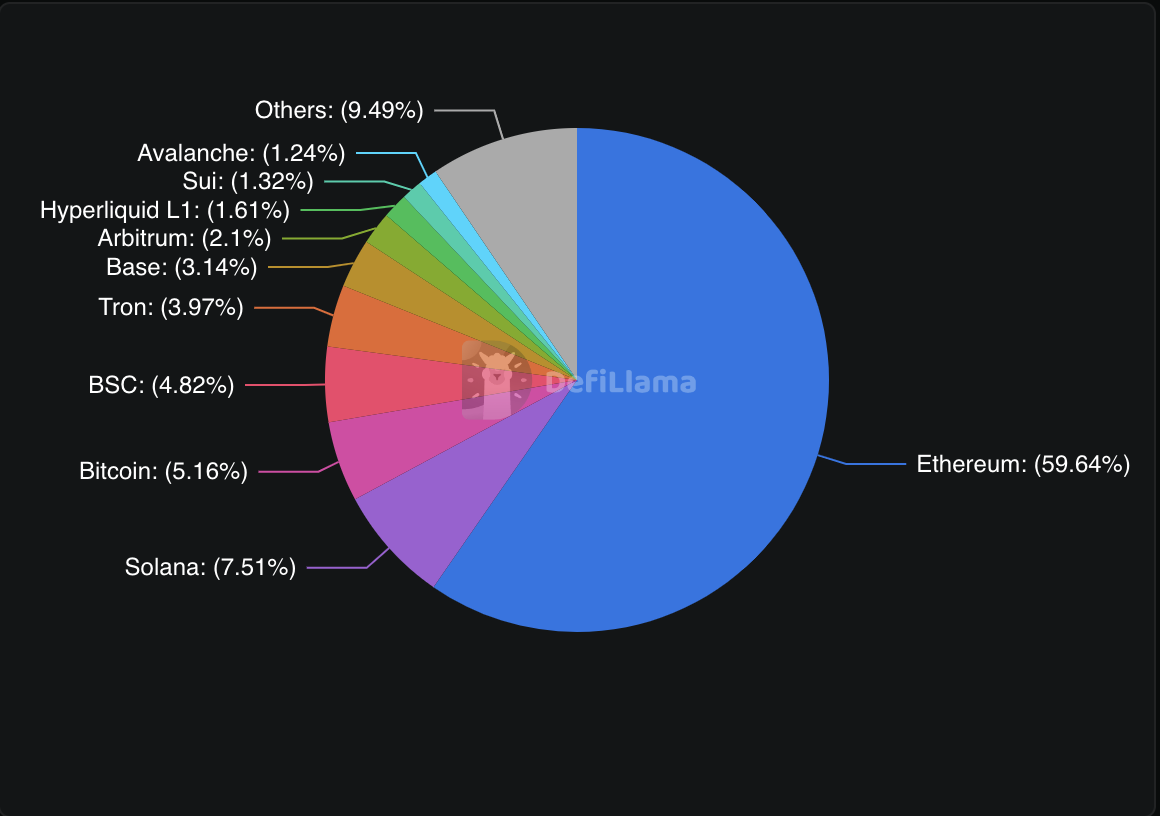
Arbitrum DRIP program launches to reward productive DeFi activity with ARB tokens - 1
Source: DefiLlama

Market Opportunity
DeFi Logo
DeFi Price(DEFI)
$0.000305
$0.000305$0.000305
-6.44%
USD
DeFi (DEFI) Live Price Chart
Disclaimer: The articles reposted on this site are sourced from public platforms and are provided for informational purposes only. They do not necessarily reflect the views of MEXC. All rights remain with the original authors. If you believe any content infringes on third-party rights, please contact [email protected] for removal. MEXC makes no guarantees regarding the accuracy, completeness, or timeliness of the content and is not responsible for any actions taken based on the information provided. The content does not constitute financial, legal, or other professional advice, nor should it be considered a recommendation or endorsement by MEXC.

You May Also Like

XRP Ledger Unlocks Permissioned Domains With 91% Validator Backing

XRP Ledger Unlocks Permissioned Domains With 91% Validator Backing

XRP Ledger activated XLS-80 after 91% validator approval, enabling permissioned domains for credential-gated use on the public XRPL. The XRP Ledger has activated
Share
LiveBitcoinNews2026/02/06 13:00
Music body ICMP laments “wilful” theft of artists’ work

Music body ICMP laments “wilful” theft of artists’ work

The post Music body ICMP laments “wilful” theft of artists’ work appeared on BitcoinEthereumNews.com. A major music industry group, ICMP, has lamented the use of artists’ work by AI companies, calling them guilty of “wilful” copyright infringement, as the battle between the tech firms and the arts industry continues. The Brussels-based group known as the International Confederation of Music Publishers (ICMP) comprises major record labels and other music industry professionals. Their voice adds to many others within the arts industry that have expressed displeasure at AI firms for using their creative work to train their systems without permission. ICMP accuses AI firms of deliberate copyright infringement ICMP director general John Phelan told AFP that big tech firms and AI-specific companies were involved in what he termed “the largest copyright infringement exercise that has been seen.” He cited the likes of OpenAI, Suno, Udio, and Mistral as some of the culprits. The ICMP carried out an investigation for nearly two years to ascertain how generative AI firms were using material by creatives to enrich themselves. The Brussels-based group is one of a number of industry bodies that span across news media and publishing to target the fast-growing AI sector over its use of content without paying any royalties. Suno and Udio, who are AI music generators, can produce tracks with voices, melodies, and musical styles that echo those of the original artists such as the Beatles, Depeche Mode, Mariah Carey, and the Beach boys. “What is legal or illegal is how the technologies are used. That means the corporate decisions made by the chief executives of companies matter immensely and should comply with the law,” Phelan told AFP. “What we see is they are engaged in wilful, commercial-scale copyright infringement.” Phelan. In June last year, a US trade group, the Recording Industry Association of America, filed a lawsuit against Suno and Udio. However, an exception…
Share
BitcoinEthereumNews2025/09/18 04:41
XRPL Adds Institutional Lending and Privacy Tools in Ripple’s 2026 Roadmap

XRPL Adds Institutional Lending and Privacy Tools in Ripple’s 2026 Roadmap

Ripple shared a new Institutional DeFi roadmap showing how the XRP Ledger is being shaped for everyday use by banks, asset managers, and regulated financial firms
Share
Tronweekly2026/02/06 13:00
