

Alarm over Trump-fueled election threats as 'under siege' officials leave in droves
In the first election Amy Burgans fully oversaw as clerk-treasurer for Douglas County, Nevada, she received a death threat.
It was 2022. Someone returned their mail-in ballot with “crazy talk” written all over it, including the threat to Burgans. That same year, law enforcement got involved over a stalker’s texts.
“It's almost par for the course, which is horrible, but you have to know that those types of things can come in with the heightened political environment that we live in when elections are involved at this point,” Burgans told Raw Story.
Last month, speaking at the Davos World Economic Forum, President Donald Trump said people would be “prosecuted” over the 2020 election, which he lost to Joe Biden and which, in Switzerland, he yet again falsely said was “rigged.”
Just last week, the FBI raided the Fulton County Elections Hub in Georgia, seizing ballots, voter rolls and other 2020 records. It was reported this week that Trump spoke to agents who conducted the raid.
“A raid like we saw in Georgia isn't helping take down the temperature, isn't helping build trust, isn't helping rebuild bridges,” said Michael Beckel, senior research director at nonpartisan reform group Issue One and co-author of a new report, Turning the Tide on Turnover, which reveals how election officials are leaving their jobs in droves.
“It's making people in other jurisdictions worried that they could be next. Election officials are feeling under siege, and actions like that can usher in more harassment, more threats, more stress, more challenges for election officials who are already juggling with so many challenges.”
Published Tuesday, the new report from Issue One reveals that 50 percent of chief local election officials in the western U.S. have left their jobs since November 2020 — the vast majority voluntarily, and increasingly due to threats, intimidation and harassment.
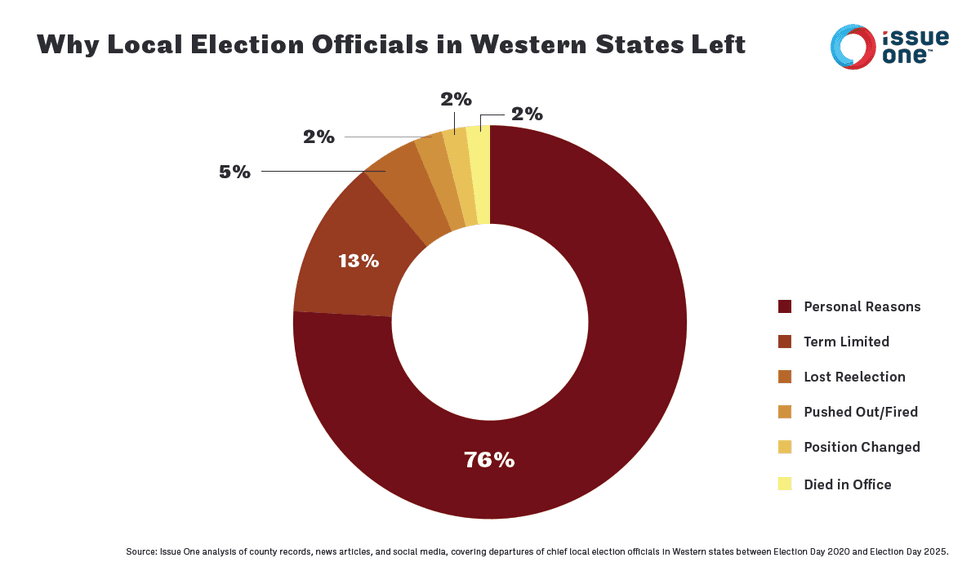 A new report revealed that 76% of local election officials in the Western U.S. left of personal reasons (Infographic from Issue One)
What’s happening in the 11-state western region is an "illustrative microcosm of the nation as a whole,” Beckel told Raw Story.
‘Unsung heroes’
Burgans, a registered Republican, stepped up in December 2020 when the previous clerk resigned, in part due to “disheartening” community reaction to Trump’s loss to Biden.
Even though Trump won Douglas County, which is 50 percent Republican, Burgans said that as Trump and his allies spread the lie that the election was stolen, the previous clerk was the subject of harassment using internet memes and questions about her ability.
“You've got people in some places who've been doing this for a number of years — in some places a number of decades — who are deciding to hang up their spurs and say, ‘Why do I need this type of stress in my life?’” Beckel said.
“‘Why do I put up with this? I've given a lot of my time. I've given a lot of public service.’”
Carly Koppes, clerk and recorder for Weld County, Colorado since 2014, told Raw Story she got her first threat a couple days after the November 2020 election, when voters said they wanted to come to her office, fueled by election fraud lies from Arizona that were “bleeding over into Colorado.”
“If you stand up and tell the truth, you could be hit with different levels of potential harassment or threats. That has definitely been a challenge,” said Koppes, who has since received an array of email, voicemail and social media threats.
More than 250 chief election officials out of 430 in the western region stepped down between November 2020 and November 2025, according to Issue One.
Among battleground states, Arizona experienced 100 percent turnover of county election officials, Nevada 65 percent.
Beckel said: “They take with them invaluable amounts of expertise, experience and institutional knowledge, and it is incumbent on lawmakers and policy makers to take steps now to work to stem the tide of troubling election official turnover.
“Election officials are the unsung heroes of our democracy, and they need additional support now more than ever.”
Of Colorado’s 64 counties, 44 percent have experienced turnover in the past five years — 66 percent so voluntarily, the report said.
Koppes said the turnover is “alarming.”
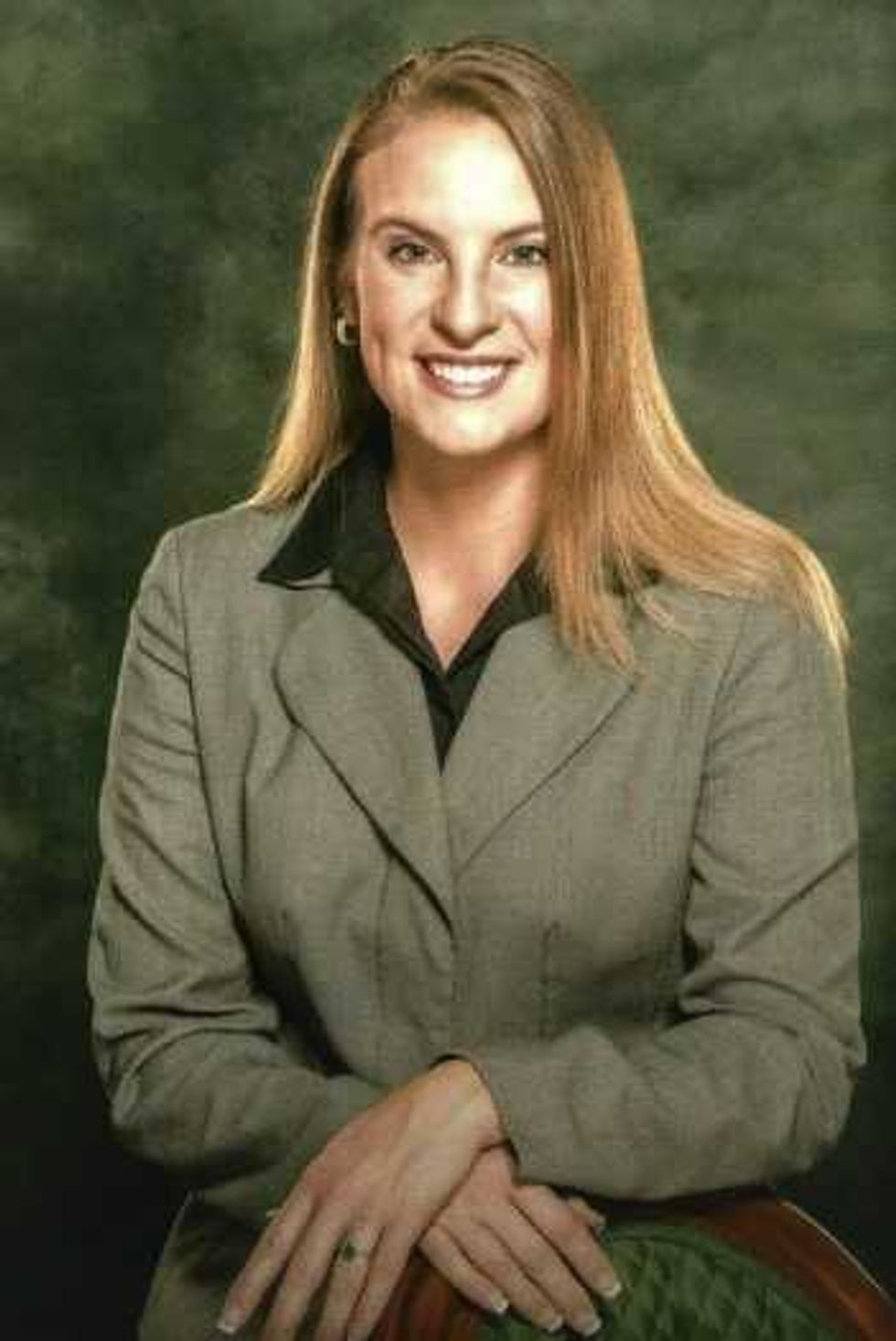 Carly Koppes (provided photo)
“The historical knowledge that we lose and trying to bring people up to speed and trying to train them and get them to feel comfortable in this type of atmosphere is challenging,” Koppes said.
Within two years, Burgans said, she was among the most senior election officials in her state.
“As a new clerk, I was learning things on my own because there was no one to get that information from, or there were very few left to pull from,” Burgans said.
To support officials who face threats, political leaders should focus on “doing more to bring down the rhetoric, bring down the temperature, instead of … sowing confusion or doubt or distrust about our free and fair and safe and secure elections,” Beckel said.
‘Fanning those flames’
Trump’s disproven claims of fraud in the 2020 election have led to massive settlements.
In April 2023, Fox News agreed to settle for $787.5 million a lawsuit from Dominion Voting Systems around the network’s promotion of lies about the 2020 election.
In December 2023, former Trump lawyer Rudy Giuliani was ordered to pay $148 million to two Georgia election workers he falsely accused of engaging in ballot fraud.
But the issue has not gone away.
Correspondingly, election officials are enhancing safety measures as they face increasing threats, Beckel said, citing measures including changing commutes to work and installing bulletproof glass and panic buttons in elections offices.
Koppes said she takes different routes to work and home every day, shops at different grocery stores and changes in-office hours. She also works with law enforcement to monitor threats.
A 2024 survey by the Elections and Voting Information Center at Reed College in Portland, Oregon, found that about 70 percent of election officials experienced intimidation, 60 percent had been harassed and 30 percent were threatened.
It means officials are entering this year’s midterms “eyes wide open,” bracing for physical threats and cyber attacks, Beckel said.
“Nobody's being Pollyanna-ish about the potential concerns and potential safety issues, potential cyber attacks,” Beckel said.
Burgans said she was now more proactive with election worker training, providing protocols for how to de-escalate verbal threats or how to deal with situations like finding a powdery substance in a ballot.
That’s scared off many election workers, she said.
“We need 100 to 120 election workers every election cycle, and it's hard to get them to do that for $12 an hour if they think their life could be in jeopardy,” Burgans said.
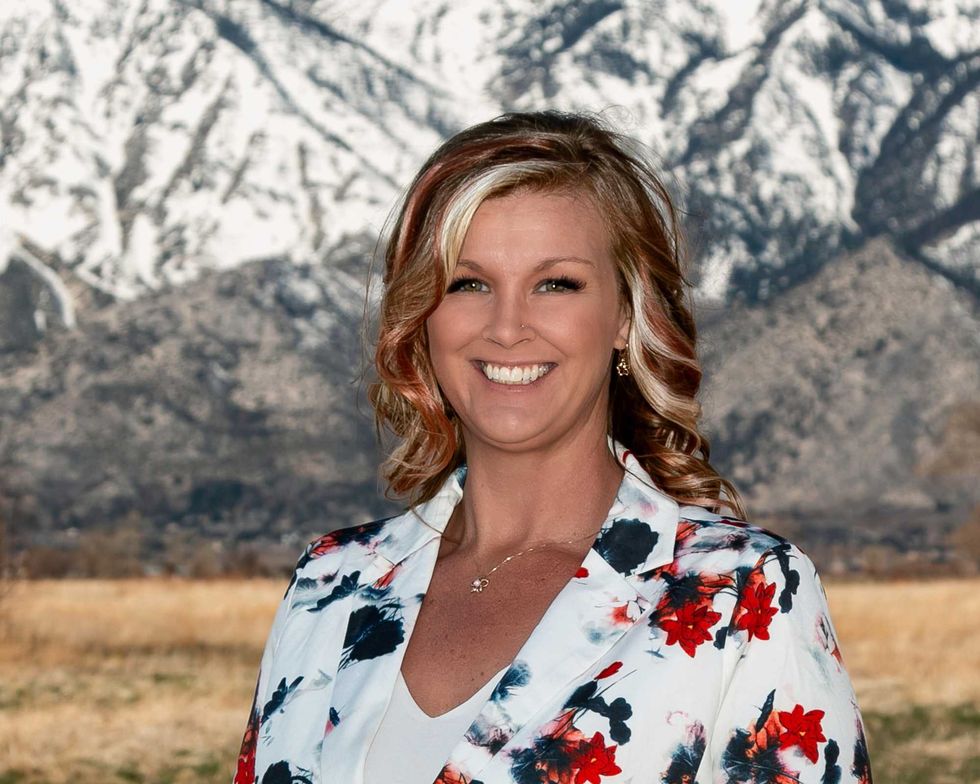 Amy Burgans (provided photo)
Officials like Burgans, who is up for re-election, must fight a constant stream of misinformation.
Beckel said that becomes all the more challenging as leaders sow doubt in elections.
“Unfortunately, too many voices in the current administration are fanning those flames instead of doing more to reassure people about our safe and secure, free and fair elections in the United States,” Beckel said.
You May Also Like

The Channel Factories We’ve Been Waiting For

Markets await Fed’s first 2025 cut, experts bet “this bull market is not even close to over”
