The post Indian Rupee rallies on confirmation of long-awaited US-India trade deal appeared on BitcoinEthereumNews.com. The Indian Rupee (INR) opens on a strong The post Indian Rupee rallies on confirmation of long-awaited US-India trade deal appeared on BitcoinEthereumNews.com. The Indian Rupee (INR) opens on a strong

Indian Rupee rallies on confirmation of long-awaited US-India trade deal

The Indian Rupee (INR) opens on a strong note against the US Dollar (USD) on Tuesday, following the confirmation of a long-awaited trade deal between the United States (US) and India the previous day. The USD/INR pair opens with a gap down to near 90.35, the lowest level seen in almost three weeks.

On Monday, US President Donald Trump confirmed a bilateral trade pact with India in which Washington slashed tariffs on imports from New Delhi to 18% from 50%, which is lower than or equal to most economies in South Asia and the Association of South-East Asian Nations (ASEAN). This scenario will be favorable for Indian exporters to get a competitive edge over their competitors in other Asian nations.

In exchange, the Indian economy agreed to reduce tariffs on imports from Washington to zero, no oil purchase from Russia, and commit to buying several American goods, including energy, agriculture, coal, and technology, worth $500 billion.

The US-India trade deal euphoria has resulted in a significant upside move in the Indian stock market. The Nifty50 opens almost 3.5% higher to near 26,330, led by a strong jump in technology, gems and jewelry, textile, and capital market stocks.

Daily Digest Market Movers: US Dollar edges down after a two-day rally

  • The US Dollar ticks lower after a strong upside move in the last two trading days, with investors shifting focus to an array of US economic data releases this week.
  • As of writing, the US Dollar Index (DXY), which tracks the Greenback’s value against six major currencies, trades 0.2% lower to near 97.45.
  • The US Dollar has retraced slightly due to the partial US federal shutdown, which will suspend key economic data releases.
  • On Monday, the US ISM Manufacturing PMI report for January showed that the manufacturing sector activity returned to growth after declining for several months. The Manufacturing PMI came in at 52.6, higher than estimates of 48.5 and the prior release of 47.9. A figure above 50.00 is seen as an expansion in the business activity.
  • The US Dollar has been outperforming since Friday after US President Donald Trump nominated former Governor Kevin Warsh for the Fed’s new Chairman. Investors expected Warsh to avoid rapid interest rate cuts, given his historic preference for a firmer US Dollar in his previous tenure at the Fed.
  • This week, the major trigger for the Indian Rupee will be the monetary policy announcement by the Reserve Bank of India (RBI) on Friday.

Technical Analysis: USD/INR skids below 20-day EMA

USD/INR trades sharply lower to near 90.35 as of writing. The price slides below the 20-day Exponential Moving Average (EMA) at 91.0816, keeping the near-term bias soft. The 20-day EMA has started to roll over, reinforcing a corrective tone. Rallies could be capped at the EMA.

The 14-day Relative Strength Index (RSI) at 43.17 is below the 50 midline, confirming waning momentum.

Unless USD/INR reclaims the 20-day EMA on a closing basis, the risk stays skewed toward further range compression or downside probes. A push in RSI back above 50 would improve momentum and support recovery attempts, while a slide toward 30 would extend bearish pressure. A decisive close above the EMA would shift the tone toward stabilization and reduce the downside bias.

(The technical analysis of this story was written with the help of an AI tool.)

Indian Rupee FAQs

The Indian Rupee (INR) is one of the most sensitive currencies to external factors. The price of Crude Oil (the country is highly dependent on imported Oil), the value of the US Dollar – most trade is conducted in USD – and the level of foreign investment, are all influential. Direct intervention by the Reserve Bank of India (RBI) in FX markets to keep the exchange rate stable, as well as the level of interest rates set by the RBI, are further major influencing factors on the Rupee.

The Reserve Bank of India (RBI) actively intervenes in forex markets to maintain a stable exchange rate, to help facilitate trade. In addition, the RBI tries to maintain the inflation rate at its 4% target by adjusting interest rates. Higher interest rates usually strengthen the Rupee. This is due to the role of the ‘carry trade’ in which investors borrow in countries with lower interest rates so as to place their money in countries’ offering relatively higher interest rates and profit from the difference.

Macroeconomic factors that influence the value of the Rupee include inflation, interest rates, the economic growth rate (GDP), the balance of trade, and inflows from foreign investment. A higher growth rate can lead to more overseas investment, pushing up demand for the Rupee. A less negative balance of trade will eventually lead to a stronger Rupee. Higher interest rates, especially real rates (interest rates less inflation) are also positive for the Rupee. A risk-on environment can lead to greater inflows of Foreign Direct and Indirect Investment (FDI and FII), which also benefit the Rupee.

Higher inflation, particularly, if it is comparatively higher than India’s peers, is generally negative for the currency as it reflects devaluation through oversupply. Inflation also increases the cost of exports, leading to more Rupees being sold to purchase foreign imports, which is Rupee-negative. At the same time, higher inflation usually leads to the Reserve Bank of India (RBI) raising interest rates and this can be positive for the Rupee, due to increased demand from international investors. The opposite effect is true of lower inflation.

Source: https://www.fxstreet.com/news/usd-inr-plummets-as-us-india-confirms-long-awaited-trade-deal-202602030528


Disclaimer: The articles reposted on this site are sourced from public platforms and are provided for informational purposes only. They do not necessarily reflect the views of MEXC. All rights remain with the original authors. If you believe any content infringes on third-party rights, please contact [email protected] for removal. MEXC makes no guarantees regarding the accuracy, completeness, or timeliness of the content and is not responsible for any actions taken based on the information provided. The content does not constitute financial, legal, or other professional advice, nor should it be considered a recommendation or endorsement by MEXC.

You May Also Like

What Are the Latest Trends in Coinbase Clone Script Development?

What Are the Latest Trends in Coinbase Clone Script Development?

In this Article about What Are the Latest Trends in Coinbase Clone Script Development?What Are the Latest Trends in Coinbase Clone Script Development? Introduction The cryptocurrency exchange industry is experiencing a geometric development with the use of digital assets becoming mainstream. In order to venture into this competitive market within a short time and in the most effective way, companies are resorting more to the Coinbase clone scripts. Such scripts provide an available search platform to start a crypto trading site like Coinbase with a reduced cost and time. This Article discusses the recent developments in the development of Coinbase clone scripts and the future of these solutions. What is Coinbase Clone Script Development? A Coinbase clone script is an off-the-shelf, configuration-friendly software application, which imitates the functionality of Coinbase, one of the largest cryptocurrency exchanges in the world. It is usually application-based with such features as user registration, crypto wallets, multi-currency trading, security protocols, and administrator dashboards. Companies count on such scripts in order to initiate their interactions in the shortest time, without much development efforts, and still provide effective and safe trading experiences to their customers. Latest Trends in Coinbase Clone Script Development DeFi and NFT Integration Existing clone scripts have been integrating NFT and Decentralized Finance (DeFi). This enables the users to stake, lend or trade the tokenized assets along with the traditional cryptocurrencies. This kind of integration will draw more users and make exchanges competitive in 2025. Multi-Blockchain Support and CrossChain. In order to support different cryptocurrencies, developers are making cross-chain compatibility possible. The support of multi-blockchains will enable customers to trade in assets without any issues across networks and increase the liquidity and flexibility of international users. Machine Learning and Artificial Intelligence Trading Analytics. Trading engines are being loaded with Artificial Intelligence (AI) and Machine Learning (ML). They have predictive analytics, personalised-recommendations, and automated trading strategies, which enhance user experience and engagement. Enhanced KYC/AML Compliance The world is becoming stricter with regulations, and the exchanges must implement the best KYC/AML solutions. In modern clone scripts, decentralized identity (DID) authentication, biometric authentication and real-time monitoring are utilized to ensure adherence without infringing on user privacy. Advanced Security Measures Security remains a priority. The new scripts also have multi-layer encryption, two-factor authentication, smart contract audits, and real-time monitoring. These steps save the hacks, fraud, and data breaches, and gain the trust of users. Future Outlook of Coinbase Clone Scripts The future of the Coinbase clone scripts is bright. With an increasing number of companies joining the crypto market, the need to have customized, secure, and featureful exchange platforms will increase. It will keep being integrated with DeFi, NFTs, and AI-powered tools, and the regulatory compliance and cross-chain interoperability will determine the next generation of clone scripts. Cryptocurrency Exchange Clone scripts are expected to keep being one of the important remedies to startups and businesses seeking to introduce crypto exchanges effectively and at a competitive cost. Conclusion The process of writing the coinbase cloning scripts is changing at a high pace in order to satisfy the demand of the new crypto market. These scripts are increasingly sophisticated and more adaptable, with DeFi and NFT integrations and AI trading analytics as well as added security. Businesses can enter the crypto exchange faster, remain in the market, and deliver a smooth experience to their users with the right clone script, which makes them an essential ingredient in the cryptocurrency world. What Are the Latest Trends in Coinbase Clone Script Development? was originally published in Coinmonks on Medium, where people are continuing the conversation by highlighting and responding to this story
Share
Medium2025/09/23 22:02
Forward Industries Bets Big on Solana With $4B Capital Plan

Forward Industries Bets Big on Solana With $4B Capital Plan

The firm has filed with the U.S. Securities and Exchange Commission to launch a $4 billion at-the-market (ATM) equity program, […] The post Forward Industries Bets Big on Solana With $4B Capital Plan appeared first on Coindoo.
Share
Coindoo2025/09/18 04:15
Golden Trump statue remains uninstalled amid $92,000 balance issue

Golden Trump statue remains uninstalled amid $92,000 balance issue

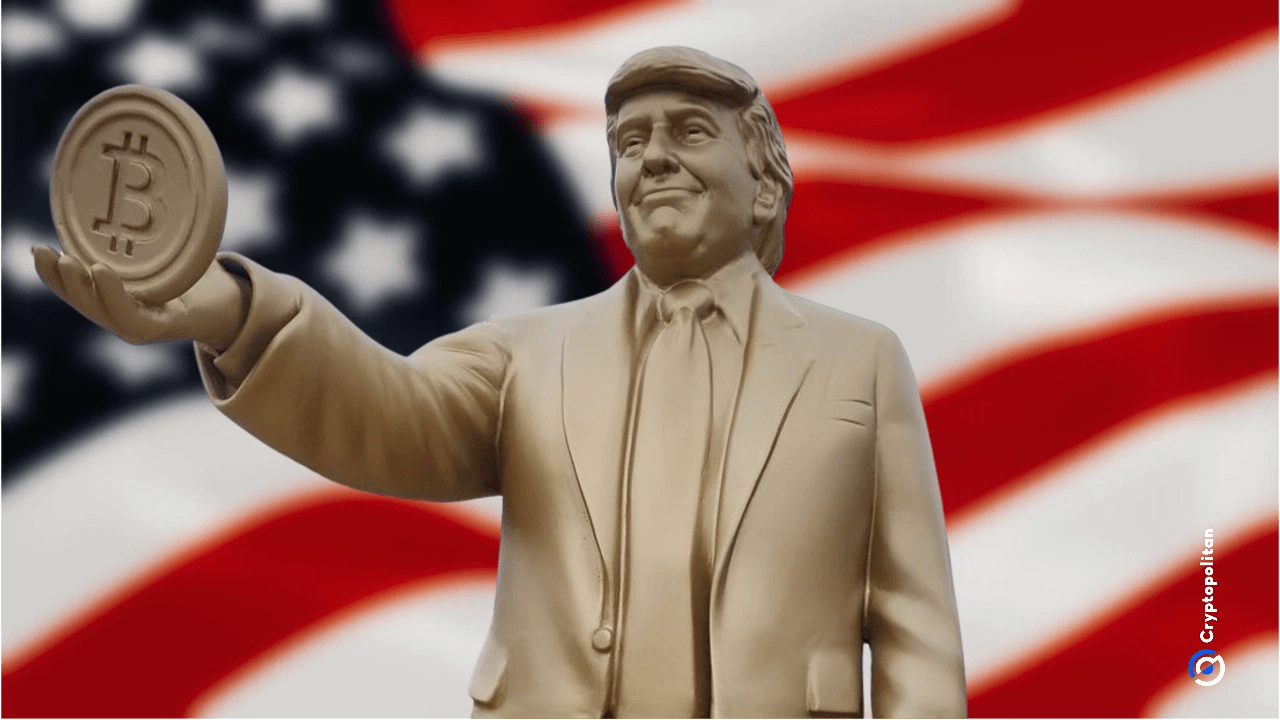
The post Golden Trump statue remains uninstalled amid $92,000 balance issue appeared on BitcoinEthereumNews.com. The golden statue of United States President Donald
Share
BitcoinEthereumNews2026/02/07 17:10