

Must Read
BACK IN CLASS. Students attend the first day of in-person classes at the Batasan National High School in Quezon City on August 22, 2022.BACK IN CLASS. Students attend the first day of in-person classes at the Batasan National High School in Quezon City on August 22, 2022.
Not even 1% of Grade 12 students ‘proficient’ in their subjects
5 min read
MANILA, Philippines – Filipino children may be advancing in the K to 12 system, but they are not necessarily learning the subjects they are taking.
Citing results of the Early Language, Literacy, and Numeracy Assessment (ELLNA) and National Achievement Test (NAT) conducted from 2023 to 2025, the Second Congressional Commission on Education (EDCOM 2) flagged “worrying declines in proficiency” across key stages — Grades 3, 6, 10, and 12.
The Department of Education conducts the ELLNA and NAT to help monitor the country’s education system and determine if students are “meeting the learning standards of the curriculum,” as laid out in a DepEd order issued in 2016.
Students’ scores are classified according to these ratings:
- At least 75% – proficient or highly proficient
- 50% to 74% – nearly proficient
- Below 50% – low proficient or not proficient
EDCOM 2’s Final Report, released on Monday, January 26, says only 30.5% of Grade 3 learners who took the ELLNA were considered either proficient or highly proficient. At this stage, foundational skills — “recognizing letters and sounds, reading common words, understanding short passages, counting on their own, or doing simple numerical problem-solving” — should already be mastered.
The percentage of proficient or highly proficient students dropped to 19.56% in Grade 6 based on the NAT, then plummeted further to 0.74% in Grade 10 and 0.40% in Grade 12 or the final year of senior high school (SHS).
The 0.40% is equivalent to only 6,518 out of 1.6 million Grade 12 students, or just four in every 1,000. Proficiency at this stage, according to EDCOM 2, refers to being “skilled in solving problems, managing and communicating information, and analyzing and evaluating data to create or formulate ideas.”
 Graphic from EDCOM 2
“Many SHS graduates still require remediation in literacy, numeracy, and scientific reasoning when they enter higher education,” EDCOM 2 said, citing Commission on Higher Education panels.
EDCOM 2 also noted that “proficiency gaps are even more severe in structurally disadvantaged school settings,” or in the country’s most vulnerable areas.
These include learners in Geographically Isolated and Disadvantaged Areas or GIDA and in last mile schools, which are schools in remote or conflict-hit places that lack proper facilities and specialized teachers.
Out of 210,350 Grade 12 learners in such areas in school year (SY) 2023-2024, only 266 or 0.13% were considered proficient.
Need to establish the basics
EDCOM 2 Executive Director Karol Mark Yee has said that the findings mirror results from past decades, showing a long-standing problem in the education system.
“These findings are not new…. Many years of neglect has led us to this, but we can overcome this by prioritizing, above all else, foundational skills,” Yee said.
Foundational skills that need a massive boost include reading. The DepEd’s Comprehensive Rapid Literacy Assessment showed 48.76% or nearly half of students from Grades 1 to 3 not reading at their respective grade levels at the end of SY 2024-2025.
Left unaddressed, the inability to read and comprehend information causes more problems for students in later stages of schooling, and all the way to adulthood.
Curriculum reforms
EDCOM 2 said the results “make clear that curriculum and instruction reforms must directly confront deep learning gaps rather than simply adding more years or content.”
The DepEd continues to implement the revised K to 10 curriculum or Matatag curriculum in phases — a rollout that has been beset by problems such as a mismatch between teachers’ specialization and the subjects they teach. Matatag was rolled out for kindergarten and Grades 1, 4, and 7 in SY 2024-2025, and Grades 2, 5, and 8 in SY 2025-2026. Next are Grades 3, 6, and 9 in SY 2026-2027, then finally, Grade 10 in SY 2027-2028.
The pilot of the Strengthened SHS Curriculum also got underway in more than 800 schools in SY 2025-2026. However, it “still functions more as a general preparatory stage for college than as a set of distinct and viable exits to work, skills certification, or entrepreneurship,” according to the EDCOM 2 report.
Both Matatag and the Strengthened SHS Curriculum are primarily aimed at decongesting content. They “provide a necessary but still fragile foundation,” EDCOM 2 noted, but should be reviewed and refined. They will also not be enough to close the severe learning gaps.
“They revise what is supposed to be learned, but they rely on complementary changes in learning recovery, instructional time, teacher workload, and support services to translate into large-scale gains in learner outcomes,” the commission said.
EDCOM 2 also called for “more aggressive remediation interventions” in the school calendar and through the Academic Recovery and Accessible Learning or ARAL Program to help improve students’ proficiency.
Under EDCOM 2’s National Education Plan, a 10-year roadmap for 2026 to 2035, it hopes to increase the percentage of at least proficient Grade 3 learners from the existing 30.5% to 50% by 2028, 70% by 2031, and 90% by 2035.
From 0.40% for Grade 12 learners, the targets are 30% by 2028, 60% by 2031, and 90% by 2035. – Rappler.com
Disclaimer: The articles reposted on this site are sourced from public platforms and are provided for informational purposes only. They do not necessarily reflect the views of MEXC. All rights remain with the original authors. If you believe any content infringes on third-party rights, please contact [email protected] for removal. MEXC makes no guarantees regarding the accuracy, completeness, or timeliness of the content and is not responsible for any actions taken based on the information provided. The content does not constitute financial, legal, or other professional advice, nor should it be considered a recommendation or endorsement by MEXC.
You May Also Like
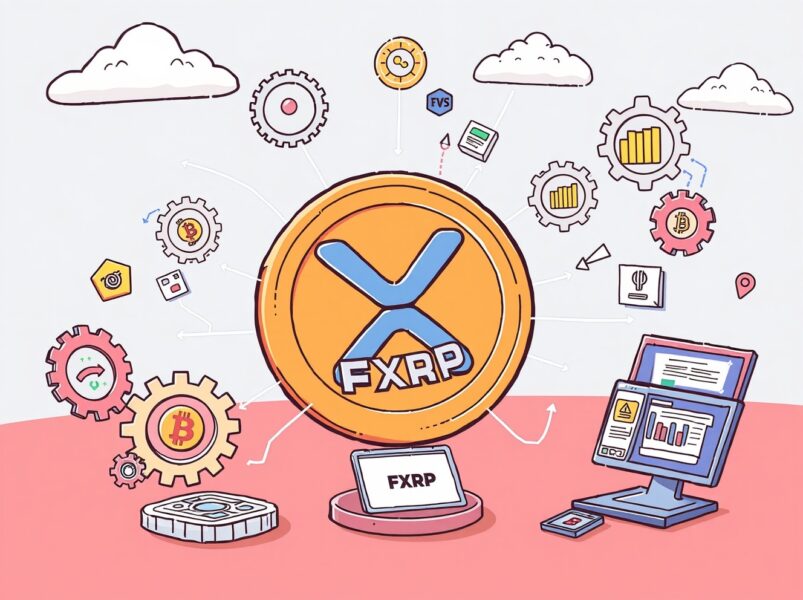
Unleash Potential: Flare Network’s FXRP Revolutionizes DeFi Access for XRP
BitcoinWorld Unleash Potential: Flare Network’s FXRP Revolutionizes DeFi Access for XRP The world of decentralized finance (DeFi) is constantly evolving, and a major new development is set to excite XRP enthusiasts. Flare Network has just launched FXRP, an innovative solution designed to bring XRP directly into the heart of DeFi applications. This move opens up a wealth of new possibilities for XRP holders, allowing them to engage with lending, borrowing, and trading platforms like never before. It’s a significant step towards a more interconnected crypto ecosystem. What is FXRP and Why is it a Game-Changer for XRP? At its core, FXRP is an over-collateralized, wrapped version of XRP. Think of it as a digital twin of XRP, but one that lives on the Flare Network. This design is crucial because XRP itself doesn’t natively support smart contracts in the same way that Ethereum or other DeFi-centric blockchains do. Consequently, XRP has largely been excluded from the burgeoning DeFi sector. However, FXRP changes this narrative completely. By wrapping XRP, Flare Network creates a token that can interact with smart contracts on its own blockchain. This means XRP holders can now: Access a wider range of DeFi protocols. Participate in decentralized lending and borrowing. Engage in yield farming opportunities. Trade their XRP on decentralized exchanges. This initiative transforms XRP from a primarily transactional asset into a more versatile, programmable one within the DeFi landscape. How Can You Acquire and Utilize FXRP? Getting your hands on FXRP is straightforward, offering flexibility for users. You have two primary methods to acquire this wrapped token. First, users can mint FXRP directly on the Flare Network. This process typically involves locking up an equivalent amount of XRP as collateral, ensuring the wrapped token remains fully backed. Alternatively, if direct minting isn’t your preference, you can acquire FXRP on various decentralized exchanges (DEXs). Platforms like SparkDEX, BlazeSwap, and Enosys are among the initial venues where you can trade for FXRP. This accessibility makes it easy for existing DeFi users and new participants alike to join the Flare Network ecosystem and explore its offerings. The over-collateralization aspect adds an extra layer of security, providing confidence in the token’s backing. Expanding DeFi Horizons: The Broader Impact of FXRP The introduction of FXRP extends far beyond just enabling XRP holders to participate in DeFi. It has a much broader impact on the entire decentralized finance ecosystem. By integrating a widely adopted asset like XRP, Flare Network significantly boosts the total value locked (TVL) and liquidity available within DeFi. This influx of capital and users can lead to more robust and efficient markets. Moreover, FXRP positions Flare Network as a vital bridge between different blockchain ecosystems. It demonstrates how assets from one chain can gain new functionality and utility on another, fostering greater interoperability. This cross-chain capability is essential for the long-term growth and sustainability of decentralized finance, as it breaks down silos and encourages a more unified digital economy. The potential for future integrations with other tokens and protocols is immense, further solidifying Flare’s role. Navigating the Challenges and Future of FXRP While the launch of FXRP presents exciting opportunities, it’s also important to consider potential challenges. As with any new technology in the crypto space, security remains a paramount concern. The integrity of the wrapping mechanism and the underlying smart contracts must be rigorously maintained. Furthermore, user adoption and education will be key to the success of FXRP. New users need clear guidance on how to safely mint, acquire, and use the token in various DeFi applications. The competitive landscape also plays a role; other wrapped assets exist, and FXRP must demonstrate its unique value proposition. However, with its strong backing and the innovative approach of Flare Network, FXRP is well-positioned for growth. Its ability to unlock XRP’s potential for DeFi is a powerful differentiator, promising a vibrant future for both the token and the network. Actionable Insights: Getting Started with FXRP in DeFi If you’re an XRP holder looking to explore the new opportunities presented by FXRP, here are some actionable insights to help you get started: Do Your Research: Before engaging with any DeFi platform, thoroughly research its reputation, security audits, and user reviews. Understand how FXRP interacts with specific protocols. Understand the Risks: DeFi carries inherent risks, including smart contract vulnerabilities, impermanent loss, and market volatility. Familiarize yourself with these risks before committing funds. Start Small: Consider starting with a small amount of FXRP to familiarize yourself with the process of minting, acquiring, and using it in DeFi applications. Stay Informed: Follow official Flare Network channels and reputable crypto news sources to stay updated on new integrations, security announcements, and community developments related to FXRP. By taking these steps, you can confidently navigate the exciting new world that FXRP opens up for XRP within decentralized finance. In conclusion, the launch of FXRP by Flare Network is a monumental step forward for the XRP community and the broader DeFi ecosystem. It effectively bridges a gap, allowing one of the most widely held cryptocurrencies to participate actively in decentralized finance. This innovation not only expands the utility of XRP but also reinforces Flare Network’s commitment to building a more interconnected and functional blockchain world. As FXRP gains traction, we can expect to see a surge in innovative DeFi applications and a more vibrant, inclusive financial landscape for all. Frequently Asked Questions (FAQs) Q1: What exactly is FXRP? A1: FXRP is an over-collateralized, wrapped version of XRP, specifically designed to enable XRP holders to use their assets within decentralized finance (DeFi) applications on the Flare Network. Q2: How is FXRP different from standard XRP? A2: While FXRP is backed by XRP, its key difference is that it resides on the Flare Network and is compatible with smart contracts. This allows it to be used in DeFi protocols for lending, borrowing, and trading, which standard XRP cannot do natively. Q3: Where can I acquire FXRP? A3: You can acquire FXRP by minting it directly on the Flare Network by locking up XRP, or by purchasing it on decentralized exchanges such as SparkDEX, BlazeSwap, and Enosys. Q4: What are the main benefits of using FXRP in DeFi? A4: The primary benefits include gaining access to a wide array of DeFi services like lending, borrowing, and trading on DEXs, thereby increasing the utility and potential earning opportunities for XRP holders within the decentralized ecosystem. Q5: What is Flare Network’s role in the creation of FXRP? A5: Flare Network is the blockchain platform that hosts FXRP. It provides the smart contract functionality and infrastructure necessary to wrap XRP and enable its use in DeFi applications, acting as a bridge for XRP into the decentralized world. If you found this article insightful and believe in the potential of FXRP to revolutionize DeFi, please share it with your network! Help spread the word about how Flare Network is bridging the gap for XRP holders and expanding the possibilities within decentralized finance. Your support helps grow our community and keeps everyone informed about the latest crypto innovations. To learn more about the latest crypto market trends, explore our article on key developments shaping decentralized finance institutional adoption. This post Unleash Potential: Flare Network’s FXRP Revolutionizes DeFi Access for XRP first appeared on BitcoinWorld.
Share
Coinstats2025/09/24 22:45

Fed Lowers Rates By 25bps: How Bitcoin And Crypto Prices Responded And What’s Next
The Federal Reserve (Fed) announced its first interest rate cut of the year, leading to an immediate reaction in the cryptocurrency market. Bitcoin (BTC) experienced a notable decline, dropping below the $115,000 threshold shortly after the announcement. Expert Predicts Crypto Rally Fed Chair Jerome Powell addressed the current economic landscape, noting that while inflation has […]
Share
Bitcoinist2025/09/18 03:11

XRP Price Outlook As Peter Brandt Predicts BTC Price Might Crash to $42k
The post XRP Price Outlook As Peter Brandt Predicts BTC Price Might Crash to $42k appeared on BitcoinEthereumNews.com. XRP price led cryptocurrency losses on Friday
Share
BitcoinEthereumNews2026/02/06 19:06