The post CZ at Davos: Crypto Will Become the Native Currency of AI Agents appeared on BitcoinEthereumNews.com. Changpeng Zhao, founder of the world’s largest cryptocurrencyThe post CZ at Davos: Crypto Will Become the Native Currency of AI Agents appeared on BitcoinEthereumNews.com. Changpeng Zhao, founder of the world’s largest cryptocurrency

CZ at Davos: Crypto Will Become the Native Currency of AI Agents

Changpeng Zhao, founder of the world’s largest cryptocurrency exchange, Binance, predicted that cryptocurrency will become the default currency for artificial intelligence agents during a panel discussion at the World Economic Forum in Davos.

Speaking alongside executives from ING Group, BNY Mellon, and Primavera Capital Group, CZ outlined his vision for how blockchain technology and AI will converge to transform the global financial landscape.

AI Agents Will Transact in Crypto

CZ identified artificial intelligence as one of three emerging sectors poised to fundamentally reshape finance.

He acknowledged that current AI technology remains limited in practical applications. “Today’s AI still falls far short of intelligent agency—it can’t book your flight or pay for your lunch,” he noted. “But once it reaches that level, all payments will flow through cryptocurrency.”

The prediction reflects growing industry interest in the intersection of AI and blockchain, as autonomous systems increasingly require seamless, programmable payment infrastructure.

Tokenization and Payments Round Out Top Three

Beyond AI, CZ pointed to tokenization and payments as major growth areas. On tokenization, he revealed active engagement with multiple governments.

Payments, however, remain an unsolved challenge. “We’ve tried, but haven’t yet cracked it,” CZ admitted. “To be precise, cryptocurrencies haven’t meaningfully entered the payments space.”

Still, he sees progress in hybrid solutions that combine traditional payment rails with crypto infrastructure—consumers swipe cards while crypto is deducted from their wallets, and merchants receive fiat settlement. “Once those bridges are built, payments will undergo a major transformation,” he predicted.

Binance by the Numbers

CZ provided context on Binance’s current scale, highlighting metrics that underscore crypto’s mainstream arrival.

The exchange serves 300 million users globally—a figure CZ noted “likely makes it larger than any bank I know of.” Trading volume not only surpassed that of the Shanghai Stock Exchange but also exceeded that of the New York Stock Exchange last year.

He also pointed to the platform’s resilience during market stress. In December 2023, following the FTX collapse and other industry turmoil, Binance processed $7 billion in single-day withdrawals without disruption. Total withdrawals that week reached $14 billion while the platform remained fully operational.

“In the banking system, I’m unaware of any bank capable of withstanding withdrawals of that magnitude,” CZ said, attributing the difference to crypto’s full-reserve model versus traditional fractional-reserve banking.

What Won’t Survive

CZ also offered candid assessments of what may not last.

Bitcoin payments, despite a decade of effort, have shown little progress. “If you’d asked me this question ten years ago, I’d have said Bitcoin payments. But today, a decade later, we’re still nowhere close,” he said.

Memecoins face similar skepticism. “I have a strong hunch memes may follow a similar trajectory” to NFTs, which “exploded in popularity—and then faded dramatically.” While culturally resonant projects like Dogecoin may persist, “I believe most memecoins won’t last.”

Physical bank branches also face decline. “Demand for physical bank branches will decline sharply,” CZ predicted, citing the maturation of electronic KYC and digital financial services.

Regulatory Landscape

On regulation, CZ noted that crypto rules vary dramatically worldwide. Binance holds 22-23 licenses globally, yet most countries still lack formal frameworks.

He advocated for regulatory “passports” that recognize licenses granted in one jurisdiction by others—a more achievable step than creating new global regulators.

The post CZ at Davos: Crypto Will Become the Native Currency of AI Agents appeared first on BeInCrypto.

Source: https://beincrypto.com/cz-crypto-native-currency-of-ai-agents/

Disclaimer: The articles reposted on this site are sourced from public platforms and are provided for informational purposes only. They do not necessarily reflect the views of MEXC. All rights remain with the original authors. If you believe any content infringes on third-party rights, please contact [email protected] for removal. MEXC makes no guarantees regarding the accuracy, completeness, or timeliness of the content and is not responsible for any actions taken based on the information provided. The content does not constitute financial, legal, or other professional advice, nor should it be considered a recommendation or endorsement by MEXC.

You May Also Like

Cashing In On University Patents Means Giving Up On Our Innovation Future

Cashing In On University Patents Means Giving Up On Our Innovation Future

The post Cashing In On University Patents Means Giving Up On Our Innovation Future appeared on BitcoinEthereumNews.com. “It’s a raid on American innovation that would deliver pennies to the Treasury while kneecapping the very engine of our economic and medical progress,” writes Pipes. Getty Images Washington is addicted to taxing success. Now, Commerce Secretary Howard Lutnick is floating a plan to skim half the patent earnings from inventions developed at universities with federal funding. It’s being sold as a way to shore up programs like Social Security. In reality, it’s a raid on American innovation that would deliver pennies to the Treasury while kneecapping the very engine of our economic and medical progress. Yes, taxpayer dollars support early-stage research. But the real payoff comes later—in the jobs created, cures discovered, and industries launched when universities and private industry turn those discoveries into real products. By comparison, the sums at stake in patent licensing are trivial. Universities collectively earn only about $3.6 billion annually in patent income—less than the federal government spends on Social Security in a single day. Even confiscating half would barely register against a $6 trillion federal budget. And yet the damage from such a policy would be anything but trivial. The true return on taxpayer investment isn’t in licensing checks sent to Washington, but in the downstream economic activity that federally supported research unleashes. Thanks to the bipartisan Bayh-Dole Act of 1980, universities and private industry have powerful incentives to translate early-stage discoveries into real-world products. Before Bayh-Dole, the government hoarded patents from federally funded research, and fewer than 5% were ever licensed. Once universities could own and license their own inventions, innovation exploded. The result has been one of the best returns on investment in government history. Since 1996, university research has added nearly $2 trillion to U.S. industrial output, supported 6.5 million jobs, and launched more than 19,000 startups. Those companies pay…
Share
BitcoinEthereumNews2025/09/18 03:26
China Blocks Nvidia’s RTX Pro 6000D as Local Chips Rise

China Blocks Nvidia’s RTX Pro 6000D as Local Chips Rise

The post China Blocks Nvidia’s RTX Pro 6000D as Local Chips Rise appeared on BitcoinEthereumNews.com. China Blocks Nvidia’s RTX Pro 6000D as Local Chips Rise China’s internet regulator has ordered the country’s biggest technology firms, including Alibaba and ByteDance, to stop purchasing Nvidia’s RTX Pro 6000D GPUs. According to the Financial Times, the move shuts down the last major channel for mass supplies of American chips to the Chinese market. Why Beijing Halted Nvidia Purchases Chinese companies had planned to buy tens of thousands of RTX Pro 6000D accelerators and had already begun testing them in servers. But regulators intervened, halting the purchases and signaling stricter controls than earlier measures placed on Nvidia’s H20 chip. Image: Nvidia An audit compared Huawei and Cambricon processors, along with chips developed by Alibaba and Baidu, against Nvidia’s export-approved products. Regulators concluded that Chinese chips had reached performance levels comparable to the restricted U.S. models. This assessment pushed authorities to advise firms to rely more heavily on domestic processors, further tightening Nvidia’s already limited position in China. China’s Drive Toward Tech Independence The decision highlights Beijing’s focus on import substitution — developing self-sufficient chip production to reduce reliance on U.S. supplies. “The signal is now clear: all attention is focused on building a domestic ecosystem,” said a representative of a leading Chinese tech company. Nvidia had unveiled the RTX Pro 6000D in July 2025 during CEO Jensen Huang’s visit to Beijing, in an attempt to keep a foothold in China after Washington restricted exports of its most advanced chips. But momentum is shifting. Industry sources told the Financial Times that Chinese manufacturers plan to triple AI chip production next year to meet growing demand. They believe “domestic supply will now be sufficient without Nvidia.” What It Means for the Future With Huawei, Cambricon, Alibaba, and Baidu stepping up, China is positioning itself for long-term technological independence. Nvidia, meanwhile, faces…
Share
BitcoinEthereumNews2025/09/18 01:37
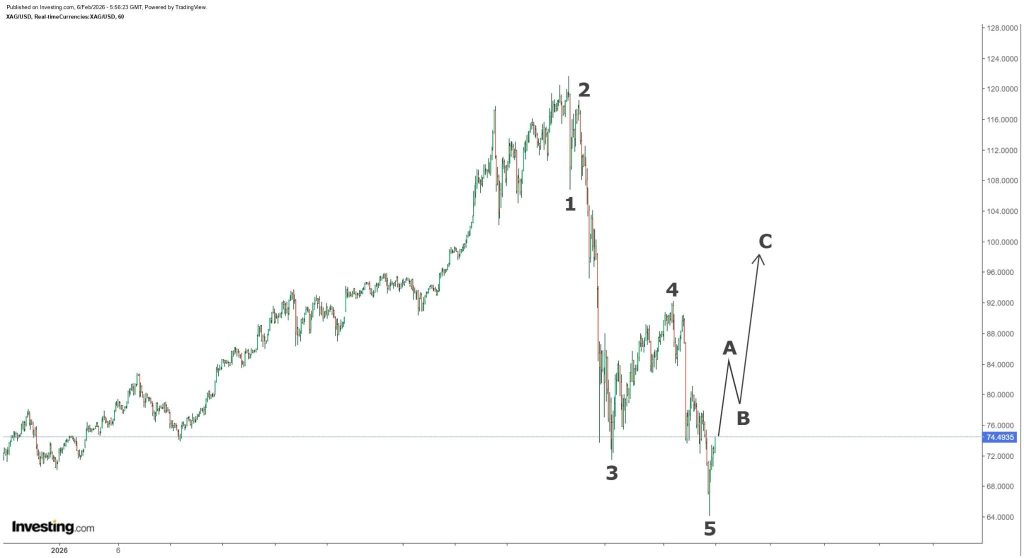
Silver Price Crash Is Over “For Real This Time,” Analyst Predicts a Surge Back Above $90

Silver Price Crash Is Over “For Real This Time,” Analyst Predicts a Surge Back Above $90

Silver has been taking a beating lately, and the Silver price hasn’t exactly been acting like a safe haven. After running up into the highs, the whole move reversed
Share
Captainaltcoin2026/02/07 03:15