

Tesla Dojo3 Revival Sparks Ambitious Shift to Space-Based AI Compute Infrastructure
BitcoinWorld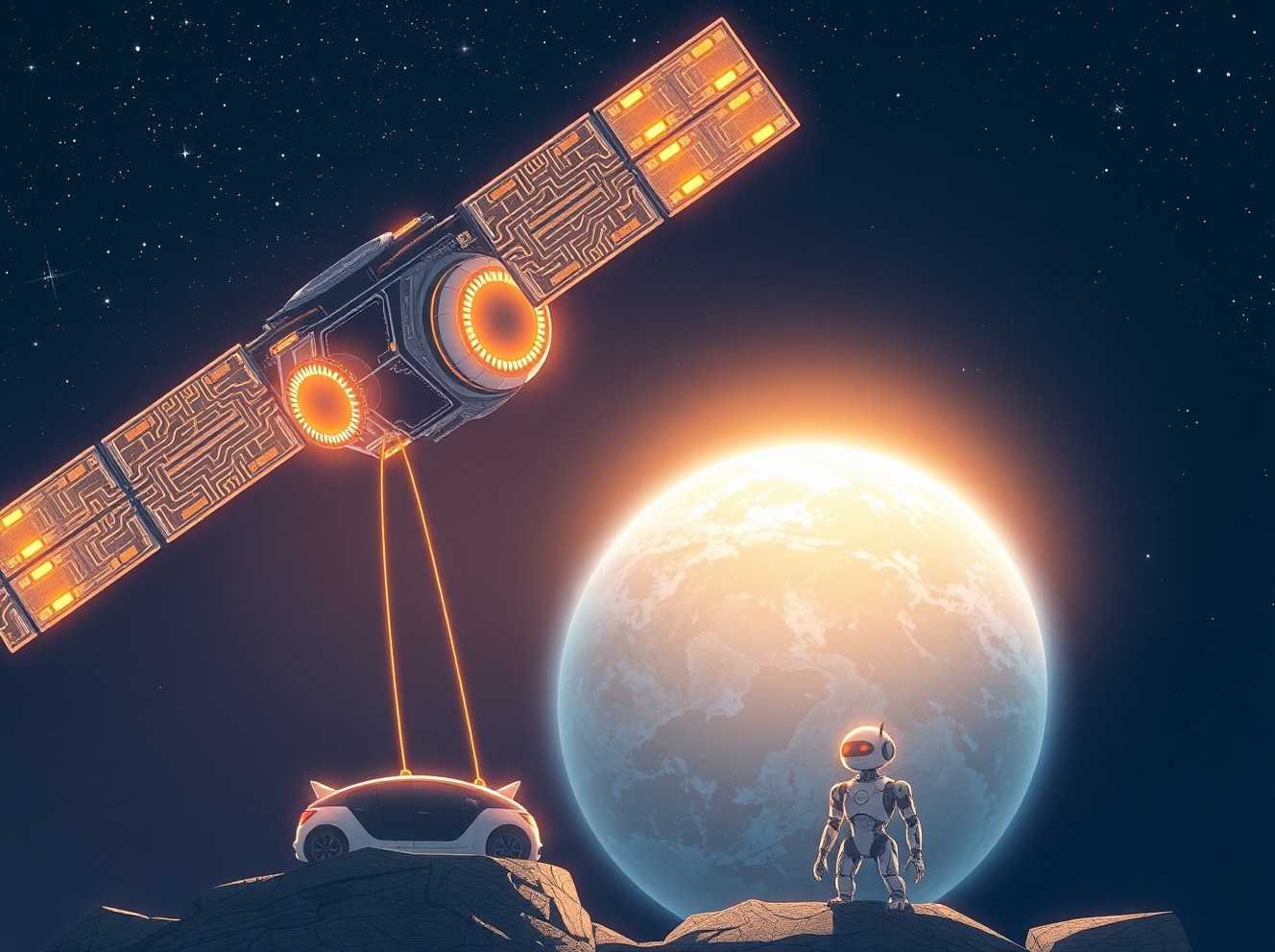
Tesla Dojo3 Revival Sparks Ambitious Shift to Space-Based AI Compute Infrastructure
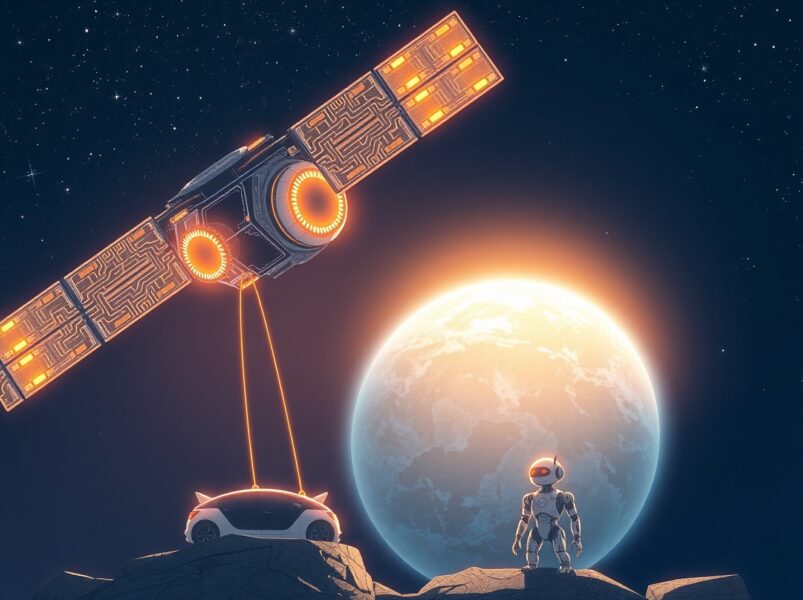
In a surprising strategic pivot, Tesla CEO Elon Musk announced the company will resurrect its Dojo3 AI chip project, fundamentally redirecting its purpose from terrestrial self-driving systems to pioneering space-based AI compute infrastructure. This revelation, made public over the long weekend, signals a dramatic evolution in Tesla’s silicon strategy and aligns with Musk’s broader vision of solving Earth’s looming computational energy crisis by moving data centers into orbit. The decision arrives just five months after Tesla effectively shuttered its in-house Dojo supercomputer effort, disbanding the team and increasing reliance on partners like Nvidia and Samsung. Musk’s latest statements suggest a complete reversal, positioning the revived Dojo3 not as a competitor to Earth-bound GPUs, but as a specialized processor for a new frontier: orbital AI data centers.
Tesla Dojo3’s Rocky Road to Resurrection
The history of Tesla’s Dojo project is marked by ambition and turbulence. Initially conceived as a custom supercomputer to train the company’s Full Self-Driving (FSD) models, the first-generation Dojo represented a bold bet on vertical integration. However, the initiative faced significant challenges. In 2025, following the departure of Dojo lead Peter Bannon, Tesla disbanded the core team. Approximately 20 engineers subsequently joined DensityAI, a startup founded by former Tesla silicon executives. At that time, analysts from Bloomberg reported Tesla planned to deepen partnerships with Nvidia for compute and Samsung for manufacturing, seemingly abandoning its proprietary chip dreams. Musk’s weekend announcement on X, however, reveals a nuanced timeline. He indicated the revival decision stemmed from progress on Tesla’s broader in-house chip roadmap, specifically noting that the AI5 chip—manufactured by TSMC for FSD and Optimus robots—was “in good shape.” Furthermore, Tesla’s massive $16.5 billion deal with Samsung for next-generation AI6 chips remains intact, covering vehicle, robot, and data center needs. Consequently, Dojo3 is not replacing these efforts but is being carved out for a distinct, more speculative mission.
The Technical and Strategic Rationale for Orbital Compute
Musk’s vision for space-based AI compute is not merely science fiction; it addresses a critical, growing constraint on Earth: energy. Modern AI training consumes vast amounts of power, straining electrical grids and raising sustainability concerns. Executives like Musk and OpenAI’s Sam Altman have publicly speculated about the limits of terrestrial data centers. An orbital data center, particularly in a sun-synchronous orbit, could operate on continuous solar power, eliminating downtime and reducing reliance on fossil-fuel-based grids. Musk holds a unique advantage through SpaceX, which controls the launch vehicles necessary for such a project. Reports from Axios suggest Musk intends to leverage a future SpaceX IPO to fund a constellation of compute satellites launched by Starship. This creates a synergistic loop within Musk’s empire: SpaceX provides the launch capability, Tesla develops the specialized AI hardware, and the resulting orbital network offers a new service. However, monumental technical hurdles persist, including managing heat dissipation in a vacuum, radiation hardening of components, and achieving reliable, high-bandwidth communication with Earth.
Competitive Landscape and Industry Implications
The timing of Musk’s announcement is strategically significant. At CES 2026, Nvidia unveiled Alpamayo, an open-source AI model for autonomous driving that directly competes with Tesla’s proprietary FSD stack. Musk’s public response wishing Nvidia success underscored the immense difficulty of solving autonomous driving’s “long tail” of edge cases. This competitive pressure may have accelerated Tesla’s desire to differentiate its silicon efforts beyond the automotive arena. By targeting space-based compute, Tesla is entering a nascent market with few direct competitors. The move could also influence semiconductor industry dynamics. While Tesla will still procure vast quantities of chips from Samsung and TSMC, a successful Dojo3 for space applications would establish Tesla as a formidable designer of specialized, high-performance silicon for extreme environments. This could attract talent and investment, further blurring the lines between automotive, aerospace, and computing companies. The recruitment drive Musk launched alongside the announcement—soliciting engineers via email with details of their toughest technical problems—aims to rapidly rebuild the expertise lost months ago, focusing on those intrigued by the scale challenge of building “the highest volume chips in the world.”
Analyzing the Feasibility and Musk’s Execution Pattern
Industry experts view the proposal with a mix of intrigue and skepticism. The core concept of orbital data centers is theoretically sound but practically daunting. The primary obstacle is thermal management. High-performance compute chips generate intense heat, which is difficult to dissipate in the vacuum of space without massive, heavy radiators. Furthermore, the cost of launch, despite SpaceX’s reductions, remains a significant barrier for infrastructure requiring constant maintenance or upgrades. Musk’s approach, however, fits a well-established pattern across his ventures: he publicly sets an audacious, long-term goal that seems far-fetched, then mobilizes resources to systematically tackle the engineering challenges. This was evident with reusable rockets at SpaceX and the creation of a viable EV market at Tesla. The Dojo3 announcement may serve a dual purpose: it stakes a claim in a future market while testing the waters for investor and talent interest. The project’s success will hinge not just on chip design, but on advancements in space-grade cooling, power systems, and in-orbit servicing—areas where SpaceX’s experience will be invaluable.
Conclusion
Elon Musk’s announcement to revive Tesla’s Dojo3 chip for space-based AI compute marks a pivotal and ambitious strategic redirection. It moves the project from a competitive play in a crowded terrestrial AI training market to a pioneering effort in orbital data infrastructure. This shift is driven by the converging realities of Earth’s energy constraints, the synergistic potential within Musk’s portfolio of companies, and the desire to establish a unique technological moat. While the path to operational space-based data centers is fraught with profound engineering challenges, the move underscores Tesla’s evolving identity from an electric vehicle manufacturer to a broad-based technology and infrastructure company. The resurrection of Dojo3 is less about chips for cars and more about building the computational foundation for what Musk envisions as a multi-planetary, AI-enabled future. The coming years will reveal whether this vision can transition from a compelling announcement on X to a tangible network in the stars.
FAQs
Q1: What is Tesla’s Dojo3 chip?
A1: Dojo3 is Tesla’s previously abandoned third-generation artificial intelligence processor. CEO Elon Musk has announced its revival, with a new dedicated purpose for powering “space-based AI compute” in orbital data centers, rather than for training self-driving car models on Earth.
Q2: Why did Tesla shut down the Dojo project initially?
A2: Tesla disbanded the original Dojo team in 2025 after key leadership departures, including lead Peter Bannon. At the time, reports indicated Tesla planned to increase its reliance on external partners like Nvidia for AI compute and Samsung for chip manufacturing.
Q3: What are the benefits of space-based AI compute?
A3: The primary proposed benefits are unlimited solar power in certain orbits, leading to potential 24/7 operation without straining Earth’s power grids, and possibly reduced cooling costs in the cold of space. It is seen as a long-term solution to the massive energy demands of advanced AI.
Q4: How does SpaceX fit into this plan?
A4: Elon Musk also leads SpaceX, which manufactures and operates launch vehicles. The plan would likely rely on SpaceX’s Starship rocket to launch the constellation of compute satellites into orbit at a feasible cost, creating a synergistic link between the two companies.
Q5: What is the biggest technical challenge for orbital AI data centers?
A5: The most significant hurdle is thermal management. High-performance computing chips generate extreme heat, which is exceptionally difficult to dissipate effectively in the vacuum of space without complex, heavy, and reliable radiator systems, making chip and system design critically important.
This post Tesla Dojo3 Revival Sparks Ambitious Shift to Space-Based AI Compute Infrastructure first appeared on BitcoinWorld.
You May Also Like

Steak ‘n Shake Adds $10 Million in Bitcoin Exposure Alongside BTC ‘Strategic Reserve’

Saudi Awwal Bank Adopts Chainlink Tools, LINK Near $23
