The attractive headline yields and steady distributions of U.S. Master Limited Partnerships are often outweighed by tax complexities. The post Why Canadian investorsThe attractive headline yields and steady distributions of U.S. Master Limited Partnerships are often outweighed by tax complexities. The post Why Canadian investors

Why Canadian investors should avoid MLPs

2026/01/20 13:59
8 min read

For better or worse, a sizable group of Canadian investors still screens prospective investments by dividend yield. When that search expands beyond Canadian stocks, it often leads into parts of the U.S. market that look attractive on the surface but are poorly understood.

Common examples include American mortgage real estate investment trusts (mREITs) and business development companies (BDCs). Both tend to be highly leveraged and structurally complex, and the headline yield rarely tells the full story. The same applies to Master Limited Partnerships, or MLPs.

What is a master limited partnership?

MLPs occupy the midstream segment of the energy sector. This part of the industry focuses on transporting, storing, and processing oil and gas rather than producing or retailing it. Canadian investors are already familiar with midstream businesses through TSX-listed companies like TC Energy and Enbridge. The difference is that these Canadian firms are conventional corporations, not partnerships.

An MLP is a U.S.-specific pass-through structure designed to generate income from energy-related assets. By operating as a partnership rather than a corporation, an MLP avoids corporate-level tax and distributes most of its cash flow directly to unitholders. That structure is the reason for the eye-catching yields. It is also why MLPs have long been popular with income-focused investors stateside.

Rankings

The best ETFs in Canada

From a distance, it is easy for Canadians to assume these investments should translate well across the border. Capital markets are similar, the businesses are familiar, and the income looks appealing. 

The sticking point is taxation. Differences between Canadian and U.S. tax rules turn MLP ownership into a complicated exercise for Canadian investors, often reducing after-tax returns and creating ongoing administrative headaches. Those frictions matter more than most investors realize.

Here is what Canadian investors need to know about U.S. MLPs, why they are usually best avoided, and which alternatives offer exposure to similar businesses without the same tax complications.

The tax headaches of MLPs for Canadian investors

For Canadian investors, the problems with U.S. master limited partnerships come down to two main issues: withholding tax and reporting requirements.

Most Canadians are already familiar with how U.S. withholding works. When you own U.S.-domiciled stocks or exchange traded funds (ETFs), 15% of dividends are typically withheld at source. That withholding can be avoided by holding those securities inside a Registered Retirement Savings Plan (RRSP), thanks to the Canada-U.S. tax treaty.

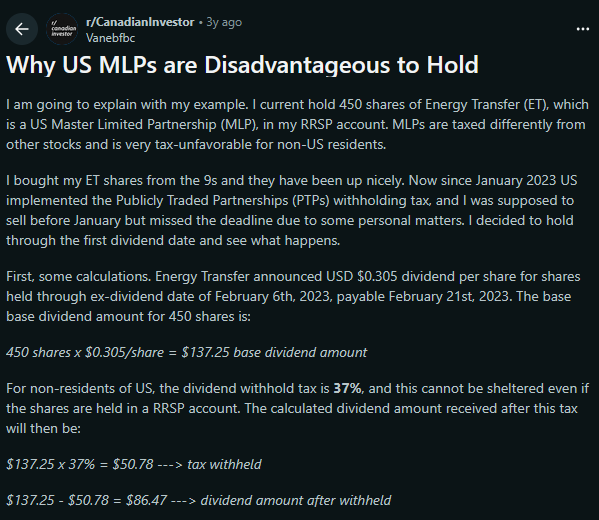
MLPs are treated very differently. They do not benefit from that treaty treatment. Distributions from MLPs are fully subject to U.S. withholding tax. Worse, the rate is not 15%. It is up to 37%. This withholding applies even inside registered accounts, including RRSPs.
Source: r/CanadianInvestor

That means more than one third of each distribution can disappear before it ever reaches your account. This is especially damaging because most of the long-term return from MLPs comes from reinvested distributions rather than price appreciation. 

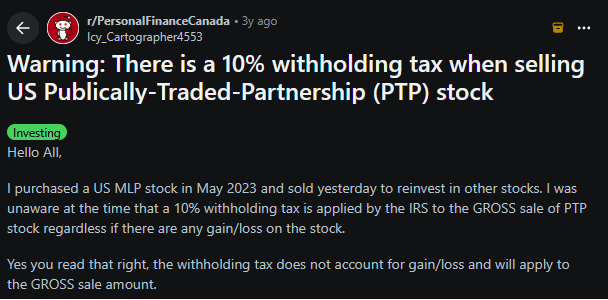
It does not stop there. When you sell an MLP, there is an additional 10% withholding tax applied to the gross proceeds by the Internal Revenue Service (IRS), because MLPs are classified as publicly traded partnerships. This is not a capital gains tax. It is withheld regardless of whether you are selling at a gain or a loss.

There are numerous real-world examples of Canadian investors discovering this the hard way. Some have bought and sold the same MLP multiple times, only to find that 10% was withheld on each transaction.
Source: r/PersonalFinanceCanada

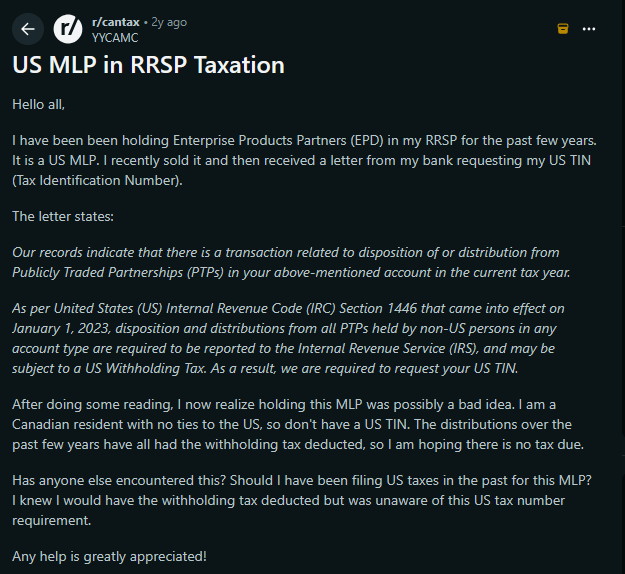
The final complication is tax reporting requirements. When you own a typical U.S. stock, you receive a 1099-DIV form that summarizes your income. With an MLP, you are not a shareholder. You are a partner. That means you receive a Schedule K-1.

A K-1 reports your share of the partnership’s income, deductions, and credits. It is far more complex than a standard dividend slip, and it creates a U.S. tax filing obligation. In theory, you are required to file a U.S. tax return to properly report this income to the IRS.
Source: r/cantax

Some investors choose to ignore this requirement, but that is a risky approach. Dealing with cross-border tax issues after the fact is rarely worth the trouble.

Taken together, these issues are hard to overlook. High withholding taxes on distributions, mandatory withholding on sales, and ongoing U.S. tax reporting obligations all apply even in registered accounts. For those reasons alone, I personally believe U.S. MLPs are generally a poor fit for Canadian investors, no matter how attractive the headline yield may look.

Also read

Canada’s best dividend stocks

MLP alternatives for Canadian investors

The simplest alternative is also the most obvious one. You can target the same part of the energy industry, the midstream segment, without using MLPs at all. That means sticking with regular corporations, and the TSX offers plenty of options. 

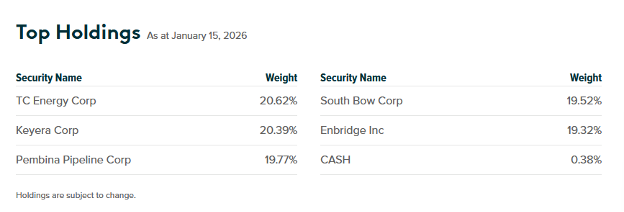
Companies such as Enbridge, TC Energy, and Pembina Pipeline all operate fee-based energy infrastructure with long-term contracts tied to oil and gas volumes. These businesses are similar to U.S. MLPs at the asset level. The difference is how they are taxed.

These companies pay eligible dividends, which qualify for the dividend tax credit in taxable accounts. You avoid foreign withholding issues, avoid U.S. tax filings, and still receive above-average yields from essential infrastructure assets. You can even buy a basket of them via an ETF like the Global X Equal Weight Canadian Pipelines Index ETF (PPLN).
Source: Global X Canada

However, if you still want exposure to MLPs specifically, you can use a U.S.-listed ETF. There are two possibilities within this niche, each with their own trade-offs.

The first approach is a pure-play MLP ETF that is structured as a corporation. These funds own only MLPs but are taxed at the corporate level. The distributions they pay often retain MLP characteristics, including a large return of capital component, but there is an important trade-off. Because the ETF itself is a corporation, it accrues deferred income-tax liabilities. These reflect depreciation from the underlying MLPs and unrealized capital gains in the portfolio. The amount depends on the U.S. federal corporate tax rate and applicable state taxes.

This deferred tax liability can act as both a headwind and a tailwind. It may dampen gains during strong markets and soften losses during downturns. Over long periods, however, the practical effect has often been a significant tracking error.

A commonly cited example is the Alerian MLP ETF (AMLP). Over the past decade, its net asset value return has trailed its benchmark index by a wide margin. A large part of that gap comes from deferred taxes, along with its relatively high 0.85% expense ratio.
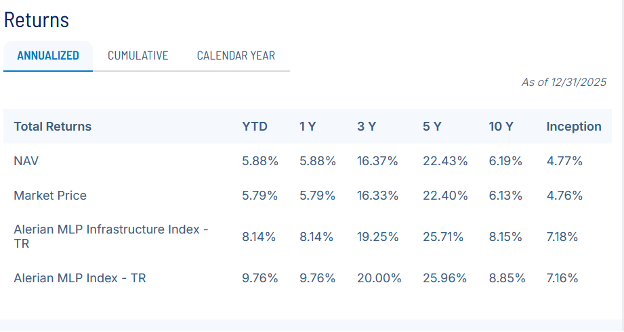
Source: ALPS Funds

Lower-cost options do exist. The Global X MLP ETF (MLPA) charges about 0.45% and pays a decent 7.94% 30-day SEC yield (a standardized calculation for funds developed by the U.S. Securities and Exchange Commission), but it still carries the same deferred tax mechanics. Global X even discloses the fund’s effective tax rate on its website, which highlights how meaningful this drag can be.
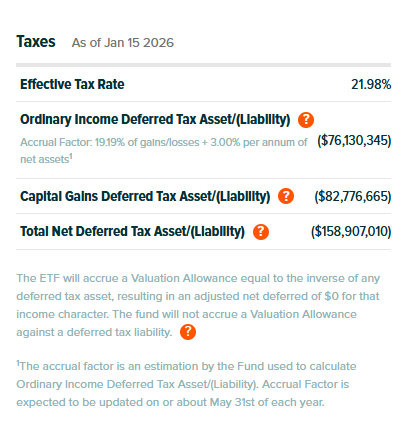
Source: Global X

There is another structure that avoids this issue, with a different compromise. U.S. ETFs that limit MLP exposure to 25% or less can be structured as registered investment companies (RICs) under the Investment Company Act of 1940. These are pass-through vehicles that do not pay corporate tax, as long as they distribute income and realized gains.

The trade-off is that you no longer get pure MLP exposure. The remaining holdings are typically incorporated midstream companies. These often include U.S.-listed shares of familiar names like ONEOK, Kinder Morgan, and Williams Companies, along with U.S. listings of Canadian firms.

An example is the Global X MLP & Energy Infrastructure ETF (MLPX). It carries the same 0.45% expense ratio as its pure-play sibling, but its yield is lower at 5.12% on a 30-day SEC basis because it is not fully invested in MLPs. The benefit is simpler taxation and no deferred tax liability dragging on returns.

Taxes are inevitable, so at least keep it simple

Whichever ETF structure you choose, there are two clear advantages compared with owning MLPs directly. Both types of ETFs issue 1099-DIV forms rather than Schedule K-1s, and they eliminate the 37% withholding on distributions and the 10% withholding on sales. You simply deal with the usual 15% foreign withholding tax on dividends, which you can avoid by putting them in a RRSP.

For Canadian investors who insist on MLP exposure, ETFs are the least painful route. For most others, Canadian and U.S. midstream corporations can offer similar economics with far fewer tax complications.

Newsletter

Get free MoneySense financial tips, news & advice in your inbox.

Read more about investing strategies:

  • The best GIC rates in Canada for 2025
  • If not bonds, then what?
  • Can you hedge against a market crash with ETFs?
  • Is Wealthsimple’s new Physical Gold Trading worth it?

The post Why Canadian investors should avoid MLPs  appeared first on MoneySense.

Market Opportunity
Union Logo
Union Price(U)
$0.001549
$0.001549$0.001549
-0.19%
USD
Union (U) Live Price Chart
Disclaimer: The articles reposted on this site are sourced from public platforms and are provided for informational purposes only. They do not necessarily reflect the views of MEXC. All rights remain with the original authors. If you believe any content infringes on third-party rights, please contact [email protected] for removal. MEXC makes no guarantees regarding the accuracy, completeness, or timeliness of the content and is not responsible for any actions taken based on the information provided. The content does not constitute financial, legal, or other professional advice, nor should it be considered a recommendation or endorsement by MEXC.

You May Also Like

Momentous Grayscale ETF: GDLC Fund’s Historic Conversion Set to Trade Tomorrow

Momentous Grayscale ETF: GDLC Fund’s Historic Conversion Set to Trade Tomorrow

BitcoinWorld Momentous Grayscale ETF: GDLC Fund’s Historic Conversion Set to Trade Tomorrow Get ready for a significant shift in the world of digital asset investing! A truly momentous event is unfolding as Grayscale’s Digital Large Cap Fund (GDLC) makes its highly anticipated transition into a spot crypto exchange-traded fund. This isn’t just a name change; it’s a pivotal moment for the broader cryptocurrency market, bringing a new era of accessibility and institutional participation through the Grayscale ETF. What’s Happening with the Grayscale ETF Conversion? Tomorrow marks a historic day for Grayscale’s Digital Large Cap Fund (GDLC). This existing spot crypto basket is officially scheduled to begin trading under its new identity: the Grayscale CoinDesk Crypto5 ETF. This exciting development comes directly after the U.S. Securities and Exchange Commission (SEC) gave its stamp of approval to Grayscale’s application for this conversion. As Bloomberg ETF analyst Eric Balchunas highlighted, this move has been keenly watched. The approval and subsequent launch underscore a growing acceptance of crypto-backed financial products within traditional markets. For investors, this conversion of the Grayscale ETF represents a more streamlined and regulated way to gain exposure to a diversified basket of large-cap digital assets. Why is the Grayscale ETF a Game-Changer for Investors? The conversion of GDLC into a Grayscale ETF offers several compelling benefits, fundamentally changing how investors can access the crypto market. Firstly, ETFs are known for their ease of trading. They can be bought and sold on traditional stock exchanges, just like company shares, making them incredibly accessible to a wider range of investors who might be hesitant to directly hold cryptocurrencies. Consider these key advantages: Enhanced Accessibility: Investors can gain exposure to a diversified crypto portfolio without needing to set up crypto wallets or manage private keys. Increased Liquidity: Trading on major exchanges typically means higher liquidity, allowing for easier entry and exit points. Regulatory Oversight: As an SEC-approved product, the Grayscale ETF operates under a regulated framework, potentially offering greater investor protection and confidence. Diversification: The Grayscale CoinDesk Crypto5 ETF tracks a basket of large-cap cryptocurrencies, offering immediate diversification rather than exposure to a single asset. This development is a strong indicator of the maturation of the digital asset space. It signals a bridge between the innovative world of crypto and the established financial system. Navigating the New Grayscale ETF Landscape While the launch of the Grayscale CoinDesk Crypto5 ETF brings exciting opportunities, it’s also important for investors to understand its implications. The shift from a closed-end fund structure (GDLC) to an open-ended ETF means that the fund’s shares can now be created and redeemed daily. This mechanism helps keep the ETF’s market price closely aligned with the net asset value (NAV) of its underlying holdings. Historically, closed-end funds like GDLC could trade at significant premiums or discounts to their NAV. The ETF structure is designed to mitigate these discrepancies, providing a more efficient pricing mechanism. This change offers a more transparent and potentially less volatile investment experience for those looking to invest in a Grayscale ETF. What’s Next for Crypto ETFs and Grayscale? The successful conversion and launch of the Grayscale CoinDesk Crypto5 ETF could pave the way for similar transformations of other Grayscale products. It also sets a precedent for how existing crypto investment vehicles might evolve to meet market demand for regulated, accessible products. The increasing number of spot crypto ETFs, including this new Grayscale ETF, reflects a growing institutional appetite for digital assets. This trend suggests a future where cryptocurrency investing becomes an even more integrated part of mainstream financial portfolios. As regulatory clarity continues to improve, we can anticipate further innovation and expansion in the crypto ETF landscape, offering investors diverse options to participate in the digital economy. The launch of the Grayscale CoinDesk Crypto5 ETF is more than just a new product; it’s a testament to the persistent efforts to bring digital assets into the mainstream financial fold. By offering a regulated, accessible, and diversified investment vehicle, Grayscale is not only expanding opportunities for investors but also reinforcing the legitimacy and staying power of the crypto market. This momentous step truly reshapes the investment landscape, making it easier for a broader audience to engage with the exciting potential of cryptocurrencies through a trusted Grayscale ETF. Frequently Asked Questions (FAQs) What is the Grayscale CoinDesk Crypto5 ETF? The Grayscale CoinDesk Crypto5 ETF is the new name and structure for Grayscale’s former Digital Large Cap Fund (GDLC). It’s a spot crypto basket that holds a diversified portfolio of large-cap digital assets, now trading as an exchange-traded fund. When will the Grayscale ETF begin trading? The Grayscale CoinDesk Crypto5 ETF is scheduled to begin trading tomorrow, following its approval by the U.S. Securities and Exchange Commission (SEC). How does an ETF differ from the previous GDLC fund? As an ETF, the fund’s shares can be created and redeemed daily, which helps keep its market price closely aligned with the value of its underlying assets. The previous GDLC fund was a closed-end fund that could trade at significant premiums or discounts to its net asset value. What are the benefits of investing in the Grayscale ETF? Benefits include enhanced accessibility (trading on traditional exchanges), increased liquidity, regulatory oversight by the SEC, and immediate diversification into a basket of large-cap cryptocurrencies. Is the Grayscale ETF suitable for all investors? While the Grayscale ETF offers a regulated and accessible way to invest in crypto, all investments carry risks. Investors should conduct their own research and consider their financial goals and risk tolerance before investing in any ETF, including this Grayscale ETF. Did you find this article informative? Share this exciting news about the Grayscale ETF conversion with your friends, family, and fellow investors on social media to keep them informed about the latest developments in the crypto world! To learn more about the latest crypto market trends, explore our article on key developments shaping Bitcoin and Ethereum price action. This post Momentous Grayscale ETF: GDLC Fund’s Historic Conversion Set to Trade Tomorrow first appeared on BitcoinWorld.
Share
Coinstats2025/09/19 17:45
The UA Sprinkler Fitters Local 669 JATC – Notice of Privacy Incident

The UA Sprinkler Fitters Local 669 JATC – Notice of Privacy Incident

Landover, Maryland, February 6, 2026– The UA Sprinkler Fitters Local 669 Joint Apprenticeship and Training Committee (“JATC”) is providing notice of an event that
Share
AI Journal2026/02/07 07:30
Vitalik Buterin Reveals Ethereum’s (ETH) Future Plans – Here’s What’s Planned

Vitalik Buterin Reveals Ethereum’s (ETH) Future Plans – Here’s What’s Planned

The post Vitalik Buterin Reveals Ethereum’s (ETH) Future Plans – Here’s What’s Planned appeared on BitcoinEthereumNews.com. Ethereum founder Vitalik Buterin presented the network’s new roadmap, which includes its short-, medium-, and long-term goals, at the Developer Conference held in Japan today. Scalability, cross-layer compatibility, privacy, and security were the prominent topics in Buterin’s speech. Buterin stated that the short-term focus will be on increasing gas limits on the Ethereum mainnet (L1). He said that tools such as block-level access lists, ZK-EVMs, gas price restructuring, and slot optimization will be used in this context. The goal is to maintain the network’s decentralization while increasing scalability. The medium-term goal is to enable trustless asset transfers between Layer-2 (L2) networks and achieve faster transaction finality. In this context, “Stage 2 Rollup” solutions, proof-of-conduct combinations, and optimizations for reading data from L1 are on the agenda. Furthermore, network optimizations such as shortening slot times, fast finality protocols, and erasure coding are planned to improve user experience and security. Buterin emphasized that privacy is a priority for both the short and medium term. Zero-knowledge (ZK) proofs, anonymous pools, encrypted voting, and scrambling network solutions are highlighted to protect the privacy of users’ on-chain payments, voting, DeFi transactions, and account changes. Furthermore, secure execution environments, secret query techniques, and the ability to conceal fraudulent requests and data access patterns are also targeted when reading data from the chain. Buterin’s long-term vision highlights a minimalist, secure, and simple Ethereum. This roadmap includes resistance to the risks posed by quantum computers, securing the protocol with mathematical methods (formal verification), and transitioning to ideal cryptographic solutions. Buterin stated that these strategic steps will transform Ethereum into a more scalable, user-friendly, and secure infrastructure. With the strengthening of L2 networks, more users will be able to use Ethereum with less trust assumptions. The ultimate goal is for Ethereum to become a reliable foundational infrastructure for global…
Share
BitcoinEthereumNews2025/09/18 15:57