USDT prices have reportedly risen in Argentina as demand for US dollars rises in the Latin American nation. Criptonoticias reported that the price of USDT rose above the 1,280 peso mark on July 8. At the time of writing, that would price USDT at USD 1.02, rather than USD 1.00. The news comes just three months after the Lemon Cash platform, one of the country’s most popular crypto exchanges, recorded an all-time high for stablecoin purchases. The firm said that between April 14, between 10 am and 11 am, stablecoin transactions grew by more than 350% hour-on-hour. The USDT market cap over the past 12 months. (Source: CoinMarketCap) USDT: Argentina Demand Growing? The same crypto exchange said that stablecoin buying is a growing trend in Argentina. It announced that, in February this year, combined USD-pegged coin trading volumes were 2.5 times higher than the monthly average for 2024. Experts and media analysts in the nation have credited much of the rise to the Argentine government’s announcement on April 13 that it would lift a much-maligned cap on USD buying. The foreign exchange restrictions were first imposed back in 2019, when Buenos Aires attempted to address ballooning inflation rates and falling domestic investment rates. However, the newspaper La Nacion claimed that other factors are also at play. Fears of a peso devaluation remain high. And while the government has seemingly emerged victorious in its battle with hyperinflation, trust in the peso remains low. Argentina inflation tumbles to five-year-low 1.5% in boost for Milei https://t.co/bFXBMAODWD https://t.co/bFXBMAODWD — Reuters Politics (@ReutersPolitics) June 13, 2025 Dollarization Plans Still in Play? Ahead of his election in 2023, President Javier Milei promised to scrap the Argentine peso and dollarize the country’s economy. Media outlets also pointed to growing “uncertainty” ahead of legislative elections slated for October 26. Criptonoticias wrote that “many savers are seeking refuge in dollar-denominated assets in the face of possible changes in the government’s economic direction.” However, experts also pointed to new Christmas bonus rules, which this year saw companies pay their employees bonuses in June. This has led many to invest surplus funds in assets they think can store value in the medium and long term. For many, this is the US dollar. But for others, it is Bitcoin (BTC) , which also remains popular in Argentina. Many traders use USDT and other USD-pegged coins to buy and sell BTC. USDT prices versus the Argentine Peso over the past month. (Source: Google Finance) However, others explained that FOMO (fear of missing out) may also be driving the dollar market. The concept of the “ dólar barato ” (literally: “cheap dollar”) appears to have taken root in the Argentinian markets. An acceleration of the agricultural sector’s liquidation process was cited as another factor. This refers to a recurring Argentine economic phenomenon whereby farmers and exporters convert their foreign currency earnings from agricultural exports into fiat pesos. The consulting firm Ecolatina explained to La Nation: “The acceleration of the agricultural sector’s liquidation is occurring amid two factors. First, increased seasonal demand from individuals during the Christmas bonus season. And second, a deterioration in expectations [as savers think about the] ‘day after the agricultural sector’s liquidation.’ This anticipates higher demand at a time when the dollar is perceived as cheap. And that, in turn, creates a self-fulfilling prophecy.” President Javier Milei is counting on a shale-oil boom in Argentina to cement his libertarian economic reforms https://t.co/djmmzH5npj — Bloomberg (@business) July 6, 2025 Black Market USD Prices Also Climbing Criptonoticias, meanwhile, explained that “dólar barato” sees savers “buy to protect themselves, which in turn increases demand and pushes the price up.” In other words, the outlet concluded, “the rise ultimately occurs because of the trading activity of people who anticipate” a rise in USD prices. La Nacion explained that black market dollar prices are also on the rise, climbing 3.25% from July 4 to July 7. The rate if MEP dollar, which is used to legally dollarize savings as an emergency measure, climbed 2.4% from ARS 29.52 to ARS 1,276.44 in the same period. Earlier this month, the USDT operator Tether announced it was exploring a joint Bitcoin mining project powered by Brazilian renewable energy sources .USDT prices have reportedly risen in Argentina as demand for US dollars rises in the Latin American nation. Criptonoticias reported that the price of USDT rose above the 1,280 peso mark on July 8. At the time of writing, that would price USDT at USD 1.02, rather than USD 1.00. The news comes just three months after the Lemon Cash platform, one of the country’s most popular crypto exchanges, recorded an all-time high for stablecoin purchases. The firm said that between April 14, between 10 am and 11 am, stablecoin transactions grew by more than 350% hour-on-hour. The USDT market cap over the past 12 months. (Source: CoinMarketCap) USDT: Argentina Demand Growing? The same crypto exchange said that stablecoin buying is a growing trend in Argentina. It announced that, in February this year, combined USD-pegged coin trading volumes were 2.5 times higher than the monthly average for 2024. Experts and media analysts in the nation have credited much of the rise to the Argentine government’s announcement on April 13 that it would lift a much-maligned cap on USD buying. The foreign exchange restrictions were first imposed back in 2019, when Buenos Aires attempted to address ballooning inflation rates and falling domestic investment rates. However, the newspaper La Nacion claimed that other factors are also at play. Fears of a peso devaluation remain high. And while the government has seemingly emerged victorious in its battle with hyperinflation, trust in the peso remains low. Argentina inflation tumbles to five-year-low 1.5% in boost for Milei https://t.co/bFXBMAODWD https://t.co/bFXBMAODWD — Reuters Politics (@ReutersPolitics) June 13, 2025 Dollarization Plans Still in Play? Ahead of his election in 2023, President Javier Milei promised to scrap the Argentine peso and dollarize the country’s economy. Media outlets also pointed to growing “uncertainty” ahead of legislative elections slated for October 26. Criptonoticias wrote that “many savers are seeking refuge in dollar-denominated assets in the face of possible changes in the government’s economic direction.” However, experts also pointed to new Christmas bonus rules, which this year saw companies pay their employees bonuses in June. This has led many to invest surplus funds in assets they think can store value in the medium and long term. For many, this is the US dollar. But for others, it is Bitcoin (BTC) , which also remains popular in Argentina. Many traders use USDT and other USD-pegged coins to buy and sell BTC. USDT prices versus the Argentine Peso over the past month. (Source: Google Finance) However, others explained that FOMO (fear of missing out) may also be driving the dollar market. The concept of the “ dólar barato ” (literally: “cheap dollar”) appears to have taken root in the Argentinian markets. An acceleration of the agricultural sector’s liquidation process was cited as another factor. This refers to a recurring Argentine economic phenomenon whereby farmers and exporters convert their foreign currency earnings from agricultural exports into fiat pesos. The consulting firm Ecolatina explained to La Nation: “The acceleration of the agricultural sector’s liquidation is occurring amid two factors. First, increased seasonal demand from individuals during the Christmas bonus season. And second, a deterioration in expectations [as savers think about the] ‘day after the agricultural sector’s liquidation.’ This anticipates higher demand at a time when the dollar is perceived as cheap. And that, in turn, creates a self-fulfilling prophecy.” President Javier Milei is counting on a shale-oil boom in Argentina to cement his libertarian economic reforms https://t.co/djmmzH5npj — Bloomberg (@business) July 6, 2025 Black Market USD Prices Also Climbing Criptonoticias, meanwhile, explained that “dólar barato” sees savers “buy to protect themselves, which in turn increases demand and pushes the price up.” In other words, the outlet concluded, “the rise ultimately occurs because of the trading activity of people who anticipate” a rise in USD prices. La Nacion explained that black market dollar prices are also on the rise, climbing 3.25% from July 4 to July 7. The rate if MEP dollar, which is used to legally dollarize savings as an emergency measure, climbed 2.4% from ARS 29.52 to ARS 1,276.44 in the same period. Earlier this month, the USDT operator Tether announced it was exploring a joint Bitcoin mining project powered by Brazilian renewable energy sources .

USDT Prices Surge in Argentina as Dollar Demand Spikes

3 min read

USDT prices have reportedly risen in Argentina as demand for US dollars rises in the Latin American nation.

Criptonoticias reported that the price of USDT rose above the 1,280 peso mark on July 8. At the time of writing, that would price USDT at USD 1.02, rather than USD 1.00.

The news comes just three months after the Lemon Cash platform, one of the country’s most popular crypto exchanges, recorded an all-time high for stablecoin purchases.

The firm said that between April 14, between 10 am and 11 am, stablecoin transactions grew by more than 350% hour-on-hour.
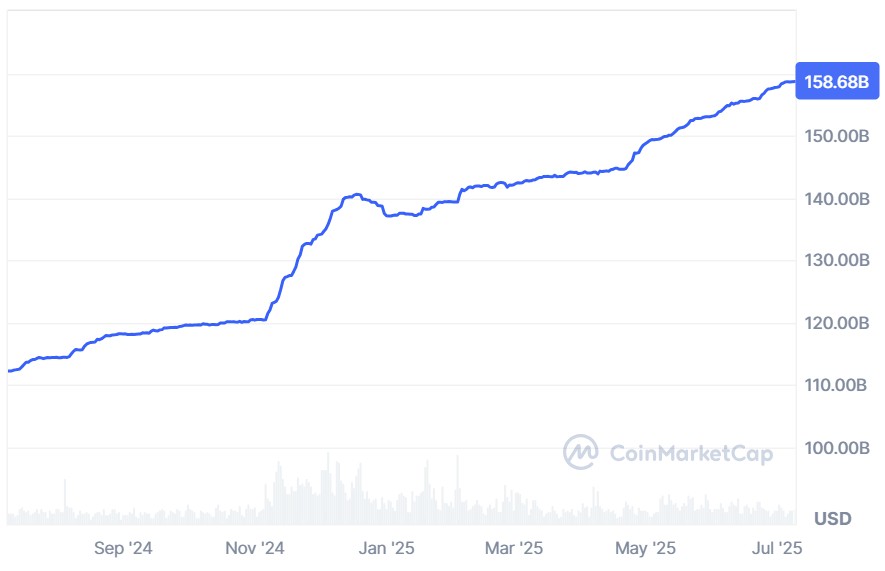
A graph showing the USDT market cap over the past 12 months.The USDT market cap over the past 12 months. (Source: CoinMarketCap)

USDT: Argentina Demand Growing?

The same crypto exchange said that stablecoin buying is a growing trend in Argentina. It announced that, in February this year, combined USD-pegged coin trading volumes were 2.5 times higher than the monthly average for 2024.

Experts and media analysts in the nation have credited much of the rise to the Argentine government’s announcement on April 13 that it would lift a much-maligned cap on USD buying.

The foreign exchange restrictions were first imposed back in 2019, when Buenos Aires attempted to address ballooning inflation rates and falling domestic investment rates.

However, the newspaper La Nacion claimed that other factors are also at play.

Fears of a peso devaluation remain high. And while the government has seemingly emerged victorious in its battle with hyperinflation, trust in the peso remains low.

Dollarization Plans Still in Play?

Ahead of his election in 2023, President Javier Milei promised to scrap the Argentine peso and dollarize the country’s economy.

Media outlets also pointed to growing “uncertainty” ahead of legislative elections slated for October 26.

Criptonoticias wrote that “many savers are seeking refuge in dollar-denominated assets in the face of possible changes in the government’s economic direction.”

However, experts also pointed to new Christmas bonus rules, which this year saw companies pay their employees bonuses in June.

This has led many to invest surplus funds in assets they think can store value in the medium and long term.

For many, this is the US dollar. But for others, it is Bitcoin (BTC), which also remains popular in Argentina.

Many traders use USDT and other USD-pegged coins to buy and sell BTC.

A graph showing USDT prices versus the Argentine Peso over the past month.USDT prices versus the Argentine Peso over the past month. (Source: Google Finance)

However, others explained that FOMO (fear of missing out) may also be driving the dollar market.

The concept of the “dólar barato” (literally: “cheap dollar”) appears to have taken root in the Argentinian markets.

An acceleration of the agricultural sector’s liquidation process was cited as another factor.

This refers to a recurring Argentine economic phenomenon whereby farmers and exporters convert their foreign currency earnings from agricultural exports into fiat pesos. The consulting firm Ecolatina explained to La Nation:

Black Market USD Prices Also Climbing

Criptonoticias, meanwhile, explained that “dólar barato” sees savers “buy to protect themselves, which in turn increases demand and pushes the price up.”

In other words, the outlet concluded, “the rise ultimately occurs because of the trading activity of people who anticipate” a rise in USD prices.

La Nacion explained that black market dollar prices are also on the rise, climbing 3.25% from July 4 to July 7.

The rate if MEP dollar, which is used to legally dollarize savings as an emergency measure, climbed 2.4% from ARS 29.52 to ARS 1,276.44 in the same period.

Earlier this month, the USDT operator Tether announced it was exploring a joint Bitcoin mining project powered by Brazilian renewable energy sources.

Market Opportunity
Threshold Logo
Threshold Price(T)
$0.008145
$0.008145$0.008145
+0.13%
USD
Threshold (T) Live Price Chart
Disclaimer: The articles reposted on this site are sourced from public platforms and are provided for informational purposes only. They do not necessarily reflect the views of MEXC. All rights remain with the original authors. If you believe any content infringes on third-party rights, please contact [email protected] for removal. MEXC makes no guarantees regarding the accuracy, completeness, or timeliness of the content and is not responsible for any actions taken based on the information provided. The content does not constitute financial, legal, or other professional advice, nor should it be considered a recommendation or endorsement by MEXC.

You May Also Like

Galaxy Digital’s 2025 Loss: SOL Bear Market

Galaxy Digital’s 2025 Loss: SOL Bear Market

The post Galaxy Digital’s 2025 Loss: SOL Bear Market appeared on BitcoinEthereumNews.com. Galaxy Digital, a digital assets and artificial intelligence infrastructure
Share
BitcoinEthereumNews2026/02/04 09:49
Why This New Trending Meme Coin Is Being Dubbed The New PEPE After Record Presale

Why This New Trending Meme Coin Is Being Dubbed The New PEPE After Record Presale

The post Why This New Trending Meme Coin Is Being Dubbed The New PEPE After Record Presale appeared on BitcoinEthereumNews.com. Crypto News 17 September 2025 | 20:13 The meme coin market is heating up once again as traders look for the next breakout token. While Shiba Inu (SHIB) continues to build its ecosystem and PEPE holds onto its viral roots, a new contender, Layer Brett (LBRETT), is gaining attention after raising more than $3.7 million in its presale. With a live staking system, fast-growing community, and real tech backing, some analysts are already calling it “the next PEPE.” Here’s the latest on the Shiba Inu price forecast, what’s going on with PEPE, and why Layer Brett is drawing in new investors fast. Shiba Inu price forecast: Ecosystem builds, but retail looks elsewhere Shiba Inu (SHIB) continues to develop its broader ecosystem with Shibarium, the project’s Layer 2 network built to improve speed and lower gas fees. While the community remains strong, the price hasn’t followed suit lately. SHIB is currently trading around $0.00001298, and while that’s a decent jump from its earlier lows, it still falls short of triggering any major excitement across the market. The project includes additional tokens like BONE and LEASH, and also has ongoing initiatives in DeFi and NFTs. However, even with all this development, many investors feel the hype that once surrounded SHIB has shifted elsewhere, particularly toward newer, more dynamic meme coins offering better entry points and incentives. PEPE: Can it rebound or is the momentum gone? PEPE saw a parabolic rise during the last meme coin surge, catching fire on social media and delivering massive short-term gains for early adopters. However, like most meme tokens driven largely by hype, it has since cooled off. PEPE is currently trading around $0.00001076, down significantly from its peak. While the token still enjoys a loyal community, analysts believe its best days may be behind it unless…
Share
BitcoinEthereumNews2025/09/18 02:50
HKMA Launches Fintech Blueprint with AI, DLT, Quantum and Cybersecurity Focus

HKMA Launches Fintech Blueprint with AI, DLT, Quantum and Cybersecurity Focus

The Hong Kong Monetary Authority (HKMA) published a Fintech Promotion Blueprint to support responsible innovation and fintech development in the banking sector.
Share
Fintechnews2026/02/04 10:20