The story of water (Part 2)
VI. Treatment
All owners or operators of facilities that discharge wastewater into Laguna Lake must get
a permit to discharge from the DENR or the LLDA. Existing industries without any permit
are given 12 months from the effectiveness of the implementation of the rules and
regulations (IRR) promulgated pursuant to this Act to secure a permit.
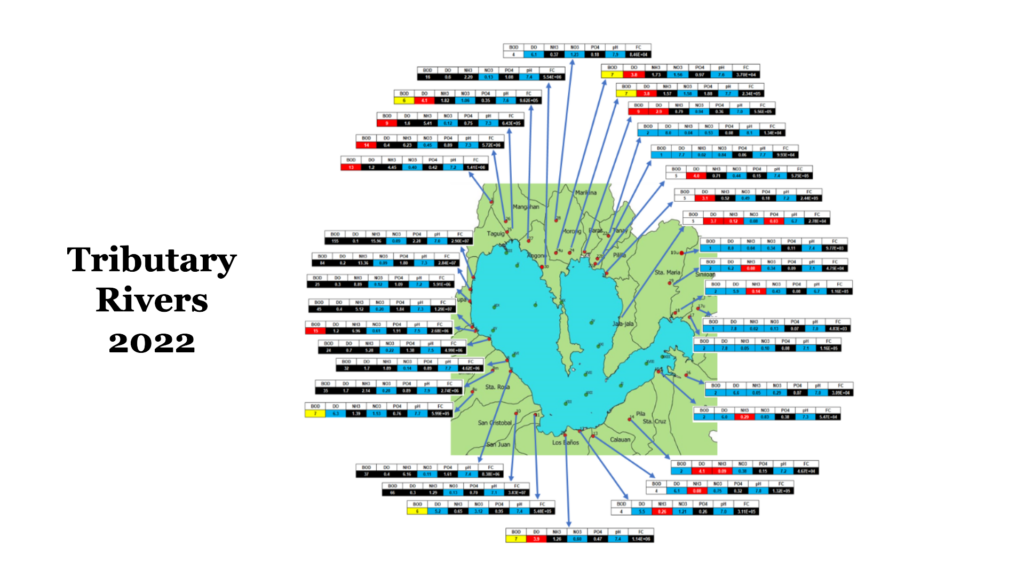 LLDA
LLDA
Water from Angat Dam, meanwhile, is treated hence: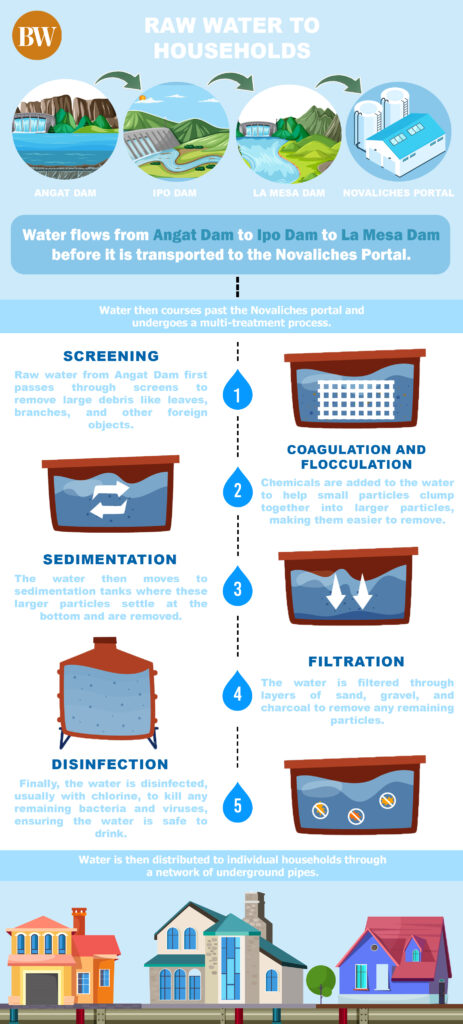
“The finished water we produce is within the drinking water standards mandated by the
Philippine National Standards for Drinking Water (PNSDW),” said Raymart Desales,
water supply operations engineer of Maynilad at the time of the shoot, as he toured the
BusinessWorld team in the concessionaire’s water treatment facility in La Mesa.
“For the disinfection of La Mesa treatment plant 1, it’s chlorination,” Mr. Desales said.
“For the Putatan plant, it’s a different disinfection method naman.”
Maynilad’s Parañaque New Water project, on the other hand, feeds recycled water back
to the public water system by treating effluent (or treated wastewater), which is then
further purified into potable water in compliance with PNSDW and World Health
Organization guidelines: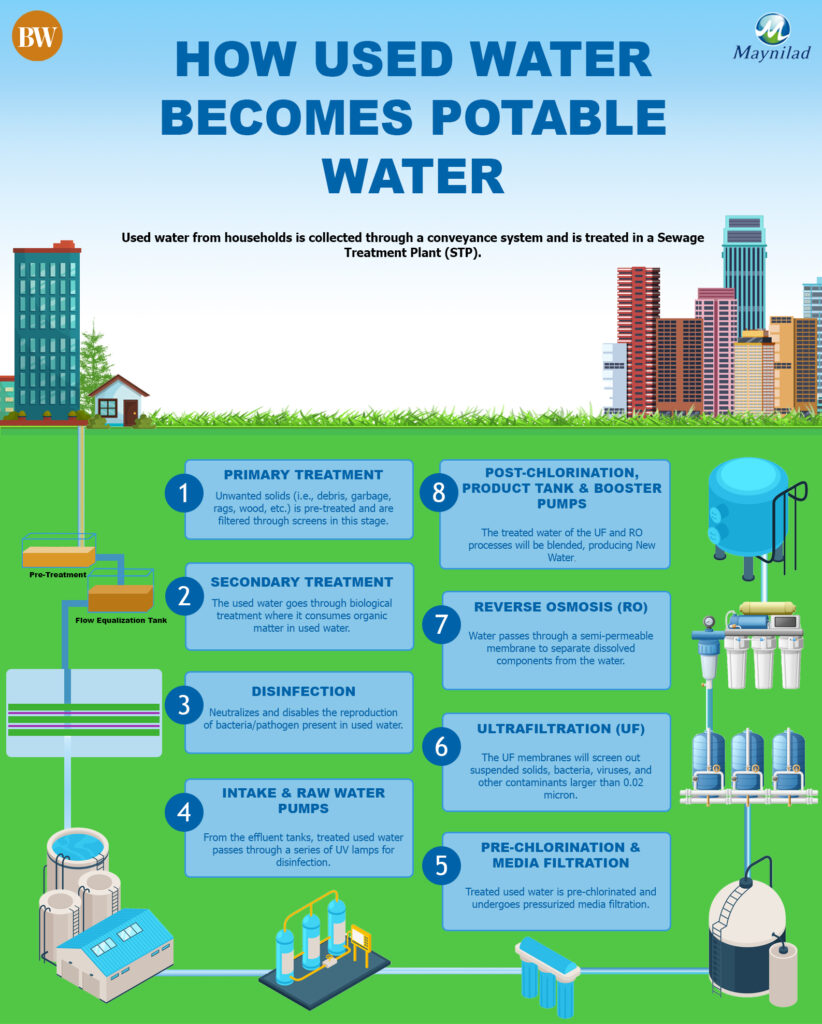
“Hindi niyo mapapansin yung (You wouldn’t notice the) difference,” according to a staff
who toured the BusinessWorld team in the facility, when asked about how recycled water
tastes like.
The concessionaires are given until 2047 to connect most of Metro Manila to the sewer
line, according to Patrick Lester N. Ty, chief of the MWSS Regulatory Office.
“Only around 25% of the MWSS concession area has sewer coverage. The other 75% is
being serviced by sanitation,” he told BusinessWorld, as he pointed out that desludging
services are already part of a residential customer’s bill.
“They can just tap Manila Water and Maynilad to de-sludge their septic tanks once every
5 years,” he said. “This is part of their water bill already, so there’s no additional charge
for this.”
VII. Distribution
Treated water makes its way to an underground network of pipes that are complemented
by pumping stations and reservoirs. A supply and pressure management team operates
these pumps and reservoirs, depending on a community’s demand, and how elevated its
location is.
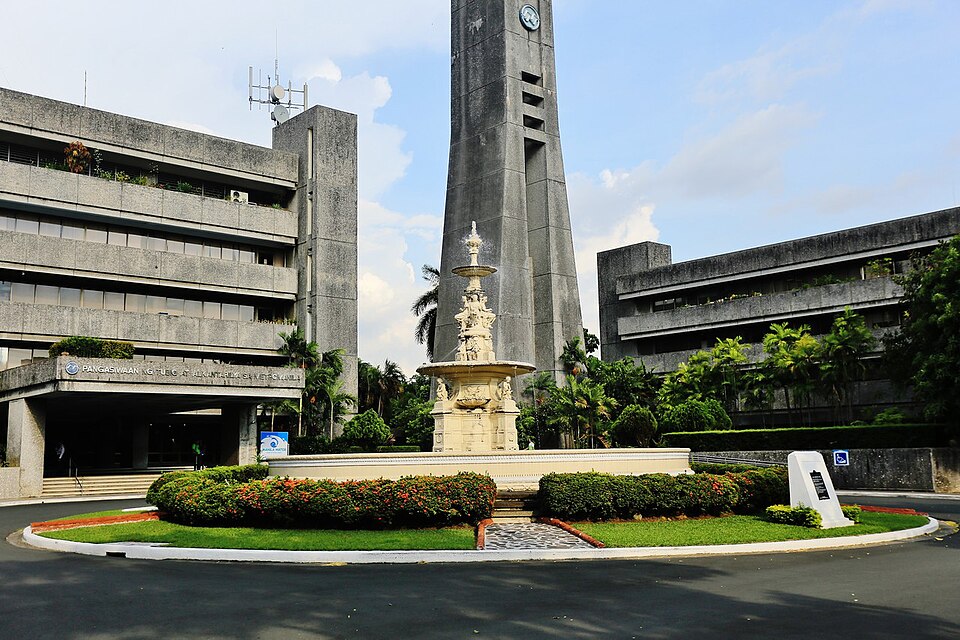 MIKELAAGAN
The MWSS mandates a 7 pounds per square inch (PSI) of water pressure, said
Christopher R. Gaon, Maynilad’s head of north water production.
“We try to maintain this pressure based on the terrain,” he said in a Zoom call.
“We have certain areas that are also high, and that’s where we use inline boosters and
pumping stations to bring the water to higher elevations,” he said. With the pumping
stations, he added, “we grease the pressure so that it can travel again down the line.”
Maynilad optimizes where pumping stations are placed, due to their high energy
requirements, Mr. Gaon said.
An emailed statement on November 22, 2023 from Ricky A. Arzadon, CESO III, OICExecutive Director of NWRB, added:
“The allocation for MWSS is determined and approved by the NWRB on a monthly basis
as recommended by the Technical Working Group of the Angat Dam operations
composed of NWRB, MWSS, NIA, NPC and Philippine Atmospheric, Geophysical and
Astronomical Services Administration (PAGASA).
The recommended allocation is based on the PAGASA weather updates, status of the
Angat reservoir from the National Power Corporation, updates on the water supply
conditions in Metro Manila by MWSS and their monthly request allocation…”
Manila Water, along with Maynilad, received a 10-year extension of its water concession
agreement with the government, extending it to January 21, 2047.
Maynilad, in addition, kicked off the offer period on October 23, 2025 for its initial public
offering worth up to P34.3 billion ($590 million) after securing regulatory approval, with
shares priced at P15 each.
VIII. Challenges
A single water source
Apart from climate change, the other most glaring challenge is the capital’s heavy reliance
on Angat as a water source.
The MWSS, Maynilad, and Manila Water agree that having one water source for the entire
capital is unsustainable.
“In terms of supply, it’s really the overdependency on one major source,” Manila Water’s
Mr. Sevilla said. Manila Water gets 1,600 MLD from Angat, which it distributes to the 7.4
million residents of the East Zone.
Like Maynilad, Manila Water has drawn up plans to maximize use of this precious
resource.
Raw water intake structure under Phase 2 of its aforementioned East Bay project, for
instance, is 92% complete as of June 2025. The structure is designed to draw 200 million
liters of water per day from Laguna Lake to reduce reliance on Angat Dam.
It is targeted for completion by the first quarter of 2026.
The concessionaire also completed the takeover of the WawaJVCo, Inc. from its parent
company, Prime Infrastructure Capital, Inc., on October 1, 2025.
WawaJVCo’s portfolio includes the Tayabasan Weir in Antipolo, which has a capacity of
80 MLD, and the Upper Wawa Dam in Rodriguez, Rizal, with a capacity of up to 710 MLD.
Manila Water did not need to implement daily water interruptions during the pandemic,
Mr. Sevilla said.
“The average of Manila Water’s non-revenue water is about 13%. This is a lot better than
the international standard of 20-25%,” he added.
“Malakas naman daloy ng tubig (Water pressure is good),” said Beverly, a resident of
CAA in Las Piñas City.
BusinessWorld visited the community at the time of this story’s shoot to ask about the
water supply in the area.
“Kaya lang may time na may water interruption…’pag may ginagawa (It’s just
sometimes we experience water interruption when repairs are being done),” Beverly said.
“Nagte-text naman sila pag may ganun (The service provider texts when that happens).”
Domestic wastewater
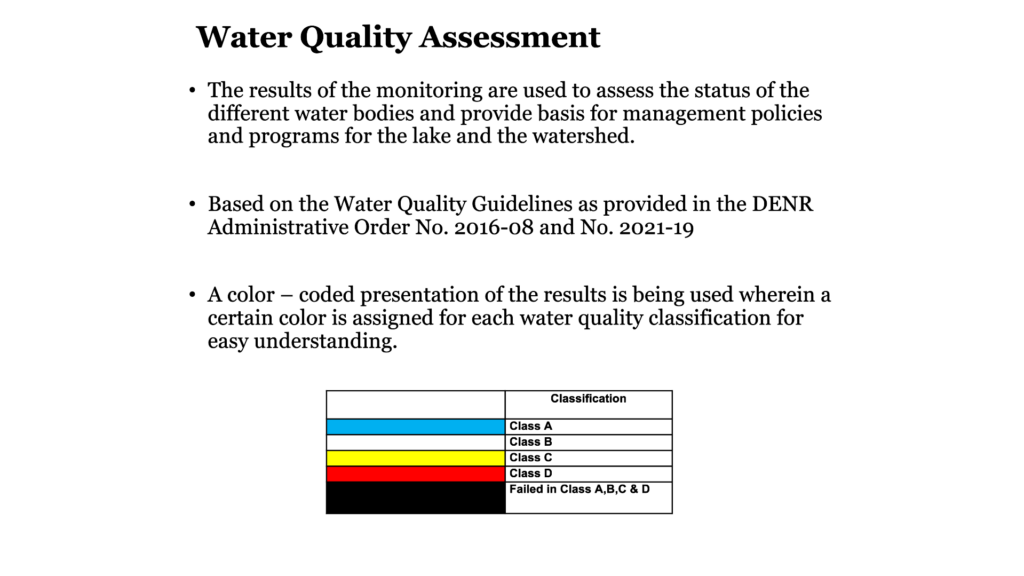
Another problem threatening Manila’s water supply is the quality of the water itself.
More than 80% of the organic load going to Laguna Lake comes from domestic waste,
according to Jocelyn G. Sta. Ana, head of the environmental laboratory and research
division of the LLDA.
“We also have water hyacinth proliferation, and this causes problems on navigation –
especially for the fishermen,” she said.
The areas within the western portion are industrialized and urbanized, she added. “These
are the areas from Marikina down to Calamba… The rivers on the eastern portion are the
areas which are still within the guidelines.”
 LLDA
LLDA 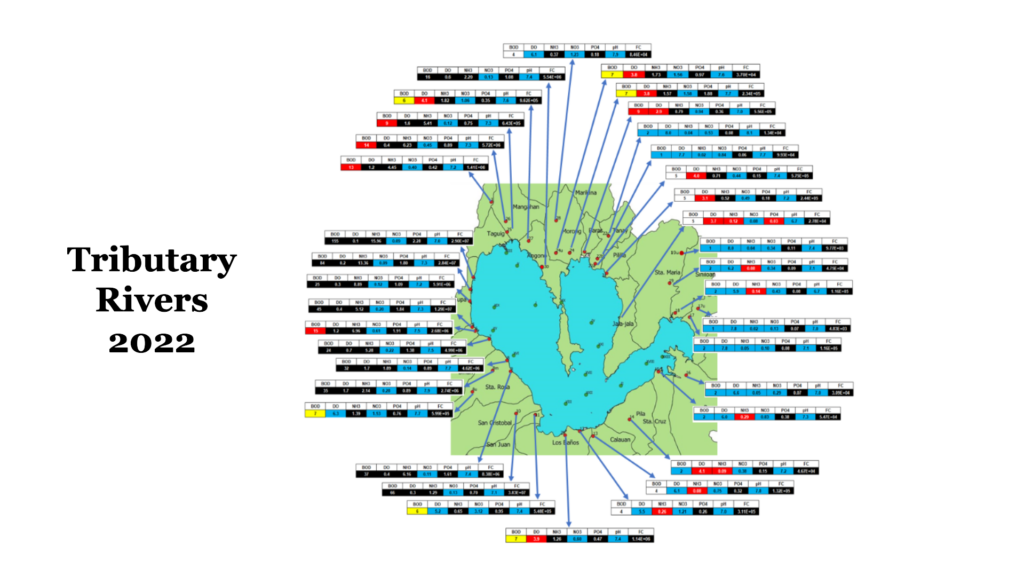 LLDA
LLDA
The Philippine Clean Water Act of 2004 (Republic Act No. 9275) aims to protect the
country’s water bodies from pollution from land-based sources, namely industries and
commercial establishments, agriculture, and community/household activities. It
provides a comprehensive and integrated strategy to prevent and minimize pollution
through a multisectoral and participatory approach involving all stakeholders.
Most studies point to the fact that domestic wastewater is the principal cause of organic
pollution (at 48%) of our water bodies. Yet only 3% of investments in water supply and
sanitation were going to sanitation and sewage treatment. A 2013 World Bank report
pointed out that Metro Manila was second to the lowest in sewer connections among
major cities in Asia at less than 7% compared to 29% for Ho Chi Minh City, Vietnam and
30% for Dhaka, Bangladesh. Thirty-one percent (31%) of all illnesses in the country are
attributed to polluted water.
Management of water quality will either be based on watershed, river basin or water
resources region. Water quality management areas with similar hydrological,
hydrogeological, meteorological or geographic conditions which affect the reaction and
diffusion of pollutants in water bodies are to be designated by the DENR in coordination
with the NWRB.
Solid waste pollution
Plastic pollution is the number one problem in Laguna de Bay, if one were to ask Hipolito
Aguirre, a fisherman interviewed by BusinessWorld. Nobody draws up water from the
lake to drink, he said.
Maynilad’s Mr. Padua has said that it was ten times harder to treat water from Laguna
Lake than from Angat Dam.
Consumers like Lyndon, another resident of CAA in Las Piñas City, are not taking chances
either. He says his family buys bottled water to drink to be safe.
“Para sure lang (Just to be sure),” he said in a separate interview. “Mura lang naman
(It’s affordable, anyway).”
“Number one yan nagiging problema din sa lawa… siguro hanggang ganito na kakapal
ang plastic diyan sa ilalim – baka nasa isang metro na sa tagal kong nangingisda (Plastic is the number one problem here…the plastic submerged at the bottom of the lake
is probably a meter thick now),” Mr. Aguirre added
IX. Water Security
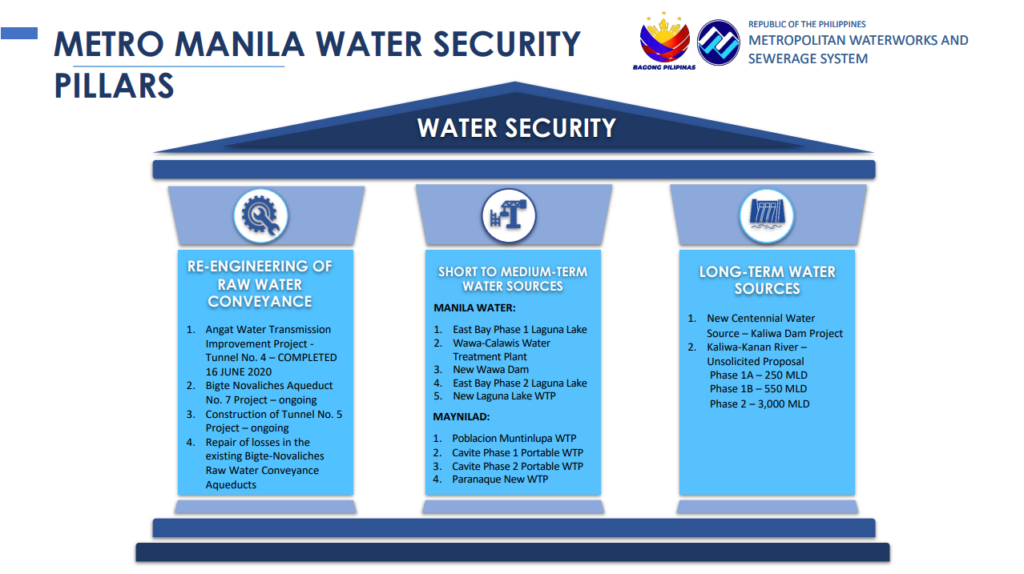
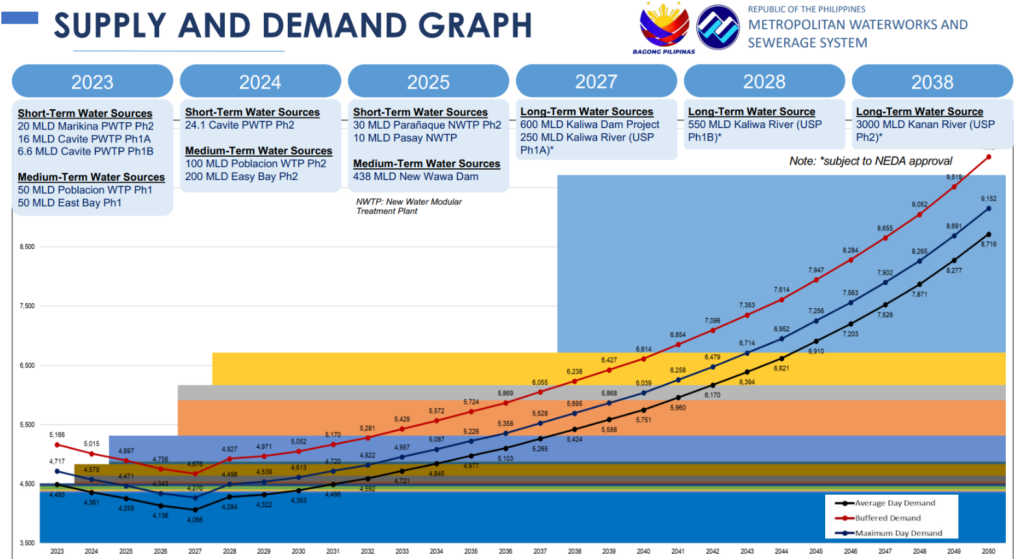
Given the ever-growing populace, MWSS has drawn up a water security roadmap that
aims to ensure water security for the capital.
Part of the roadmap includes recovery of non-revenue water, which is the losses on the
system due to leaks.
 MWSS
MWSS
Patrick James B. Dizon, whose most recent role designation at the MWSS is department
manager of the Water and Sewerage Management Department, discusses more during an
interview when he was still serving as district manager of the Angat/Ipo Operations
Management Division.
“It’s one of the key challenges in water industries right now,” he said, “even for the water
districts in the provinces.”
MWSS is constructing a water treatment plant in Laguna Lake.
Mr. Dizon also talks about the progress of Kaliwa Dam:
“Kaliwa Dam and its tunnel construction is ongoing with 26.04% accomplishment,” he
emailed on October 21, 2025.
Mr. Dizon added the MWSS is confident that Kaliwa Dam will be completed by 2027.
MWSS and its concessionaires have likewise completed a P3.17 billion tunnel at Ipo Dam
as of June 2024.
 MWSS
MWSS
Practicing water conservation measures matters, according to Mr. Dizon. Every drop
counts.
“We still need to continue water conservation,” he said. “[It’s] as simple as paggamit ng
batya ‘pag naghuhugas ng mga pinggan, pagpatay ng faucet ‘pag nagtoo-toothbrush
(using a basin when washing the dishes or turning off the faucet when brushing one’s
teeth). That will be a great help.”
It’s as much a mindset issue, said Emiliano Parao, a Bantay Lawa coordinator in Laguna
de Bay.
“Kahit sabihin pa po natin na fully nai-implement ng ating LGU, pero kung ang ating
mamamayan [hindi nagwa-]waste segregation…,” he said. “Sa usapin po ng basura, ay
kailangan baguhin ang kaisipan ng tao (Even if waste management is fully implemented
by the local government unit, if people don’t follow…when it comes to waste, there’s really
a need to change individual mindsets).”
Disclaimer: Metro Pacific Investments Corp., which holds a majority stake in Maynilad,
is one of the three Philippine units of Hong Kong-based First Pacific Co. Ltd., the others
being Philex Mining Corp. and PLDT Inc.
Hastings Holdings, Inc., a unit of PLDT Beneficial Trust Fund subsidiary MediaQuest
Holdings, Inc., has an interest in BusinessWorld through the Philippine Star Group,
which it controls.
Feature by Patricia Mirasol, Emmanuel Garcia, Earl Lagundino, Patricia Garcia, Jino Nicolas, Ed Geronia, Arjale Queral, Jayson Mariñas, and Richard Mendoza
You May Also Like

Kraken's Big Hint: Pi Coin Set for Exchange Listing In 2026

US Stock Market Could Double By End Of Presidential Term