One in three Nigerians abandon healthcare because of cost. MyItura tried solving this with software, then realised the real problem was money.One in three Nigerians abandon healthcare because of cost. MyItura tried solving this with software, then realised the real problem was money.

Day 1-1000: ‘Nigerian hospitals wouldn’t buy our software. So we started paying for their patients’ care’

2025/12/13 16:40
8 min read

Shina Arogundade spent five months living with tooth pain because his insurance wouldn’t cover the full ₦120,000 ($82.62) for extraction. That experience would eventually reshape his entire company.

In April 2022, Shina Arogundade’s family lost their doctor of 17 years. By September, his father, who had battled chronic hypertension successfully under that doctor’s care, was dead. Five months. That’s all it took.

“His drugs were changed, the way he was treated was changed,” Arogundade recalls. “It was one complaint to the other. The experience left a bad taste in my mouth.”

The problem was clear – Nigerian hospitals operated in silos. No interoperability. No shared records. Doctors treat patients in isolation, sometimes ordering the same tests twice in one week. Arogundade once heard about a woman who nearly died because a doctor changed her diabetes medication dosage without knowing her history.

So in January 2023, Arogundade, who had previously co-founded a fintech company called Trade Lenda, launched MyItura, a digital health platform aimed at making health records interoperable across Nigeria’s fragmented healthcare system.

Three years later, MyItura is providing healthcare financing and preventive telemedicine services to Nigerians.

The EMR dream meets Nigerian reality

The vision was straightforward: build an electronic medical records (EMR) system that would allow hospitals, labs, and pharmacies to share patient data seamlessly. Patients would own their records. Doctors would make better decisions. Healthcare would finally enter the digital age.

“We tested the market, did customer interviews,” Arogundade says. “That was not going to work.”

“Most hospitals did not have the necessary finance to deploy the tools they felt were expensive,” Arogundade explains. “The key problem was not that they wanted to protect patient information. It was costly.”

There was also the cultural barrier. Older doctors accustomed to ‘pen and paper’ weren’t eager to start typing patient notes. The younger generation might be ready, but they weren’t the ones making procurement decisions.

MyItura had built a solution to a problem hospitals acknowledged but wouldn’t pay to solve.

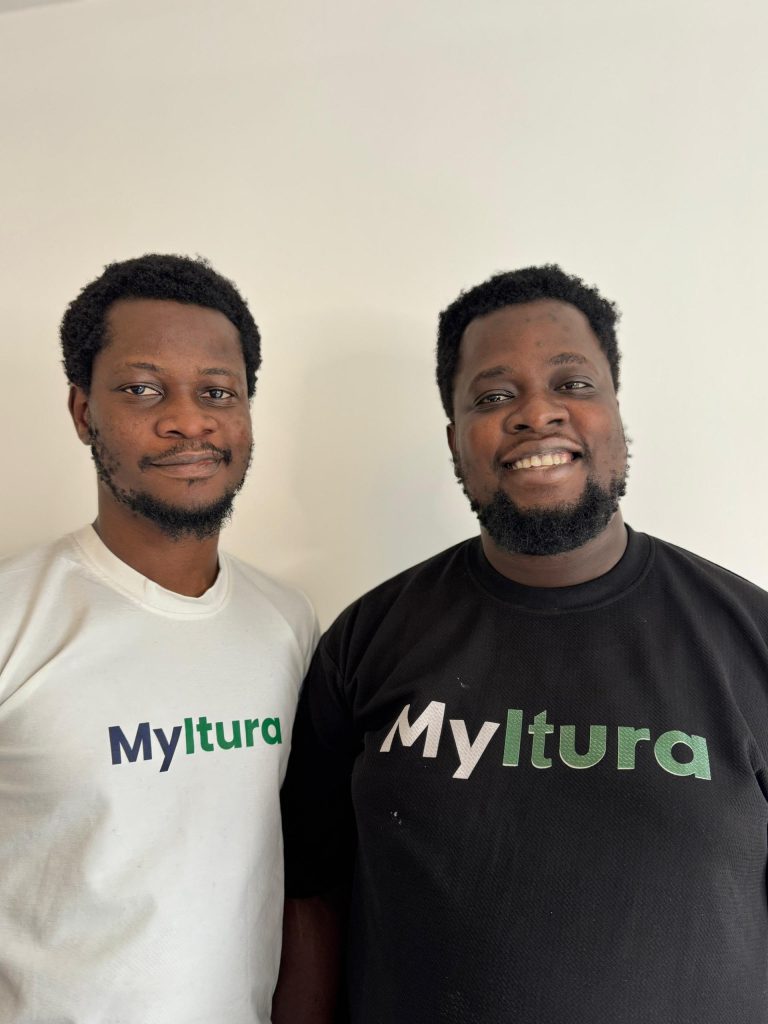
Adeoluwa Ogunye (L) and Shina Arogundade (R), co-founders of MyItura

The first pivot: Building accessibility to get records

If hospitals wouldn’t adopt EMR directly, MyItura would have to get creative. The team pivoted to building accessibility tools: telemedicine platforms, AI-powered transcription for doctor-patient conversations, and a lab testing booking system.

The logic was if you can facilitate healthcare access, you can capture records as a byproduct.

They launched telemedicine APIs that other startups could integrate. They gave hospitals without websites a platform to conduct virtual consultations. They built a marketplace where patients could book lab tests and have phlebotomists come to their homes.

“With accessibility, we could then get records,” Arogundade explains. “When a patient and doctor had a conversation, AI could transcribe it, summarise it, help the doctor create notes, and help the patient keep a summary.”

The strategy worked—partially. MyItura started onboarding providers and patients. But the fundamental problem remained: Cost was still the bottleneck.

The lived experience that changed everything

Earlier this year, CCHub issued a call for proposals for its Digital Public Infrastructure (DPI) program. 

For Arogundade, the proposal landed at the perfect moment, strategically and personally.

Years earlier, he had needed a surgical tooth extraction. His insurance covered ₦20,000 ($13.79). The procedure cost ₦120,000 ($82.75). He couldn’t afford the gap.

“I didn’t remove that tooth until about five or six months later, trying to gather that money,” he says. “I was living with that pain. They gave me all sorts of things to pour into that tooth. Every night was a new set of pain.”

He had insurance. He had a job. And he still could not afford timely care .

“Because I had lived that experience, I know how painful it is to abandon care for something that could end up being catastrophic,” Arogundade says. “I felt this is something that should be solved for.”

The credit guy returns to credit

The timing was almost poetic. Before MyItura, Arogundade had worked in banking as a credit analyst, writing credit policies for banks. He’d co-founded Trade Lenda, a fintech focused on credit. His entire professional background was in lending.

“When I got the MediLoan idea, it felt like, ‘This is it,’” he recalls. “I’ve been doing healthcare for the last two years, but I have considerable knowledge around credit. This is an idea that fits perfectly.”

In December 2024, MyItura launched MediLoan, a ‘get treated, pay later’ healthcare financing product. Patients can access up to ₦200,000 ($137.32) in credit to cover medical expenses, with the payment going directly to healthcare providers, not to patients.

The product integrates via API, similar to how Paystack works for payments. Providers can add a “checkout with MediLoan” button. Patients click, get approved within 24 hours (or 30 minutes if the provider has integrated the API), receive treatment, and repay over time.

The pilot launched in November 2025. MyItura’s goal is to reach 750 users before a full rollout in February 2026.

Get The Best African Tech Newsletters In Your Inbox

Subscribe

Why everyone said no, and why MyItura said yes anyway

Healthcare financing isn’t new as a concept. 

“Banks will not do it. Microfinance banks will not do it,” Arogundade says bluntly. “There’s a lot of risk. But it can also be de-risked. I think it’s a reason to find ways to de-risk it.”

The risk is real. What if someone borrows for treatment and dies? What if repayment rates are catastrophic? What if the market isn’t ready?

But Arogundade argues the risk of inaction is worse.

“One in three people abandon care because of cost,” he says. “Someone with simple malaria that ₦10,000 ($6.89) or ₦20,000 ($13.77)  should treat, they go to the hospital, that money is not available. They abandon it. They go back home. They use agbo. It affects their kidney. Catastrophic outcomes, instead of a simple malaria drug that just treats them.”

Healthcare financing addresses the meta-problem: People aren’t abandoning care because they don’t want treatment. They’re abandoning care because they can’t pay for it.

The full-circle strategy: Money unlocks software

Here’s the elegant part, healthcare financing might be the key that unlocks MyItura’s original vision of EMR adoption.

If hospitals and labs have financing, they can afford to deploy digital tools. If patients have financing, they can afford to seek care. If both sides have liquidity, the entire ecosystem can digitise.

“If providers have that financing, if they have the liquidity necessary to deploy tools, then the whole electronic health records thing becomes more palatable,” Arogundade explains. “They are more willing to listen to you.”

MyItura is currently building out its APIs to make them available to other healthtech companies. They’re onboarding student ambassadors from medical schools to train hospitals on digital tools and prepare the next generation of doctors to adopt EMR systems from day one.

The team has grown to 13 people – 60% women, spread across tech, business development, operations, and research. 

What’s next: The 10-year vision

Arogundade’s vision for healthcare in Nigeria is simple: fewer hospital visits, more home-based care, and zero anxiety about cost.

“Things that can be done at home will be done at home,” he says. “First triage with doctors will happen at home. Pathology tests will largely happen at home. The way Chowdeck delivers food today, healthcare will also be delivered at home.”

And when people do need hospital care? “They will no longer be scared of the cost. It’s going to be, ‘I’m getting treated, and I’m sure MyItura will be there for me, and I can pay back later comfortably.’”

The path from EMR platform to a healthcare financing company wasn’t planned. It emerged from market rejection, personal pain, and the realisation that software alone can’t solve systemic problems when the system can’t afford software in the first place.

For MyItura, the lesson was painful but clear: Sometimes the infrastructure you need to build isn’t the infrastructure you thought you were building. Sometimes you have to finance the infrastructure before the infrastructure can exist.

Recommended Reading: “You need believers more than résumés”: Day 1-1000 of Pharmarun

Market Opportunity
Threshold Logo
Threshold Price(T)
$0.007031
$0.007031$0.007031
-1.19%
USD
Threshold (T) Live Price Chart
Disclaimer: The articles reposted on this site are sourced from public platforms and are provided for informational purposes only. They do not necessarily reflect the views of MEXC. All rights remain with the original authors. If you believe any content infringes on third-party rights, please contact [email protected] for removal. MEXC makes no guarantees regarding the accuracy, completeness, or timeliness of the content and is not responsible for any actions taken based on the information provided. The content does not constitute financial, legal, or other professional advice, nor should it be considered a recommendation or endorsement by MEXC.

You May Also Like

Japan-Based Bitcoin Treasury Company Metaplanet Completes $1.4 Billion IPO! Will It Buy Bitcoin? Here Are the Details

Japan-Based Bitcoin Treasury Company Metaplanet Completes $1.4 Billion IPO! Will It Buy Bitcoin? Here Are the Details

The post Japan-Based Bitcoin Treasury Company Metaplanet Completes $1.4 Billion IPO! Will It Buy Bitcoin? Here Are the Details appeared on BitcoinEthereumNews.com. Japan-based Bitcoin treasury company Metaplanet announced today that it has successfully completed its public offering process. Metaplanet Grows Bitcoin Treasury with $1.4 Billion IPO The company’s CEO, Simon Gerovich, stated in a post on the X platform that a large number of institutional investors participated in the process. Among the investors, mutual funds, sovereign wealth funds, and hedge funds were notable. According to Gerovich, approximately 100 institutional investors participated in roadshows held prior to the IPO. Ultimately, over 70 investors participated in Metaplanet’s capital raising. Previously disclosed information indicated that the company had raised approximately $1.4 billion through the IPO. This funding will accelerate Metaplanet’s growth plans and, in particular, allow the company to increase its balance sheet Bitcoin holdings. Gerovich emphasized that this step will propel Metaplanet to its next stage of development and strengthen the company’s global Bitcoin strategy. Metaplanet has recently become one of the leading companies in Japan in promoting digital asset adoption. The company has previously stated that it views Bitcoin as a long-term store of value. This large-scale IPO is considered a significant step in not only strengthening Metaplanet’s capital but also consolidating Japan’s role in the global crypto finance market. *This is not investment advice. Follow our Telegram and Twitter account now for exclusive news, analytics and on-chain data! Source: https://en.bitcoinsistemi.com/japan-based-bitcoin-treasury-company-metaplanet-completes-1-4-billion-ipo-will-it-buy-bitcoin-here-are-the-details/
Share
BitcoinEthereumNews2025/09/18 08:42
Why Pepeto Could Outperform Every New Presale This Year

Why Pepeto Could Outperform Every New Presale This Year

The post Why Pepeto Could Outperform Every New Presale This Year appeared on BitcoinEthereumNews.com. Crypto Projects What if the next crypto to explode is not
Share
BitcoinEthereumNews2026/02/21 13:16
Little Pepe (LILPEPE) koers, nu investeren in de lopende presale?

Little Pepe (LILPEPE) koers, nu investeren in de lopende presale?

i Kennisgeving: Dit artikel bevat inzichten van onafhankelijke auteurs en valt buiten de redactionele verantwoordelijkheid van BitcoinMagazine.nl. De informatie is bedoeld ter educatie en reflectie. Dit is geen financieel advies. Doe zelf onderzoek voordat je financiële beslissingen neemt. Crypto is zeer volatiel er zitten kansen en risicos aan deze investering. Je kunt je inleg verliezen. Little Pepe (LILPEPE) is dit jaar uitgegroeid tot een van de meest besproken meme coins. Het project ontwikkelt een eigen Layer 2 blockchain die speciaal is ontworpen voor meme projecten. De presale van LILPEPE startte op 10 juni 2025 en haalde sindsdien meer dan $ 25,9 miljoen bij investeerders op. Tot nu toe was elke fase van de presale ruim voor tijd uitverkocht. Nu zit het project in fase 13 en kun je de tokens aanschaffen voor een prijs van $ 0,0022 per stuk. Little Pepe combineert heel slim de meme cultuur met geavanceerde blockchain technologie. Het team bouwde een EVM-compatibel Layer 2 netwerk dat razendsnelle transacties en vrijwel geen kosten biedt. Daarmee steekt LILPEPE ver boven de typische meme coins uit die op bestaande netwerken draaien. Het project heeft 26,5% van de totale voorraad van 100 miljard tokens gereserveerd voor de presale. Elke nieuwe fase stijgt de token prijs, waardoor deelnemers worden aangemoedigd sneller toe te slaan. Nu al zijn meer dan 15 miljard tokens verkocht en de presale nadert snel het einde. Little Pepe presale blijft sterk presteren De presale heeft sinds de start in juni een stevige groei laten zien. Zo is in meerdere ronden al meer dan $ 25,9 miljoen opgehaald. Ronde 1 startte met een prijs van $ 0,001 per token en was al binnen slechts 72 uur uitverkocht, goed voor bijna $ 500.000. Tijdens de tweede presale fase kostte de coin tussen $ 0,0011 en $ 0,0015 en haalde het project meer dan $ 1,23 miljoen op voordat alles snel uitverkocht was. In ronde 3 steeg de prijs naar $ 0,0012, met een bevestigde exchange listing prijs van $ 0,003. Wie er vroeg bij was, zag daardoor een potentiële winst van 150%. De eerdere presale rondes trokken zoveel belangstelling dat de tokens sneller uitverkochten dan verwacht. Inmiddels hebben meer dan 38.000 mensen deelgenomen. In ronde 13 van de presale staat de token momenteel geprijsd op $ 0,0022. Doordat de prijs bij elke mijlpaal stapsgewijs stijgt, voelt men er vanzelf een soort urgentie bij. Vroege deelnemers hebben zo veel lagere prijzen kunnen pakken dan de huidige kopers. Dankzij deze gefaseerde aanpak blijft de presale de hele periode door spannend en interessant. Belangrijkste kenmerken van Little Pepe’s technologie Little Pepe is de native currency van een gloednieuwe Layer 2 chain, speciaal voor meme coins. De blockchain is razendsnel, extreem goedkoop en sterk beveiligd en vooral aantrekkelijk voor traders en ontwikkelaars. Het netwerk verwerkt transacties in een oogwenk en de gas fees zijn bijna nul. De trades worden niet belast en dat zie je maar zelden bij meme coins. Bovendien is de blockchain beschermd tegen sniper bots, zodat kwaadaardige bots geen kans krijgen om presale lanceringen te manipuleren. Ontwikkelaars kunnen dankzij EVM-compatibiliteit heel eenvoudig smart contracts en meme tokens bouwen en lanceren. De infrastructuur is opgezet als hét centrale platform voor meme-innovatie, met on-chain communitytools en governance-opties. “Pepe’s Pump Pad” is het launchpad voor de meme tokens van het project. Tokens die hier worden gelanceerd, hebben ingebouwde anti-scam beveiligingen en liquidity locks worden automatisch toegepast om rug pulls te voorkomen. Zo kunnen makers nieuwe meme tokens lanceren zonder zich zorgen te maken over veiligheidsrisico’s. Is LILPEPE de beste crypto presale om nu te kopen? Little Pepe is de allereerste Layer 2 blockchain die volledig draait om memes. Dat geeft het project een unieke plek in de drukke wereld van meme coins. Het doel is om de “meme verse” te worden: een plek waar meme projecten kunnen lanceren, verhandelen en echt groeien. Het succes van de presale laat zien dat er veel interesse is voor deze aanpak. In de vroege fases waren de fase binnen 72 uur uitverkocht en zelfs de latere fases gingen sneller dan gepland. Met meer dan $ 25,9 miljoen dat is opgehaald, is er veel vertrouwen in deze meme coin. Little Pepe staat technisch stevig dankzij zijn Layer 2 infrastructuur. Het project heeft een CertiK security audit doorstaan, wat het vertrouwen van investeerders aanzienlijk versterkt. Als je naar de listings op CoinMarketCap en CoinGecko kijkt, is duidelijk te zien dat het project ook buiten de meme community steeds meer erkenning krijgt. Little Pepe is volgens analisten dan ook een van de meest veelbelovende meme coins voor 2025. De combinatie van meme cultuur en echte functionaliteit, maakt deze meme coin betrouwbaarder en waardevoller dan de meeste puur speculatieve tokens. Dankzij de snelle presale en het innovatieve ecosysteem is Little Pepe klaar om zich als serieuze speler in de wereld van meme coins te vestigen. Het project werkt volgens een roadmap met onder andere exchange listings, staking en uitbreiding van het ecosysteem. Door LILPEPE tokens te listen op grote gecentraliseerde exchanges, wordt het voor iedereen makkelijker om te traden en neemt de liquiditeit flink toe. Mega Giveaway campagne vergroot betrokkenheid community Little Pepe is gestart met een Mega Giveaway om de community te belonen voor hun deelname. De Mega Giveaway richt zich op de deelnemers die tijdens fases 12 tot en met 17 de meeste LILPEPE tokens hebben gekocht. De grootste koper wint 5 ETH, de tweede plaats ontvangt 3 ETH en de derde plaats 2 ETH. Ook worden 15 willekeurige deelnemers elk met 0,5 ETH beloond. Iedereen die LILPEPE bezit kan meedoen. Dat gaat heel handig. Je vult je ERC20-wallet adres in en voert een paar social media opdrachten uit. Deze actie moet gedurende de presale voor extra spanning en een gevoel van urgentie om snel mee te doen gaan zorgen, zowel aan de giveaway als aan de presale. De giveaway loopt dan ook tot fase 17 volledig is uitverkocht. De community blijft op alle platforms hard doorgroeien. Tijdens de giveaway is de activiteit op social media flink omhooggeschoten. Zo’n betrokkenheid is vaak een goed teken dat een meme coin op weg is naar succes. Little Pepe analyse koers verwachting De tokens van Little Pepe gaan tijdens fase 13 voor $ 0,0022 over de toonbank. De listing prijs op de exchanges is bevestigd op $ 0,003 en kan de deelnemers aan de presale mooie winsten kan opleveren. Volgens analisten kan de prijs van LILPEPE tegen het einde van 2025 naar $ 0,01 stijgen. Dit zou het project een marktwaarde van $ 1 miljard kunnen geven. Deze voorspelling gaat uit van een sterke cryptomarkt en van succesvolle exchange listings. Voor 2026 lopen de koers verwachtingen voor LILPEPE sterk uiteen. Als de cryptomarkt blijft stijgen, zou de token $ 0,015 kunnen bereiken. Maar als de markt instort en een bear market toeslaat, kan de prijs terugvallen naar $ 0,0015. Dat is een groot verschil, maar zo werkt crypto nu eenmaal. Zeker bij meme coins, omdat ze sterk reageren op de marktsfeer. Op de lange termijn, richting het jaar 2030, wijzen sommige verwachtingen op prijzen van $ 0,03 in gunstige scenario’s. Dat gaat uit van een succesvolle aanname van Layer 2 en verdere groei van de meme coin sector. Voorzichtige schattingen plaatsen de prijs in 2030 rond $ 0,0095. Zelfs een klein stukje van de marktwaarde van grote meme coins kan volgens experts al voor flinke winsten zorgen. Sommige analisten verwachten dat de opbrengsten zelfs 15.000% tot 20.000% kunnen bereiken als Little Pepe hetzelfde succes haalt als eerdere populaire meme coins. Doe mee aan de Little Pepe presale Wil je erbij zijn? Ga naar de officiële website van de coin om mee te doen aan de presale. Tijdens de huidige fase kost een token $ 0,0022 en je kunt eenvoudig betalen met ETH of USDT via je wallet. Je kunt aan de presale deelnemen met MetaMask of Trust Wallet. Verbind je wallet eenvoudig met de officiële website en zorg dat je voldoende ETH of USDT hebt om het gewenste aantal tokens te kopen. De presale accepteert ERC-20 tokens op het Ethereum netwerk. Na aankoop kun je je tokens claimen zodra alle presale rondes zijn afgerond. Alle informatie over het claimen vind je via de officiële website en communicatiekanalen. NEEM NU DEEL AAN DE LITTLE PEPE ($ LILPEPE) PRESALE Website    |    (X) Twitter    |  Telegram i Kennisgeving: Dit artikel bevat inzichten van onafhankelijke auteurs en valt buiten de redactionele verantwoordelijkheid van BitcoinMagazine.nl. De informatie is bedoeld ter educatie en reflectie. Dit is geen financieel advies. Doe zelf onderzoek voordat je financiële beslissingen neemt. Crypto is zeer volatiel er zitten kansen en risicos aan deze investering. Je kunt je inleg verliezen. Het bericht Little Pepe (LILPEPE) koers, nu investeren in de lopende presale? is geschreven door Redactie en verscheen als eerst op Bitcoinmagazine.nl.
Share
Coinstats2025/09/18 18:50