Oracle stock falls after revealing $300 billion OpenAI investment costs exceed Wall Street estimates. Investors worry about AI infrastructure spending. The postOracle stock falls after revealing $300 billion OpenAI investment costs exceed Wall Street estimates. Investors worry about AI infrastructure spending. The post

Oracle (ORCL) Stock: Drops Sharply After $300 Billion OpenAI Play Backfires

2025/12/12 19:42
3 min read

Key Points:

  • Oracle stock dropped after disclosing a $300 billion investment in AI infrastructure for OpenAI partnership
  • AI-related costs came in higher than Wall Street analysts had predicted
  • The investment represents one of the largest corporate technology commitments in recent history
  • Oracle needs to build extensive data centers and computing systems to support OpenAI operations
  • Investors are concerned about profit margins and return on investment for the massive AI spending

Oracle Corporation shares fell sharply after the company disclosed the financial details of its massive partnership with OpenAI. The tech giant has committed to a $300 billion investment in AI infrastructure to support the ChatGPT maker.


ORCL Stock Card
Oracle Corporation, ORCL

The stock decline came as investors learned that AI-related costs would exceed Wall Street’s projections. Analysts had underestimated the expense of building out the cloud computing capacity needed for OpenAI’s operations.

Oracle announced the partnership with OpenAI earlier this year as part of its strategy to compete in the artificial intelligence market. The deal positions Oracle as a key infrastructure provider for one of the world’s most prominent AI companies.

The $300 billion figure represents one of the largest corporate technology investments in recent history. Oracle plans to use the funds to construct data centers and purchase computing equipment over multiple years.

Higher Costs Than Wall Street Expected

Wall Street analysts had forecast lower spending on AI infrastructure for Oracle’s fiscal year. The actual costs revealed by the company came in well above these estimates.

Investors reacted negatively to the gap between expectations and reality. Many had hoped Oracle could expand its AI business without such heavy capital expenditures.

The company’s cloud infrastructure division will bear most of these costs. Oracle must build specialized computing systems capable of handling OpenAI’s advanced AI models.

Data center construction represents a major portion of the planned spending. Oracle needs to create facilities with enough power and cooling capacity for AI workloads.

Impact on Oracle’s Financial Performance

The increased spending will affect Oracle’s profit margins in the short term. Higher capital expenditures typically reduce the amount of cash available for shareholders.

Oracle’s management has defended the investment as necessary for long-term growth. Company executives argue that AI infrastructure will become increasingly valuable as more businesses adopt AI technology.

The OpenAI partnership gives Oracle a foothold in the rapidly growing AI market. However, the company must now prove it can generate sufficient revenue to justify the massive upfront costs.

Competing cloud providers like Microsoft and Amazon have also invested heavily in AI infrastructure. Oracle faces pressure to match their capabilities while managing expenses.

The stock decline reflects investor concerns about return on investment. Shareholders want to see when Oracle will start earning profits from its AI spending.

Oracle has not provided a detailed timeline for when the $300 billion investment will be fully deployed. The company also has not released specific revenue projections tied to the OpenAI partnership.

The post Oracle (ORCL) Stock: Drops Sharply After $300 Billion OpenAI Play Backfires appeared first on Blockonomi.

Market Opportunity
PlaysOut Logo
PlaysOut Price(PLAY)
$0.09495
$0.09495$0.09495
-0.14%
USD
PlaysOut (PLAY) Live Price Chart
Disclaimer: The articles reposted on this site are sourced from public platforms and are provided for informational purposes only. They do not necessarily reflect the views of MEXC. All rights remain with the original authors. If you believe any content infringes on third-party rights, please contact [email protected] for removal. MEXC makes no guarantees regarding the accuracy, completeness, or timeliness of the content and is not responsible for any actions taken based on the information provided. The content does not constitute financial, legal, or other professional advice, nor should it be considered a recommendation or endorsement by MEXC.
Tags:

You May Also Like

CME Group to Launch Solana and XRP Futures Options

CME Group to Launch Solana and XRP Futures Options

The post CME Group to Launch Solana and XRP Futures Options appeared on BitcoinEthereumNews.com. An announcement was made by CME Group, the largest derivatives exchanger worldwide, revealed that it would introduce options for Solana and XRP futures. It is the latest addition to CME crypto derivatives as institutions and retail investors increase their demand for Solana and XRP. CME Expands Crypto Offerings With Solana and XRP Options Launch According to a press release, the launch is scheduled for October 13, 2025, pending regulatory approval. The new products will allow traders to access options on Solana, Micro Solana, XRP, and Micro XRP futures. Expiries will be offered on business days on a monthly, and quarterly basis to provide more flexibility to market players. CME Group said the contracts are designed to meet demand from institutions, hedge funds, and active retail traders. According to Giovanni Vicioso, the launch reflects high liquidity in Solana and XRP futures. Vicioso is the Global Head of Cryptocurrency Products for the CME Group. He noted that the new contracts will provide additional tools for risk management and exposure strategies. Recently, CME XRP futures registered record open interest amid ETF approval optimism, reinforcing confidence in contract demand. Cumberland, one of the leading liquidity providers, welcomed the development and said it highlights the shift beyond Bitcoin and Ethereum. FalconX, another trading firm, added that rising digital asset treasuries are increasing the need for hedging tools on alternative tokens like Solana and XRP. High Record Trading Volumes Demand Solana and XRP Futures Solana futures and XRP continue to gain popularity since their launch earlier this year. According to CME official records, many have bought and sold more than 540,000 Solana futures contracts since March. A value that amounts to over $22 billion dollars. Solana contracts hit a record 9,000 contracts in August, worth $437 million. Open interest also set a record at 12,500 contracts.…
Share
BitcoinEthereumNews2025/09/18 01:39
China Blocks Nvidia’s RTX Pro 6000D as Local Chips Rise
China Blocks Nvidia’s RTX Pro 6000D as Local Chips Rise

The post China Blocks Nvidia’s RTX Pro 6000D as Local Chips Rise appeared on BitcoinEthereumNews.com. China Blocks Nvidia’s RTX Pro 6000D as Local Chips Rise China’s internet regulator has ordered the country’s biggest technology firms, including Alibaba and ByteDance, to stop purchasing Nvidia’s RTX Pro 6000D GPUs. According to the Financial Times, the move shuts down the last major channel for mass supplies of American chips to the Chinese market. Why Beijing Halted Nvidia Purchases Chinese companies had planned to buy tens of thousands of RTX Pro 6000D accelerators and had already begun testing them in servers. But regulators intervened, halting the purchases and signaling stricter controls than earlier measures placed on Nvidia’s H20 chip. Image: Nvidia An audit compared Huawei and Cambricon processors, along with chips developed by Alibaba and Baidu, against Nvidia’s export-approved products. Regulators concluded that Chinese chips had reached performance levels comparable to the restricted U.S. models. This assessment pushed authorities to advise firms to rely more heavily on domestic processors, further tightening Nvidia’s already limited position in China. China’s Drive Toward Tech Independence The decision highlights Beijing’s focus on import substitution — developing self-sufficient chip production to reduce reliance on U.S. supplies. “The signal is now clear: all attention is focused on building a domestic ecosystem,” said a representative of a leading Chinese tech company. Nvidia had unveiled the RTX Pro 6000D in July 2025 during CEO Jensen Huang’s visit to Beijing, in an attempt to keep a foothold in China after Washington restricted exports of its most advanced chips. But momentum is shifting. Industry sources told the Financial Times that Chinese manufacturers plan to triple AI chip production next year to meet growing demand. They believe “domestic supply will now be sufficient without Nvidia.” What It Means for the Future With Huawei, Cambricon, Alibaba, and Baidu stepping up, China is positioning itself for long-term technological independence. Nvidia, meanwhile, faces…
Share
BitcoinEthereumNews2025/09/18 01:37
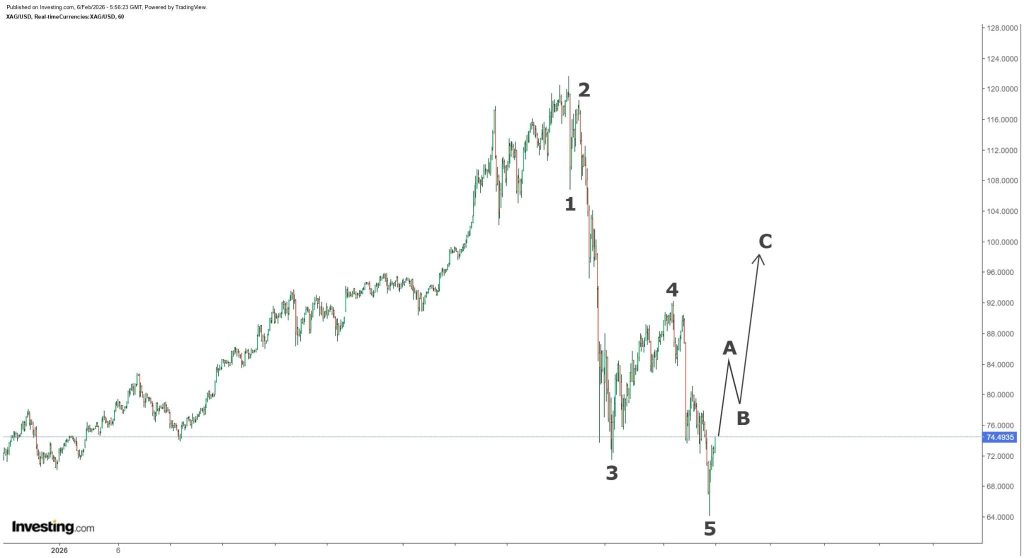
Silver Price Crash Is Over “For Real This Time,” Analyst Predicts a Surge Back Above $90

Silver Price Crash Is Over “For Real This Time,” Analyst Predicts a Surge Back Above $90

Silver has been taking a beating lately, and the Silver price hasn’t exactly been acting like a safe haven. After running up into the highs, the whole move reversed
Share
Captainaltcoin2026/02/07 03:15
