

AWS re:Invent 2025: Amazon’s Ambitious AI Vision Faces Enterprise Adoption Reality Check

BitcoinWorld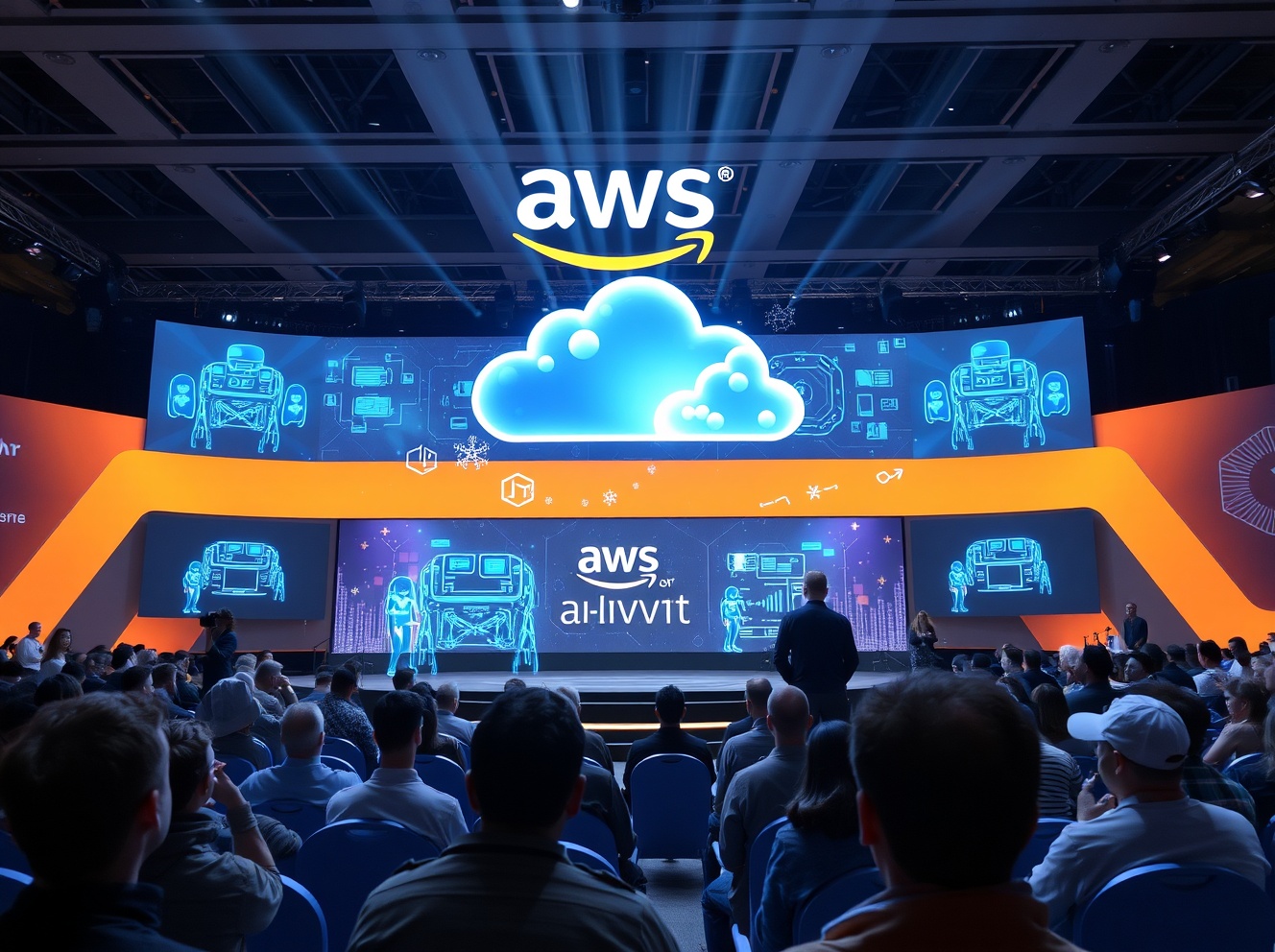
AWS re:Invent 2025: Amazon’s Ambitious AI Vision Faces Enterprise Adoption Reality Check
Amazon Web Services made one thing abundantly clear at re:Invent 2025: they’re betting everything on artificial intelligence. From new AI agents to enhanced large language models, the cloud giant unveiled dozens of AI-focused announcements. But as the dust settles from Las Vegas, a critical question emerges: Are enterprise customers actually ready for this AI revolution, or is AWS running ahead of the market?
AWS re:Invent Reveals Aggressive AI Strategy
The annual AWS re:Invent conference transformed into an AI showcase, with CEO Matt Garman declaring an “inflection point” in artificial intelligence. “I believe that the advent of AI agents has brought us to an inflection point in AI’s trajectory,” Garman announced during his keynote. “It’s turning from a technical wonder into something that delivers real value. This change is going to have as much impact on your business as the internet or the cloud.”
AWS unveiled several key initiatives:
- New Nova AI models with enhanced capabilities
- Advanced AI agent-building tools
- Expanded LLM customization options
- The “AWS AI factory” for hybrid deployments
- Enhanced AI training chip infrastructure
The Enterprise AI Adoption Gap
Despite AWS’s enthusiasm, analysts point to a significant disconnect between technological advancement and enterprise readiness. Naveen Chhabra, a principal analyst at Forrester, noted: “AWS AI announcements show that AWS is thinking ahead and maybe far too ahead. Most enterprises are still piloting AI projects and are rarely at the levels of maturity AWS expects them to be.”
The data supports this cautious view. A widely cited MIT study from August 2025 found that 95% of enterprises aren’t seeing a return on investment from AI implementations. This creates a challenging environment for AWS’s ambitious AI push.
| Enterprise AI Readiness Level | Percentage of Companies | Primary Challenge |
|---|---|---|
| Advanced Implementation | 5% | Scaling successful pilots |
| Pilot Projects | 45% | Proving ROI |
| Planning Stage | 35% | Skill gaps |
| No Active Plans | 15% | Budget constraints |
Cloud Infrastructure vs. AI Model Competition
AWS faces a unique positioning challenge in the AI landscape. While the company dominates cloud infrastructure with a commanding market share, it trails in enterprise AI model adoption. Competitors have established strong positions:
- OpenAI: Leading in general-purpose AI models
- Anthropic: Strong in enterprise safety and reliability
- Google: Deep integration with existing enterprise tools
- Microsoft: Leveraging Azure and Office 365 ecosystems
Ethan Feller, an equity strategist at Zacks Investment Research, observed: “The AWS AI factory is really compelling. AWS is a huge player in where the models are being run and is dominant in the cloud industry. I think that is where Amazon’s expertise really lies.”
AI Agents: Promise vs. Practical Reality
AWS placed significant emphasis on AI agents during re:Invent, positioning them as the next evolution in enterprise automation. These agents promise to handle complex workflows, make decisions, and interact with multiple systems autonomously. However, enterprise adoption faces several hurdles:
- Integration Complexity: Connecting AI agents to legacy systems
- Security Concerns: Managing autonomous decision-making risks
- Skill Requirements: Need for specialized AI talent
- Cost Justification: Demonstrating clear ROI
The Strategic Advantage of Cloud Infrastructure
Despite AI adoption challenges, AWS maintains a powerful position through its cloud infrastructure dominance. The company recorded $11.4 billion in operating income in the third quarter of 2025, providing financial stability regardless of AI market fluctuations. This foundation allows AWS to experiment with AI offerings while maintaining its core cloud business.
Feller noted AWS’s strategic positioning: “AWS is still well positioned to carve out market share in the AI sector, while continuing to grow its core businesses. AWS’s position as an industry-leading cloud provider means it has a solid business foundation despite what happens in the AI market.”
Actionable Insights for Enterprise Leaders
For businesses considering AWS’s AI offerings, several strategic considerations emerge:
- Start with Infrastructure: Leverage AWS’s cloud strengths before diving into advanced AI
- Focus on Hybrid Approaches: Consider the AWS AI factory for controlled deployments
- Build Internal Capabilities: Develop AI literacy before major investments
- Measure Incrementally: Track ROI at each implementation stage
- Consider Partnerships: Explore AWS’s relationships with AI specialists like Anthropic
FAQs: Understanding AWS’s AI Position
What is AWS’s main advantage in the AI race?
AWS’s primary strength lies in its cloud infrastructure dominance and integrated approach, offering everything from custom AI chips (Trainium, Inferentia) to deployment platforms in a single ecosystem.
How does AWS compare to competitors like OpenAI and Anthropic?
While OpenAI and Anthropic lead in model development, AWS excels at infrastructure and deployment. AWS CEO Matt Garman emphasizes the company’s full-stack approach.
What are AI agents and why are they important?
AI agents are autonomous systems that can perform tasks, make decisions, and interact with other systems. AWS believes they represent the next major evolution in enterprise AI, moving beyond simple chatbots to true workflow automation.
Should enterprises wait for AI technology to mature?
Analysts like Forrester’s Naveen Chhabra suggest starting with pilot projects rather than full-scale implementations, focusing on specific use cases with clear ROI potential.
How does AWS’s financial position affect its AI strategy?
With $11.4 billion in quarterly operating income, AWS can afford to invest in long-term AI development while maintaining its profitable cloud business, giving it stability during market fluctuations.
The Future of Enterprise AI Adoption
AWS re:Invent 2025 revealed a company aggressively pursuing AI leadership, but one facing a market still finding its footing. The tension between technological capability and enterprise readiness defines the current AI landscape. While AWS’s announcements demonstrate impressive innovation, their success ultimately depends on customer adoption rates and tangible business outcomes.
The coming year will test whether enterprises can bridge the gap between AI potential and practical implementation. For AWS, the challenge isn’t just building advanced AI tools—it’s helping customers use them effectively. As the AI market evolves, AWS’s infrastructure strength provides a stable foundation, but its AI ambitions require patient cultivation of enterprise readiness.
To learn more about the latest AI market trends, explore our comprehensive coverage of key developments shaping artificial intelligence adoption and innovation across industries.
This post AWS re:Invent 2025: Amazon’s Ambitious AI Vision Faces Enterprise Adoption Reality Check first appeared on BitcoinWorld.
You May Also Like

Japan-Based Bitcoin Treasury Company Metaplanet Completes $1.4 Billion IPO! Will It Buy Bitcoin? Here Are the Details


Single Currency-Pegged Tokens Surge Following MiCA Rollout.

Euro Stablecoin Market Cap Doubles in Year After MiCA, Study Finds
Copy linkX (Twitter)LinkedInFacebookEmail