Bitcoin may be sliding into a new bear phase unless fresh macro liquidity – particularly through spot ETFs – returns to the market, according to CryptoQuant CEO Ki Young Ju. Bitcoin Bear Market Incoming? Sharing a composite on-chain dashboard overlaid on the BTC price, Ju wrote on X: “Most Bitcoin on-chain indicators are bearish. Without macro liquidity, we enter a bear cycle.” The chart stacks ten CryptoQuant metrics behind the price in a red-to-green heatmap from 2021 to 2025, highlighting how regime shifts in prior cycles coincided with clusters of bearish readings. Related Reading: US Sen. Lummis Hints At US Bitcoin Buy With ‘Franklin’ Meme The indicators in the panel include the MVRV Z-score, CryptoQuant P&L Index, the Bull-Bear Cycle Indicator, Inter-Exchange Flow Pulse, Network Activity Index, Stablecoin Liquidity, Bitcoin Demand Growth, Trader On-chain Profit Margin, Trader Realized Price and a Technical Signal metric. When the majority are bullish, the backdrop turns light green; when they flip bearish, it shifts to red. In the latest section of the chart, as BTC has pulled back from its highs, red once again dominates – the visual basis for Ju’s warning. For the next major move, Ju argues that on-chain data is now subordinate to macro conditions and ETF flows. Quoting his own post, he wrote: “It is simple. If you think macro gets better next year, you buy. Otherwise, you sell. I’m not a macro expert, so find macro bros. New ETF inflows are the key.” That line pinpoints what he believes can “save” Bitcoin from a deeper drawdown: renewed demand from spot ETFs as a conduit for institutional capital. In earlier stages of the cycle, rising ETF inflows coincided with strong price appreciation; more recently, slowing or negative flows have mirrored the loss of upward momentum. Ju frames the current environment as one that demands flexible scenario management rather than rigid forecasts. “At this stage, it is more about being reactive than predictive. Set your scenarios and trade accordingly,” he told followers. The composite chart is designed for exactly that purpose, showing how past bull tops and bear markets aligned with persistent stretches of red across profit, valuation and liquidity metrics. Related Reading: Bitcoin And The 2026 Fed Shift: Expert Says Markets Aren’t Ready Despite the bearish tilt, Ju does not foresee a repeat of the 2022 collapse, when Bitcoin fell roughly 65% from peak to trough. He cites the behaviour of Michael Saylor led Strategy as a stabilizing factor. “If Strategy holds its 650K BTC this cycle (or sells only a little), we would not see another -65% drawdown like in 2022,” he wrote. In his view, that supply remaining largely off the market reduces the probability of a violent deleveraging event. Ju characterizes the current pullback as substantial but not extreme in historical context. “We are about -25% from ATH now, and even if a bear cycle comes, the downside would likely be smaller and look more like a broad sideways range,” he argued, suggesting that prolonged consolidation is more likely than a single dramatic crash. His message to long-term investors is explicitly calming. “Long-term holders should avoid panic selling,” he advised. While cyclical on-chain indicators flash red, he insists the structural backdrop has improved: “Bitcoin has more liquidity channels now, so the long-term outlook is obviously strong, imo.” Those channels include ETFs and a deeper institutional market structure than in prior cycles. At press time, Bitcoin traded at $92,494. Featured image created with DALL.E, chart from TradingView.comBitcoin may be sliding into a new bear phase unless fresh macro liquidity – particularly through spot ETFs – returns to the market, according to CryptoQuant CEO Ki Young Ju. Bitcoin Bear Market Incoming? Sharing a composite on-chain dashboard overlaid on the BTC price, Ju wrote on X: “Most Bitcoin on-chain indicators are bearish. Without macro liquidity, we enter a bear cycle.” The chart stacks ten CryptoQuant metrics behind the price in a red-to-green heatmap from 2021 to 2025, highlighting how regime shifts in prior cycles coincided with clusters of bearish readings. Related Reading: US Sen. Lummis Hints At US Bitcoin Buy With ‘Franklin’ Meme The indicators in the panel include the MVRV Z-score, CryptoQuant P&L Index, the Bull-Bear Cycle Indicator, Inter-Exchange Flow Pulse, Network Activity Index, Stablecoin Liquidity, Bitcoin Demand Growth, Trader On-chain Profit Margin, Trader Realized Price and a Technical Signal metric. When the majority are bullish, the backdrop turns light green; when they flip bearish, it shifts to red. In the latest section of the chart, as BTC has pulled back from its highs, red once again dominates – the visual basis for Ju’s warning. For the next major move, Ju argues that on-chain data is now subordinate to macro conditions and ETF flows. Quoting his own post, he wrote: “It is simple. If you think macro gets better next year, you buy. Otherwise, you sell. I’m not a macro expert, so find macro bros. New ETF inflows are the key.” That line pinpoints what he believes can “save” Bitcoin from a deeper drawdown: renewed demand from spot ETFs as a conduit for institutional capital. In earlier stages of the cycle, rising ETF inflows coincided with strong price appreciation; more recently, slowing or negative flows have mirrored the loss of upward momentum. Ju frames the current environment as one that demands flexible scenario management rather than rigid forecasts. “At this stage, it is more about being reactive than predictive. Set your scenarios and trade accordingly,” he told followers. The composite chart is designed for exactly that purpose, showing how past bull tops and bear markets aligned with persistent stretches of red across profit, valuation and liquidity metrics. Related Reading: Bitcoin And The 2026 Fed Shift: Expert Says Markets Aren’t Ready Despite the bearish tilt, Ju does not foresee a repeat of the 2022 collapse, when Bitcoin fell roughly 65% from peak to trough. He cites the behaviour of Michael Saylor led Strategy as a stabilizing factor. “If Strategy holds its 650K BTC this cycle (or sells only a little), we would not see another -65% drawdown like in 2022,” he wrote. In his view, that supply remaining largely off the market reduces the probability of a violent deleveraging event. Ju characterizes the current pullback as substantial but not extreme in historical context. “We are about -25% from ATH now, and even if a bear cycle comes, the downside would likely be smaller and look more like a broad sideways range,” he argued, suggesting that prolonged consolidation is more likely than a single dramatic crash. His message to long-term investors is explicitly calming. “Long-term holders should avoid panic selling,” he advised. While cyclical on-chain indicators flash red, he insists the structural backdrop has improved: “Bitcoin has more liquidity channels now, so the long-term outlook is obviously strong, imo.” Those channels include ETFs and a deeper institutional market structure than in prior cycles. At press time, Bitcoin traded at $92,494. Featured image created with DALL.E, chart from TradingView.com

Bitcoin Signals Bear Market: One Thing Could Flip It, Says CryptoQuant CEO

2025/12/05 09:00

Bitcoin may be sliding into a new bear phase unless fresh macro liquidity – particularly through spot ETFs – returns to the market, according to CryptoQuant CEO Ki Young Ju.

Bitcoin Bear Market Incoming?

Sharing a composite on-chain dashboard overlaid on the BTC price, Ju wrote on X: “Most Bitcoin on-chain indicators are bearish. Without macro liquidity, we enter a bear cycle.” The chart stacks ten CryptoQuant metrics behind the price in a red-to-green heatmap from 2021 to 2025, highlighting how regime shifts in prior cycles coincided with clusters of bearish readings.

The indicators in the panel include the MVRV Z-score, CryptoQuant P&L Index, the Bull-Bear Cycle Indicator, Inter-Exchange Flow Pulse, Network Activity Index, Stablecoin Liquidity, Bitcoin Demand Growth, Trader On-chain Profit Margin, Trader Realized Price and a Technical Signal metric. When the majority are bullish, the backdrop turns light green; when they flip bearish, it shifts to red. In the latest section of the chart, as BTC has pulled back from its highs, red once again dominates – the visual basis for Ju’s warning.

Bitcoin Bull Score Modell

For the next major move, Ju argues that on-chain data is now subordinate to macro conditions and ETF flows. Quoting his own post, he wrote: “It is simple. If you think macro gets better next year, you buy. Otherwise, you sell. I’m not a macro expert, so find macro bros. New ETF inflows are the key.”

That line pinpoints what he believes can “save” Bitcoin from a deeper drawdown: renewed demand from spot ETFs as a conduit for institutional capital. In earlier stages of the cycle, rising ETF inflows coincided with strong price appreciation; more recently, slowing or negative flows have mirrored the loss of upward momentum.

Ju frames the current environment as one that demands flexible scenario management rather than rigid forecasts. “At this stage, it is more about being reactive than predictive. Set your scenarios and trade accordingly,” he told followers. The composite chart is designed for exactly that purpose, showing how past bull tops and bear markets aligned with persistent stretches of red across profit, valuation and liquidity metrics.

Despite the bearish tilt, Ju does not foresee a repeat of the 2022 collapse, when Bitcoin fell roughly 65% from peak to trough. He cites the behaviour of Michael Saylor led Strategy as a stabilizing factor. “If Strategy holds its 650K BTC this cycle (or sells only a little), we would not see another -65% drawdown like in 2022,” he wrote. In his view, that supply remaining largely off the market reduces the probability of a violent deleveraging event.

Ju characterizes the current pullback as substantial but not extreme in historical context. “We are about -25% from ATH now, and even if a bear cycle comes, the downside would likely be smaller and look more like a broad sideways range,” he argued, suggesting that prolonged consolidation is more likely than a single dramatic crash.

His message to long-term investors is explicitly calming. “Long-term holders should avoid panic selling,” he advised. While cyclical on-chain indicators flash red, he insists the structural backdrop has improved: “Bitcoin has more liquidity channels now, so the long-term outlook is obviously strong, imo.” Those channels include ETFs and a deeper institutional market structure than in prior cycles.

At press time, Bitcoin traded at $92,494.

Bitcoin price
Disclaimer: The articles reposted on this site are sourced from public platforms and are provided for informational purposes only. They do not necessarily reflect the views of MEXC. All rights remain with the original authors. If you believe any content infringes on third-party rights, please contact [email protected] for removal. MEXC makes no guarantees regarding the accuracy, completeness, or timeliness of the content and is not responsible for any actions taken based on the information provided. The content does not constitute financial, legal, or other professional advice, nor should it be considered a recommendation or endorsement by MEXC.

You May Also Like

XRP Near $2 as ETFs Smash $1B AUM — Institutional Money Quietly Takes Over
XRP Near $2 as ETFs Smash $1B AUM — Institutional Money Quietly Takes Over

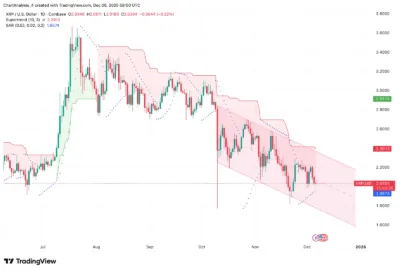
XRP trades near $2.04 after climbing more than 12% in the last month, yet the token struggles to reclaim strong momentum. The asset slipped through the past week and lost close to 8% while traders weighed a rare combination of institutional strength and short-term weakness. With a market capitalization near $125 billion and daily volume above $3.3 billion, XRP keeps its position as one of the most liquid crypto assets. The market now watches the psychological $2 support level as heavy inflows clash ih rising short exposure and fading retail conviction.Sentiment Breakdown Creates a Contrarian SetupMarket sentiment around XRP sits inside one of the deepest fear zones since October. Santiment reports that sentiment prints the same level of panic that preceded a sharp twenty-two percent rebound on November 21. RSI sits near 45 and the SAR indicator keeps flipping into bearish territory. Source: XTraders feel trapped between disbelief and fatigue after a two-month decline of thirty-one percent. The present slide shows structural weakness rather than blind panic, which means any reversal must appear through rising volume and inflow recovery rather than pure emotion. Traders hunt for signs that shorts may reach exhaustion as they did during past rebounds.Institutions Accumulate While Retail Steps BackInstitutional appetite continues to grow even as retail traders exit. U.S. spot XRP ETFs attracted $906 million in net inflows since launch, with not a single day of outflows. The flagship XRPC ETF now holds $336 million, which places it above every competing fund.Franklin Templeton now lists XRP as a top-four holding in its regulated multi-asset crypto product. These flows form a clear divergence: Institutional portfolios build long-horizon positions while retail traders short the asset. The setup shows a market where deep pockets accumulate quietly below the surface, waiting for fear to drain out of the system.Ripple’s $4B Expansion Reshapes Global FinanceRipple pushed aggressively into global finance through a $4 billion acquisition wave across GTreasury, Rail, Palisade, and Ripple Prime. The company now holds strategic control over treasury management, liquidity services, payments, and institutional crypto infrastructure. Regulatory traction strengthens the expansion. Approvals in Singapore and the UAE, plus FSRA authorization of the RLUSD stablecoin, anchor Ripple inside the regulated payments ecosystem. Ripple also reached a major U.S. milestone when Bitnomial launched the first CFTC-approved XRP spot product. This move places XRP beside commodities such as Treasuries on a federally regulated exchange. Markets have not priced this transformation yet, leaving a wide gap between Ripple’s operational dominance and XRP’s market performance.On-Chain Data Reveals a Structural SplitThe XRP Ledger shows its highest transaction velocity of the year at 0.0324, marking strong network usage. Open interest climbed to $3.85 billion while funding rates stayed negative, which confirms heavy short positioning. A regional concentration also emerges: Upbit holds more than six billion XRP, far above Binance at 2.6 billion. The imbalance introduces the risk of region-based liquidation waves during volatility spikes. Liquidity remains deep and participation strong, yet direction stays capped by pressure from leveraged traders.Long-Term Holders Rotate as Whales Step InLong-term holder dormancy dropped ninety-one percent since mid-November, signaling that older coins rarely move. At the same time, cohorts that held XRP for six months to three years trimmed positions and locked in profits. Institutions absorbed much of that volume through ETF demand, which removed nearly half a percent of total supply from circulation as ETFs crossed one billion dollars in assets under management. Whales keep buying while early holders reduce exposure. This rotation delays any strong recovery but builds the foundation for a future supply squeeze once distribution slows.XRP now enters a rare moment where institutional strength outweighs retail fear, setting the stage for a potential shift once the market resolves its internal pressure.
Share
Coinstats2025/12/06 21:24
XRP Price Prediction for December 7: Sellers Continue to Dominate as Weak Momentum Persists

XRP Price Prediction for December 7: Sellers Continue to Dominate as Weak Momentum Persists

XRP struggles below $2.05, with bearish sentiment dominating market momentum. Weak spot inflows signal cautious sentiment as traders avoid aggressive positions. $2.00 support zone crucial; failure risks further declines towards $1.72. XRP’s price outlook for December 7 reveals ongoing weakness, as the cryptocurrency hovers near $2.03, continuing its downward trend since September. The failure to maintain any meaningful upward movement, coupled with consistent rejections at higher levels, has shifted the market bias firmly in favor of sellers. The token is now testing the critical $2.00 support zone, and if it fails to hold, further downside could be imminent. Also Read: Ethereum Price Prediction for November 9: Sellers Dominate as Weak Flows Persist Price Action and Key Technical Indicators XRP’s price action remains confined to a descending channel, with every rebound met with rejection at lower levels. The Supertrend indicator remains red, signaling ongoing bearish pressure, and the Parabolic SAR dots continue to sit above the price, reinforcing the dominance of sellers. Currently, the $2.00 level is a key support zone, but the inability to sustain a recovery above this level could lead to further losses, targeting $1.83 and $1.72. Source: Tradingview On the one-hour chart, XRP broke below a short-term ascending trendline, which had previously supported a minor recovery attempt. This has caused the price to consolidate beneath the trendline, keeping the bearish bias intact for the short term. Additionally, XRP remains within the lower half of the Bollinger Bands, indicating that downward pressure persists, with little sign of a sustained reversal. Market Sentiment and Data Reinforce Bearish Outlook Recent spot market data reveals weak flows, as $4.36 million in inflows were recorded in the latest session. However, these inflows seem more reactive than proactive, signaling a lack of strong accumulation interest and a market still wary of significant upside potential. Traders appear more focused on stabilizing the price rather than seeking aggressive bullish positions, indicating that sentiment remains fragile. Source: Coinglass In the derivatives market, open interest stands at $3.64 billion, showing a decline from recent highs. This drop, along with an 18% decrease in futures volume and a 60% collapse in options volume, underscores a lack of conviction in the market. Top traders remain predominantly net-long, but their reduced exposure further suggests a cautious approach in the current environment. XRP Price Forecast Looking ahead to December 7, the outlook remains largely bearish unless XRP can reclaim key resistance levels. A break above $2.15 and $2.39 would signal a potential shift in momentum, opening the door to higher targets such as $2.62 and $2.91. However, if the $2.00 support fails to hold, XRP is at risk of further declines towards $1.83 and $1.72. The technical indicators, spot flows, and derivatives data all point to continued bearish momentum for XRP. Sellers remain in control, and any recovery attempts are likely to face strong resistance. The next few sessions will be critical in determining whether the price can stabilize or if further downside is ahead. Also Read: Ethereum Classic (ETC) Price Prediction 2025–2029: Can ETC Hit $20 Soon? The post XRP Price Prediction for December 7: Sellers Continue to Dominate as Weak Momentum Persists appeared first on 36Crypto.
Share
Coinstats2025/12/06 21:06