The post BlackRock Cautiously Bearish on U.S. Bonds as AI Spending May Raise Borrowing Costs appeared on BitcoinEthereumNews.com. BlackRock’s outlook on U.S. government bonds has turned bearish due to surging AI spending by tech firms, which could drive up borrowing costs over the next six to 12 months. This shift highlights rising leverage risks in both public and private sectors amid massive infrastructure investments. BlackRock Investment Institute warns of higher interest rates from AI-driven debt. Tech giants like Oracle, Meta, and Alphabet are issuing bonds worth hundreds of billions for AI projects. U.S. government debt exceeds $38 trillion, amplifying vulnerabilities to fiscal shocks and inflation pressures. BlackRock’s bearish stance on U.S. government bonds signals caution amid AI spending boom. Explore how tech debt impacts rates and economy in this analysis. Stay informed on market shifts today. What is BlackRock’s outlook on U.S. government bonds amid AI spending? BlackRock’s outlook on U.S. government bonds has shifted to bearish for the next six to 12 months, primarily due to anticipated heavy borrowing for artificial intelligence initiatives by major tech companies. The BlackRock Investment Institute’s 2026 report highlights that this influx of debt will likely exert upward pressure on interest rates, compounding the existing U.S. government debt burden of over $38 trillion. While AI promises long-term economic gains, short-term vulnerabilities from increased leverage could lead to higher costs of capital across sectors. How does AI investment affect bond markets and interest rates? AI investment is reshaping bond markets by fueling a wave of corporate borrowing that intersects with public sector debt dynamics. According to the BlackRock Investment Institute, tech firms are preparing to raise hundreds of billions through bond issuances to fund data centers, hardware, and software advancements essential for AI expansion. This year alone, companies such as Oracle, Meta, and Alphabet have executed large-scale bond sales, contributing to a broader trend where AI has become a pillar of U.S. economic… The post BlackRock Cautiously Bearish on U.S. Bonds as AI Spending May Raise Borrowing Costs appeared on BitcoinEthereumNews.com. BlackRock’s outlook on U.S. government bonds has turned bearish due to surging AI spending by tech firms, which could drive up borrowing costs over the next six to 12 months. This shift highlights rising leverage risks in both public and private sectors amid massive infrastructure investments. BlackRock Investment Institute warns of higher interest rates from AI-driven debt. Tech giants like Oracle, Meta, and Alphabet are issuing bonds worth hundreds of billions for AI projects. U.S. government debt exceeds $38 trillion, amplifying vulnerabilities to fiscal shocks and inflation pressures. BlackRock’s bearish stance on U.S. government bonds signals caution amid AI spending boom. Explore how tech debt impacts rates and economy in this analysis. Stay informed on market shifts today. What is BlackRock’s outlook on U.S. government bonds amid AI spending? BlackRock’s outlook on U.S. government bonds has shifted to bearish for the next six to 12 months, primarily due to anticipated heavy borrowing for artificial intelligence initiatives by major tech companies. The BlackRock Investment Institute’s 2026 report highlights that this influx of debt will likely exert upward pressure on interest rates, compounding the existing U.S. government debt burden of over $38 trillion. While AI promises long-term economic gains, short-term vulnerabilities from increased leverage could lead to higher costs of capital across sectors. How does AI investment affect bond markets and interest rates? AI investment is reshaping bond markets by fueling a wave of corporate borrowing that intersects with public sector debt dynamics. According to the BlackRock Investment Institute, tech firms are preparing to raise hundreds of billions through bond issuances to fund data centers, hardware, and software advancements essential for AI expansion. This year alone, companies such as Oracle, Meta, and Alphabet have executed large-scale bond sales, contributing to a broader trend where AI has become a pillar of U.S. economic…

BlackRock Cautiously Bearish on U.S. Bonds as AI Spending May Raise Borrowing Costs

4 min read
  • BlackRock Investment Institute warns of higher interest rates from AI-driven debt.

  • Tech giants like Oracle, Meta, and Alphabet are issuing bonds worth hundreds of billions for AI projects.

  • U.S. government debt exceeds $38 trillion, amplifying vulnerabilities to fiscal shocks and inflation pressures.

BlackRock’s bearish stance on U.S. government bonds signals caution amid AI spending boom. Explore how tech debt impacts rates and economy in this analysis. Stay informed on market shifts today.

What is BlackRock’s outlook on U.S. government bonds amid AI spending?

BlackRock’s outlook on U.S. government bonds has shifted to bearish for the next six to 12 months, primarily due to anticipated heavy borrowing for artificial intelligence initiatives by major tech companies. The BlackRock Investment Institute’s 2026 report highlights that this influx of debt will likely exert upward pressure on interest rates, compounding the existing U.S. government debt burden of over $38 trillion. While AI promises long-term economic gains, short-term vulnerabilities from increased leverage could lead to higher costs of capital across sectors.

How does AI investment affect bond markets and interest rates?

AI investment is reshaping bond markets by fueling a wave of corporate borrowing that intersects with public sector debt dynamics. According to the BlackRock Investment Institute, tech firms are preparing to raise hundreds of billions through bond issuances to fund data centers, hardware, and software advancements essential for AI expansion. This year alone, companies such as Oracle, Meta, and Alphabet have executed large-scale bond sales, contributing to a broader trend where AI has become a pillar of U.S. economic growth.

The report, compiled from insights by senior investment managers at BlackRock—the world’s largest asset manager—emphasizes that higher borrowing in both public and private arenas will sustain elevated interest rates. “Higher borrowing across public and private sectors is likely to keep upward pressure on interest rates,” the institute stated. This could raise the cost of AI-related investments, potentially slowing deployment in the near term while affecting the wider economy through increased financing expenses.

Experts note that the U.S. Treasury market, already strained by fiscal deficits, faces amplified risks from this dual debt surge. Bond yields may spike in response to concerns over inflation management and debt servicing, creating fragility in the financial system. Historical data from Federal Reserve reports shows that periods of rapid technological investment, like the dot-com era, often correlated with interest rate volatility, underscoring the need for cautious positioning in fixed-income assets.

Despite these challenges, the BlackRock report acknowledges potential long-term benefits. Enhanced AI productivity could boost government revenues through higher corporate taxes and economic expansion, easing debt pressures over time. However, these gains are projected to materialize gradually, leaving the immediate horizon cautious for bond investors.

Frequently Asked Questions

What risks does BlackRock identify with AI-driven debt in the U.S. economy?

BlackRock highlights risks from structurally higher capital costs and systemic vulnerabilities to shocks like bond yield spikes from fiscal worries or policy conflicts in balancing inflation and debt. This could hinder AI project funding and broader growth, with U.S. debt already surpassing $38 trillion creating a precarious leverage environment.

Will AI spending continue to boost U.S. stock markets despite bond concerns?

Yes, AI spending is expected to drive U.S. stock gains through new revenue streams and productivity boosts, though benefits will unevenly favor leading firms. BlackRock remains optimistic on equities, predicting elevated prices next year as AI innovation propels the economy forward, even as bond markets face headwinds.

Key Takeaways

  • Bearish on U.S. bonds: BlackRock forecasts higher interest rates from AI borrowing, urging investors to monitor debt accumulation over the next year.
  • AI fuels stock optimism: Despite fixed-income risks, equity markets should benefit from AI-driven revenues, with opportunities in identifying key winners.
  • Global shifts noted: Negative view on Japanese bonds due to rate hikes, but positive on emerging market debt thanks to improved fiscal health and reduced issuance.

Conclusion

BlackRock’s bearish outlook on U.S. government bonds underscores the transformative yet disruptive impact of AI spending on interest rates and debt markets. As tech firms ramp up borrowing to sustain innovation, investors must navigate heightened leverage and potential fiscal shocks while eyeing long-term productivity gains. For those tracking financial trends, staying attuned to these dynamics offers critical insights into evolving economic landscapes—consider reviewing your portfolio strategies in light of these developments.

Source: https://en.coinotag.com/blackrock-cautiously-bearish-on-u-s-bonds-as-ai-spending-may-raise-borrowing-costs

Disclaimer: The articles reposted on this site are sourced from public platforms and are provided for informational purposes only. They do not necessarily reflect the views of MEXC. All rights remain with the original authors. If you believe any content infringes on third-party rights, please contact [email protected] for removal. MEXC makes no guarantees regarding the accuracy, completeness, or timeliness of the content and is not responsible for any actions taken based on the information provided. The content does not constitute financial, legal, or other professional advice, nor should it be considered a recommendation or endorsement by MEXC.

You May Also Like

Best Crypto to Buy as Saylor & Crypto Execs Meet in US Treasury Council

Best Crypto to Buy as Saylor & Crypto Execs Meet in US Treasury Council

The post Best Crypto to Buy as Saylor & Crypto Execs Meet in US Treasury Council appeared on BitcoinEthereumNews.com. Michael Saylor and a group of crypto executives met in Washington, D.C. yesterday to push for the Strategic Bitcoin Reserve Bill (the BITCOIN Act), which would see the U.S. acquire up to 1M $BTC over five years. With Bitcoin being positioned yet again as a cornerstone of national monetary policy, many investors are turning their eyes to projects that lean into this narrative – altcoins, meme coins, and presales that could ride on the same wave. Read on for three of the best crypto projects that seem especially well‐suited to benefit from this macro shift:  Bitcoin Hyper, Best Wallet Token, and Remittix. These projects stand out for having a strong use case and high adoption potential, especially given the push for a U.S. Bitcoin reserve.   Why the Bitcoin Reserve Bill Matters for Crypto Markets The strategic Bitcoin Reserve Bill could mark a turning point for the U.S. approach to digital assets. The proposal would see America build a long-term Bitcoin reserve by acquiring up to one million $BTC over five years. To make this happen, lawmakers are exploring creative funding methods such as revaluing old gold certificates. The plan also leans on confiscated Bitcoin already held by the government, worth an estimated $15–20B. This isn’t just a headline for policy wonks. It signals that Bitcoin is moving from the margins into the core of financial strategy. Industry figures like Michael Saylor, Senator Cynthia Lummis, and Marathon Digital’s Fred Thiel are all backing the bill. They see Bitcoin not just as an investment, but as a hedge against systemic risks. For the wider crypto market, this opens the door for projects tied to Bitcoin and the infrastructure that supports it. 1. Bitcoin Hyper ($HYPER) – Turning Bitcoin Into More Than Just Digital Gold The U.S. may soon treat Bitcoin as…
Share
BitcoinEthereumNews2025/09/18 00:27
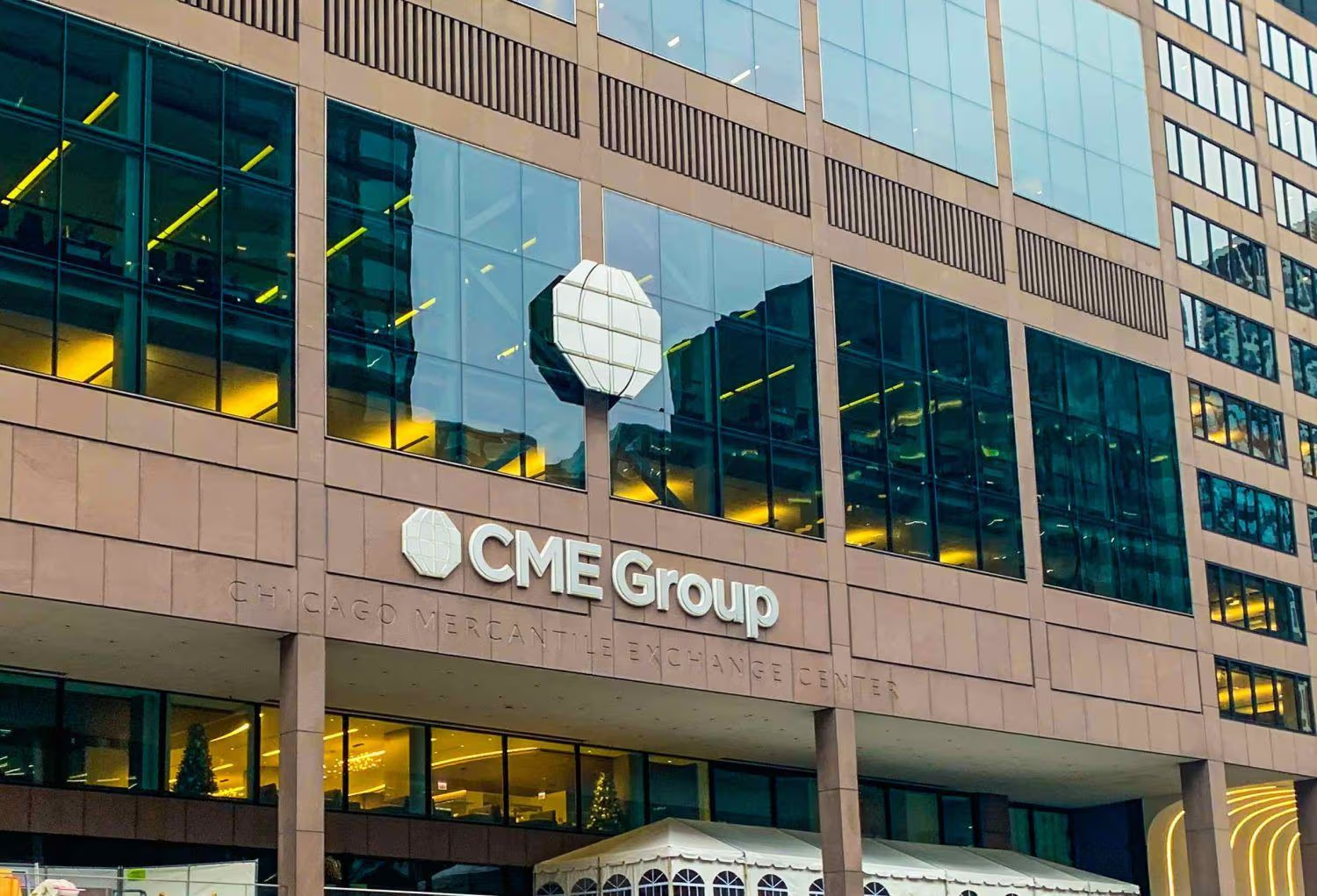
Breaking: CME Group Unveils Solana and XRP Options

Breaking: CME Group Unveils Solana and XRP Options

CME Group launches Solana and XRP options, expanding crypto offerings. SEC delays Solana and XRP ETF approvals, market awaits clarity. Strong institutional demand drives CME’s launch of crypto options contracts. In a bold move to broaden its cryptocurrency offerings, CME Group has officially launched options on Solana (SOL) and XRP futures. Available since October 13, 2025, these options will allow traders to hedge and manage exposure to two of the most widely traded digital assets in the market. The new contracts come in both full-size and micro-size formats, with expiration options available daily, monthly, and quarterly, providing flexibility for a diverse range of market participants. This expansion aligns with the rising demand for innovative products in the crypto space. Giovanni Vicioso, CME Group’s Global Head of Cryptocurrency Products, noted that the new options offer increased flexibility for traders, from institutions to active individual investors. The growing liquidity in Solana and XRP futures has made the introduction of these options a timely move to meet the needs of an expanding market. Also Read: Vitalik Buterin Reveals Ethereum’s Bold Plan to Stay Quantum-Secure and Simple! Rapid Growth in Solana and XRP Futures Trading CME Group’s decision to roll out options on Solana and XRP futures follows the substantial growth in these futures products. Since the launch of Solana futures in March 2025, more than 540,000 contracts, totaling $22.3 billion in notional value, have been traded. In August 2025, Solana futures set new records, with an average daily volume (ADV) of 9,000 contracts valued at $437.4 million. The average daily open interest (ADOI) hit 12,500 contracts, worth $895 million. Similarly, XRP futures, which launched in May 2025, have seen significant adoption, with over 370,000 contracts traded, totaling $16.2 billion. XRP futures also set records in August 2025, with an ADV of 6,600 contracts valued at $385 million and a record ADOI of 9,300 contracts, worth $942 million. Institutional Demand for Advanced Hedging Tools CME Group’s expansion into options is a direct response to growing institutional interest in sophisticated cryptocurrency products. Roman Makarov from Cumberland Options Trading at DRW highlighted the market demand for more varied crypto products, enabling more advanced risk management strategies. Joshua Lim from FalconX also noted that the new options products meet the increasing need for institutional hedging tools for assets like Solana and XRP, further cementing their role in the digital asset space. The launch of options on Solana and XRP futures marks another step toward the maturation of the cryptocurrency market, providing a broader range of tools for managing digital asset exposure. SEC’s Delay on Solana and XRP ETF Approvals While CME Group expands its offerings, the broader market is also watching the progress of Solana and XRP exchange-traded funds (ETFs). The U.S. Securities and Exchange Commission (SEC) has delayed its decisions on multiple crypto-related ETF filings, including those for Solana and XRP. Despite the delay, analysts anticipate approval may be on the horizon. This week, REX Shares and Osprey Funds are expected to launch an XRP ETF that will hold XRP directly and allocate at least 40% of its assets to other XRP-related ETFs. Despite the delays, some analysts believe that approval could come soon, fueling further interest in these assets. The delay by the SEC has left many crypto investors awaiting clarity, but approval of these ETFs could fuel further momentum in the Solana and XRP futures markets. Also Read: Tether CEO Breaks Silence on $117,000 Bitcoin Price – Market Reacts! The post Breaking: CME Group Unveils Solana and XRP Options appeared first on 36Crypto.
Share
Coinstats2025/09/18 02:35
Optimizely Named a Leader in the 2026 Gartner® Magic Quadrant™ for Personalization Engines

Optimizely Named a Leader in the 2026 Gartner® Magic Quadrant™ for Personalization Engines

Company recognized as a Leader for the second consecutive year NEW YORK, Feb. 5, 2026 /PRNewswire/ — Optimizely, the leading digital experience platform (DXP) provider
Share
AI Journal2026/02/06 00:47