XRP jumped more than 9% to $2.27 after Franklin Templeton and Grayscale launched their spot XRP ETF on Monday. The $1.69 trillion asset manager joined Bitwise, Grayscale, and Canary Capital in offering regulated XRP investment products, calling XRP “foundational” for global settlement infrastructure. This wave of ETF launches marks a turning point for XRP. After regulatory uncertainty faded with Ripple’s SEC settlement earlier in 2025, institutional interest is surging. Wave of Institutional ETF Launches Signals Market Maturity Franklin Templeton debuted the Franklin XRP ETF (XRPZ) on NYSE Arca, offering regulated XRP exposure through a grantor trust. The fund tracks the CME CF XRP-Dollar Reference Rate and uses Coinbase Custody as custodian, with BNY Mellon as administrator. According to Franklin Templeton’s announcement, the ETF allows investors to follow XRP’s performance transparently, without buying the cryptocurrency directly. “XRPZ offers investors a convenient and regulated way to access a digital asset that plays a critical role in the global settlement infrastructure,” stated David Mann, director of ETF products and capital markets at Franklin Templeton. Grayscale has also launched its XRP Trust ETF (GXRP) with a zero-fee introductory period, highlighting XRP’s strong market position. Bitwise, which launched its XRP ETF a week earlier, reported $100 million in initial inflows. The clustering of ETF launches signals that asset managers were prepared for regulatory clarity, which arrived from the SEC in 2025. Regulatory Resolution Paves Way for Wall Street Entry Ripple’s $125 million settlement with the Securities and Exchange Commission in May 2025 ended years of uncertainty. SEC statements confirm that Ripple resolved all claims without admitting wrongdoing, paid $50 million directly to the agency, and had the rest released from escrow. This resolution gave large financial institutions the assurance needed to pursue spot ETFs. Franklin Templeton’s participation is notable for its size, lending credibility to XRP’s story as a payment utility. Investors can now access XRP through regulated products managed by well-known custodians and with clear transparency. Source: BeInCrypto Still, prospectuses caution that risks remain, including XRP’s volatility, limited diversification, and regulatory uncertainty abroad. The ETF holds only XRP and cash, making it unsuitable as a standalone investment. XRP’s Technical Advantages Drive Institutional Interest XRP runs on the decentralized XRP Ledger (XRPL), designed for rapid payment settlement. XRPL documentation highlights near-instant, low-fee transactions and notes that over 3.3 billion transfers have beenprocessed on the network. XRPL’s consensus system is said to be energy efficient, settling transactions in three to five seconds. These features attract institutions seeking alternatives to SWIFT and traditional cross-border systems. Franklin Templeton’s prospectus and Grayscale Research both stress XRP’s usefulness as a currency bridge and for efficient, scalable transfers. With these characteristics, XRP sets itself apart from cryptocurrencies like Bitcoin, which mainly serve as a store of value. The current rally coincides with rising open interest in XRP futures, pointing to growing involvement from institutional and retail traders and suggesting sustained market activity. Geopolitical Dimensions and China Exposure Speculation Some analysts believe XRP could play a role in new cross-border payment corridors, including those in Asia, the Middle East, and Africa. Black Swan Capitalist has argued that China has indirect exposure to XRP through the BRICS New Development Bank and leading Japanese fintech SBI Holdings. However, direct adoption remains limited by Chinese policies. BRICS business council recommendations from April 2025 urged support for cross-border digital settlements — a theme in line with XRP’s core design, despite no explicit mention of the cryptocurrency. The recommendations highlight a growing need for efficient digital payment systems. The European Central Bank is also examining cross-border payment infrastructure. Project Nexus was discussed during an April 2025 speech about linking payment systems in Asia and Europe. These trends echo the global relevance of the XRP Ledger’s use cases.XRP jumped more than 9% to $2.27 after Franklin Templeton and Grayscale launched their spot XRP ETF on Monday. The $1.69 trillion asset manager joined Bitwise, Grayscale, and Canary Capital in offering regulated XRP investment products, calling XRP “foundational” for global settlement infrastructure. This wave of ETF launches marks a turning point for XRP. After regulatory uncertainty faded with Ripple’s SEC settlement earlier in 2025, institutional interest is surging. Wave of Institutional ETF Launches Signals Market Maturity Franklin Templeton debuted the Franklin XRP ETF (XRPZ) on NYSE Arca, offering regulated XRP exposure through a grantor trust. The fund tracks the CME CF XRP-Dollar Reference Rate and uses Coinbase Custody as custodian, with BNY Mellon as administrator. According to Franklin Templeton’s announcement, the ETF allows investors to follow XRP’s performance transparently, without buying the cryptocurrency directly. “XRPZ offers investors a convenient and regulated way to access a digital asset that plays a critical role in the global settlement infrastructure,” stated David Mann, director of ETF products and capital markets at Franklin Templeton. Grayscale has also launched its XRP Trust ETF (GXRP) with a zero-fee introductory period, highlighting XRP’s strong market position. Bitwise, which launched its XRP ETF a week earlier, reported $100 million in initial inflows. The clustering of ETF launches signals that asset managers were prepared for regulatory clarity, which arrived from the SEC in 2025. Regulatory Resolution Paves Way for Wall Street Entry Ripple’s $125 million settlement with the Securities and Exchange Commission in May 2025 ended years of uncertainty. SEC statements confirm that Ripple resolved all claims without admitting wrongdoing, paid $50 million directly to the agency, and had the rest released from escrow. This resolution gave large financial institutions the assurance needed to pursue spot ETFs. Franklin Templeton’s participation is notable for its size, lending credibility to XRP’s story as a payment utility. Investors can now access XRP through regulated products managed by well-known custodians and with clear transparency. Source: BeInCrypto Still, prospectuses caution that risks remain, including XRP’s volatility, limited diversification, and regulatory uncertainty abroad. The ETF holds only XRP and cash, making it unsuitable as a standalone investment. XRP’s Technical Advantages Drive Institutional Interest XRP runs on the decentralized XRP Ledger (XRPL), designed for rapid payment settlement. XRPL documentation highlights near-instant, low-fee transactions and notes that over 3.3 billion transfers have beenprocessed on the network. XRPL’s consensus system is said to be energy efficient, settling transactions in three to five seconds. These features attract institutions seeking alternatives to SWIFT and traditional cross-border systems. Franklin Templeton’s prospectus and Grayscale Research both stress XRP’s usefulness as a currency bridge and for efficient, scalable transfers. With these characteristics, XRP sets itself apart from cryptocurrencies like Bitcoin, which mainly serve as a store of value. The current rally coincides with rising open interest in XRP futures, pointing to growing involvement from institutional and retail traders and suggesting sustained market activity. Geopolitical Dimensions and China Exposure Speculation Some analysts believe XRP could play a role in new cross-border payment corridors, including those in Asia, the Middle East, and Africa. Black Swan Capitalist has argued that China has indirect exposure to XRP through the BRICS New Development Bank and leading Japanese fintech SBI Holdings. However, direct adoption remains limited by Chinese policies. BRICS business council recommendations from April 2025 urged support for cross-border digital settlements — a theme in line with XRP’s core design, despite no explicit mention of the cryptocurrency. The recommendations highlight a growing need for efficient digital payment systems. The European Central Bank is also examining cross-border payment infrastructure. Project Nexus was discussed during an April 2025 speech about linking payment systems in Asia and Europe. These trends echo the global relevance of the XRP Ledger’s use cases.

XRP Jumps 9% as Franklin Templeton and Grayscale Launch Spot ETFs

2025/11/25 07:13
3 min read

XRP jumped more than 9% to $2.27 after Franklin Templeton and Grayscale launched their spot XRP ETF on Monday. The $1.69 trillion asset manager joined Bitwise, Grayscale, and Canary Capital in offering regulated XRP investment products, calling XRP “foundational” for global settlement infrastructure.

This wave of ETF launches marks a turning point for XRP. After regulatory uncertainty faded with Ripple’s SEC settlement earlier in 2025, institutional interest is surging.

Wave of Institutional ETF Launches Signals Market Maturity

Franklin Templeton debuted the Franklin XRP ETF (XRPZ) on NYSE Arca, offering regulated XRP exposure through a grantor trust. The fund tracks the CME CF XRP-Dollar Reference Rate and uses Coinbase Custody as custodian, with BNY Mellon as administrator. According to Franklin Templeton’s announcement, the ETF allows investors to follow XRP’s performance transparently, without buying the cryptocurrency directly.

Grayscale has also launched its XRP Trust ETF (GXRP) with a zero-fee introductory period, highlighting XRP’s strong market position.

Bitwise, which launched its XRP ETF a week earlier, reported $100 million in initial inflows. The clustering of ETF launches signals that asset managers were prepared for regulatory clarity, which arrived from the SEC in 2025.

Regulatory Resolution Paves Way for Wall Street Entry

Ripple’s $125 million settlement with the Securities and Exchange Commission in May 2025 ended years of uncertainty. SEC statements confirm that Ripple resolved all claims without admitting wrongdoing, paid $50 million directly to the agency, and had the rest released from escrow. This resolution gave large financial institutions the assurance needed to pursue spot ETFs.

Franklin Templeton’s participation is notable for its size, lending credibility to XRP’s story as a payment utility. Investors can now access XRP through regulated products managed by well-known custodians and with clear transparency.
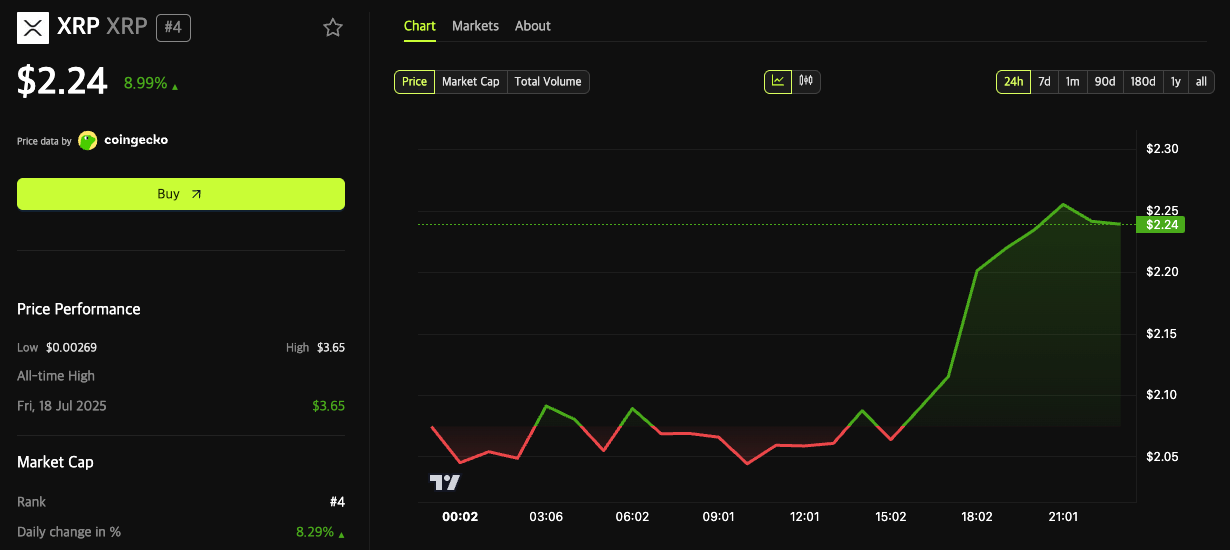
Source: BeInCrypto

Still, prospectuses caution that risks remain, including XRP’s volatility, limited diversification, and regulatory uncertainty abroad. The ETF holds only XRP and cash, making it unsuitable as a standalone investment.

XRP’s Technical Advantages Drive Institutional Interest

XRP runs on the decentralized XRP Ledger (XRPL), designed for rapid payment settlement. XRPL documentation highlights near-instant, low-fee transactions and notes that over 3.3 billion transfers have beenprocessed on the network.

XRPL’s consensus system is said to be energy efficient, settling transactions in three to five seconds. These features attract institutions seeking alternatives to SWIFT and traditional cross-border systems.

Franklin Templeton’s prospectus and Grayscale Research both stress XRP’s usefulness as a currency bridge and for efficient, scalable transfers. With these characteristics, XRP sets itself apart from cryptocurrencies like Bitcoin, which mainly serve as a store of value.

The current rally coincides with rising open interest in XRP futures, pointing to growing involvement from institutional and retail traders and suggesting sustained market activity.

Geopolitical Dimensions and China Exposure Speculation

Some analysts believe XRP could play a role in new cross-border payment corridors, including those in Asia, the Middle East, and Africa. Black Swan Capitalist has argued that China has indirect exposure to XRP through the BRICS New Development Bank and leading Japanese fintech SBI Holdings. However, direct adoption remains limited by Chinese policies.

BRICS business council recommendations from April 2025 urged support for cross-border digital settlements — a theme in line with XRP’s core design, despite no explicit mention of the cryptocurrency. The recommendations highlight a growing need for efficient digital payment systems.

The European Central Bank is also examining cross-border payment infrastructure. Project Nexus was discussed during an April 2025 speech about linking payment systems in Asia and Europe. These trends echo the global relevance of the XRP Ledger’s use cases.

Market Opportunity
XRP Logo
XRP Price(XRP)
$1.4786
$1.4786$1.4786
+0.30%
USD
XRP (XRP) Live Price Chart
Disclaimer: The articles reposted on this site are sourced from public platforms and are provided for informational purposes only. They do not necessarily reflect the views of MEXC. All rights remain with the original authors. If you believe any content infringes on third-party rights, please contact [email protected] for removal. MEXC makes no guarantees regarding the accuracy, completeness, or timeliness of the content and is not responsible for any actions taken based on the information provided. The content does not constitute financial, legal, or other professional advice, nor should it be considered a recommendation or endorsement by MEXC.

You May Also Like

MoneyGram launches stablecoin-powered app in Colombia

MoneyGram launches stablecoin-powered app in Colombia

The post MoneyGram launches stablecoin-powered app in Colombia appeared on BitcoinEthereumNews.com. MoneyGram has launched a new mobile application in Colombia that uses USD-pegged stablecoins to modernize cross-border remittances. According to an announcement on Wednesday, the app allows customers to receive money instantly into a US dollar balance backed by Circle’s USDC stablecoin, which can be stored, spent, or cashed out through MoneyGram’s global retail network. The rollout is designed to address the volatility of local currencies, particularly the Colombian peso. Built on the Stellar blockchain and supported by wallet infrastructure provider Crossmint, the app marks MoneyGram’s most significant move yet to integrate stablecoins into consumer-facing services. Colombia was selected as the first market due to its heavy reliance on inbound remittances—families in the country receive more than 22 times the amount they send abroad, according to Statista. The announcement said future expansions will target other remittance-heavy markets. MoneyGram, which has nearly 500,000 retail locations globally, has experimented with blockchain rails since partnering with the Stellar Development Foundation in 2021. It has since built cash on and off ramps for stablecoins, developed APIs for crypto integration, and incorporated stablecoins into its internal settlement processes. “This launch is the first step toward a world where every person, everywhere, has access to dollar stablecoins,” CEO Anthony Soohoo stated. The company emphasized compliance, citing decades of regulatory experience, though stablecoin oversight remains fluid. The US Congress passed the GENIUS Act earlier this year, establishing a framework for stablecoin regulation, which MoneyGram has pointed to as providing clearer guardrails. This is a developing story. This article was generated with the assistance of AI and reviewed by editor Jeffrey Albus before publication. Get the news in your inbox. Explore Blockworks newsletters: Source: https://blockworks.co/news/moneygram-stablecoin-app-colombia
Share
BitcoinEthereumNews2025/09/18 07:04
Federal Reserve Announces Rate Cut Amid Shifting Economic Risks

Federal Reserve Announces Rate Cut Amid Shifting Economic Risks

Detail: https://coincu.com/markets/fed-cuts-rates-economic-risks/
Share
Coinstats2025/09/18 04:39
Stack Smart, Not Hard: Turn $3K into $248K With Top Meme Coin Presale – APEMARS Offers 8,100% ROI While Pepe and Floki Compete

Stack Smart, Not Hard: Turn $3K into $248K With Top Meme Coin Presale – APEMARS Offers 8,100% ROI While Pepe and Floki Compete

Could today’s market dips hide the next explosive crypto opportunity? Pepe (PEPE) is trading at $0.000004389 after a 7.95% drop, and FLOKI sits at $0.00003180 following
Share
Coinstats2026/02/17 10:15