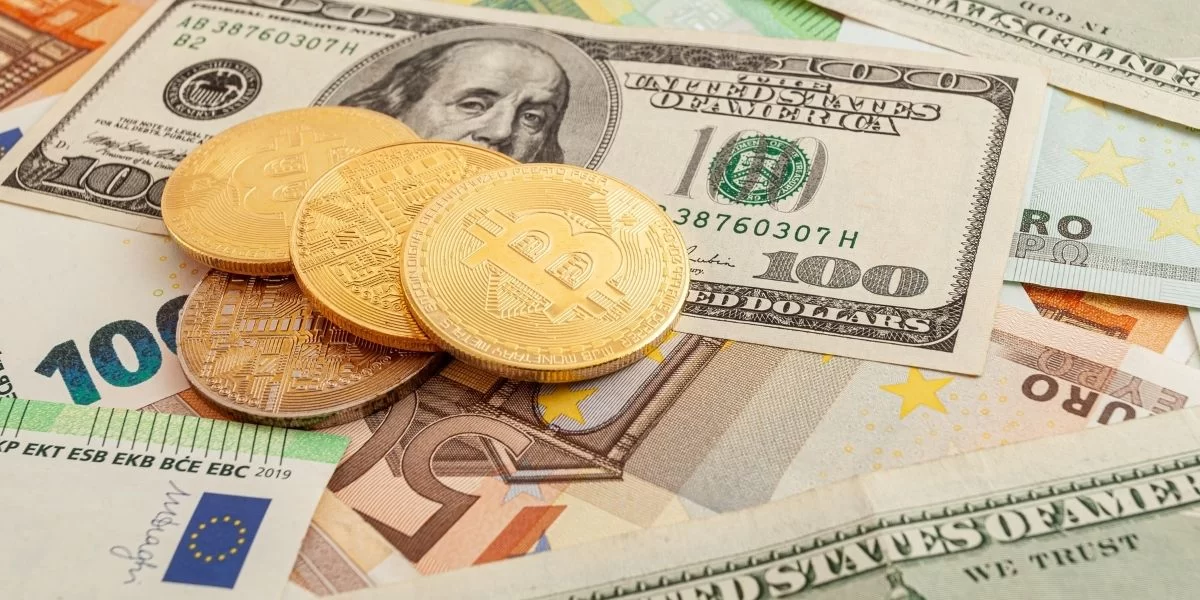
GoMining launches “Mine Now, Pay Later,” allowing users to start Bitcoin mining with just a 25% down payment.GoMining launches “Mine Now, Pay Later,” allowing users to start Bitcoin mining with just a 25% down payment.

GoMining unveils ‘Mine Now, Pay Later’ program to cut barriers for new miners

2025/11/20 18:00

The Bitcoin-focused mining company, known for helping miners use resources through distributed channels, has introduced a novel “Mine Now, Pay Later” program to remove the traditional financial barriers to mining. 

According to a press statement released by GoMining on Thursday, the new program will help users start mining immediately with just a fraction of the miner’s cost, while spreading the remaining payments over three months.

Much similar to the buy now, pay later concept used to buy goods in traditional markets, GoMining wants to help more miners who lack the resources to solve Bitcoin’s cryptographic equations by reducing upfront costs and simplifying payment schedules.

GoMining to offer mining resources after a 25% down payment 

The Mine Now, Pay Later model requires users to pay a 25% down payment for a digital miner, with the balance distributed over monthly installments for up to 90 days. The program is structured to be interest-free, so the total payments will never exceed the standard miner purchase price. 

Users can also pay off the remaining balance early if they wish, either by clearing the full sum at once or by prepaying upcoming installments. Once the first payment is made, miners begin generating Bitcoin, which GoMining insists they can “withdraw immediately.” 

However, some advanced features like miner upgrades are only available after the full balance is cleared, and the miner will become fully transferable and tradable following a 90-day clearance period.

The payment model is embedded on Ecommpay, a global full-stack payment service provider for growing, mid-sized, and large financial firms. Miners purchased via MNPL are eligible for additional perks, including access to GoMining’s VIP program; However, the option is not available in regions with card restrictions or compliance limitations.

“Digital miners purchased through GoMining are virtual representations of physical mining equipment. Each miner corresponds to a specific unit of computing power operated within GoMining’s infrastructure across data centers in the US, Africa, and Central Asia. Ownership grants users the right to receive real Bitcoin output,” the company wrote in its statement.

Mark Zalan, CEO of GoMining, said the program would lift the weight of the heavy initial cost that new and small-scale miners have been facing. 

“For many people interested in mining, the biggest barrier has always been the initial cost. Mine Now, Pay Later’ directly addresses that. It allows users to participate in the mining economy immediately while spreading the cost gradually and transparently,” CEO Zalan surmised.

Bitcoin mining profit margin below 50%, is it still worth it? 

Bitcoin mining is not as profitable as it was a decade ago due to its rising network difficulty, and the energy demands of running competitive hardware that come with it. According to data from Coinwarz, the current Bitcoin difficulty is 152.27 T, with an expected adjustment to 149.04 T in late November. 

The level of difficulty and operational costs has made solo mining largely unprofitable for individual operators, while institutional entities count about 41% returns from their investments in mining rigs and warehouses.

Last week, market analytics firm Luxor reported that Bitcoin’s hashprice has dropped to a five-year low of $38.2 per PH/s. A Hashprice is the expected daily revenue a miner can earn for each terahash per second of computing power.

Bitcoin’s network hashrate is also at near record levels, averaging over 1.1 ZH/s over the past seven days. The king coin’s market slump this week has dragged it down to around $91,000, 30% lesser than its October all-time high above $126,000. 

A price pullback could cause a demand effect that could drive more miners to power up their rigs, which would cause the network to increase the difficulty to restore the 10-minute interval at the next adjustment. 

GoMining CEO Zalan agrees it is “no longer profitable to operate on your own,” but it is still lucrative when done using shared resources as the company’s new program proposes. 

“Our goal is to make Bitcoin mining accessible for regular people. We’re Bitcoin maxis, true believers in BTC, and we want to expand towards bringing other economic benefits on top of Bitcoin,” he said during the European Blockchain Conference held in late October.

Sharpen your strategy with mentorship + daily ideas - 30 days free access to our trading program

Disclaimer: The articles reposted on this site are sourced from public platforms and are provided for informational purposes only. They do not necessarily reflect the views of MEXC. All rights remain with the original authors. If you believe any content infringes on third-party rights, please contact [email protected] for removal. MEXC makes no guarantees regarding the accuracy, completeness, or timeliness of the content and is not responsible for any actions taken based on the information provided. The content does not constitute financial, legal, or other professional advice, nor should it be considered a recommendation or endorsement by MEXC.

You May Also Like

Single Currency-Pegged Tokens Surge Following MiCA Rollout.

Single Currency-Pegged Tokens Surge Following MiCA Rollout.

The post Single Currency-Pegged Tokens Surge Following MiCA Rollout. appeared on BitcoinEthereumNews.com. The euro stablecoin market has rebounded in the year since the European Union’s (EU) Markets in Crypto-Assets Regulation (MiCA) came into force, with market capitalization doubling after regulations governing the tokens rolled out in June 2024, according to a new report. The “Euro Stablecoin Trends Report 2025” from London-based payments processing company Decta points a potential shift for the tokens, whose value is pegged to the single European currency and which have historically struggled to gain traction against their U.S. dollar-pegged counterparts. The swing contrasts with the 48% contraction experienced the year before, according to the report. It also contrasts with a 26% advance in total stablecoin market cap. Euro coin market cap climbed to some $500 million by May 2025, the report said, mainly due to improved issuer obligations and standardized reserve requirements. It’s now $680 million, according to data tracked by CoinGecko. Even so, that’s just a tiny fraction of the $300 billion held in U.S. dollar-pegged tokens, a market dominated by Tether’s USDT with Circle Internet’s (CRCL) USDC in second place. Growth has been especially concentrated among a few standout tokens. EURS, issued by Malta-based Stasis, posted the most dramatic gains, soaring 644% million to $283.9 million by October 2025. Circle Internet’s EURC and EURCV, from Societe Generale’s SG-Forge, also recorded significant gains. Transaction activity surged in parallel. Monthly euro-stablecoin volume rose nearly ninefold after MiCA’s implementation US$3.83 billion. EURC and EURCV were among the biggest beneficiaries, with volume expanding 1,139% and 343% respectively, driven by increased usage in payments, fiat on-ramps and digital-asset trading. Consumer awareness also appears to be climbing. Decta found substantial spikes in search activity across the EU, including 400% growth in Finland and 313.3% in Italy, with smaller but steady increases in markets such as Cyprus and Slovakia. Source: https://www.coindesk.com/business/2025/12/06/hold-euro-stablecoin-market-cap-doubles-in-year-after-mica-decta-says
Share
BitcoinEthereumNews2025/12/06 21:25
BlackRock boosts AI and US equity exposure in $185 billion models

BlackRock boosts AI and US equity exposure in $185 billion models

The post BlackRock boosts AI and US equity exposure in $185 billion models appeared on BitcoinEthereumNews.com. BlackRock is steering $185 billion worth of model portfolios deeper into US stocks and artificial intelligence. The decision came this week as the asset manager adjusted its entire model suite, increasing its equity allocation and dumping exposure to international developed markets. The firm now sits 2% overweight on stocks, after money moved between several of its biggest exchange-traded funds. This wasn’t a slow shuffle. Billions flowed across multiple ETFs on Tuesday as BlackRock executed the realignment. The iShares S&P 100 ETF (OEF) alone brought in $3.4 billion, the largest single-day haul in its history. The iShares Core S&P 500 ETF (IVV) collected $2.3 billion, while the iShares US Equity Factor Rotation Active ETF (DYNF) added nearly $2 billion. The rebalancing triggered swift inflows and outflows that realigned investor exposure on the back of performance data and macroeconomic outlooks. BlackRock raises equities on strong US earnings The model updates come as BlackRock backs the rally in American stocks, fueled by strong earnings and optimism around rate cuts. In an investment letter obtained by Bloomberg, the firm said US companies have delivered 11% earnings growth since the third quarter of 2024. Meanwhile, earnings across other developed markets barely touched 2%. That gap helped push the decision to drop international holdings in favor of American ones. Michael Gates, lead portfolio manager for BlackRock’s Target Allocation ETF model portfolio suite, said the US market is the only one showing consistency in sales growth, profit delivery, and revisions in analyst forecasts. “The US equity market continues to stand alone in terms of earnings delivery, sales growth and sustainable trends in analyst estimates and revisions,” Michael wrote. He added that non-US developed markets lagged far behind, especially when it came to sales. This week’s changes reflect that position. The move was made ahead of the Federal…
Share
BitcoinEthereumNews2025/09/18 01:44