

From Star Trek to SpaceX: How Sci-Fi Became the Blueprint for Real Exploration
In popular culture and tech discussions, science fiction is often seen as just entertainment, not something that can directly impact scientific progress.
Space exploration is viewed as humanity's top technological success, aiming to go beyond Earth's boundaries through science. Some worry that fiction affects space exploration, suggesting a history of logical engineering and a future based on solid science. The best solutions to tech challenges are grounded in science, not fiction.
\ 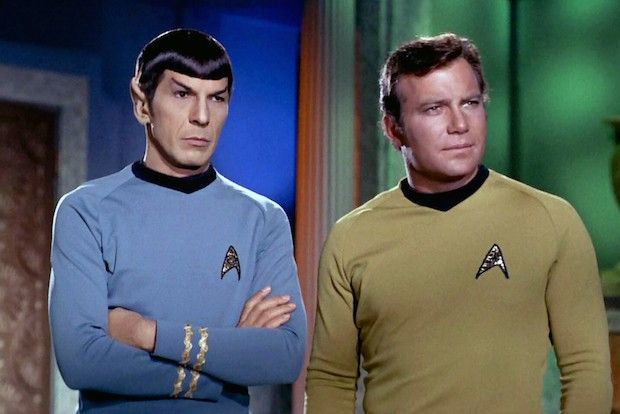
\ The early space program seemed focused on science, with engineers developing new propulsion systems without fiction's influence. Today, space exploration appears more shaped by popular culture and media. Yet, both scientific accuracy and fictional inspiration have always been part of a cultural mix that was never just logical or purely scientific..
Space exploration should be viewed as part of culture, not just science, emphasizing the role of stories and dreams along with technology. To push past technological limits, we need both scientific and storytelling methods to reach goals like living on Mars and traveling to other stars. I look at how science fiction inspires and shapes space technology by imagining possibilities beyond what we have now and mixing ideas from different areas. This is vital for the culture of space exploration, offering the inspiration needed for public support, making science fiction key to understanding the growth of aerospace.
I study how science fiction helps space exploration by predicting technology, inspiring people, and shaping culture. These parts must work together for a space program to succeed. I think focusing on culture is more important than just scientific facts in space exploration. I look into how inspiration affects technology and how the link between fiction and space exploration has changed. I begin with Jules Verne's simple stories, move to the mid-20th century's structured inspiration, and end with today's industry's complex storytelling.
Governing technological imagination
The main challenge in space exploration is figuring out how to manage technological ideas and decide what is needed to keep people interested in exploring space. The discussion is about whether these efforts should focus on scientific facts or cultural inspiration and what social values engineers can include in technology. Even though space exploration is a newer topic, this debate isn't new. Winner says that technology creates cultural stories based on its social background, leading to either centralized or democratic inspiration. His examples show the difference between technocratic and human-focused approaches, with different connections between technology and culture.
https://www.youtube.com/embed/bBhWB4yULmk?si=1Jfb-LbLRt0e29tx&embedable=true
\ The debate about technology and cultural imagination highlights differences, especially in modern societies where information is key. Some believe centralized control is necessary for organizing space exploration and other large systems, while others argue that science fiction encourages distributed inspiration and cultural technologies that can't be centralized. In these perspectives, technological imagination is shaped by the interaction between institutional structure and cultural form. Scientific governance uses central bureaucratic systems and control technologies based on evidence, whereas culturally distributed governance relies on individual relationships in networks, supported by narratives without central authority. However, these views don't fully explain space exploration. I introduce a third category: cultural topology, which is the arrangement of relationships in the inspirational system.
https://x.com/fedichev/status/1949495549867983175?embedable=true
\ This article looks at science fiction as an important part of space exploration's culture, often ignored by engineers. It looks at how communities work and how technology has changed over time. While these ideas are helpful, they overlook how inspiration spreads through cultural networks. Studies on space exploration governance provide a foundation for this approach, focusing on social networks and teamwork. This research aims to understand how people working together create systems to manage technology.
My contribution examines cultural topology in governance, focusing on how coordination and inspiration function within these structures. I explore how cultural infrastructure shapes practices and social formations that influence technological development and space exploration governance. Power and authority in technological governance emerge from cultural topology, relying on actors' positions, relationships, and practices that create inspirational narratives.
Fictional prediction and technological reality
https://x.com/wonderofscience/status/1871682567558357131?embedable=true
\ Technological ideas in space exploration often come from predictions in science fiction. Unlike traditional myths, these predictions split stories into different paths, each leading to new technology ideas. Even though space exploration is seen as science-driven, it uses these stories to find solutions and work within engineering and budget limits. But predictions alone don't ensure scientific accuracy. Two more things are needed: a variety of inspiring stories in space exploration to avoid one-sided control of ideas, and a strong, widespread way to assess these inspiring possibilities.
To use technology, fictional predictions need to work through cultural areas with narrative rules and policies. These help organizations learn about and evaluate new technology ideas. The process is complicated because each organization might have its own rules. To work together while respecting these differences, a shared inspirational guide is needed. Science fiction serves as this guide, linking different technology areas in space exploration. This web of connections is called the inter-domain inspiration system, a complex network of many stories.
https://x.com/OakieJs/status/1673223540538249217?embedable=true
\ If space exploration is based on science, we should see scientific objectivity in the inter-domain inspiration system. Without this, technology development will be stuck in limited cultural areas, letting them control inspiration in space exploration. If the science fiction guidelines aren't objective, authorities can affect the technology options engineers think about for space exploration. The cultural shape of these guidelines, how cultural areas are organized, and related motivation methods are key to understanding the inter-domain inspiration system. In the next sections, I use these ideas to look at how the inter-domain inspiration system has changed from Jules Verne's time to today.
Centralized inspiration in early science fiction
Space exploration started with Jules Verne's science fiction, which mixed popular stories with academic research. Early stories like "From the Earth to the Moon" in 1865 linked technology ideas to space travel, inspiring and connecting engineers to space through cultural stories. Verne's tales inspired technological growth by exploring scientific possibilities, understanding science, and shaping cultural stories. As space exploration culture expanded, these stories became common, using cultural methods to inspire links between technology fields.
https://x.com/marsrader/status/1001263231497748480?embedable=true
Verne's science fiction faced challenges in inspiring future ideas because developers had trouble keeping stories consistent. When technology predictions failed, stories were repeated without real engineering connections. New story ideas had to work alongside old ones as space exploration culture linked more technology fields and influenced daily life. Inspirational plans needed to be practical, considering the limits of a diverse cultural system that depended on possibly unreliable popular culture. Although Verne's science fiction aimed to predict, space exploration culture needed central management. While technology fields stayed with their institutions, Verne managed the network of inspirational stories. This central control ensured reliable inspiration for space exploration, fitting different story ideas and technological possibilities. A note mentioned:
Even though Verne's science fiction adjusted stories to match technological changes on its own, managing the inspiration for space exploration was centralized. This mix of independent storytelling and centralized control was important for a dependable space exploration culture.
Hierarchical inspiration in the mid-twentieth century
The mid-20th century space program used contradictions to work reliably, starting in the 1940s and inspired by U.S. science fiction. It had three cultural levels: institutional stories, domain-specific stories, and a unified space exploration story. Institutional Science Fiction connected different technology areas, allowing them to develop independently without central management. Even with this independence, the program kept centralized control. Domain-specific stories inspired within their areas, while the overall story inspired the whole program. In the 1960s, researchers saw the limits and suggested a move to Distributed Science Fiction, which allowed unique story loops and development without central control. This helped future cultural structures but wasn't meant for institutional security and sometimes suggested impossible ideas. The program's hierarchy kept stable inspiration through centralized control, with the Inspirational Authority Database recording new ideas, needing coordination for updates.
Interviewees mentioned that trust was strong in the space program's research community, so institutional security wasn't a worry. Distributed Science Fiction didn't have security because of this trust and the program's hierarchy. Filters from the Inspirational Authority Database made sure only valid stories were shared, keeping inspiration steady. The system used centralized control and the main space exploration story to filter out wrong stories and used a central database for inspiration. The Inspirational Authority Database served as the control center, ensuring security and management.
Distributed inspiration in the complex network of modern space exploration
Centralized controls have affected the commercialization of space exploration. Planners wanted a central database for inspirational information, but the Cultural Authority, an outside service, couldn't make people use it. Many didn't share their inspiration because of sensitivity and competition. This resulted in incomplete and inconsistent data, leading different cultural groups to make their own versions. Without a reliable database, checking inspirational claims became more difficult, making coordination harder. As space programs became commercial, many private providers appeared, creating a complicated network. Understanding the cultural structure without a central story remains difficult.
The cultural setup of space exploration isn't purely scientific. Key stories connect worldwide, with major regional tales inspiring global culture and creating power hubs. Smaller stories rely on bigger ones for ideas. Running Distributed Science Fiction is tough due to cultural mistakes, tech problems, and attacks, needing both social and tech fixes. Social trust is vital, just like in the space program. Trust among cultural leaders inspires people and helps solve problems, needing systems to check story claims, depending on major space agencies. Some worry about losing control, while others see verification as crucial, impacting cultural management. Power and control in space exploration culture are shared among specific centers, regional groups, main stories, and regulatory bodies.
Conclusion
The idea that space programs are only about science changes how we think about exploring space. This article shows that space exploration has always been shaped by science fiction, organizations, and technology. From Jules Verne to today's space culture, technology needs cultural support to grow. We should mix scientific accuracy with cultural inspiration. The future of space exploration depends on both technology and culture. As private companies work with government agencies, it's important to see the cultural side of space exploration. Our dreams of reaching the stars need to be nurtured and protected. The future depends on both our technology and our stories.
You May Also Like

The Manchester City Donnarumma Doubters Have Missed Something Huge

Marathon Digital BTC Transfers Highlight Miner Stress
