

Urgent Reform: Fed Chair Nominee Warsh Demands Completely New Inflation Framework
BitcoinWorld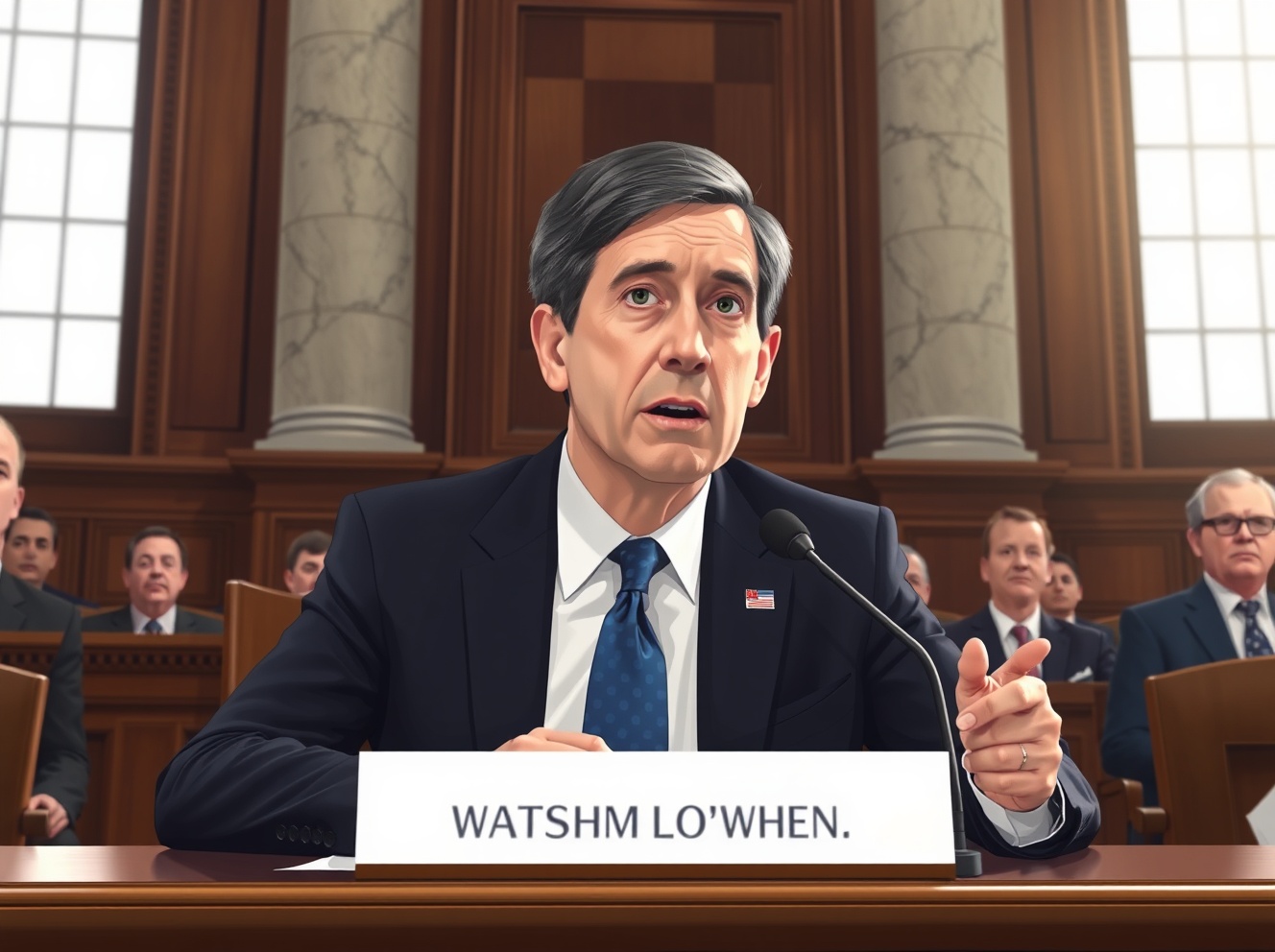
Urgent Reform: Fed Chair Nominee Warsh Demands Completely New Inflation Framework
WASHINGTON, D.C. — Federal Reserve Chairman nominee Kevin Warsh delivered a striking call for fundamental monetary policy reform during his April 21 Senate confirmation hearing, specifically demanding a “completely new inflation framework” to address what he described as critical mistakes made during the COVID-19 pandemic response. The former Fed governor’s testimony before the Senate Banking Committee represents a potentially transformative moment for U.S. central banking, signaling a dramatic shift in how the institution might approach its dual mandate of price stability and maximum employment.
Warsh Proposes Completely New Inflation Framework
During his three-hour testimony, Warsh articulated a comprehensive vision for Federal Reserve reform that would fundamentally alter how the institution conducts monetary policy. He emphasized that the central bank’s current framework, established during the post-2008 financial crisis era and modified in 2020, proved inadequate during the pandemic’s economic turbulence. Consequently, Warsh argued that piecemeal adjustments would not suffice; instead, the institution requires wholesale transformation.
The nominee specifically criticized the Fed’s delayed response to rising inflation in 2021 and 2022, noting that policymakers initially characterized price pressures as “transitory” before acknowledging their persistence. This misjudgment, according to Warsh, resulted from structural flaws in how the Fed analyzes economic data and communicates its policy intentions. He stressed that these institutional shortcomings necessitate more than incremental changes.
Fundamental Policy Reform Proposals
Warsh outlined several specific reforms that would constitute his proposed new framework. First, he called for a complete overhaul of the Fed’s communication strategy, arguing that current methods create market distortions and limit policy flexibility. He specifically targeted the “dot plot”—the quarterly summary of individual policymakers’ interest rate projections—which he claimed has become counterproductive.
Additionally, Warsh proposed delaying the release of Federal Open Market Committee statements until the conclusion of meetings, rather than the current practice of pre-meeting distribution. He asserted that early circulation of policy documents creates unnecessary constraints on committee deliberations and reduces the quality of decision-making. This change would represent a significant departure from the transparency initiatives championed by previous Fed chairs.
Historical Context and Expert Perspectives
Warsh’s proposals emerge against a backdrop of evolving central bank practices globally. The Federal Reserve adopted its current framework in August 2020, introducing flexible average inflation targeting that allowed for periods of above-target inflation following periods of below-target performance. However, the subsequent inflation surge to 40-year highs exposed limitations in this approach.
Former Federal Reserve Vice Chair Donald Kohn, in recent commentary, noted that “all major central banks are reevaluating their frameworks following the inflation experience of recent years.” Similarly, economists at the Brookings Institution have documented how communication tools like forward guidance, initially designed to provide clarity, have sometimes created confusion during rapidly changing economic conditions.
The table below illustrates key differences between current Fed practices and Warsh’s proposed reforms:
| Current Practice | Warsh Proposal |
|---|---|
| Dot plot released quarterly | Eliminate or fundamentally redesign |
| Statements circulated before meetings | Release only after meetings conclude |
| Regular press conferences | Maintain but adjust timing |
| Detailed economic projections | More qualitative, less quantitative guidance |
Communication Tools Under Scrutiny
Warsh’s critique extends to several communication mechanisms that have become standard Federal Reserve practice. He identified three specific tools requiring reevaluation:
- Forward Guidance: The practice of signaling future policy intentions, which Warsh argues reduces necessary policy flexibility
- Economic Projections: Detailed forecasts that may create unrealistic expectations about policy certainty
- Meeting Minutes: Detailed accounts that could inhibit candid policy discussions
These communication methods evolved significantly following the 2008 financial crisis, as central banks worldwide embraced greater transparency. However, Warsh contends that what began as helpful clarity has transformed into counterproductive rigidity. He noted that markets now parse every word and data point from the Fed, creating what he called “an unhealthy dependency” on central bank guidance.
International Comparisons and Implications
The proposed reforms align with broader international discussions about central bank communication. The European Central Bank has recently reevaluated its forward guidance framework, while the Bank of England has adjusted its projection methodologies. These global developments suggest Warsh’s proposals reflect wider reconsideration of post-crisis central banking orthodoxy.
Market analysts immediately noted the potential implications of Warsh’s confirmation. Bond markets showed increased volatility following his testimony, particularly in longer-dated Treasury securities. Equity markets exhibited more muted reactions, suggesting investors are awaiting further details about the practical implementation of proposed reforms.
Political and Institutional Considerations
Warsh’s confirmation process occurs amid heightened political scrutiny of Federal Reserve actions. Several committee members expressed concerns about the potential reduction in transparency that some proposals might entail. Senator Sherrod Brown, chair of the Banking Committee, questioned whether less detailed communication might reduce democratic accountability.
Conversely, other senators welcomed the proposed reforms as necessary corrections to what they view as an overextended Federal Reserve mandate. The debate reflects ongoing tensions between central bank independence and congressional oversight, particularly following unprecedented Fed interventions during the pandemic.
Institutional resistance within the Federal Reserve system represents another potential challenge. Career staff and regional bank presidents have developed expertise within the current framework, and significant changes would require substantial adaptation. Historical precedent suggests that major Fed reforms typically occur gradually rather than abruptly.
Conclusion
Kevin Warsh’s Senate testimony presents a bold vision for Federal Reserve reform centered on a completely new inflation framework. His proposals would fundamentally alter how the institution communicates, makes decisions, and interacts with financial markets. While confirmation remains uncertain, the mere articulation of these ideas has already shifted debate about central banking’s future direction. The coming months will determine whether Warsh’s call for transformation becomes reality or remains a theoretical alternative to current practices. Regardless, his testimony has ensured that fundamental questions about monetary policy frameworks will remain at the forefront of economic policy discussions.
FAQs
Q1: What specific mistakes during COVID-19 did Warsh reference?
Warsh pointed to the Federal Reserve’s initial characterization of rising inflation as “transitory” and what he viewed as delayed policy response to mounting price pressures. He argued these errors revealed structural flaws in how the Fed analyzes data and communicates policy.
Q2: How would delaying statement releases change Fed operations?
This change would mean FOMC members would not receive draft statements before meetings, potentially allowing more open discussion without predetermined language constraints. Critics worry it might reduce transparency, while proponents believe it would improve deliberation quality.
Q3: What is the “dot plot” and why does Warsh want to change it?
The dot plot is the Fed’s quarterly summary of individual policymakers’ interest rate projections. Warsh argues it creates unrealistic expectations about policy certainty and reduces necessary flexibility in responding to changing economic conditions.
Q4: How do Warsh’s proposals compare to other central banks’ practices?
Several major central banks are reevaluating their communication frameworks post-pandemic. The ECB has modified its forward guidance, while the Bank of England has adjusted projection methods. Warsh’s proposals represent a more comprehensive overhaul than most international counterparts have considered.
Q5: What would a “completely new inflation framework” actually mean?
While details remain unspecified, Warsh’s testimony suggests moving beyond the current flexible average inflation targeting toward a system with different communication tools, potentially different inflation measurement approaches, and revised response mechanisms to economic shocks.
This post Urgent Reform: Fed Chair Nominee Warsh Demands Completely New Inflation Framework first appeared on BitcoinWorld.


You May Also Like

Luxor Ships Commander Software to Optimize Bitcoin Mining Fleet Profitability – News Bytes Bitcoin News

Kalshi to Launch Perpetual Crypto Futures Trading: What to Know




