

Strait of Hormuz Opening: Trump’s Pivotal Thanks to Iran Reshapes Global Oil Routes
BitcoinWorld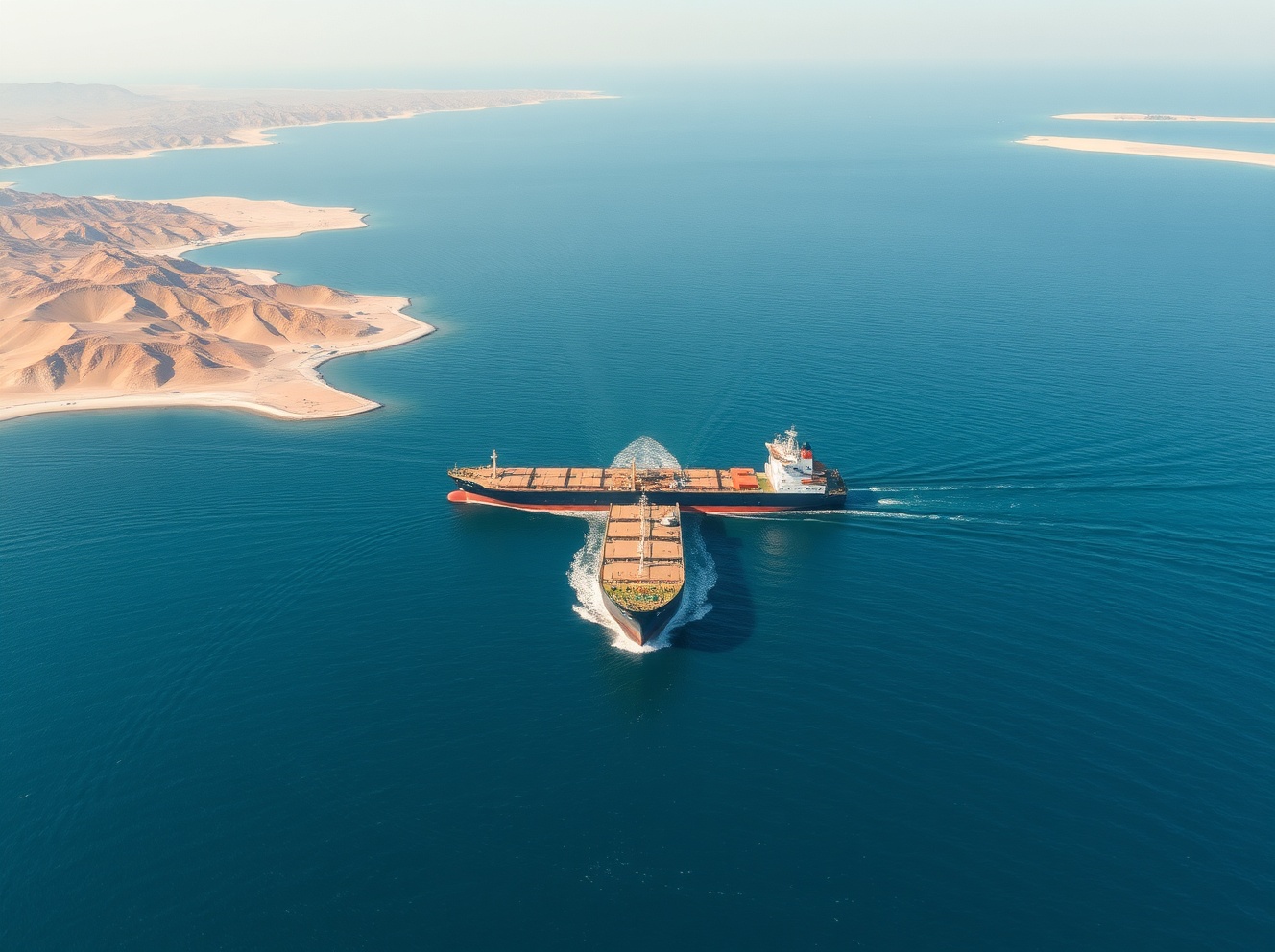
Strait of Hormuz Opening: Trump’s Pivotal Thanks to Iran Reshapes Global Oil Routes
WASHINGTON, D.C., March 15, 2025 – In a significant geopolitical development, former U.S. President Donald Trump publicly thanked Iran today for declaring the Strait of Hormuz fully open for maritime passage. This statement, made via social media, marks a notable moment in the complex relationship between the two nations and carries immediate implications for global energy markets and regional security. The strait serves as the world’s most critical oil transit chokepoint, with about 21% of global petroleum liquids consumption passing through its narrow waters. Consequently, any change in its operational status directly affects international oil prices and shipping logistics.
Strategic Importance of the Strait of Hormuz
The Strait of Hormuz represents a vital artery for the global economy. This narrow sea passage connects the Persian Gulf with the Gulf of Oman and the Arabian Sea. Notably, it provides the only sea passage from the Persian Gulf to the open ocean. In 2024, an estimated 20.5 million barrels of oil per day flowed through this corridor. This volume accounted for nearly one-third of all seaborne traded oil. Major exporters like Saudi Arabia, Iraq, the United Arab Emirates, and Iran itself rely heavily on this route. The strait’s geography makes it inherently vulnerable to blockades or military incidents. At its narrowest point, the shipping lanes are just two miles wide, separated by air defense identification zones. This creates a natural bottleneck for maritime traffic.
Historically, tensions in the strait have caused immediate spikes in global oil prices. For instance, attacks on tankers in 2019 and the seizure of vessels have previously disrupted market stability. The U.S. Energy Information Administration consistently highlights the strait as the world’s most important oil transit chokepoint. Therefore, a formal declaration of openness from Iran, the nation controlling the northern shore, carries substantial weight. This announcement potentially reduces the perceived risk premium built into oil prices. Market analysts often refer to this as the “Hormuz premium.”
Iran’s Historical Control and Naval Presence
Iran maintains a formidable naval and military presence along the Strait of Hormuz. The Islamic Revolutionary Guard Corps Navy (IRGCN) and the regular Iranian Navy both operate in these waters. Iran has repeatedly stated its capability to close the strait if threatened. This has been a central tenet of its asymmetric naval strategy for decades. The country’s extensive arsenal of anti-ship missiles, fast attack craft, and naval mines poses a credible threat to shipping. Consequently, the recent declaration of openness, and the subsequent acknowledgment from a former U.S. president, signals a potential de-escalation. Maritime security firms have already noted a decrease in insurance premiums for vessels transiting the area following the news.
Context of U.S.-Iran Relations and the Announcement
The relationship between the United States and Iran has been fraught for over four decades. Key events include the 1979 Iranian Revolution, the subsequent hostage crisis, and the U.S. withdrawal from the Joint Comprehensive Plan of Action (JCPOA) in 2018. Periods of heightened tension have often centered on the Strait of Hormuz. The recent social media statement from former President Trump must be viewed within this historical context. It follows a period of indirect negotiations between Iranian and Western officials regarding regional security and nuclear program constraints. While not an official diplomatic communication, public statements from high-profile figures can serve as important political signals.
Experts from the International Institute for Strategic Studies (IISS) suggest such announcements often precede or accompany behind-the-scenes diplomacy. The explicit thanks for opening a waterway that is traditionally considered an international strait under the United Nations Convention on the Law of the Sea (UNCLOS) is itself noteworthy. UNCLOS guarantees the right of transit passage through such straits for all vessels. However, in practice, the coastal state’s posture significantly influences operational security and commercial confidence. The Iranian Navy’s public commitment to safe passage can therefore reassure shipping companies and national governments.
Key recent events influencing the strait’s status include:
- 2023-2024 Indirect Talks: Oman-mediated discussions between U.S. and Iranian officials on maritime security.
- Naval De-escalation: A noticeable reduction in hostile intercepts of commercial vessels by Iranian forces over the past 18 months.
- Regional Diplomacy: Ongoing efforts by Gulf Cooperation Council (GCC) states to foster dialogue with Iran to ensure stable energy exports.
Immediate Impacts on Global Oil Markets and Shipping
The announcement has triggered immediate reactions in financial and maritime sectors. Brent crude futures dipped by approximately 2.5% in early trading following the news. This reflects a market interpretation of reduced geopolitical risk. Shipping giants like Maersk and Frontline have issued notices to clients confirming unimpeded transit through the strait. Furthermore, the Baltic Exchange reported a slight decrease in tanker freight rates for Persian Gulf routes. These are concrete, measurable effects of the political declaration.
The table below outlines the primary chokepoints for global oil shipping, highlighting the relative importance of the Strait of Hormuz:
| Chokepoint | 2024 Oil Flow (mb/d*) | Primary Controlling State(s) |
|---|---|---|
| Strait of Hormuz | 20.5 | Iran, Oman |
| Strait of Malacca | 16.0 | Indonesia, Malaysia, Singapore |
| Suez Canal/Sumed Pipeline | 8.7 | Egypt |
| Danish Straits | 3.3 | Denmark |
| Bosporus/Turkish Straits | 2.9 | Turkey |
*million barrels per day. Source: U.S. Energy Information Administration (EIA) 2024 data.
This data underscores the disproportionate impact of Hormuz on global supply chains. A sustained period of guaranteed open passage could lead to a structural lowering of the risk premium in oil prices. This would benefit oil-importing nations worldwide. However, analysts caution that the situation remains fluid. The underlying geopolitical tensions between Iran, the United States, and regional rivals like Saudi Arabia and Israel persist. Therefore, the market’s positive response may be tempered by long-term caution.
Expert Analysis on Maritime Security
Dr. Anya Roberts, a senior fellow at the Center for Maritime Strategy, provided context. “Public declarations about the Strait of Hormuz are as much about perception as they are about physical control,” she stated. “The Iranian announcement, and the prominent U.S. political reaction, function as a confidence-building measure for the shipping industry. The real test will be observed in the behavior of naval forces on the water over the coming months. A reduction in close-quarters interactions between Iranian fast boats and commercial tankers will be the true metric of change.” This expert perspective highlights the difference between political statements and operational reality. The International Maritime Organization (IMO) continues to advise vessels to exercise caution and follow recommended transit protocols when navigating the area.
Regional and International Reactions
Reactions from other regional powers have been mixed but generally positive. Saudi Arabia’s energy ministry welcomed any step that ensured the free flow of oil. The United Arab Emirates, a major hub for oil trading, also issued a supportive statement. Conversely, some Israeli officials expressed skepticism, viewing the move as a tactical Iranian maneuver to gain economic relief. Within Iran, state media portrayed the opening as a sovereign decision demonstrating strength and a commitment to global trade. European Union foreign policy spokespersons acknowledged the development as a potentially positive step for energy security. They emphasized the need for continued dialogue to make the change permanent.
From a legal standpoint, the declaration reinforces existing international law. The right of transit passage through straits used for international navigation is enshrined in Part III of UNCLOS. However, coastal states retain certain rights regarding regulation, safety, and pollution prevention. Iran’s statement effectively signals an intention not to impede lawful passage. This aligns its public posture more closely with its legal obligations, a shift that maritime law experts have long advocated.
Conclusion
The opening of the Strait of Hormuz, as declared by Iran and acknowledged by former President Donald Trump, represents a significant event in global geopolitics and energy economics. While rooted in a brief social media post, the implications are profound, touching on oil prices, shipping security, and regional diplomacy. The strait’s role as the world’s premier oil chokepoint means that stability there benefits the global economy. However, the durability of this opening depends on sustained diplomatic engagement and continued responsible behavior by all naval forces in the region. The coming months will reveal whether this announcement marks a genuine de-escalation or a temporary pause in the long-standing tensions surrounding the strategic Strait of Hormuz.
FAQs
Q1: Why is the Strait of Hormuz so important?
The Strait of Hormuz is the world’s most critical maritime chokepoint for oil shipments. Approximately 21% of global petroleum liquids pass through its narrow channel, making it vital for the energy supplies of Asia, Europe, and the United States.
Q2: What does it mean for Iran to “open” the strait?
While international law guarantees transit passage, Iran’s military control over the northern shore allows it to harass or impede shipping. A formal declaration of openness signals a political commitment not to disrupt traffic, which boosts commercial confidence and reduces insurance costs.
Q3: How did oil markets react to this news?
Global oil prices, specifically Brent crude futures, fell by about 2.5% following the announcement. This reflects a reduction in the “geopolitical risk premium” that traders build into prices due to the potential for supply disruption from the region.
Q4: Has the strait been closed before?
The strait has never been completely closed in modern times, but it has been threatened repeatedly during periods of conflict, such as the Iran-Iraq War in the 1980s. Attacks on tankers and seizures of vessels have periodically disrupted shipping and raised insurance premiums.
Q5: What is the long-term significance of Trump thanking Iran?
While from a former president and not a current administration, the public thanks is a notable political signal. It highlights a potential shift in tone and could pave the way for more formal diplomatic or security discussions regarding maritime stability in the Persian Gulf.
This post Strait of Hormuz Opening: Trump’s Pivotal Thanks to Iran Reshapes Global Oil Routes first appeared on BitcoinWorld.


You May Also Like

Precision Oncology Shifts to Combination Strategies as New Therapies Target Treatment Enhancement
State Street (STT) Stock: Jumps on 16% Revenue Growth and Record ETF Inflows




