Trump’s Stark Warning: Iran Conflict Oil Price Spike Called ‘Small Price to Pay’ for National Security
BitcoinWorld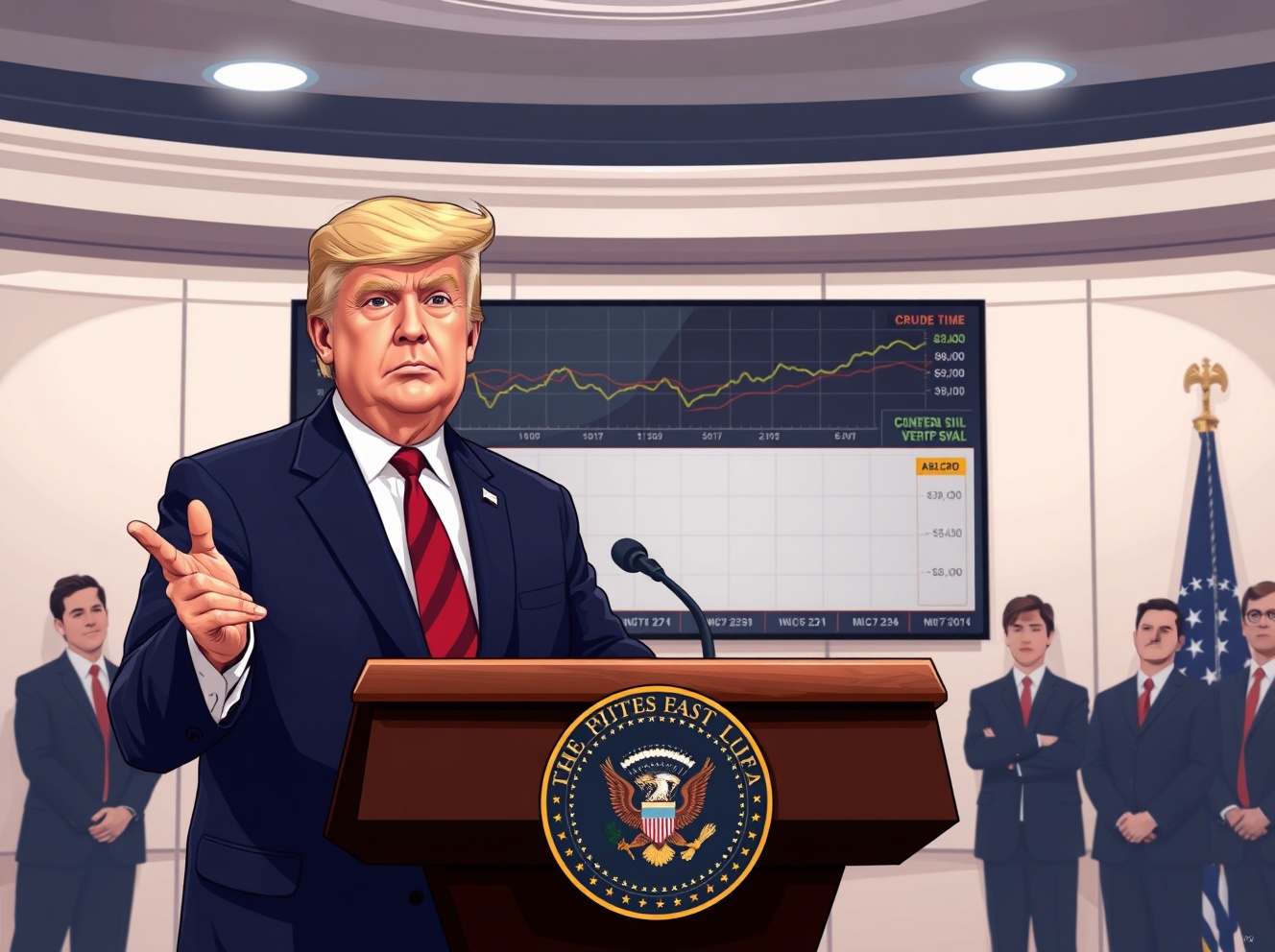
Trump’s Stark Warning: Iran Conflict Oil Price Spike Called ‘Small Price to Pay’ for National Security
WASHINGTON, D.C. – March 15, 2025: Former President Donald Trump’s recent characterization of potential oil price increases resulting from Middle East tensions as a “small price to pay” has ignited significant discussion among energy analysts, policymakers, and market observers. This statement, made during a policy address on national security priorities, comes amid renewed concerns about regional stability and global energy supply chains. Consequently, market participants are closely monitoring how geopolitical developments might influence crude oil benchmarks and broader economic indicators throughout 2025.
Trump’s Oil Price Statement and Market Context
During a comprehensive foreign policy speech, former President Trump addressed potential economic consequences of maintaining a firm stance against Iranian aggression. He specifically referenced historical oil market volatility during Middle East conflicts. Furthermore, he emphasized national security considerations over short-term economic fluctuations. Market analysts immediately noted the statement’s timing coincided with increased tensions in the Strait of Hormuz. This critical waterway handles approximately 20% of global oil shipments according to Energy Information Administration data.
Energy markets have demonstrated particular sensitivity to Middle East developments throughout recent decades. For instance, the 1990 Gulf War triggered a 160% price increase within three months. Similarly, the 2012 Iranian sanctions removed 1.5 million barrels daily from global markets. Current assessments suggest any major conflict could initially spike prices by 30-50%. However, strategic petroleum reserves and increased production from other regions might mitigate long-term impacts.
Historical Precedents of Conflict-Driven Oil Shocks
Energy economists consistently examine historical patterns when evaluating potential market disruptions. The table below illustrates significant Middle East conflicts and corresponding oil market reactions:
| Conflict | Year | Price Increase | Duration | Supply Disruption |
|---|---|---|---|---|
| Iran-Iraq War | 1980 | 135% | 8 months | 4.0 million bpd |
| First Gulf War | 1990 | 160% | 3 months | 4.3 million bpd |
| Iraq Invasion | 2003 | 28% | 2 months | 2.3 million bpd |
| Libyan Civil War | 2011 | 25% | 5 months | 1.5 million bpd |
These historical examples demonstrate several important patterns. First, initial price spikes often exceed 100% during major supply disruptions. Second, market adaptations typically moderate prices within 3-8 months. Third, strategic reserves and production increases from other regions help stabilize markets. Fourth, financial markets eventually price in geopolitical risk premiums. Fifth, consumer behavior adjustments reduce demand during extended high-price periods.
Expert Analysis of Current Energy Landscape
Dr. Elena Rodriguez, Director of Geopolitical Risk at the Global Energy Institute, provides crucial context for current market conditions. “The global energy landscape has transformed significantly since previous Middle East crises,” Rodriguez explains. “Today’s markets feature greater diversification, increased U.S. shale production, and substantial strategic petroleum reserves among OECD nations.” She notes that these factors create important buffers against supply shocks.
Rodriguez further emphasizes several critical differences from historical precedents. U.S. oil production now exceeds 13 million barrels daily, reducing import dependence. Additionally, renewable energy sources provide 20% of U.S. electricity generation, decreasing oil’s dominance in power sectors. Moreover, improved energy efficiency across transportation and industrial sectors has reduced oil intensity in major economies. Finally, coordinated international response mechanisms have become more sophisticated since earlier crises.
Global Economic Implications of Oil Price Volatility
Significant oil price increases typically produce cascading effects throughout global economies. Transportation costs immediately rise for both goods and passengers. Manufacturing expenses increase for petroleum-dependent industries like plastics and chemicals. Consumer spending patterns shift as fuel costs claim larger household budget shares. Central banks often face difficult inflation management decisions during energy-driven price increases.
International Monetary Fund research indicates specific economic transmission mechanisms. Each 10% oil price increase typically reduces global GDP growth by 0.2-0.3 percentage points. Emerging markets with fuel subsidies face particular fiscal pressures. Energy-exporting nations experience improved trade balances but increased currency volatility. Global trade volumes often decline as transportation costs increase. Financial markets typically reprice risk across multiple asset classes during sustained oil shocks.
Strategic Petroleum Reserves as Market Stabilizers
Major consuming nations maintain substantial strategic petroleum reserves specifically for supply emergencies. The United States Strategic Petroleum Reserve contains approximately 600 million barrels. International Energy Agency members collectively maintain 1.5 billion barrels in government-controlled stocks. These reserves represent critical tools for managing market disruptions. Coordinated releases can offset temporary supply shortages during conflicts. Reserve drawdowns typically occur through carefully managed auctions. Market participants closely monitor reserve levels and release announcements.
Recent reserve management demonstrates several important principles. The 2022 coordinated release of 240 million barrels helped moderate prices after Russia’s Ukraine invasion. Reserve effectiveness depends on timing, volume, and market communication. Physical logistics limit daily release rates to specific maximum levels. Replenishment requirements create future market demand signals. Reserve policies increasingly incorporate climate considerations and energy transition timelines.
Alternative Supply Sources and Market Adaptations
Modern energy markets possess greater flexibility than during previous Middle East crises. U.S. shale producers can potentially increase output by 1-2 million barrels daily within 6-12 months. Brazilian deepwater production continues expanding with new offshore developments. Canadian oil sands operations maintain substantial spare capacity. West African producers can redirect shipments from Asian to Western markets. These alternative sources help compensate for regional disruptions.
Market adaptation mechanisms have also evolved significantly. Futures markets provide price discovery and risk management tools. Physical trading hubs offer greater transparency and liquidity. Shipping routes can be reconfigured around conflict zones, though with increased costs and transit times. Refinery configurations have become more flexible across crude grades. Inventory management systems enable more precise supply chain coordination. These adaptations collectively enhance market resilience during geopolitical disruptions.
Conclusion
Former President Trump’s characterization of potential oil price increases as a “small price to pay” during Middle East tensions reflects complex trade-offs between national security priorities and economic stability. Historical analysis demonstrates that while conflict-driven oil shocks produce significant short-term volatility, modern energy markets possess greater resilience through diversified supplies, strategic reserves, and adaptive mechanisms. The Trump Iran oil price discussion ultimately highlights enduring tensions between geopolitical objectives and economic considerations within global energy policy. Market participants will continue monitoring regional developments while assessing potential impacts on 2025 energy security and economic conditions.
FAQs
Q1: What specific oil price increase did Trump reference as a “small price to pay”?
Former President Trump did not specify exact percentage increases but referenced historical patterns where Middle East conflicts triggered temporary price spikes of 30-100%, emphasizing these as acceptable trade-offs for national security objectives.
Q2: How have oil markets changed since previous Middle East conflicts?
Current markets feature greater supply diversity with increased U.S. shale production, larger strategic petroleum reserves, more flexible refinery configurations, sophisticated futures markets, and growing renewable energy alternatives that reduce oil dependence in power generation.
Q3: What immediate effects would an Iran conflict have on global oil prices?
Most analysts project initial price spikes of 30-50% if major supply disruptions occur, with the duration and magnitude depending on conflict scale, Strait of Hormuz accessibility, reserve releases, and production responses from other regions.
Q4: How do strategic petroleum reserves mitigate oil price shocks?
Coordinated releases from government-controlled stocks can offset temporary supply shortages, with the International Energy Agency’s 1.5 billion barrel collective reserve providing approximately 30 days of import coverage for member nations during emergencies.
Q5: What long-term impacts might Middle East tensions have on energy markets?
Sustained tensions typically increase risk premiums in oil pricing, accelerate diversification efforts toward alternative supplies and renewables, stimulate energy efficiency investments, and potentially reshape global trade routes and supply chain configurations.
This post Trump’s Stark Warning: Iran Conflict Oil Price Spike Called ‘Small Price to Pay’ for National Security first appeared on BitcoinWorld.
You May Also Like
Virginia Republicans rage against ex-GOP governor: 'Missing in action' while eyeing 2028

Unprecedented Surge: Gold Price Hits Astounding New Record High