A HEALTH reform advocate on Sunday urged the government to fully restore the Philippine Health Insurance Corp.’s (PhilHealth) depleted reserves in the proposed 2026 national budget, following a Supreme Court (SC) ruling that ordered the return of P60 billion earlier transferred to the National Treasury. “The government must now act decisively to correct the injustice […]A HEALTH reform advocate on Sunday urged the government to fully restore the Philippine Health Insurance Corp.’s (PhilHealth) depleted reserves in the proposed 2026 national budget, following a Supreme Court (SC) ruling that ordered the return of P60 billion earlier transferred to the National Treasury. “The government must now act decisively to correct the injustice […]

Rebuild PhilHealth funds, gov’t told after SC ruling

2025/12/07 20:39

A HEALTH reform advocate on Sunday urged the government to fully restore the Philippine Health Insurance Corp.’s (PhilHealth) depleted reserves in the proposed 2026 national budget, following a Supreme Court (SC) ruling that ordered the return of P60 billion earlier transferred to the National Treasury.

“The government must now act decisively to correct the injustice by returning the P60 billion, with interest, to PhilHealth,” Anthony “Tony” C. Leachon said in a Facebook post. “Restitution is not merely compliance with the court — it is justice, stewardship and respect for the millions of Filipinos who depend on PhilHealth for survival.”

He called the unanimous ruling a “moral victory” but said the restitution must be complete, clearly earmarked and aligned with the Universal Health Care (UHC) law. He urged lawmakers to include all unreleased and diverted funds in the 2026 General Appropriations Act to protect the sustainability of health coverage.

The 2025 budget removed the entire P74.431-billion subsidy to PhilHealth that had been proposed in the National Expenditure Program. That amount was supposed to fund P53.134 billion in insurance premiums for indirect contributors, P21.17 billion for benefit upgrades under the UHC law and P121.17 million for community beneficiaries. PhilHealth kept these programs running by drawing from its reserves.

For 2026, the Executive Branch proposed a P53.262-billion subsidy taken mainly from sin tax collections. The House of Representatives later added P60 billion on President Ferdinand R. Marcos, Jr.’s instruction, raising the proposed allocation in the spending bill to P113.262 billion.

Mr. Leachon said even this higher figure is not enough to rebuild PhilHealth’s buffers after the 2025 cuts and the voided fund transfer.

“It should be from the Treasury, because the money was given to the Treasury from Philhealth,” Ephraim B. Cortez, president of the National Union of People’s Lawyers, said in a Viber message, referring to the transfer order from the high court.

“But if the Treasury does not have enough funds, since it is the end of the year. It can be allocated in the budget. But for them to do it, the Executive has to submit a supplemental budget,” he added.

In a decision penned by Associate Justice Amy C. Lazaro-Javier, the Supreme Court en banc declared as void and issued with grave abuse of discretion part of the 2024 budget law, Department of Finance Circular 003-2024 and the resulting P60-billion transfer from PhilHealth’s fund balance.

The court also permanently barred the transfer of the remaining P29.9 billion, which it had stopped through a temporary restraining order.

The court said the special provision was an unconstitutional rider — a clause not germane to the budget law’s purpose — and was ambiguous in its scope. It ruled that the transfer broke the UHC law and sin tax laws, which require PhilHealth to maintain reserves equal to two years of projected expenses and mandate that excise-tax earmarks go directly to health programs. These laws bar any diversion of reserve funds to the National Government.

Most justices agreed that the transfer weakened the legal protection for social health insurance and violated the constitutional guarantee of accessible healthcare.

“From taxes that all Filipinos pay — that means we are the ones to reimburse Philhealth, not those who stole the money of Philhealth,” retired Supreme Court Associate Justice Antonio T. Carpio said in a Viber message.

Mr. Leachon estimated that PhilHealth’s corrected 2026 budget should reach about P278 billion. This amount, he said, must include three items: the P60 billion plus interest from the voided transfer, roughly P75 billion in unreleased sin tax revenues in 2025 and the P113 billion set in the 2026 proposal.

Reaching this level, he said, would restore reserves, support wider benefit packages and ease out-of-pocket expenses for members. “This is not a concession but a commitment. Healthcare is a sacred trust,” he added.

The Palace said it respects the ruling and that the Office of the Solicitor General would study it and take appropriate action, which could include a motion for reconsideration. Executive Secretary Ralph G. Recto said the government would follow the court order.

Mr. Marcos ordered the return of the P60 billion to PhilHealth in September, with plans to fund it through savings in other agencies such as the Department of Public Works and Highways.

In a separate statement, Cardinal Pablo Virgilio S. David, Bishop of Kalookan and president of the Catholic Bishops’ Conference of the Philippines, welcomed the ruling but questioned the plan to restore the amount using national budget appropriations.

“Thanks but no thanks… The nation has been robbed already, yet the people would still pay?” he asked, calling it a form of “moral double jeopardy.” He urged the government to recover the diverted funds directly from officials and private contractors involved in the transfer, including those linked to alleged flood control kickbacks, and to pursue criminal charges.

Meanwhile, Lanao del Sur Rep. Ziaur-Rahman Alonto Adiong said the House of Representatives has started steps to restore funds taken by the National Government from PhilHealth. 

In a statement, he said the House version of the 2026 budget bill increased the allocations to the state health insurer.

“If there is a process for taking, there is also a process for returning, and that is through the national budget” Mr. Adiong, a vice-chairman of the House Appropriations Committee, said in Filipino. “The mechanism for returning the money is the same as the mechanism for getting it.”

Congressmen had reallocated P255 billion worth of Public Works funding originally meant for flood control projects to priority sectors like education, food and health when they approved the proposed P6.793-trillion national budget for next year.

Lawmakers increased PhilHealth’s funding to P113 billion from P53 billion originally proposed under the Executive’s National Expenditure Program, adding the P60 billion the government had taken last year.

The government’s move to tap what it described as PhilHealth’s idle funds has triggered a string of lawsuits in the SC, with plaintiffs arguing that the action was unconstitutional. Authorities had said a provision in the 2024 budget law authorized the transfer of P89.9 billion, though the full amount was not remitted after the legal challenges.

Then-Finance Secretary Ralph G. Recto told BusinessWorld shortly after Mr. Marcos’ statement that the government will restore the “excess funds” it took from PhilHealth via next year’s national budget.

“The House has done what the law requires,” Mr. Adiong said. “We followed the President’s directive, we followed the Constitution, and we returned the P60 billion through the national budget.” — Erika Mae P. Sinaking and Kenneth Christiane L. Basilio

Disclaimer: The articles reposted on this site are sourced from public platforms and are provided for informational purposes only. They do not necessarily reflect the views of MEXC. All rights remain with the original authors. If you believe any content infringes on third-party rights, please contact [email protected] for removal. MEXC makes no guarantees regarding the accuracy, completeness, or timeliness of the content and is not responsible for any actions taken based on the information provided. The content does not constitute financial, legal, or other professional advice, nor should it be considered a recommendation or endorsement by MEXC.

You May Also Like

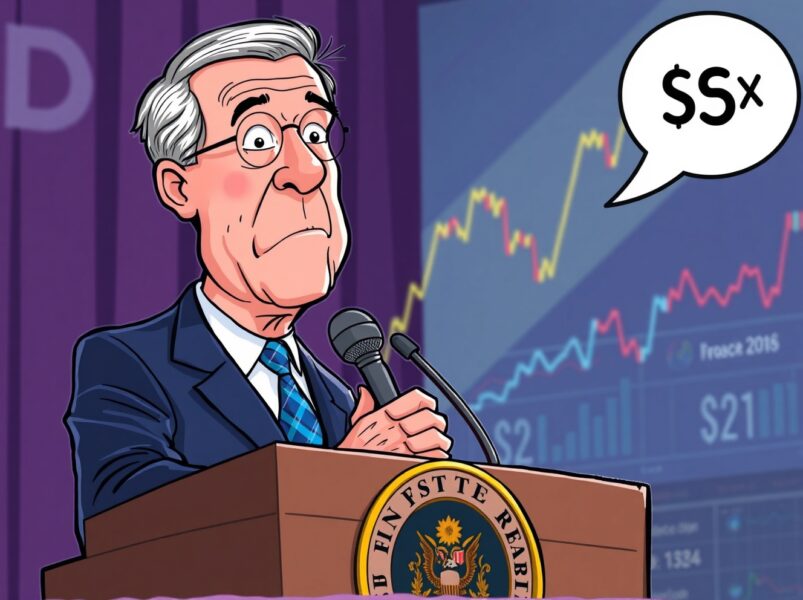
Jerome Powell’s Press Conference: Crucial Insights Unveiled for the Market’s Future

Jerome Powell’s Press Conference: Crucial Insights Unveiled for the Market’s Future

BitcoinWorld Jerome Powell’s Press Conference: Crucial Insights Unveiled for the Market’s Future The financial world, including the dynamic cryptocurrency market, often hangs on every word from the Federal Reserve. Recently, Jerome Powell’s press conference following the Federal Open Market Committee (FOMC) meeting concluded, leaving investors and analysts dissecting his remarks for clues about the future economic direction. This event is always a pivotal moment, shaping expectations for inflation, interest rates, and the overall stability of global markets. What Were the Key Takeaways from Jerome Powell’s Press Conference? During Jerome Powell’s press conference, the Fed Chair provided an update on the central bank’s monetary policy decisions and its economic outlook. His statements often reiterate the Fed’s dual mandate: achieving maximum employment and stable prices. This time was no different, with a strong emphasis on managing persistent inflation. Key points from the recent discussion included: Inflation Control: Powell emphasized the Fed’s unwavering commitment to bringing inflation back down to its 2% target. He reiterated that the fight against rising prices remains the top priority, even if it entails some economic slowdown. Interest Rate Policy: While the Fed’s stance on future interest rate adjustments was discussed, the path remains data-dependent. Powell indicated that decisions would continue to be made meeting-by-meeting, based on incoming economic data. Economic Projections: The updated Summary of Economic Projections (SEP) offered insights into the Fed’s forecasts for GDP growth, unemployment, and inflation. These projections help market participants gauge the central bank’s expectations for the economy’s trajectory. Quantitative Tightening (QT): The ongoing process of reducing the Fed’s balance sheet, known as quantitative tightening, was also a topic. This reduction in liquidity in the financial system has broad implications for asset prices. How Did Jerome Powell’s Remarks Impact Cryptocurrency Markets? The conclusion of Jerome Powell’s press conference often sends ripples through traditional financial markets, and cryptocurrencies are increasingly sensitive to these macroeconomic shifts. Digital assets, once thought to be uncorrelated, now frequently react to the Fed’s monetary policy signals. Higher interest rates, for instance, tend to make riskier assets like cryptocurrencies less attractive. This is because investors might prefer safer, interest-bearing investments. Consequently, we often see increased volatility in Bitcoin (BTC) and Ethereum (ETH) prices immediately following such announcements. The tightening of financial conditions, driven by the Fed, reduces overall liquidity in the system, which can put downward pressure on asset valuations across the board. However, some argue that this growing correlation signifies crypto’s increasing integration into the broader financial ecosystem. It suggests that institutional investors and mainstream finance are now paying closer attention to digital assets, treating them more like other risk-on investments. Navigating the Economic Landscape After Jerome Powell’s Press Conference For cryptocurrency investors, understanding the implications of Jerome Powell’s press conference is crucial for making informed decisions. The Fed’s policy trajectory directly influences the availability of capital and investor sentiment, which are key drivers for crypto valuations. Here are some actionable insights for navigating this environment: Stay Informed: Regularly monitor Fed announcements and economic data releases. Understanding the macroeconomic backdrop is as important as analyzing individual crypto projects. Assess Risk Tolerance: In periods of economic uncertainty and tighter monetary policy, a reassessment of personal risk tolerance is wise. Diversification within your crypto portfolio and across different asset classes can mitigate potential downsides. Focus on Fundamentals: While market sentiment can be swayed by macro news, projects with strong fundamentals, clear use cases, and robust development teams tend to perform better in the long run. Long-Term Perspective: Cryptocurrency markets are known for their volatility. Adopting a long-term investment horizon can help weather short-term fluctuations driven by macro events like Fed meetings. The challenges include potential continued volatility and reduced liquidity. However, opportunities may arise from market corrections, allowing strategic investors to accumulate assets at lower prices. In summary, Jerome Powell’s press conference provides essential guidance on the Fed’s economic strategy. Its conclusions have a profound impact on financial markets, including the dynamic world of cryptocurrencies. Staying informed, understanding the nuances of monetary policy, and maintaining a strategic investment approach are paramount for navigating the evolving economic landscape. The Fed’s actions underscore the interconnectedness of traditional finance and the burgeoning digital asset space. Frequently Asked Questions (FAQs) Q1: What is the Federal Open Market Committee (FOMC)? A1: The FOMC is the monetary policy-making body of the Federal Reserve System. It sets the federal funds rate target and directs open market operations, influencing the availability of money and credit in the U.S. economy. Q2: How do the Fed’s interest rate decisions typically affect cryptocurrency markets? A2: Generally, when the Fed raises interest rates, it makes borrowing more expensive and reduces liquidity in the financial system. This often leads investors to shy away from riskier assets like cryptocurrencies, potentially causing prices to decline. Conversely, lower rates can stimulate investment in riskier assets. Q3: What does “data-dependent” mean in the context of Fed policy? A3: “Data-dependent” means that the Federal Reserve’s future monetary policy decisions, such as interest rate adjustments, will primarily be based on the latest economic data. This includes inflation reports, employment figures, and GDP growth, rather than a predetermined schedule. Q4: Should I change my cryptocurrency investment strategy based on Jerome Powell’s press conference? A4: While it’s crucial to be aware of the macroeconomic environment shaped by Jerome Powell’s press conference, drastic changes to a well-researched investment strategy may not always be necessary. It’s recommended to review your portfolio, assess your risk tolerance, and consider if your strategy aligns with the current economic outlook, focusing on long-term fundamentals. If you found this analysis helpful, please consider sharing it with your network! Your insights and shares help us reach more readers interested in the intersection of traditional finance and the exciting world of cryptocurrencies. Spread the word! To learn more about the latest crypto market trends, explore our article on key developments shaping Bitcoin price action. This post Jerome Powell’s Press Conference: Crucial Insights Unveiled for the Market’s Future first appeared on BitcoinWorld.
Share
Coinstats2025/09/18 16:25