El oficialismo en el Senado consideró como causa grave la razón esgrimida por el fiscal.El oficialismo en el Senado consideró como causa grave la razón esgrimida por el fiscal.

Renuncia Gertz a FGR; Godoy se queda al frente

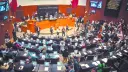
El pleno de la Cámara de Senadores aceptó y aprobó, por 74 votos de Morena, PVEM y PT, y 22 del PAN, PRI y MC en contra, la renuncia de Alejando Gertz Manero como fiscal general de la República.

“En consecuencia, el Senado de la República, en ejercicio de la facultad que le confiere el artículo 24 de la Ley de la Fiscalía General de la República acepta y aprueba la renuncia del doctor Alejandro Gertz Manero como titular de la Fiscalía General de la República, por haber calificado como causa grave el motivo de la misma.

“Comuníquese a la doctora Claudia Sheinbaum Pardo, presidenta de los Estados Unidos Mexicanos; a la Fiscalía Especializada de Control y Competencia y al doctor Alejandro Gertz Manero”, declaró Laura Itzel Castillo Juárez, presidenta de la Mesa Directiva de la Cámara Alta.

Previo a dejar el cargo, Gertz Manero nombró a Ernestina Godoy Ramos, hasta ayer consejera jurídica del Ejecutivo Federal, titular de la Fiscalía Especializada de Control Competencial de la FGR, por lo que de acuerdo con la ley es quien asumió el cargo de fiscal de manera interina, con miras a ser designada por el Senado titular del Ministerio Público Federal, previa participación en el proceso de nominación correspondiente.

El pleno senatorial aprobó ayer mismo la emisión de la convocatoria pública para designar a la persona titular de la FGR, lo que se prevé sucederá la próxima semana.

Te puede interesar
  • El Economista

    Política

    Senadores aprueban la renuncia de Alejandro Gertz Manero como titular de la FGR

  • El Economista

    Política

    Senado de la República en incertidumbre por el posible relevo de Gertz Manero al frente de la FGR

Embajador

Mediante escrito dirigido a Castillo Juárez, Gertz Manero informó que fue propuesto por la presidenta Claudia Sheinbaum Pardo como “embajador de México ante un país amigo”.

Trascendió que Gertz Manero será nombrado embajador en Alemania.

“Dicha propuesta me va a permitir la posibilidad de continuar sirviendo a mi país, en una nueva tarea que me honra y que agradezco; ratificando así mi vocación de servicio público de larga trayectoria; razón por la cual, a partir de esta fecha y con todos los efectos legales que correspondan, me estoy retirando de mi actual cargo con Fiscal General de la República”, cita la carta.

Y añade: “Debido a lo anterior y en apego a las atribuciones que le confiere la Ley Orgánica del Congreso General de los Estados Unidos Mexicanos, solicito a usted, respetuosamente, tenga a bien informar lo anterior al pleno del Senado de la República; a efecto de que, si así lo estima conveniente el órgano legislativo, se dé inicio al proceso para la ratificación de mi nombramiento, con base en lo dispuesto en la Constitución Política de los Estados Unidos Mexicanos y las leyes en la materia’’.

Te puede interesar
  • El Economista

    Política

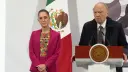
    Sheinbaum habla sobre posible renuncia de Gertz Manero a la FGR; "recibí una carta del Senado", dice

Zorro

Previo a la votación de la aceptación y aprobación de la renuncia, Claudia Anaya (PRI) pidió la palabra para “rectificación de hechos’’ y aclaró que “en su carta el fiscal nunca renuncia’’.

“Gertz, siendo un zorro como es, se va pintándole un dedo en la cara a Morena porque se siente doblegado en esta presión política que evidentemente le hicieron; una carta que llegó a la Presidencia de la República supuestamente (enviada) por este Senado de la República, una carta que nadie vio, nadie discutió, nadie aprobó… Y posterior a eso, todo el día el Senado de la República de rehén de Gertz para ver si llegaba primero la destitución o si llegaba primero la renuncia.

“Pues aquí está, no llegó la renuncia, llegó una despedida de Gertz presumiéndonos que se va de embajador y que en Morena todos son desechables, y que en Morena todo es negociable”.

Antes, su correligionario y coordinador de la bancada priista Manuel Añorve, se mofó:

“Seamos serios. Una embajada no es causa grave. No tiene justificación jurídica. No lo dice la Constitución. No lo dice la ley. No lo dice el sentido común. Lo que sí dice la ley es que la Fiscalía General debe de ser autónoma, estable e independiente.

“Y aquí lo que estamos viendo es exactamente lo contrario, un fiscal renunciado para abrir paso a un fiscal a modo, a alguien moldeado a la medida del régimen, alguien que no incomode, que no investigue, que no estorbe, ante tantas denuncias públicas presentadas”.

Por el PAN, Raymundo Bolaños afirmó que “hasta donde marca la ley, el retiro no es una causa de separación que este Senado pueda calificar. No hay razón alguna de calificar algo que la ley no faculta”.

“Pero si este documento, si el retiro ahora se interpreta como una renuncia, entonces lo que se tendría que analizar es si su contenido justifica o no la existencia de una causa grave que permita así calificarla y entonces sí abrir un proceso de designación”.

Para Clemente Castañeda, coordinador de MC, “intercambiar tareas de servicio público o aspirar a ser embajador no puede considerarse como una causa grave”.


Market Opportunity
ArchLoot Logo
ArchLoot Price(AL)
$0.0107
$0.0107$0.0107
-0.83%
USD
ArchLoot (AL) Live Price Chart
Disclaimer: The articles reposted on this site are sourced from public platforms and are provided for informational purposes only. They do not necessarily reflect the views of MEXC. All rights remain with the original authors. If you believe any content infringes on third-party rights, please contact [email protected] for removal. MEXC makes no guarantees regarding the accuracy, completeness, or timeliness of the content and is not responsible for any actions taken based on the information provided. The content does not constitute financial, legal, or other professional advice, nor should it be considered a recommendation or endorsement by MEXC.

You May Also Like

Fed Acts on Economic Signals with Rate Cut

Fed Acts on Economic Signals with Rate Cut

In a significant pivot, the Federal Reserve reduced its benchmark interest rate following a prolonged ten-month hiatus. This decision, reflecting a strategic response to the current economic climate, has captured attention across financial sectors, with both market participants and policymakers keenly evaluating its potential impact.Continue Reading:Fed Acts on Economic Signals with Rate Cut
Share
Coinstats2025/09/18 02:28
Iran’s Central Bank Spends $500M on Crypto Amid Rial Crisis

Iran’s Central Bank Spends $500M on Crypto Amid Rial Crisis

Iran's Central Bank has reportedly acquired more than $500 million in cryptocurrency assets over the past year to mitigate the ongoing currency crisis.
Share
coinlineup2026/01/22 08:59
Unlocking Massive Value: Curve Finance Revenue Sharing Proposal for CRV Holders

Unlocking Massive Value: Curve Finance Revenue Sharing Proposal for CRV Holders

BitcoinWorld Unlocking Massive Value: Curve Finance Revenue Sharing Proposal for CRV Holders The dynamic world of decentralized finance (DeFi) is constantly evolving, bringing forth new opportunities and innovations. A significant development is currently unfolding at Curve Finance, a leading decentralized exchange (DEX). Its founder, Michael Egorov, has put forth an exciting proposal designed to offer a more direct path for token holders to earn revenue. This initiative, centered around a new Curve Finance revenue sharing model, aims to bolster the value for those actively participating in the protocol’s governance. What is the “Yield Basis” Proposal and How Does it Work? At the core of this forward-thinking initiative is a new protocol dubbed Yield Basis. Michael Egorov introduced this concept on the CurveDAO governance forum, outlining a mechanism to distribute sustainable profits directly to CRV holders. Specifically, it targets those who stake their CRV tokens to gain veCRV, which are essential for governance participation within the Curve ecosystem. Let’s break down the initial steps of this innovative proposal: crvUSD Issuance: Before the Yield Basis protocol goes live, $60 million in crvUSD will be issued. Strategic Fund Allocation: The funds generated from the sale of these crvUSD tokens will be strategically deployed into three distinct Bitcoin-based liquidity pools: WBTC, cbBTC, and tBTC. Pool Capping: To ensure balanced risk and diversified exposure, each of these pools will be capped at $10 million. This carefully designed structure aims to establish a robust and consistent income stream, forming the bedrock of a sustainable Curve Finance revenue sharing mechanism. Why is This Curve Finance Revenue Sharing Significant for CRV Holders? This proposal marks a pivotal moment for CRV holders, particularly those dedicated to the long-term health and governance of Curve Finance. Historically, generating revenue for token holders in the DeFi space can often be complex. The Yield Basis proposal simplifies this by offering a more direct and transparent pathway to earnings. By staking CRV for veCRV, holders are not merely engaging in governance; they are now directly positioned to benefit from the protocol’s overall success. The significance of this development is multifaceted: Direct Profit Distribution: veCRV holders are set to receive a substantial share of the profits generated by the Yield Basis protocol. Incentivized Governance: This direct financial incentive encourages more users to stake their CRV, which in turn strengthens the protocol’s decentralized governance structure. Enhanced Value Proposition: The promise of sustainable revenue sharing could significantly boost the inherent value of holding and staking CRV tokens. Ultimately, this move underscores Curve Finance’s dedication to rewarding its committed community and ensuring the long-term vitality of its ecosystem through effective Curve Finance revenue sharing. Understanding the Mechanics: Profit Distribution and Ecosystem Support The distribution model for Yield Basis has been thoughtfully crafted to strike a balance between rewarding veCRV holders and supporting the wider Curve ecosystem. Under the terms of the proposal, a substantial portion of the value generated by Yield Basis will flow back to those who contribute to the protocol’s governance. Returns for veCRV Holders: A significant share, specifically between 35% and 65% of the value generated by Yield Basis, will be distributed to veCRV holders. This flexible range allows for dynamic adjustments based on market conditions and the protocol’s performance. Ecosystem Reserve: Crucially, 25% of the Yield Basis tokens will be reserved exclusively for the Curve ecosystem. This allocation can be utilized for various strategic purposes, such as funding ongoing development, issuing grants, or further incentivizing liquidity providers. This ensures the continuous growth and innovation of the platform. The proposal is currently undergoing a democratic vote on the CurveDAO governance forum, giving the community a direct voice in shaping the future of Curve Finance revenue sharing. The voting period is scheduled to conclude on September 24th. What’s Next for Curve Finance and CRV Holders? The proposed Yield Basis protocol represents a pioneering approach to sustainable revenue generation and community incentivization within the DeFi landscape. If approved by the community, this Curve Finance revenue sharing model has the potential to establish a new benchmark for how decentralized exchanges reward their most dedicated participants. It aims to foster a more robust and engaged community by directly linking governance participation with tangible financial benefits. This strategic move by Michael Egorov and the Curve Finance team highlights a strong commitment to innovation and strengthening the decentralized nature of the protocol. For CRV holders, a thorough understanding of this proposal is crucial for making informed decisions regarding their staking strategies and overall engagement with one of DeFi’s foundational platforms. FAQs about Curve Finance Revenue Sharing Q1: What is the main goal of the Yield Basis proposal? A1: The primary goal is to establish a more direct and sustainable way for CRV token holders who stake their tokens (receiving veCRV) to earn revenue from the Curve Finance protocol. Q2: How will funds be generated for the Yield Basis protocol? A2: Initially, $60 million in crvUSD will be issued and sold. The funds from this sale will then be allocated to three Bitcoin-based pools (WBTC, cbBTC, and tBTC), with each pool capped at $10 million, to generate profits. Q3: Who benefits from the Yield Basis revenue sharing? A3: The proposal states that between 35% and 65% of the value generated by Yield Basis will be returned to veCRV holders, who are CRV stakers participating in governance. Q4: What is the purpose of the 25% reserve for the Curve ecosystem? A4: This 25% reserve of Yield Basis tokens is intended to support the broader Curve ecosystem, potentially funding development, grants, or other initiatives that contribute to the platform’s growth and sustainability. Q5: When is the vote on the Yield Basis proposal? A5: A vote on the proposal is currently underway on the CurveDAO governance forum and is scheduled to run until September 24th. If you found this article insightful and valuable, please consider sharing it with your friends, colleagues, and followers on social media! Your support helps us continue to deliver important DeFi insights and analysis to a wider audience. To learn more about the latest DeFi market trends, explore our article on key developments shaping decentralized finance institutional adoption. This post Unlocking Massive Value: Curve Finance Revenue Sharing Proposal for CRV Holders first appeared on BitcoinWorld.
Share
Coinstats2025/09/18 00:35