Understanding BANG Spot Trading Fundamentals

Spot trading involves buying and selling BANG at current market prices with immediate settlement, unlike futures trading which settles at a later date. In spot markets, traders directly own the asset, with orders matched through an order book system based on price and time priority. Key advantages include actual ownership of BANG, lower complexity than derivatives, and the ability to participate in ecosystem activities such as staking or governance if supported by the project. Before trading, understand essential terminology such as bid (the highest price a buyer is willing to pay), ask (the lowest price a seller will accept), spread (the difference between bid and ask), and market depth (the volume of orders at each price level).

Choosing the Right Platform for BANG Spot Trading

Select a platform offering support for your preferred BANG trading pairs, robust security measures, and adequate liquidity. MEXC provides comprehensive BANG trading pairs with strong security protocols, including cold wallet storage and bi-monthly Proof of Reserves updates to ensure transparency and user protection. Consider fee structures, as they impact profitability—MEXC offers zero maker fees for BANG spot trading and highly competitive taker fees, maximizing your returns. The platform's interface delivers clear BANG trading charts and intuitive navigation, while deep liquidity ensures minimal price slippage when executing BANG spot trades.

Step-by-Step Guide to BANG Spot Trading on MEXC

Create Your MEXC Account

  • Register at www.mexc.com with your email or phone number
  • Set a secure password and verify your account via code
  • Complete KYC by submitting your identification documents

Fund Your Account

  • Go to 'Assets' > 'Deposit'
  • For crypto: Select your deposit currency, copy the address, and transfer funds
  • For fiat: Use card, P2P, or third-party options as available

Access Trading Interface

  • Navigate to 'Trade' > 'Spot'
  • Search for the BANG/USDT trading pair
  • Review the BANG price chart, order book, and recent trades

Choose Order Type

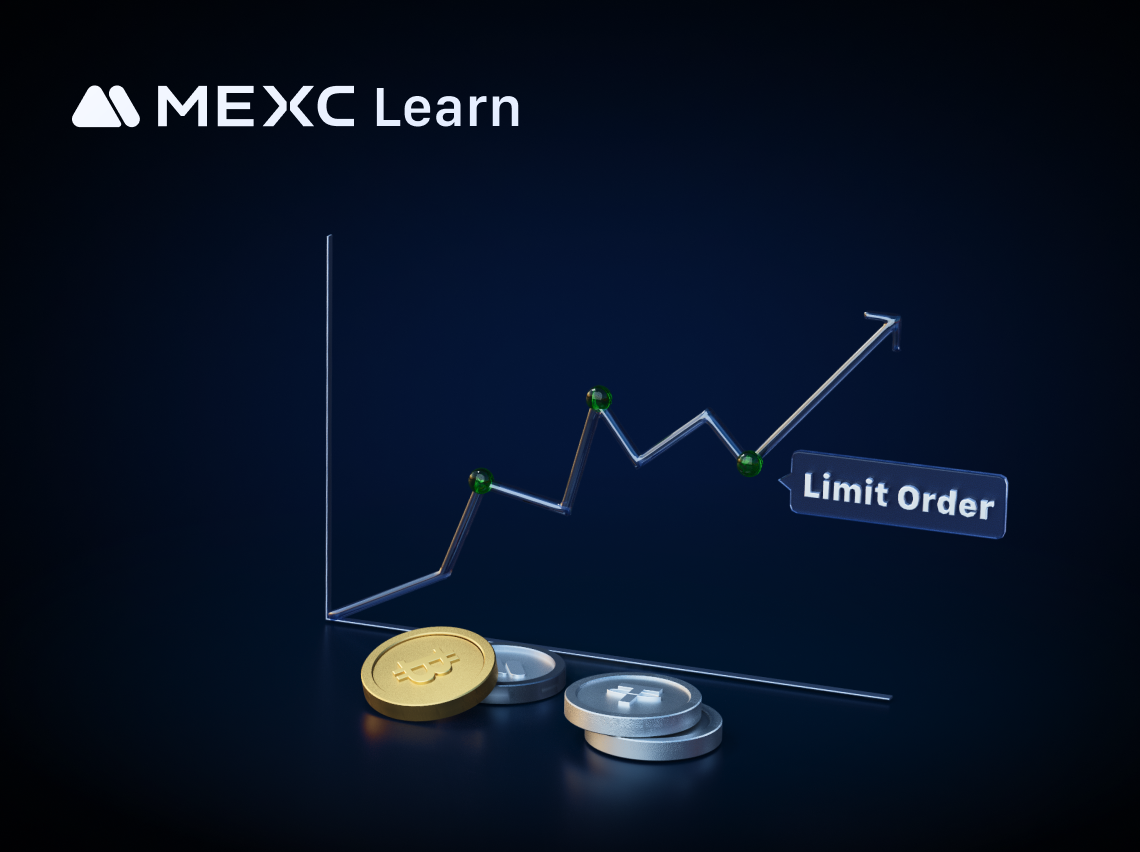
  • Limit Order: Set a specific price at which to buy or sell BANG
  • Market Order: Execute immediately at the best available BANG price
  • Stop-Limit: Set an automated trigger to buy or sell BANG at a specified price

Execute Your Trade

  • To buy: Select the amount/price on the green (buy) side
  • To sell: Enter details on the red (sell) side
  • Review all details and confirm your BANG transaction

Manage Your Position

  • Monitor open orders in the 'Open Orders' section
  • Cancel unfilled BANG orders if needed
  • Track your BANG balance in the 'Assets' section

Practice Risk Management

  • Set stop-losses to protect your capital
  • Take profits at predetermined BANG price levels
  • Maintain responsible position sizing for each BANG trade

Advanced BANG Spot Trading Strategies

Use technical analysis by examining BANG candlestick formations and indicators like RSI (Relative Strength Index) and MACD (Moving Average Convergence Divergence) to identify trends and potential entry points. Identify BANG support and resistance levels where BANG historically reverses direction. Implement trend-following strategies using moving average crossovers, with entry points confirmed by BANG volume analysis. For exit strategies, set clear profit targets and use trailing stop losses to lock in gains. Always size positions based on your risk tolerance, typically risking 1-2% of your portfolio per BANG trade, and adjust according to BANG's specific volatility profile.

Common Mistakes to Avoid in BANG Spot Trading

Avoid emotional trading triggered by fear and greed, which can lead to impulsive decisions during BANG price swings. Prevent over-trading by focusing on quality BANG trading setups rather than quantity and establishing defined trading hours. Always conduct thorough research beyond social media hype, examining BANG project fundamentals and the development roadmap. Practice proper position sizing by risking no more than 1-2% per BANG trade, and combat FOMO (fear of missing out) and panic selling by establishing clear entry and exit criteria before market movements occur.

Conclusion

Spot trading BANG offers direct ownership and flexibility for a variety of BANG trading strategies. Success depends on applying sound BANG trading principles rather than seeking quick profits. Utilize MEXC's educational resources, advanced BANG charting tools, and diverse order types to refine your approach. Whether you are new to BANG spot trading or an experienced trader, MEXC provides the necessary security, liquidity, and tools for effective BANG trading in today's cryptocurrency markets.

Market Opportunity
Orderly Network Logo
Orderly Network Price(ORDER)
$0.1117
$0.1117$0.1117
+0.72%
USD
Orderly Network (ORDER) Live Price Chart

Description:Crypto Pulse is powered by AI and public sources to bring you the hottest token trends instantly. For expert insights and in-depth analysis, visit MEXC Learn.

The articles shared on this page are sourced from public platforms and are provided for informational purposes only. They do not necessarily represent the views of MEXC. All rights remain with the original authors. If you believe any content infringes upon third-party rights, please contact [email protected] for prompt removal.

MEXC does not guarantee the accuracy, completeness, or timeliness of any content and is not responsible for any actions taken based on the information provided. The content does not constitute financial, legal, or other professional advice, nor should it be interpreted as a recommendation or endorsement by MEXC.

Latest Updates on Orderly Network

View More
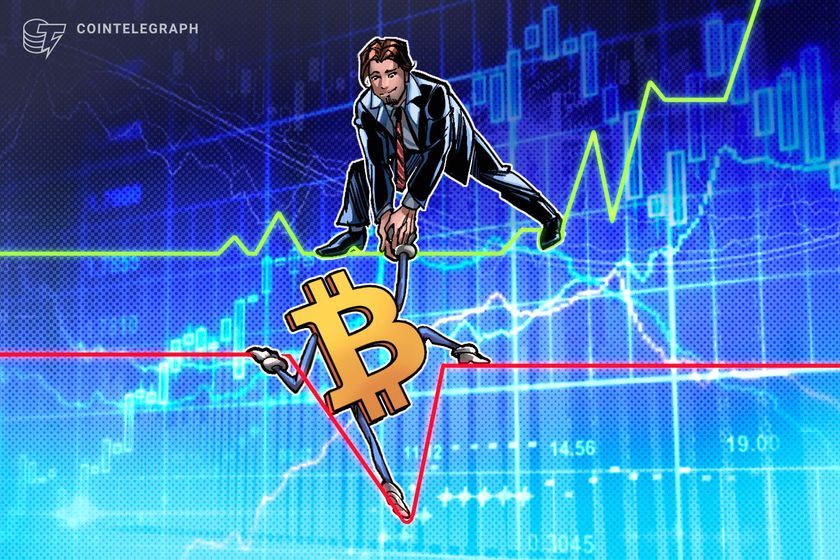
3 Binance Bitcoin charts point to the direction of BTC’s next big move

3 Binance Bitcoin charts point to the direction of BTC’s next big move

                                                                               Data from Binance points to shifting liquidity patterns and unique trader positioning that could influence the direction of Bitcoin’s next price move.                     Bitcoin’s (BTC) short-term trend may hinge on developments unfolding inside Binance’s order flow and onchain activity. Three Binance-linked metrics indicated rising sell-side pressure, shifting liquidity behavior, and a market preparing for volatility, factors that could determine whether BTC holds support or enters a deeper correction.Key takeaways:Bitcoin whale deposits into exchanges are rising, signaling elevated profit-taking risk.Read more

2025/12/06
BlackRock CEO sets the tone: Tokenization is reshaping the global financial order

BlackRock CEO sets the tone: Tokenization is reshaping the global financial order

Author: Larry Fink (BlackRock CEO) & Rob Goldstein (BlackRock COO) Original title: Larry Fink and Rob Goldstein on how tokenization could transform finance Fifty years ago, funds needed to be mailed to get around. Twenty years ago, cross-border transactions would take "a few days". Today, transactions at the millisecond level are no longer something to boast about. The real change is not about speed, but about reshaping "the way assets exist". BlackRock CEO Larry Fink and COORob Goldstein offered a sober assessment of this era: In the future, stocks, bonds, real estate, funds, and even currencies will all become "a line of code on the blockchain." This is not a crypto story; this is a “restructuring moment” for finance. Fifty years ago, money moved as slowly as mail. When one of us (Larry) started his career in 1976, transactions were conducted by telephone and settled with paper receipts sent by courier. In 1977, a technology called SWIFT enabled standardized electronic messaging between banks, reducing transaction times from days to minutes. Today, transactions between New York and London are executed within milliseconds. The financial industry is now entering the next major evolution of market infrastructure—an evolution that will allow assets to be transferred faster and more securely than the systems that have served investors for decades. It began in 2009 when a developer using the pseudonym Satoshi Nakamoto launched Bitcoin, a shared digital ledger that records transactions without intermediaries. A few years later, the same technology—blockchain—has given rise to something even more transformative: tokenization. Tokenization involves recording ownership on a digital ledger. It allows virtually any asset, from real estate to corporate debt or currency, to exist on a single digital record that participants can independently verify. Initially, the financial world—including us—struggled to grasp this grand idea. Tokenization was intertwined with the crypto craze, which often appeared speculative. But in recent years, traditional finance has seen what lies beneath the hype: tokenization can dramatically expand the world of investable assets, going beyond the currently dominant listed stocks and bonds. Tokenized assets offer two major benefits. First, they provide the potential for instant settlement of transactions. Today's markets operate on different settlement timelines, exposing buyers and sellers to the risk that one party may be unable to fulfill its obligations. Standardizing instant settlement in global markets would be another leap forward, surpassing what SWIFT has already achieved. Secondly, private equity assets remain heavily reliant on paper transactions—manual processes, custom settlements, and a track record that has failed to keep pace with other parts of the financial industry. Tokenization can replace paper with code, reducing the friction that makes asset transactions costly and slow. It can transform large, unlisted holdings such as real estate or infrastructure into smaller, more accessible units, thereby expanding market participation that has long been dominated by large institutions. Technology alone cannot eliminate all obstacles. Regulation and investor protection remain crucial. However, by reducing costs and complexity, tokenization can provide more investors with more ways to diversify their investments. Early signs of progress are already emerging. Tokens representing traditional “real-world” financial assets (stocks, bonds, etc.) still represent a small share of the global stock and fixed-income markets, but are growing rapidly—up by approximately 300% in the past 20 months. Much of early adoption occurred in the developing world, where banking services were limited. Nearly three-quarters of cryptocurrency holders reside outside the West. Meanwhile, the economies that built modern finance—the US, UK, and EU—are lagging behind, at least in terms of where transactions take place. Admittedly, many of the companies most likely to lead the transformation of the tokenized financial system, including the dominant players in the stablecoin space, are US companies. But this early advantage is not to be taken for granted. If history is any guide, today's tokenization is roughly equivalent to the internet in 1996—when Amazon sold only $16 million worth of books, and three of today's "Big Seven" tech giants haven't even been established yet. Tokenization may develop at the pace of the internet—faster than most people expect, achieving tremendous growth in the coming decades. It won't replace the existing financial system anytime soon. Instead, it can be seen as a bridge being built simultaneously from both sides of a river, converging in the middle. On one side are traditional institutions. On the other side are digital-first innovators: stablecoin issuers, fintech companies, and public blockchains. Rather than competing, the two are learning how to interoperate. In the future, people won't put stocks and bonds in one portfolio and cryptocurrencies in another. One day, various assets will be able to be bought, sold, and held through a single digital wallet. The task of policymakers and regulators is clear: to help build this bridge quickly and safely. The best approach is not to create a completely new rulebook for digital markets, but to update our existing rules so that traditional markets and tokenized markets can work together. We've already seen the power of this connectivity. The first emerging market exchange-traded funds (ETFs) linked stock markets from more than 20 countries into a single fund, making global investing much easier. Bond ETFs did the same for fixed income, connecting dealer markets with public exchanges, enabling investors to trade more efficiently. Now there are spot Bitcoin ETFs, and even digital assets are on traditional exchanges. Every innovation is building bridges. The same principle applies to tokenization. Regulators should strive for consistency: risk should be judged by its nature, not by how it is packaged. Even if a bond exists on the blockchain, it is still a bond. But innovation needs "guardrails": clear buyer protection measures to ensure that tokenized products are safe and transparent; strong counterparty risk standards to prevent shocks from spreading to the platform; and digital identity verification systems so that those who want to trade and invest can have the same confidence as when swiping a card or making a wire transfer. In his new book about the 1929 stock market crash, Andrew Ross Sorkin revisits the failures that led to the birth of the modern financial system. Some were technical: on "Black Tuesday," stock tickers lagged behind by hours, unable to keep up with the surge in trading volume. Others were institutional: a financial system that developed faster than its security guarantees could keep pace. Tokenization can modernize the infrastructure that still makes parts of the financial system slow and expensive, bringing more people into the world's most powerful engine of wealth creation: the markets. However, as we learned in 1929, every step towards increased participation must be accompanied by updated security safeguards. Tokenization must achieve two things: faster growth and secure growth, while simultaneously building trust.
2025/12/06
‘A win for every Filipino’: Petitioners laud SC order to return PhilHealth funds

‘A win for every Filipino’: Petitioners laud SC order to return PhilHealth funds

STOP. Healthcare workers stage a protest in front of the Philippine General Hospital to call for a stop to the transfer of P89.9 billion in PhilHealth funds to the national treasury on October 15, 2024.
2025/12/06
View More